Daily Life · Saint-Martin
Saint-Martin: French Hours, Caribbean Tempo
A French overseas collectivity of around 30,000 people where the euro, French schooling and paperwork sit alongside an English-speaking, Caribbean-wide population, still rebuilding parts of daily life after Hurricane Irma
By Worldlore Editorial · 30 September 2026
Saint-Martin runs, administratively, entirely on French time: the euro, French school terms, French public holidays, and a territorial council based in Marigot, the small capital on the lagoon. Only around 30,000 people live on this side of the island, yet daily life sounds far more Caribbean than French, since English is the language most people actually use with one another, a reflection of a population drawn from across the West Indies. Since Hurricane Irma tore through in September 2017, an uneven, still-ongoing rebuilding has also become part of the background of everyday life for many residents.
Family and home life
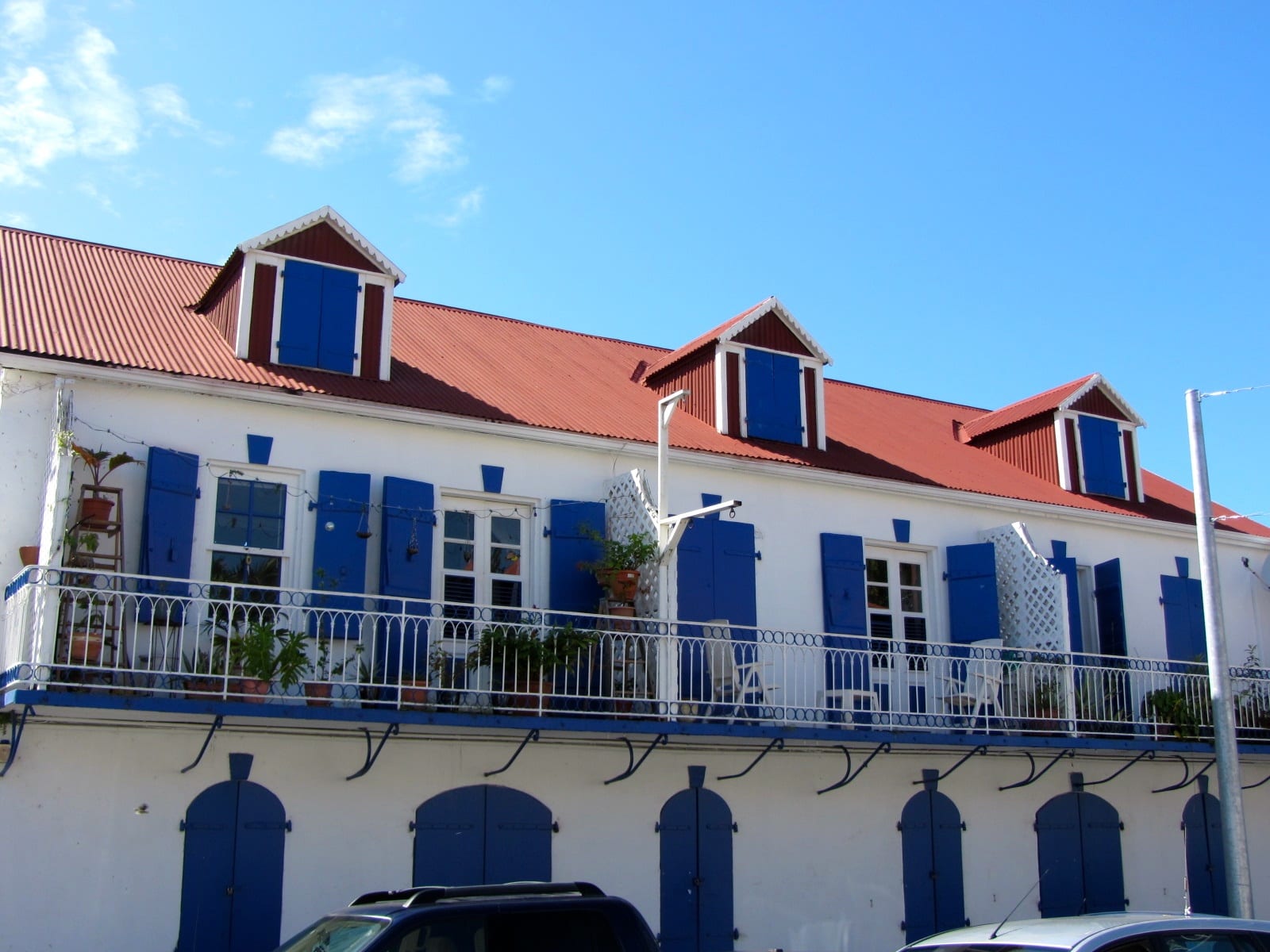
Households on Saint-Martin are shaped by a population drawn from across the Caribbean, with a sizeable Haitian community and many families of wider Caribbean origin alongside metropolitan French residents, so extended family networks often stretch across several islands rather than sitting in one place. As French and European Union citizens, many young adults leave to study or find work in mainland France or nearby Guadeloupe, keeping close ties to relatives back home. Housing ranges from concrete villas in the hills to more modest homes closer to Marigot, and in some neighbourhoods, rebuilding and repairs from Hurricane Irma are still visible years on.
Work, school and the rhythm of the day
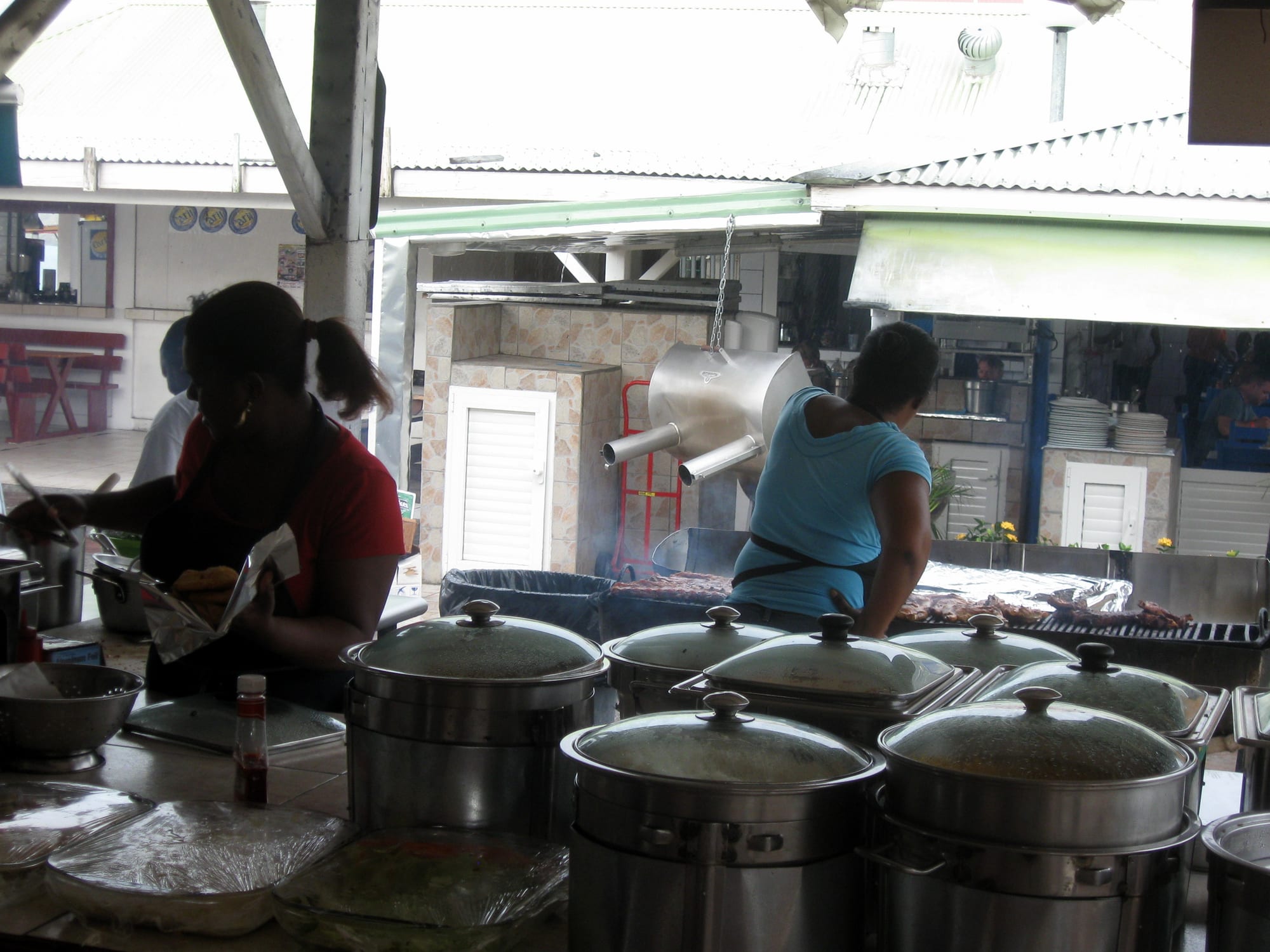
Schools follow the French national system and calendar, with the same term dates, curriculum, and school-leaving qualifications used in mainland France. Almost the entire economy runs on tourism in one form or another — stopover visitors, villa rentals, day-trippers crossing from the Dutch side, and yachting in the shared Simpson Bay Lagoon — topped up by French public spending and welfare support. Grand Case, on the northwest coast, is known island-wide for its roadside lolos, open-air barbecue shacks where cooks grill ribs, chicken, and fresh fish over half-drums through the afternoon and evening, feeding both residents and visitors.
Community life and public spaces
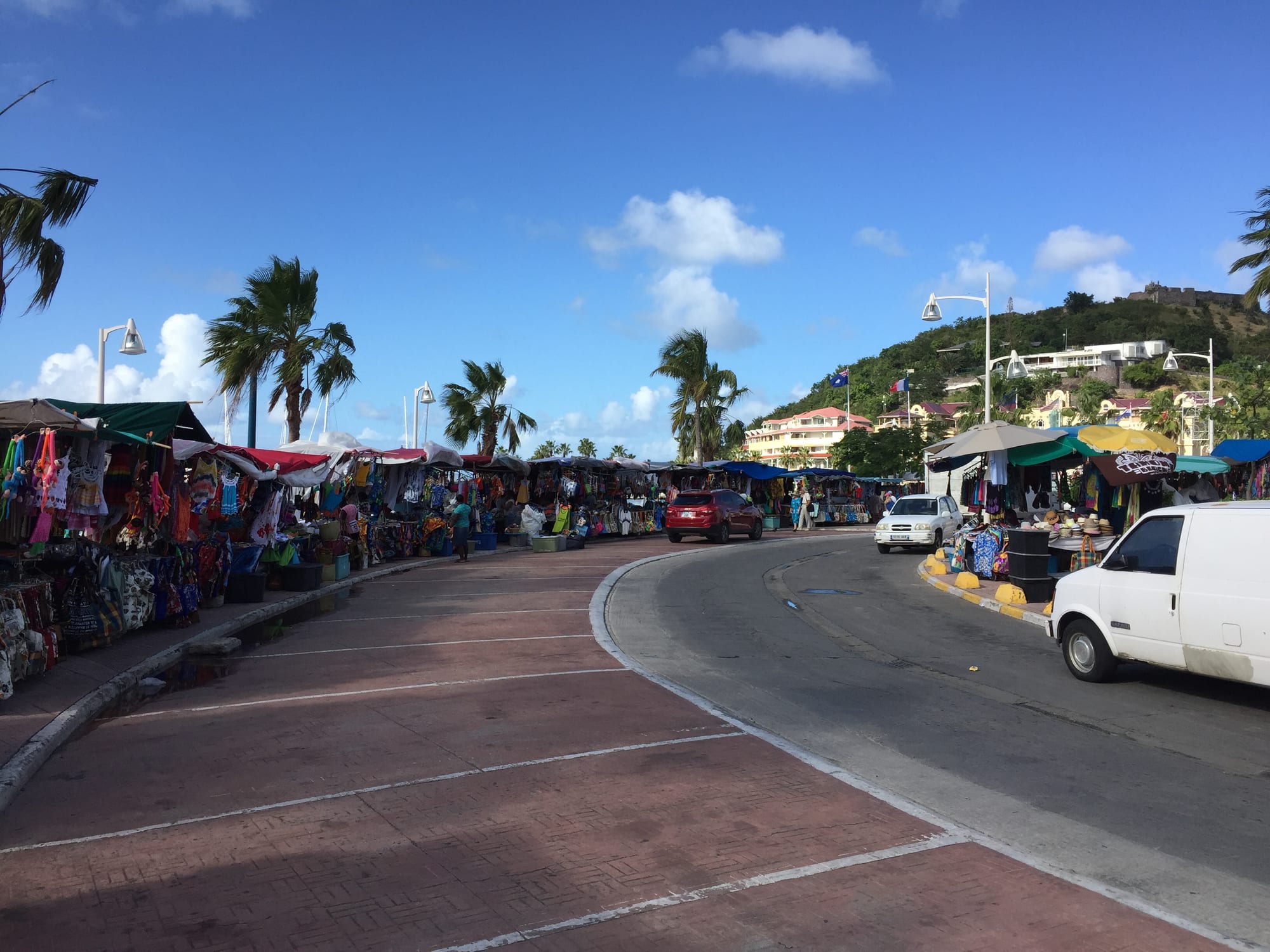
Marigot's waterfront market, below the ruined hilltop Fort Louis, is a focal point for produce, clothing, and crafts, and doubles as a meeting place for people from both sides of the island. There is normally no border check between Saint-Martin and Dutch Sint Maarten, only a road sign and a change in markings, so daily movement flows freely across the line, and people commonly cross for work, shopping, or the Dutch side's cruise port and casinos. Privately run public buses link the main towns, though many residents and visitors find a hire car or scooter the more practical way to get around.
Free time and weekends
Weekends bring boat trips to nearby cays like Pinel and Tintamarre, beach time on the long sweep of Orient Bay or the quieter Happy Bay, and, in season, weekly evening street food and music gatherings in Grand Case. Carnival on the French side is held before Lent, a separate celebration from the Dutch side's post-Easter carnival, and Saint-Martin's Day on 11 November, a public holiday celebrating the kinship of the two halves, is observed on both sides at once. Football and, increasingly, watersports draw casual weekend crowds, and many residents keep up ties with family on other islands through regular visits.
A visitor's ordinary day
The euro is the official currency, though US dollars are widely accepted, often at a less favourable rate, and cards work in most hotels and larger restaurants. A hire car is worth having, since the whole island is drivable in well under an hour end to end and there is no checkpoint to normally slow a crossing between the French and Dutch sides. Smaller businesses and some infrastructure, particularly outside the main tourist areas, can still show the effects of Hurricane Irma, so it is worth expecting some unevenness in services compared with larger Caribbean destinations.
What to take away
Saint-Martin is a small piece of France where English, not French, is the everyday language of the street — a French collectivity's paperwork and school terms laid over a thoroughly Caribbean, English-speaking, and still storm-scarred way of daily life.