Culture & Customs · Saint-Martin
Saint Martin: Freedom Came on the Twenty-Eighth
The French half of a shared island, where English is the everyday tongue, Methodism took deep root before a Catholic revival, emancipation is marked on its own date, and Carnival ends with a king on fire
By Worldlore Editorial · 30 September 2026
On 28 May, in a village on the French side, people gather for a ceremony that belongs to the French half of the island alone. There are speeches from the territorial president and the prefect, cultural parades, storytelling, music and dance, and young people take a full part. They are marking the day in 1848 when the abolition of slavery was proclaimed on Saint Martin, and the date itself is a point of pride. For years the island followed Guadeloupe in commemorating 27 May, until research in the archives showed that the news reached here a day later. Getting the date right says a good deal about the French side: a small community with ties to France, the wider Caribbean and its Dutch neighbour, but determined to tell its own story in its own way.
Faith, identity and values
Religion plays an important part in the lives of Saint Martin's residents, and many faiths live side by side: Catholic, Anglican and other Protestant churches, alongside Muslim, Hindu and Rastafarian communities. Christianity dominates, and its history here is unusual for a French territory. Under the old colonial laws, enslaved people were required to be Catholic, but after the French Revolution left the island short of priests, the Methodist preacher John Hodge arrived in 1817, preaching on the Dutch side, and by 1850 most of the island's enslaved people were Methodist. By the 1830s, French officials were alarmed to find that the inhabitants of their part of the island spoke English and that Catholicism had all but vanished. They sent priests and nuns and built a church in Marigot in 1840, and today the Catholic Church counts the largest following on the French side, while Methodism remains strong. After the Second World War, Adventists, Baptists, Jehovah's Witnesses and other denominations added to the mix.
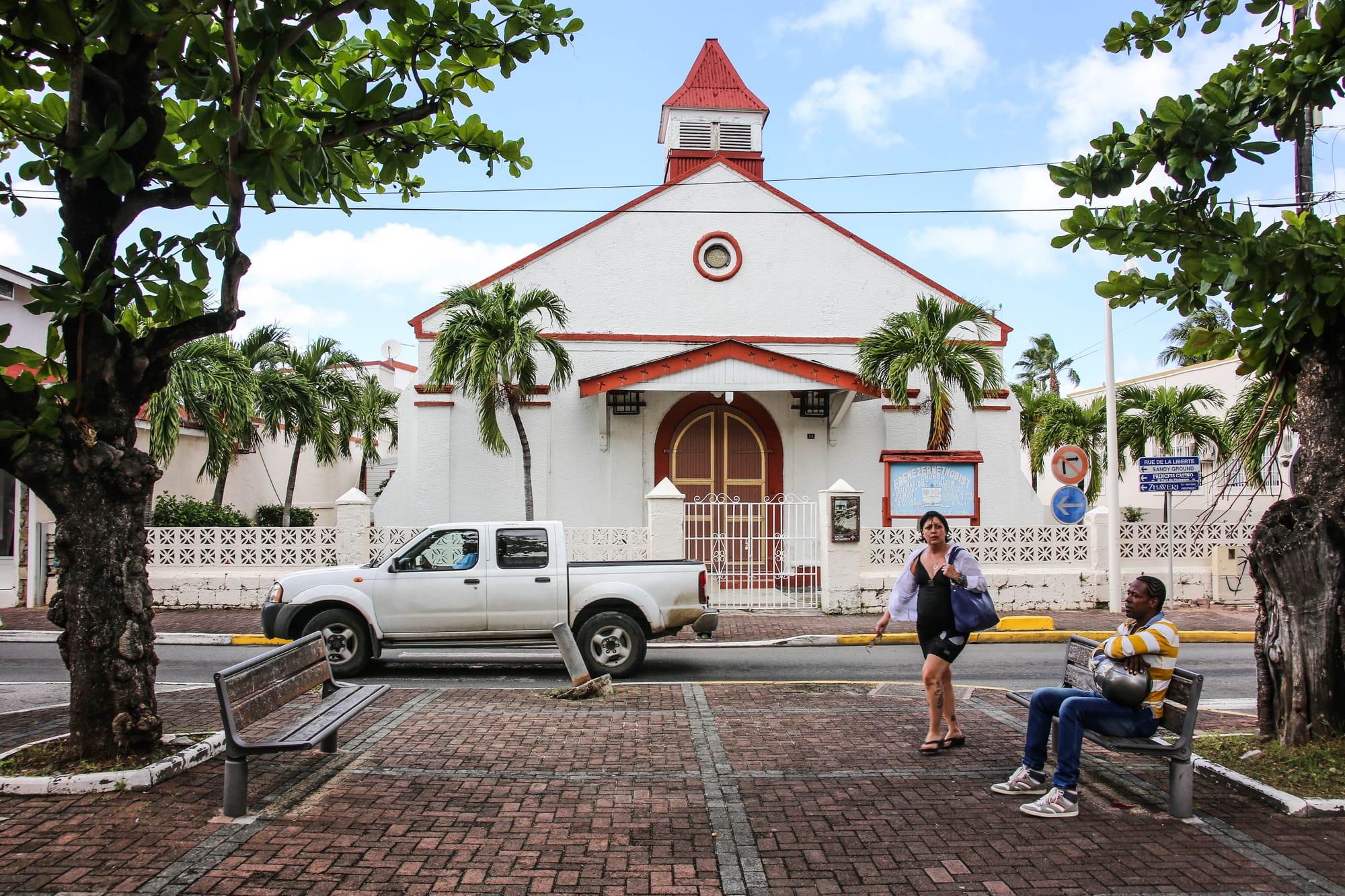
The Methodist church in the capital is counted among the historic heritage of the French side. Badly damaged by Hurricane Irma in 2017, it has been restored with public help, including a grant of half a million euros from the Collectivité.
Identity is shaped by movement and mixture. French is the official language of government and schools, but English is widely spoken, and the island's everyday vernacular is an English-based Creole. INSEE, the French statistics office, found that about a third of the French side's population in 2012 had been born abroad, with Haiti the largest single source, and the tourism office counts more than 120 nationalities on the island as a whole. Alongside families who have lived on the island for generations are people from Haiti, the Dominican Republic, Guadeloupe, Martinique, mainland France and far beyond. INSEE describes a society of great cultural mixing, and the tourism office stresses the mutual respect with which its many communities keep up their own traditions.
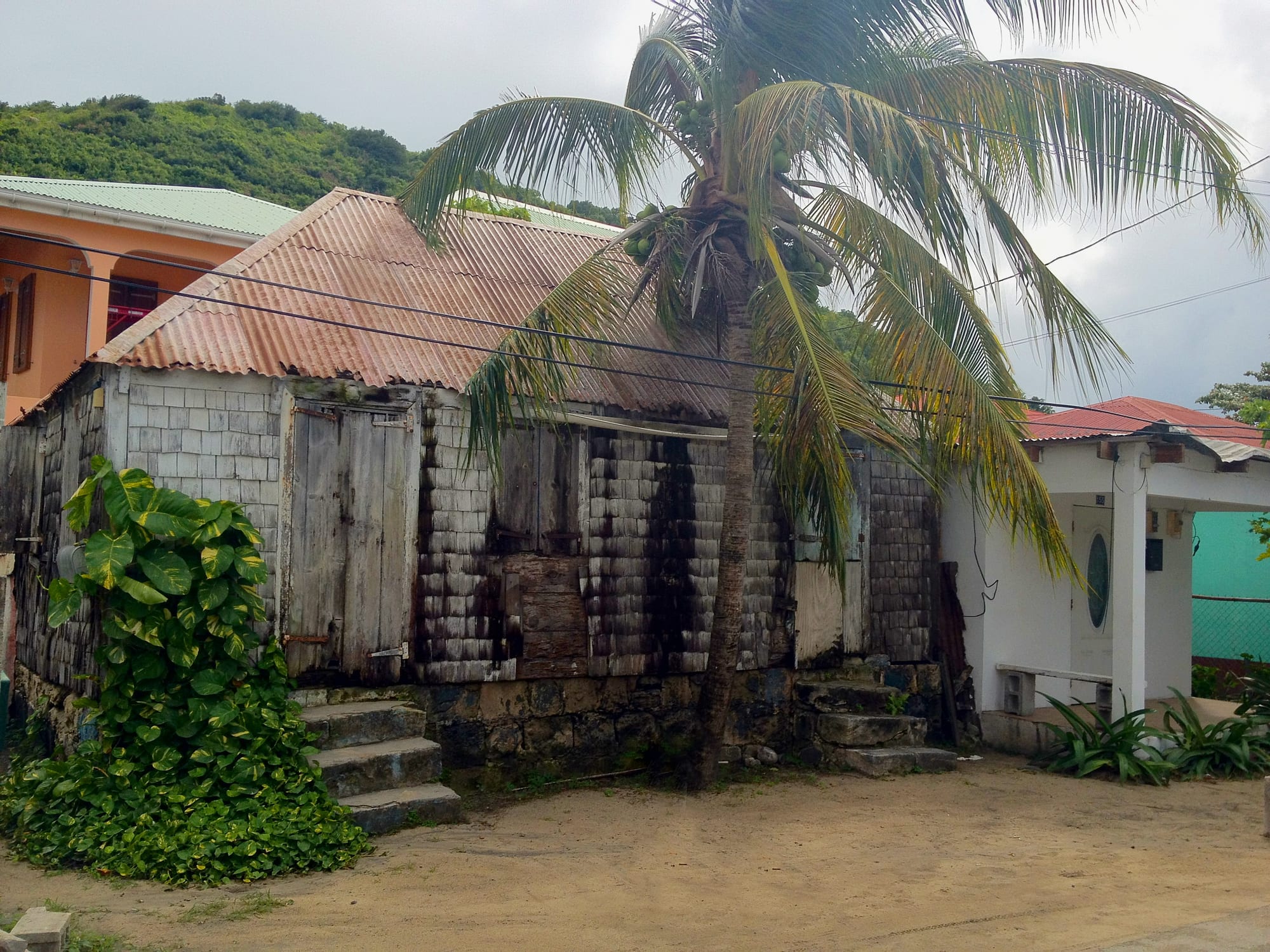
Heritage is treasured all the more because so little of it survived the hurricanes. The Old House, an eighteenth-century dwelling that served in turn a sugar estate and the salt works that operated into the late 1950s, has been a museum since 2000, and the association that runs it describes it as one of the rare old buildings left on the island, its carpentry, tilework and masonry a record of generations of island craftsmanship. The island's old name, Soualiga, "land of salt", recalls the salt ponds that once made it valuable.
Greetings and meeting people
Saint Martin calls itself the Friendly Island, and a greeting is the start of any exchange. A "good morning", "good afternoon" or "good evening" is offered to people on the street as well as in shops and offices, and it is normally returned.
Because the French side is part of France, French courtesies apply in official and French-speaking settings. There, it is usual to greet everyone present with a handshake, to address people as "Madame" or "Monsieur", and to keep to surnames and titles in formal settings until invited to do otherwise. Among French friends and relatives, la bise, a light kiss on each cheek, is the usual greeting. English, however, is the language most visitors will hear, and French, Spanish and Creole are heard alongside it.
Hospitality and being a guest
Much of the island's social life happens in shared, informal spaces. Games are a great leveller: dominoes is one of the most enthusiastically played pastimes on the island, and bingo is a weekly gathering for many in the Haitian community. Carnival and the island's festivals are described by the tourism office as occasions where there are no barriers between people.
Eating out follows French rules on paper and Caribbean habits in practice. French law requires the service charge to be included in menu prices on the French side, so there is no obligation to add more. Many restaurants, however, have drifted towards the American approach and expect tips on top, especially from American visitors, while European guests typically round up or leave a few euros. The simplest course is to ask whether service is included, rather than whether the tip is, to avoid paying twice.
Under French law, same-sex relationships are legal, though Canadian government advice notes that discrimination is still possible, and penalties for drugs offences are severe.
Festivals and life's big moments
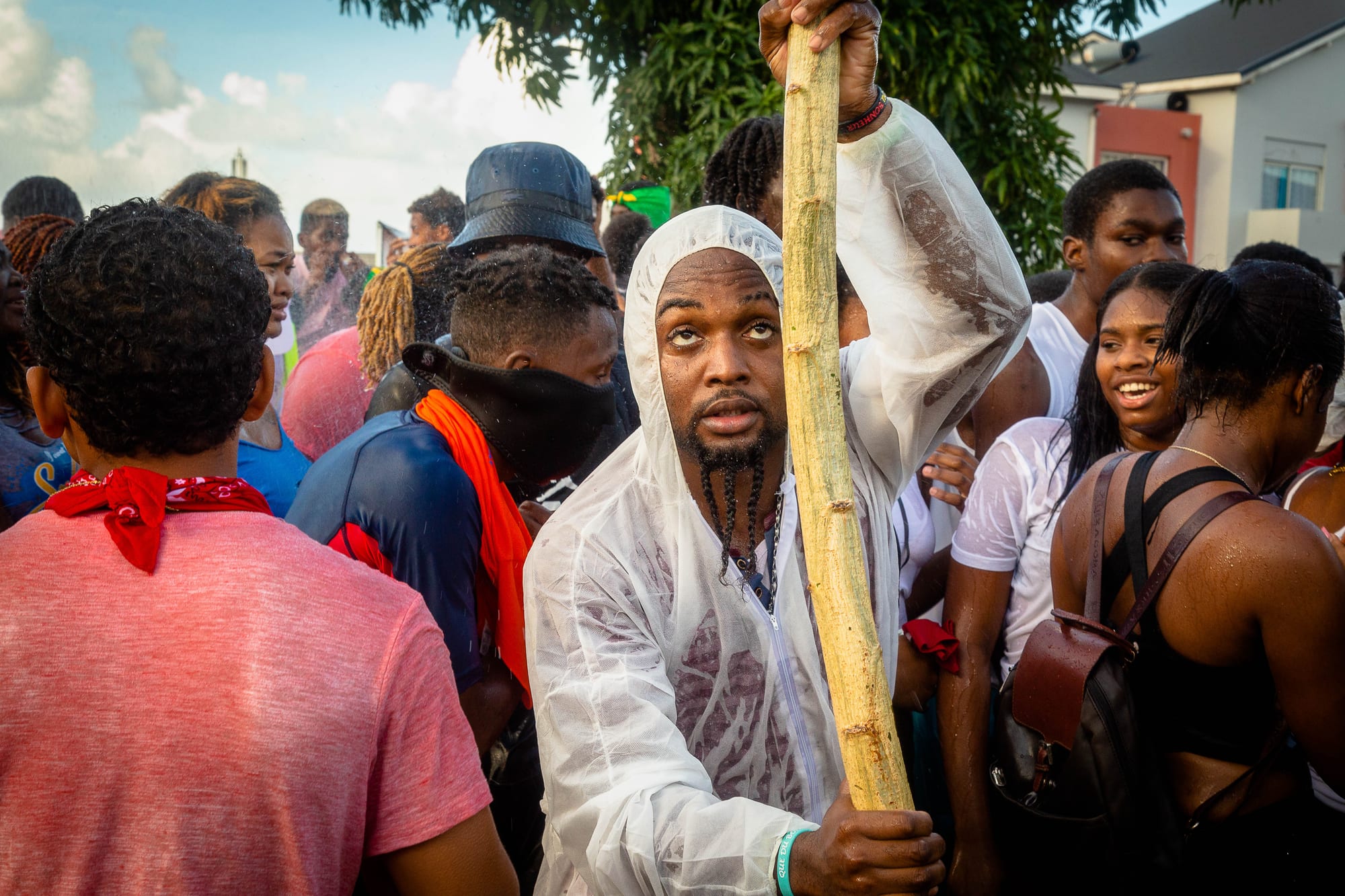
Carnival is the high point of the year. On the French side it runs in the weeks before Lent, so its dates move with Easter, and it keeps its own calendar distinct from the Dutch side's. The season opens with a parade and a seafront concert, and continues through a children's parade, the early-morning J'ouvert jump-up, the Grande Parade and the Mardi Gras parade. There are prizes for the best costume, the most striking make-up and Miss Carnival, as well as a mini-miss contest for children. Costume-makers design new outfits each year to the theme chosen by the organisers, musicians compose songs specially for the season, and troupes spend months hand making their costumes. On the last day the carnival king, Vaval, is burned, closing the festivities.
Saint-Martin's Day on 11 November celebrates the Treaty of Concordia of 1648, under which France and the Netherlands agreed to share the island. Columbus is said to have sighted it on the feast of Saint Martin in 1493, and legend holds that the dividing line was fixed by a Frenchman and a Dutchman walking in opposite directions around the coast, though the tale's accuracy is debated. The day is organised jointly by the two governments, beginning with the ringing of joy bells and a wreath-laying ceremony by French and Dutch officials at the border monument, and both national anthems are sung. On the French side, the afternoon brings music, football matches, food competitions, fashion shows and traditional dance.
The abolition anniversary on 28 May is the most solemn date of the year and a local public holiday. On the Dutch side, emancipation is marked on 1 July, because the Netherlands ended slavery fifteen years later, in 1863, so the two halves of the island remember freedom on different days.
The great moments of family life are closely tied to the churches, in keeping with the important place that religion holds in residents' lives across the island's many denominations.
Arts, crafts and music
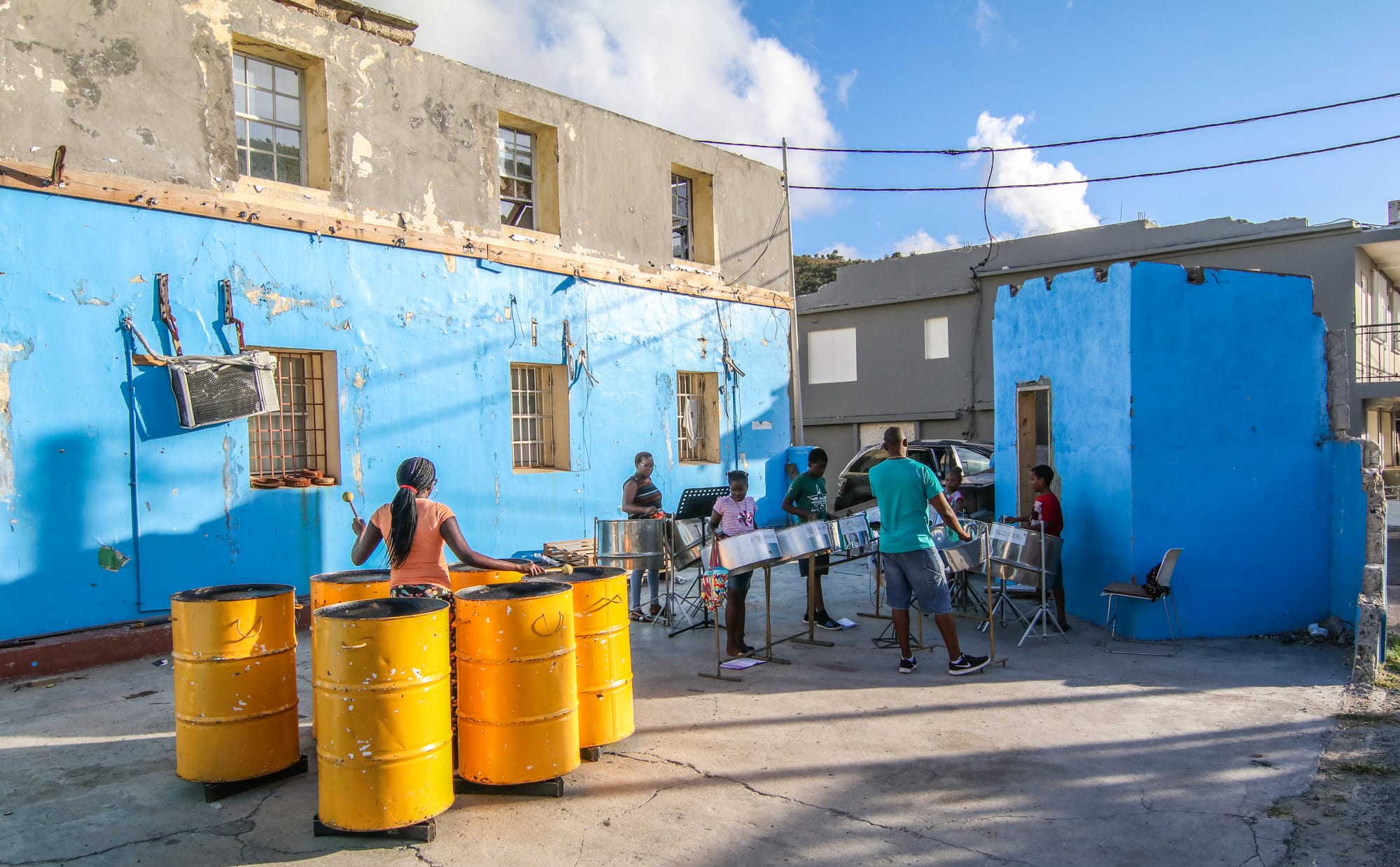
The island lives to a Caribbean beat. Carnival music is written afresh each season, steel pan groups rehearse in the open air, and weekly evening gatherings of music and street food have become fixtures. In recent years, the SXM Festival has also made the island a destination for electronic music. The light and the sea have drawn painters, sculptors and ceramicists, and galleries and exhibitions showing local and international artists run throughout the year.
Heritage work is carried on largely by local associations and a handful of dedicated people. The Old House museum, open free of charge, presents exhibitions on the island's history, nature and culture, and a bilingual book on the house has recorded interviews about its architecture and the salt industry. For the association behind it, the urgency is clear: when old buildings disappear, part of the island's history is erased with them.
Dos and don'ts for visitors
- Do greet people with "good morning", "good afternoon" or "good evening" before anything else.
- Do use "Madame" or "Monsieur" and a handshake in French official settings.
- Do ask whether service is included before tipping, rather than whether the tip is.
- Do remember that the French side marks emancipation on 28 May and holds Carnival before Lent, on different dates from the Dutch side.
- Do join in Carnival and the Saint-Martin's Day festivities, which are open to all.
- Don't fly a drone without first checking the French rules, which restrict flying near airports.
- Don't carry or use illegal drugs; penalties are severe.
What to take away
The French side of Saint Martin is a small, many-nationed community that has made its own history out of a shared island, and visitors who greet people warmly and learn the dates it holds dear will be welcomed as friends.