Culture & Customs · Saint Helena
Saint Helena: A Wave from Every Passing Car
A small, church-rooted island community where everyone knows everyone, nicknames outrun legal names, and a raised hand from the steering wheel is the everyday courtesy
By Worldlore Editorial · 30 September 2026
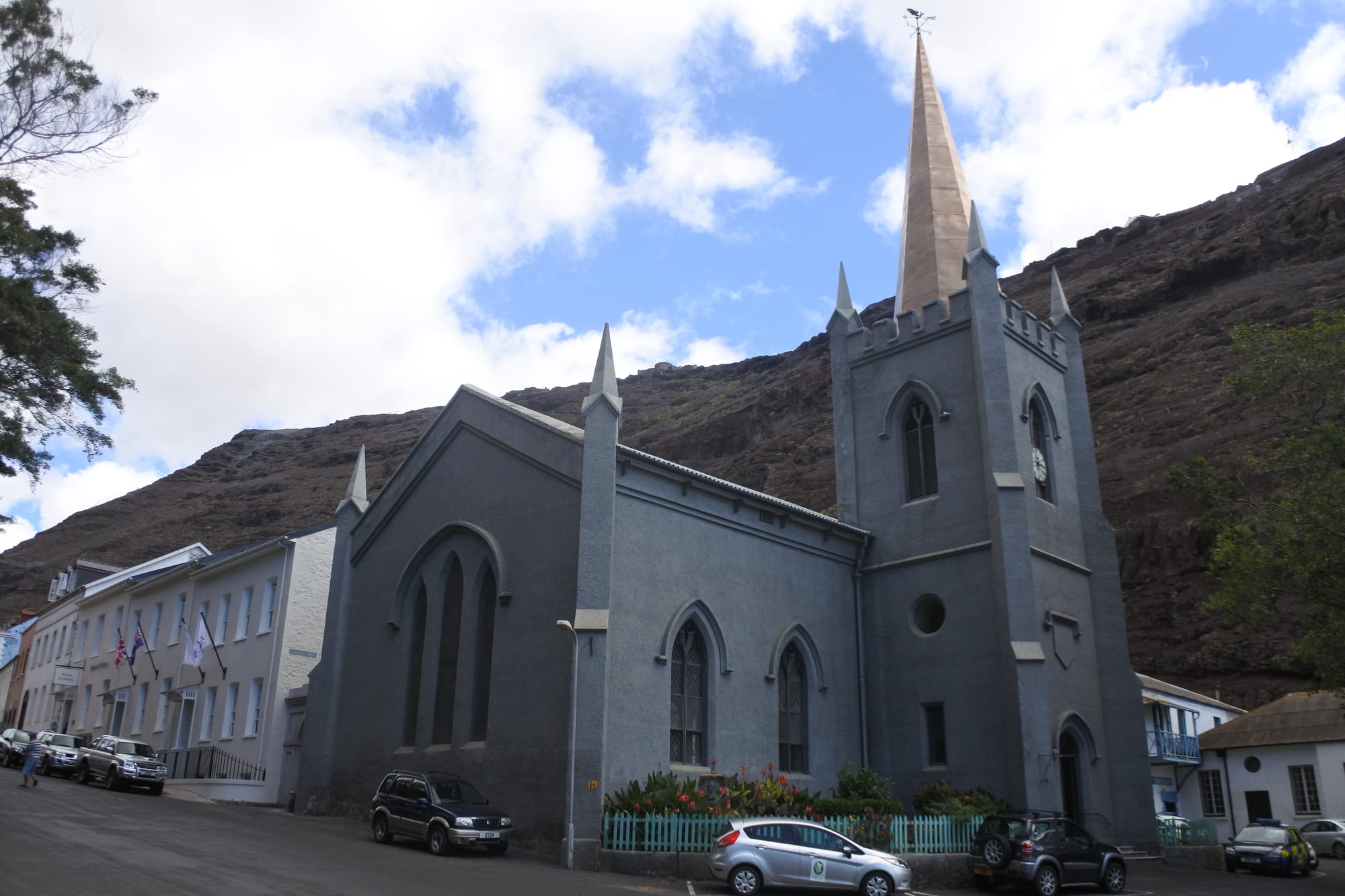
A car labours up one of the island's steep, narrow roads. Another comes round the bend towards it, and before either driver has had time to think about it, a hand lifts from each steering wheel. The two may be cousins, old schoolfriends or complete strangers; the wave is the same. On Saint Helena, a community of a few thousand people who have lived together at the far end of the South Atlantic for more than three centuries, courtesy is less a set of formal rules than a habit of noticing everyone. The island's own tourism board puts it simply: everyone knows everyone, and the driver of each car waves to the next as they pass.
Faith, identity and values
Islanders call themselves Saints, and the name carries real pride. They descend from a wide mix of people — European, African, Asian and others who arrived, freely or not, during the island's long history as a provisioning station — and have held full British citizenship since 2002. The St Helena Government describes the values that hold this small society together as a deep connection to the land and the ocean, resilience and resourcefulness, strong family, community and charitable values, and a great pride in "being Saint".
Christianity, and above all the Church of England, has been part of that identity since the island was settled. In the 2021 census, around four in five residents stated a faith, and nearly two-thirds of the household population described themselves as Anglican. The island has its own Anglican bishop, whose diocese also takes in Ascension Island. Other churches have long histories here too: Baptists since the 1840s, Roman Catholics since the 1850s, the Salvation Army since the 1880s and Seventh-day Adventists since 1949, alongside the New Apostolic Church, Jehovah's Witnesses and a small Bahá'í community. Local observers note that the number of people calling themselves Anglican is far higher than Sunday attendance, but the church remains the setting for almost every important moment of life.
Everyday manners reflect a close-knit community. Politeness and courtesy are prized, and Saints are generally described as non-confrontational, with a live-and-let-live attitude towards people who are different from themselves. Face-to-face contact still matters more than it does in many places, and in a population this small, reputation travels quickly.
Greetings and meeting people
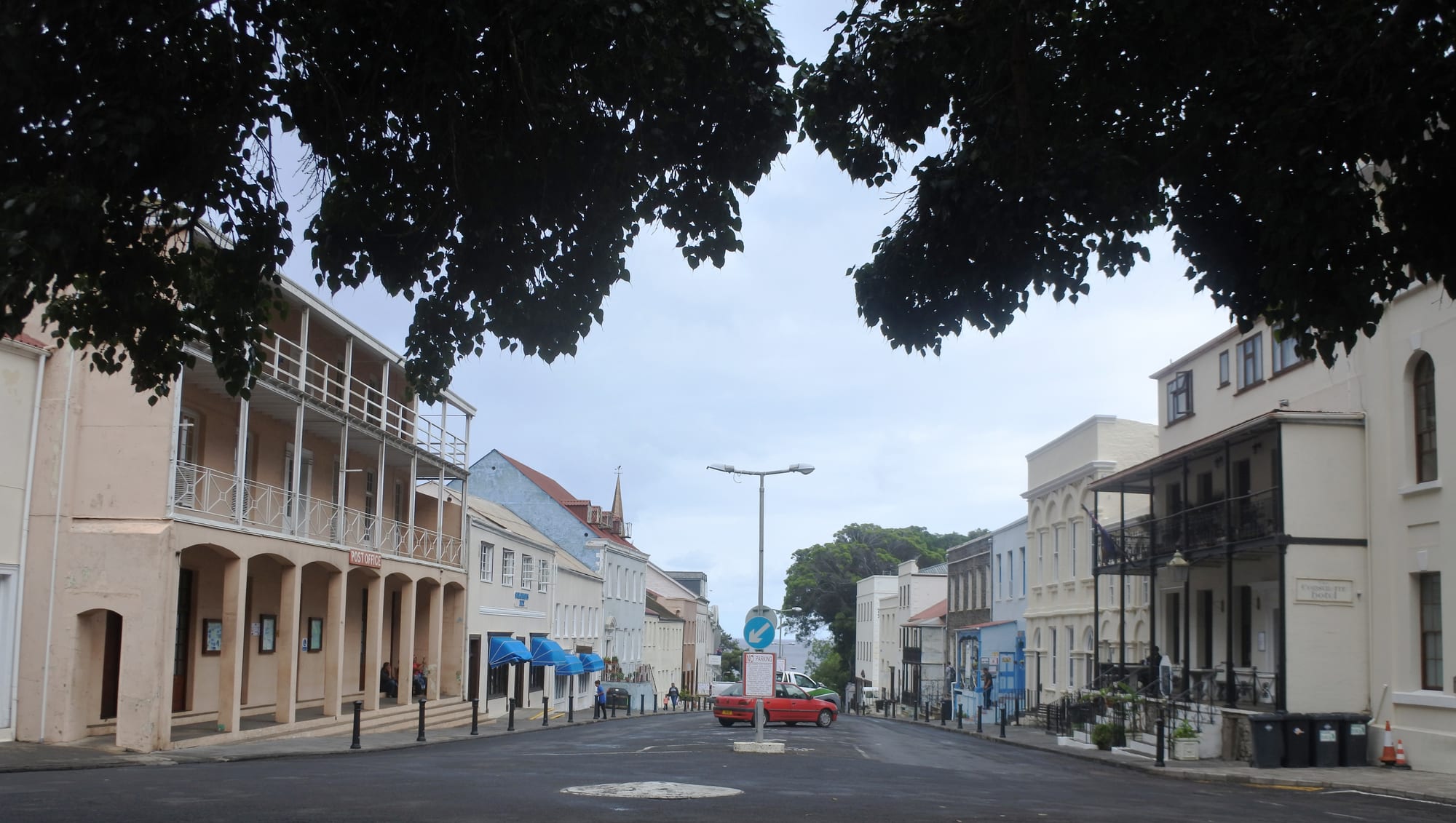
Greeting everyone is the norm. People stop to say hello in the street, and the wave between passing drivers is so general that visitors quickly find themselves doing it too. Conversation tends to turn early to family. One of the first questions a Saint may ask another, in local phrasing, is "Who is you family to?" — a way of placing a person within the web of relatives that connects most of the island.
Names work differently here. Because a large share of the population shares a small number of surnames, nicknames are everywhere, and friends may know each other for years without using legal names at all. Some are earned in childhood from a habit or a mishap, some are handed down through a family with "Young" or "Little" added to tell the generations apart, and some pass to a woman from her husband's family when she marries. Visitors are simply introduced by whatever name people actually use.
The English spoken on the island has a character of its own. Linguists describe features such as the plural being left off after numbers, as in "twelve month", and a readiness to use double negatives. The tourism board counts hearing the Saint dialect on the island's old Georgian streets among the pleasures of a visit.
Hospitality and being a guest
Saints are widely described as warm and welcoming to visitors, and much of social life happens around food shared among family and friends. The tourism board singles out two weekend traditions: the cook-up, an outdoor barbecue, and the family Sunday lunch. An invitation to either is a sign of genuine friendliness and is worth accepting; offering to bring something and helping to clear up afterwards are natural ways to return the kindness.
Public behaviour follows a fairly conservative British pattern. Bars welcome visitors, but drinking alcohol in the street in Jamestown is not permitted, although people often gather just outside a bar's door. Island guidance for visitors notes that topless sunbathing is not practised and that it is rare for men to appear bare-chested in public, so beachwear is kept for the water's edge.
Festivals and life's big moments
The island's own day is St Helena's Day on 21 May, the feast of Saint Helena of Constantinople and by long tradition the date on which the Portuguese navigator João da Nova sighted the island in 1502. It is marked with a public holiday and a street party in the capital: a formal opening, a themed parade of floats, a mini marathon and fancy dress competition, stalls, live bands into the evening and a firework display to finish.
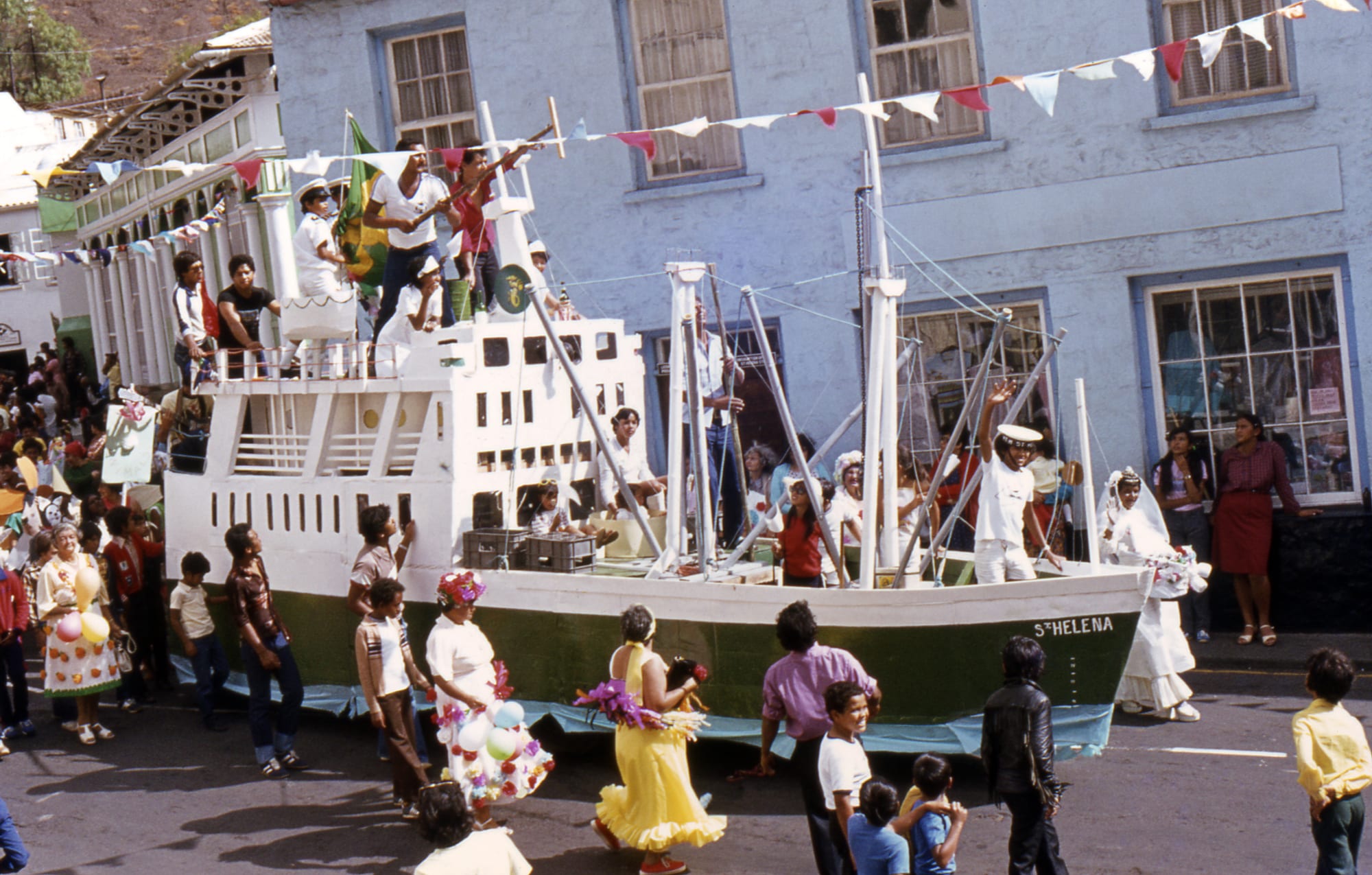
Other occasions fill the year. In December, the Festival of Lights brings floats and costumes decorated with lights, and in alternate years an October carnival sees elaborate outfits paraded to raise money for charity. Easter is traditionally spent fishing and camping with family and friends. New Year and Boxing Day both bring outdoor gatherings and sports, Guy Fawkes Night is marked with bonfires and fireworks, and on the King's Official Birthday a garden party is held at the Governor's residence for invited guests. Mothering Sunday is observed with cards and gifts not only for mothers but for grandmothers as well. The quiet days between Christmas and New Year are so widely taken off work that employees are expected to set aside leave for them.
Family events are community events. Births, birthdays, baptisms, weddings, anniversaries and funerals are all described locally as big family affairs that everybody attends, and while regular church attendance has fallen, a wedding can still fill the largest church on the island. Celebrations sometimes take to the road in the form of a "bus ride", when a group charters a bus, often in fancy dress, and tours the island's bars with most of the party happening on board.
Funerals carry particular weight. Most Saints are buried by the Anglican Church in one of its cemeteries after a church service, open-casket funerals are common, and families maintain and visit graves. A large funeral can bring the island to a standstill, with employers routinely giving staff time off to attend, and even Saints who have spent most of their lives overseas are often brought home to be buried.
Arts, crafts and music
Music is one of the community's most popular pastimes. Writing in the late 1990s, the island historian Trevor Hearl described a small population that provided live music "for every occasion, sacred or secular", from church choirs to dance bands. The St Helena Band traces its origins to the band of the old St Helena Regiment in the nineteenth century, and the Salvation Army band has well over a century of service behind it. Local songs have been collected and published, among them a musical, Fibre, written and performed by school pupils in 1984 about the hard, noisy work of the island's flax mills.
Country music holds a special place, especially among older Saints. It arrived with islanders who worked alongside Americans from the southern United States at the airfield on Ascension Island from the 1940s, and who brought the music home with them. Country programmes still fill the island's community radio on Sundays, local performers have made their own recordings, and karaoke and sing-along evenings are a regular part of social life.
The best-known craft is lace-making, introduced as a cottage industry at the end of the nineteenth century and given a government lace school in 1908. The skill is still passed on, mostly from mother to daughter, though few younger women now take it up, and fine lace is still made for sale. Woodwork is another long tradition, with skills handed down through families and pieces often made from locally grown timber. Flax, the plant that once supported the island's economy, is now woven into small items, including tortoises made by a social enterprise that employs people with disabilities.
Dos and don'ts for visitors
- Do wave back at passing drivers and greet people in the street; it is the everyday courtesy on the island.
- Do take time to talk when stopped for a chat; conversation is valued and people are rarely in a hurry.
- Do use whatever name people introduce themselves by, as nicknames are common and often more familiar than legal names.
- Do accept an invitation to a cook-up or Sunday lunch, and offer to bring something or help afterwards.
- Do join in public celebrations such as St Helena's Day, the Festival of Lights and carnival, which are open community events.
- Don't drink alcohol in the street in Jamestown, where it is not permitted.
- Don't sunbathe topless or walk around bare-chested away from the water; public dress is fairly modest.
- Do buy local lace, woodwork and flax crafts, which help keep island skills alive.
What to take away
Saint Helena's customs grow out of its size and its distance: a community small enough for everyone to count, where a wave, a greeting and a question about family are the simple ways of saying that everyone — visitors included — belongs.