Culture & Customs · Rwanda
Rwanda: Remembrance and the Warrior Dance
A deeply Christian country with one language and a single national identity, where respect is shown with a hand on the forearm, the nation falls quiet each April to remember, and the leaping intore dancers still lead every celebration
By Worldlore Editorial · 30 September 2026
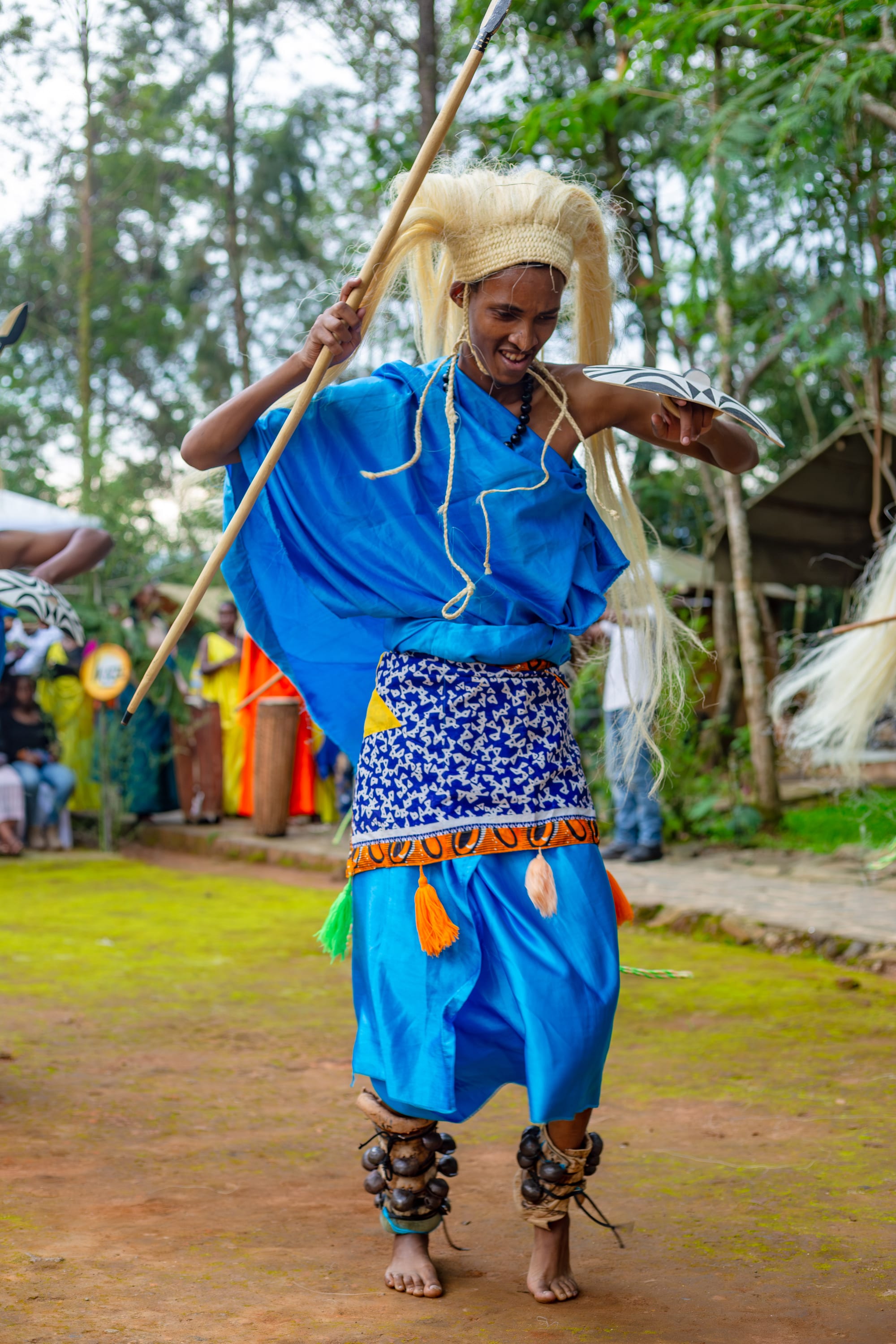
The drums start, the horns answer, and a line of dancers surges forward. They carry spears and narrow painted shields, long pale headdresses of fibre swinging as they leap, bells rattling at their ankles, and they move in ranks as if facing an invisible enemy on a battlefield. This is intore, the dance of the old royal warriors, and it is performed today at weddings, at the reception of honoured guests and at the harvest festival. Around the dancers, guests greet one another with a right hand extended and the left laid on the forearm, and a pot of sorghum beer may be set down with reed straws for all to share. The scene gathers up much of what Rwanda values: courtesy and rank, pride in a shared heritage, and a strong sense of occasion.
Faith, identity and values
Rwanda is overwhelmingly Christian. In the 2022 census, around 93 per cent of the population identified as Christian: about 40 per cent Catholic, 21 per cent members of the Pentecostal church ADEPR, 15 per cent other Protestants and 12 per cent Seventh-day Adventists. Muslims made up about 2 per cent, and only a tiny number described themselves as followers of traditional religion.
Older beliefs have not entirely disappeared. Rwandans have traditionally held that the spirit continues after death, and showing respect to dead family members is considered extremely important; failing to honour the ancestors through the proper rituals was believed to lead them to neglect their descendants. Accounts of Rwandan religion also describe spirit cults such as those of Lyangombe and Nyabingi, which carried out initiation ceremonies for families seeking spiritual help.
Identity is shaped by a shared language, Kinyarwanda, and by the deliberate building of a single national identity since 1994. The reference to ethnic origin was removed from national identity cards after the genocide, and the state's message, summed up in the phrase Ndi Umunyarwanda, "I am Rwandan", is that citizens are Rwandan first and last. Questions about whether someone is Hutu, Tutsi or Twa are therefore highly sensitive, bound up with the memory of the 1994 genocide against the Tutsi and with laws against genocide ideology and divisionism, and they are best not asked at all.
Beneath this lies a culture that places great emphasis on etiquette, respect and social rank. Courtesy and deference to elders and to people of higher status are expected, and public order is taken seriously. Plastic bags, for instance, are banned for environmental reasons, and any brought into the country are confiscated on arrival; vapes and e-cigarettes are banned too, even for personal use, and it is illegal to photograph some government buildings.
Greetings and meeting people
A handshake is appropriate in most situations, and it tends to be warm and unhurried, often lingering through the whole exchange of greetings. To show respect, particularly to an elder or a person of higher status, the right hand is extended while the left hand grasps the right forearm. The right hand is the one to use. Close friends and family may hug and exchange kisses on alternating cheeks, and an older form of embrace involves holding one another by the shoulders and brushing heads together, first on one side and then the other.
Eye contact is often indirect, and continuous eye contact during a conversation is not expected; looking down or away is not a sign of evasiveness. Business and social appointments may start later than planned, and Rwanda Chamber's etiquette advice notes that punctuality is not always treated strictly. Appearance matters: visitors are advised to dress well in the capital, and shorts are generally worn by schoolboys rather than adults, so trousers or skirts are a safer choice in towns.
Conversation about politics and about the genocide calls for care. These subjects are approached with seriousness, and it is wise for visitors to avoid pressing them and to let Rwandans lead any such conversation.
Hospitality and being a guest
Sharing drink is a traditional expression of hospitality. At important occasions, a pot of sorghum beer is placed in the centre of the room with many reed straws, and guests come forward in turn to drink from it, while calabashes of banana beer are passed through the crowd. A host traditionally sips a drink and tastes the food first before offering it to guests, a long-standing gesture of reassurance and good faith.
Traditional households also reflect a clear order of precedence. Chairs were customarily reserved for men, with other family members seated on mats, and men were served first, with women and children eating afterwards. Many urban homes are less formal today, but visitors will rarely go wrong by following their hosts' lead on where to sit and when to begin.
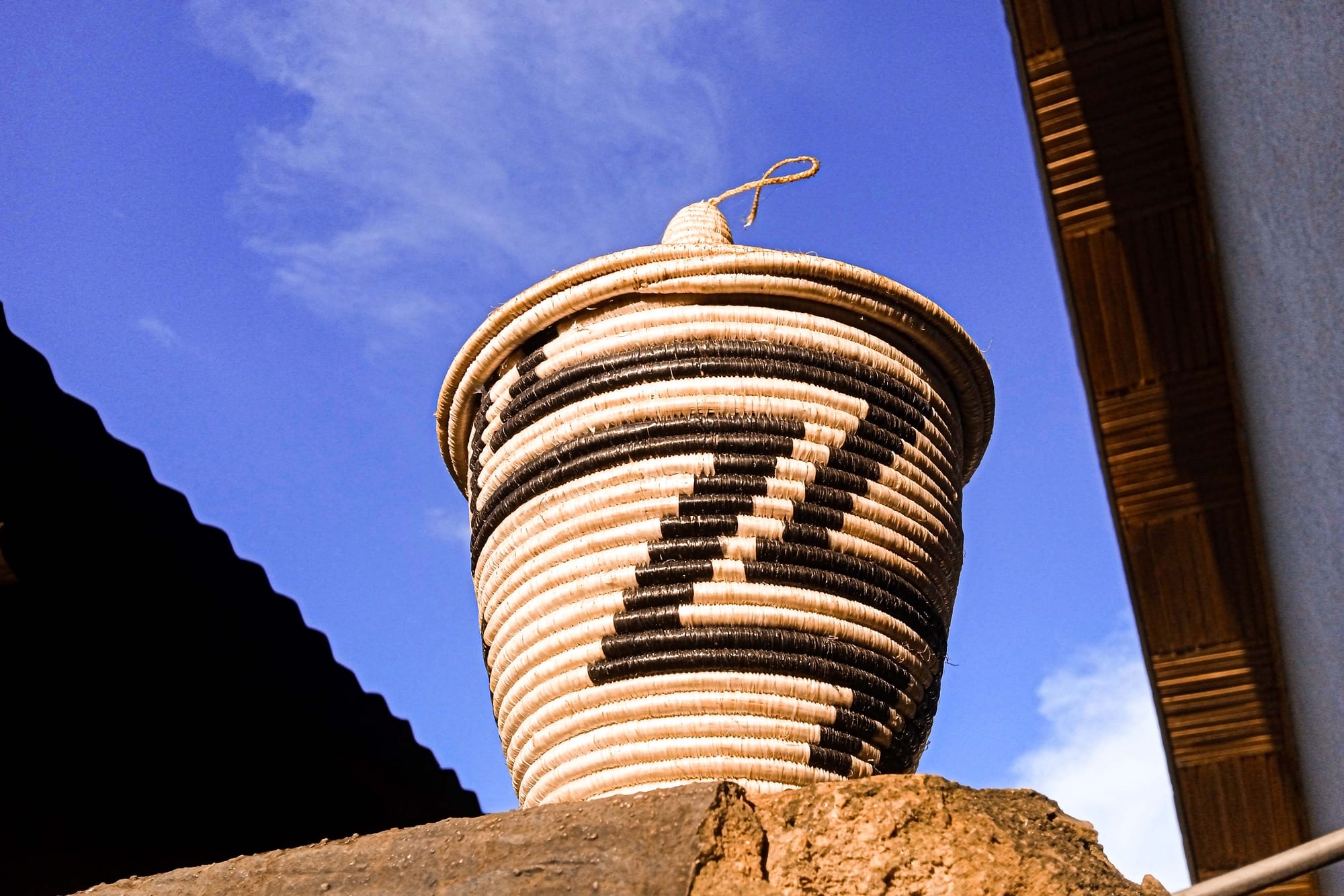
Baskets are among the country's most important decorative arts, and the lidded coiled basket known as agaseke is one of Rwanda's best-known crafts. On the last Saturday of each month, most normal services close from early morning until late morning for umuganda, the national day of community work, and visitors should plan around it.
Festivals and life's big moments
The most important date in the national calendar is 7 April, the start of Kwibuka, meaning "remembrance". It marks the beginning of the 1994 genocide against the Tutsi, in which hundreds of thousands of people (the Rwandan government puts the toll at more than a million), overwhelmingly Tutsi but also moderate Hutu and Twa, were murdered in about 100 days. The week that follows is an official week of mourning. Flags fly at half-mast, and in recent years the guidelines have banned music unrelated to commemoration in bars, restaurants and other public places, as well as weddings and team sports competitions. Remembrance continues for the full hundred days, into July. Visitors in the country at this time are expected to be quiet and respectful, and the memorial, the final resting place of some 250,000 victims, asks all visitors to dress and behave with respect. Visitors may lay flowers at the mass graves, and the memorial gardens are set aside for quiet reflection.
Umuganura, the first-fruits festival, is the celebration of plenty. In the old kingdom it was the most important national ritual, presided over by the king and the head of the royal ritualists, when the first sorghum and millet of the harvest were offered and shared. The whole kingdom took part, from the royal court down to individual families, and the celebrations ended with shared meals of the new harvest. Colonial authorities suppressed it in 1925, and it was restored in 2011 as a public holiday on the first Friday of August. Today the day is preceded by a week of arts performances and exhibitions, and it has broadened into a celebration of national achievements of every kind.
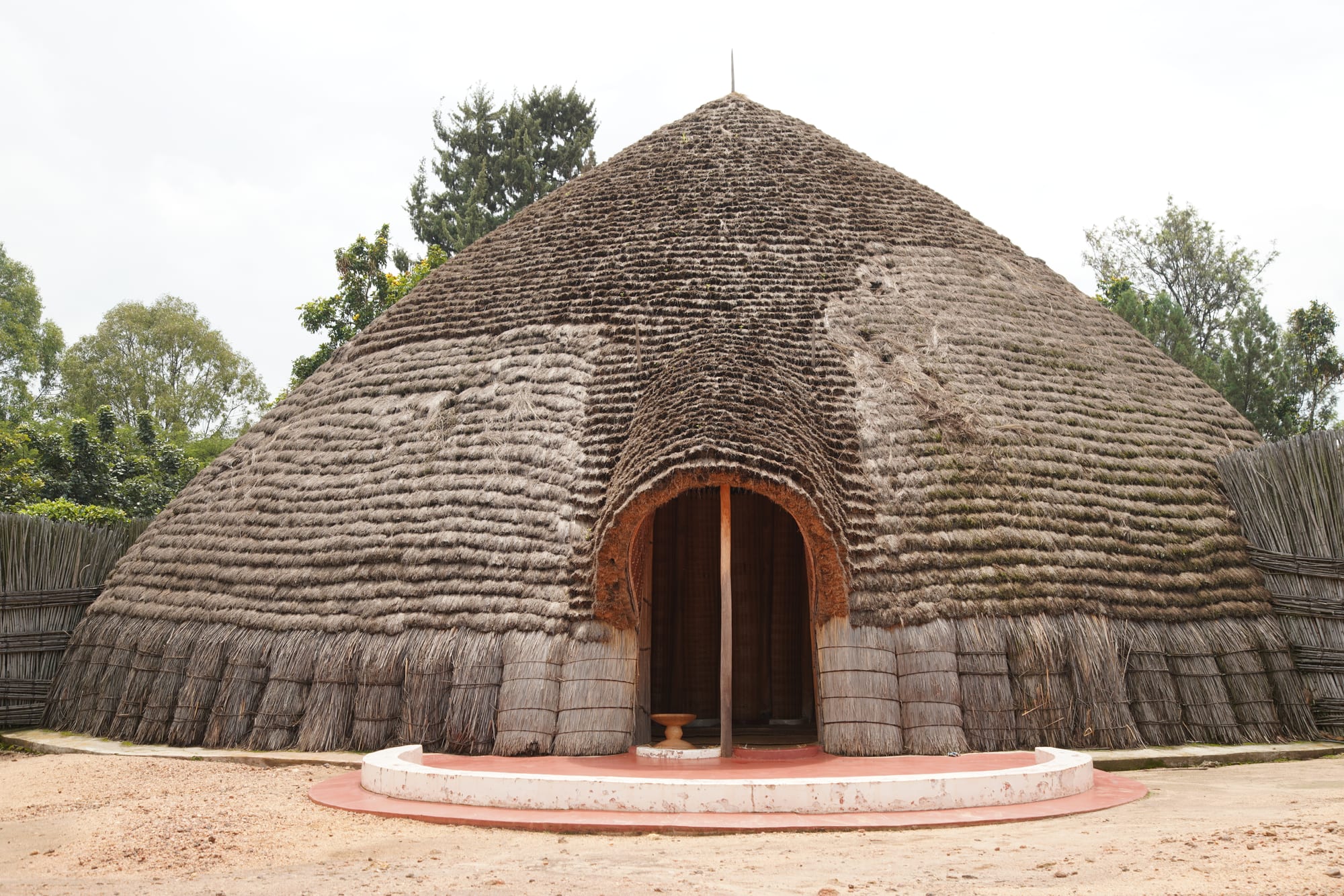
Marriage is marked by a series of family ceremonies. The first is gusaba, from the Kinyarwanda verb "to ask", in which the family of the groom-to-be officially requests the bride from her family. Once the request succeeds, the next stage is gukwa, the handing over of the bridewealth, traditionally in cattle, which have long carried deep symbolic value in Rwandan life. Intore dancers and traditional music often accompany these occasions.
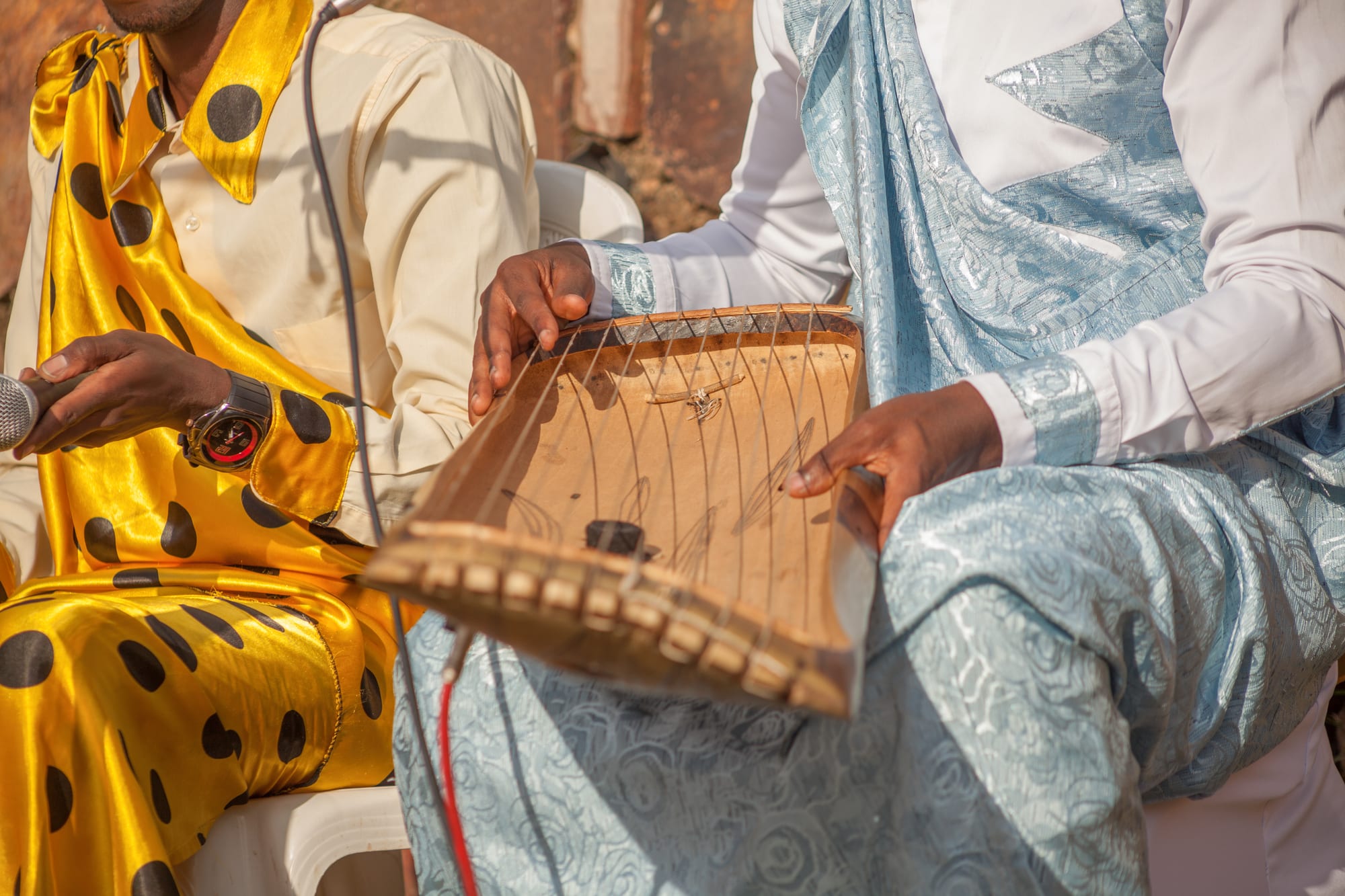
Birth is welcomed with a naming ceremony. Traditionally, children are given their names in a family ceremony held about a week after they are born. Death calls for careful observance of respect towards the dead, rooted in the long-held belief that the spirits of family members live on and continue to watch over the living.
Arts, crafts and music
Music and dance have long been the most important forms of artistic expression in Rwanda, and intore is their emblem. Countries and Their Cultures describes it as a martial dance performed to drumming, historically taught to young men at the royal court. In 2024 it was inscribed on UNESCO's Representative List of the Intangible Cultural Heritage of Humanity. UNESCO describes dancers arranged in lines like the ranks of warriors, leaping and wielding spears and shields to the rhythm of drums and horns, supported by songs and poems of triumph and strength. Intore dancers were traditionally chosen by leaders for training in institutions known as itorero; today the dance is passed on through the national ballet, troupes, schools, universities and families.
Crafts remain equally distinctive. Baskets and pottery are the main decorative arts, woven and shaped in patterns that have become emblems of Rwandan craft. Imigongo, the raised geometric panels made from cow dung and ash, is believed to date back to the eighteenth century and is now produced by cooperatives whose work is sold across the country. One of the best known was founded after the genocide to revive the craft, and National Geographic reported that almost all of the women it employed were genocide widows, for whom the work offered both an income and a way to rebuild. Alongside dance, songs and poems of praise and triumph remain part of the intore tradition, performed wherever the dancers appear.
Dos and don'ts for visitors
- Do check the latest government travel advice before any trip; governments advise against travel to the immediate border areas with the Democratic Republic of the Congo around Rubavu and Rusizi because of the conflict in eastern DRC.
- Do greet people with a warm, unhurried handshake, and support the right forearm with the left hand when greeting elders.
- Don't ask anyone whether they are Hutu, Tutsi or Twa; questions about ethnicity are deeply sensitive.
- Do be quiet and respectful during Kwibuka from 7 April, especially in the week of mourning, and dress and behave soberly at genocide memorials.
- Do use the right hand for handshakes, and follow the host's lead on where to sit and when to begin.
- Do dress neatly and modestly, favouring trousers or skirts over shorts in towns.
- Don't bring plastic bags into the country; they are banned and will be confiscated.
- Do plan around umuganda on the last Saturday morning of the month, when most services close.
What to take away
Rwanda's customs are built on respect, from the hand laid on the forearm to the silence of April, and visitors who greet people with patience and honour the country's memory will find a gracious and deeply hospitable culture in return.