Culture & Customs · Russia
Russia: Warmth Behind the Threshold
A reserved face in public and generous hospitality at home, an Orthodox calendar that still runs thirteen days behind, and customs shared across a country of Christians, Muslims, Buddhists and many who follow no faith at all
By Worldlore Editorial · 30 September 2026
The door of a city flat opens, and the host does not offer a hand. Instead he steps back to let the guest in first, because greeting someone across a threshold is considered impolite and, by an old superstition, likely to bring a quarrel. Once inside, the guest takes off their shoes and is handed a pair of slippers; a bouquet with an odd number of stems changes hands; the kettle goes on and the table begins to fill. On the street outside, the same people might have passed without a smile. The contrast captures a great deal about Russian customs: a deliberately reserved public face, and behind the front door a hospitality that can be overwhelming in its generosity.
Faith, identity and values
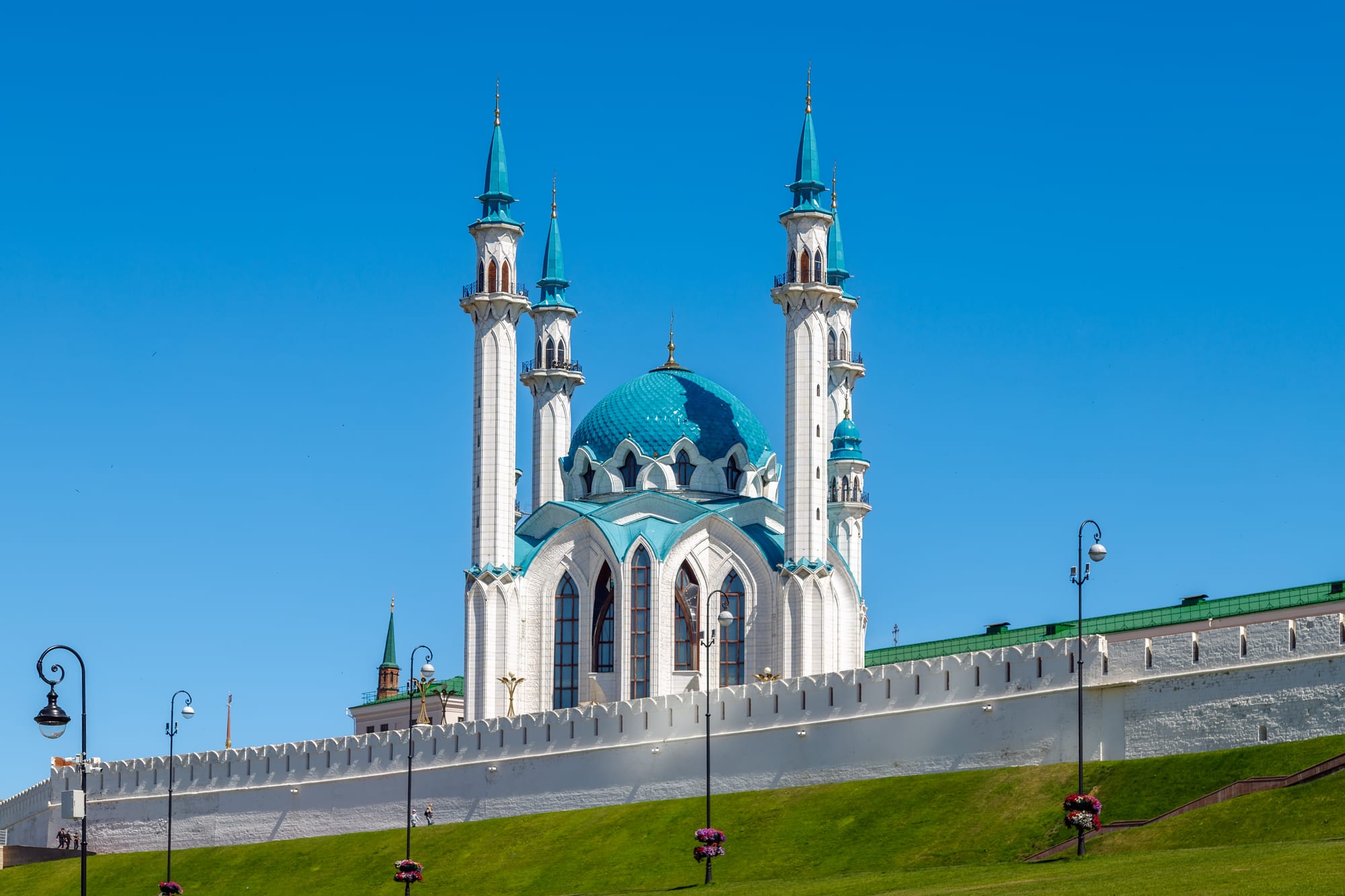
Russia is formally a secular state. Its 1997 law on religion states that no faith may be established as a state religion, while acknowledging "the special contribution of Orthodoxy" to the country's history and culture and naming Christianity, Islam, Buddhism and Judaism as an inseparable part of the heritage of its peoples. Surveys cited by Cultural Atlas put Russian Orthodox Christians at around two in five of the population and Muslims, concentrated among Turkic peoples and in the North Caucasus, at about one in fifteen, with Buddhism practised mainly among some of the country's Mongolic-speaking peoples. A large share of Russians describe themselves as spiritual but not religious, or as atheists. Religious identification rose sharply after the end of Soviet rule, but regular attendance remains low: only a small minority of Orthodox believers go to church every week, even though many more wear a cross or keep icons at home.
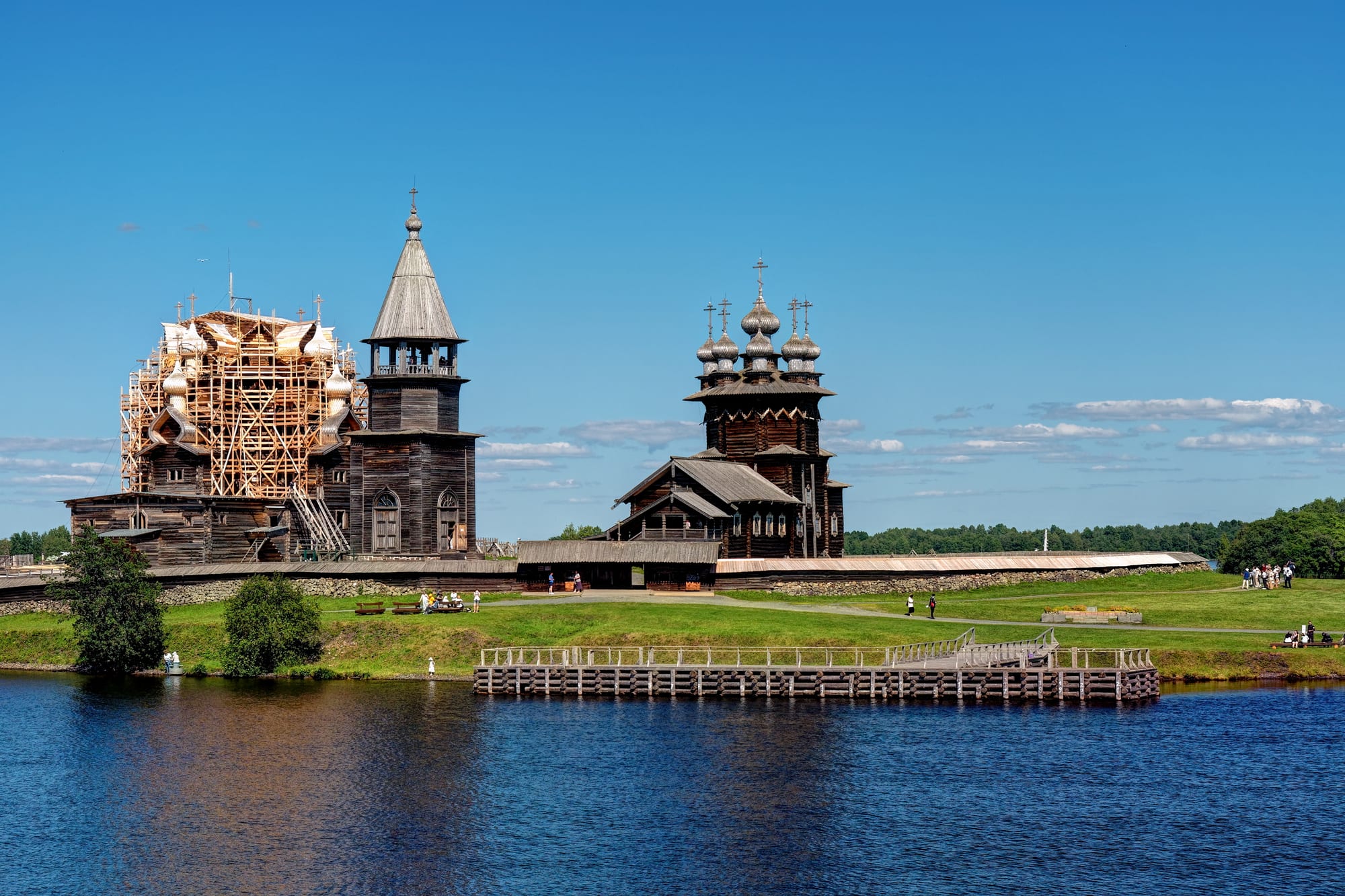
Orthodox worship has its own etiquette. Men remove their hats on entering a church, and women cover their heads and avoid revealing clothing, with long skirts expected at convents. Believers cross themselves, bowing between each sign of the cross, as they enter. Services are usually attended standing, often for an hour and a half or more. Talking is kept to a whisper, phones are silenced, and the raised area in front of the icon screen is off limits to the congregation. Photography is not formally banned in most churches, but flashes and shutter sounds during a service are considered disrespectful. Russia is also home to the Old Believers, communities that broke with the Church over its seventeenth-century reforms and have preserved older forms of worship, dress and singing.
With more than 200 ethnic groups, Russia has no single cultural pattern, but some shared values recur. The idea of dusha, the "soul", combining heart, mind and culture, is often invoked as something that unites people across their differences. Close networks of family and friends matter enormously, and trusted personal relationships are frequently valued above formal rules. Endurance in the face of hardship is prized, and humour tends to be dry, sarcastic and self-deprecating. In public, people keep a serious expression and rarely smile at strangers, which is meant as respect rather than coldness; among friends they become far more animated and candid. Social attitudes are generally conservative. Homosexuality is not widely accepted. Since 2022 the law has banned the promotion of "non-traditional" sexual relationships to people of any age, and in November 2023 the Supreme Court designated the "international LGBT public movement" as extremist, a ruling criticised by the UN human rights chief and by Human Rights Watch.
Greetings and meeting people
A firm handshake with direct eye contact is the usual greeting between strangers, and gloves are removed before shaking hands. Greetings are never exchanged across a doorway: it is polite to step fully inside, or wait for the other person to step out. Close friends greet each other more warmly; women often kiss three times on alternating cheeks, while male friends may hug or clap each other on the back.
The formal greetings follow the time of day: "dobroye utro" in the morning, "dobry den" through the day and "dobry vecher" in the evening, with a simple "privet" among friends. Older people and those of higher status are addressed by their first name and patronymic, a middle name formed from the father's first name, so that a woman named Anna whose father is Ivan becomes Anna Ivanovna. Moving to a first name alone, or to an affectionate short form, is a sign of growing closeness and is best left to the other person to suggest.
Communication is direct and to the point, and it can sound blunt to outsiders, but it is rarely meant unkindly. People tend to stand and sit fairly close to one another. Several hand gestures are considered rude or obscene, among them the "OK" circle made with thumb and forefinger and a fist with the thumb pushed between the fingers.
Hospitality and being a guest
Visitors are generally expected to take off their coat and shoes on entering a home, and slippers are often provided. It is usual to bring a gift: flowers and wine or chocolates for the hostess, perhaps a bottle of spirits for the host. Flowers must be given in an odd number, since even numbers are for funerals. Carnations are associated with mourning and official memorials, and yellow flowers are best avoided as a romantic gift, as they can suggest disloyalty. A gift may be protested at first, and it is normal to offer it a second time.
At the table, guests are pressed to eat and drink, and a host will keep refilling plates. Leaving a little food on the plate signals that the guest has had enough; an empty plate may simply be refilled. Toasts punctuate the meal and deserve full attention while they are being made. Men traditionally pour drinks for the women seated next to them, a bottle is never poured backhanded, and any bottle that has been opened is usually finished before the meal ends. Despite the country's reputation, visible drunkenness is regarded as poor manners, and public intoxication is against the law. Offering to help clear the table is appreciated, and an invitation is expected to be returned in time.
Festivals and life's big moments
New Year is the biggest family holiday of the year, followed by a long public holiday into early January. Christmas was suppressed under Soviet rule, and many of its trappings migrated to the New Year: families decorate a New Year tree, and presents are brought by Ded Moroz, Grandfather Frost, accompanied by his granddaughter Snegurochka, the Snow Maiden. Orthodox Christmas follows on 7 January.
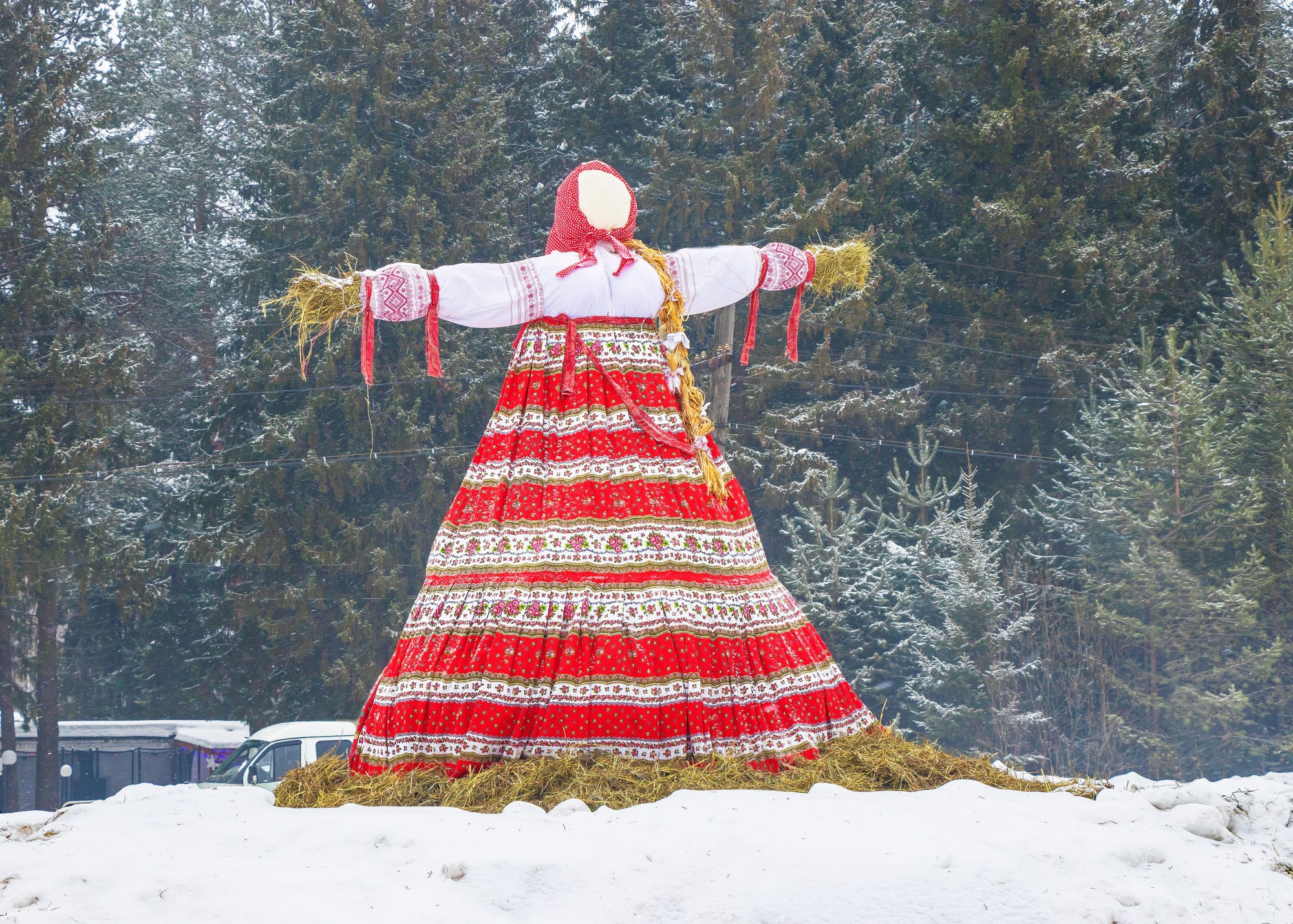
Maslenitsa, "butter week", falls in the week before Lent and began as a pre-Christian festival welcoming the sun back after winter. Its symbol is the blin, a round pancake eaten in quantity while dairy is still allowed. A straw effigy of Lady Maslenitsa, representing winter, is traditionally burned on the final Sunday, which is also Forgiveness Sunday, when people ask family and friends to forgive them for past wrongs before the fast begins. Easter, the most important feast of the Orthodox year, comes at the end of Lent. Muslim communities mark Eid al-Fitr and Eid al-Adha, and International Women's Day on 8 March, when women receive flowers and gifts, remains one of the most widely observed dates in the calendar.
Victory Day on 9 May, marking the Soviet victory in the Second World War, is observed with great solemnity. In the Immortal Regiment processions that spread across the country from the 2010s, families carry portraits of relatives who fought or died in the war. Since Russia's full-scale invasion of Ukraine in February 2022, which the UN General Assembly condemned in March that year by 141 votes to 5, the commemorations have taken place against the background of that war, and the public Immortal Regiment march was called off in 2023 and again in 2024, officially over security concerns.
Weddings begin with the civil registration at the state registry office, known as ZAGS, which is the legal ceremony; some couples add an Orthodox church wedding. Popular customs include a playful "ransom" in which the groom must complete tasks or pay the bridesmaids small sums to reach his bride, and the welcome with a round loaf of bread and salt offered by the parents at the reception. Throughout the feast, guests shout "gorko!", "bitter!", and the couple must kiss to make the wine sweet again.
Funeral customs remain some of the most carefully observed. Mirrors in the home have traditionally been covered after a death, and mourners bring an even number of flowers. A photograph of the deceased is often set out with a candle and a small glass of vodka covered by a slice of black bread, which may be left in place for forty days. The funeral is followed by pominki, a memorial meal that customarily includes bliny and kutia, a sweetened grain dish, and further commemorations follow on the ninth day, on the fortieth day, when the soul is traditionally believed to depart, and on the anniversary. Families also visit graves on the Church's Parents' Days, including Radonitsa in the weeks after Easter.
Arts, crafts and music
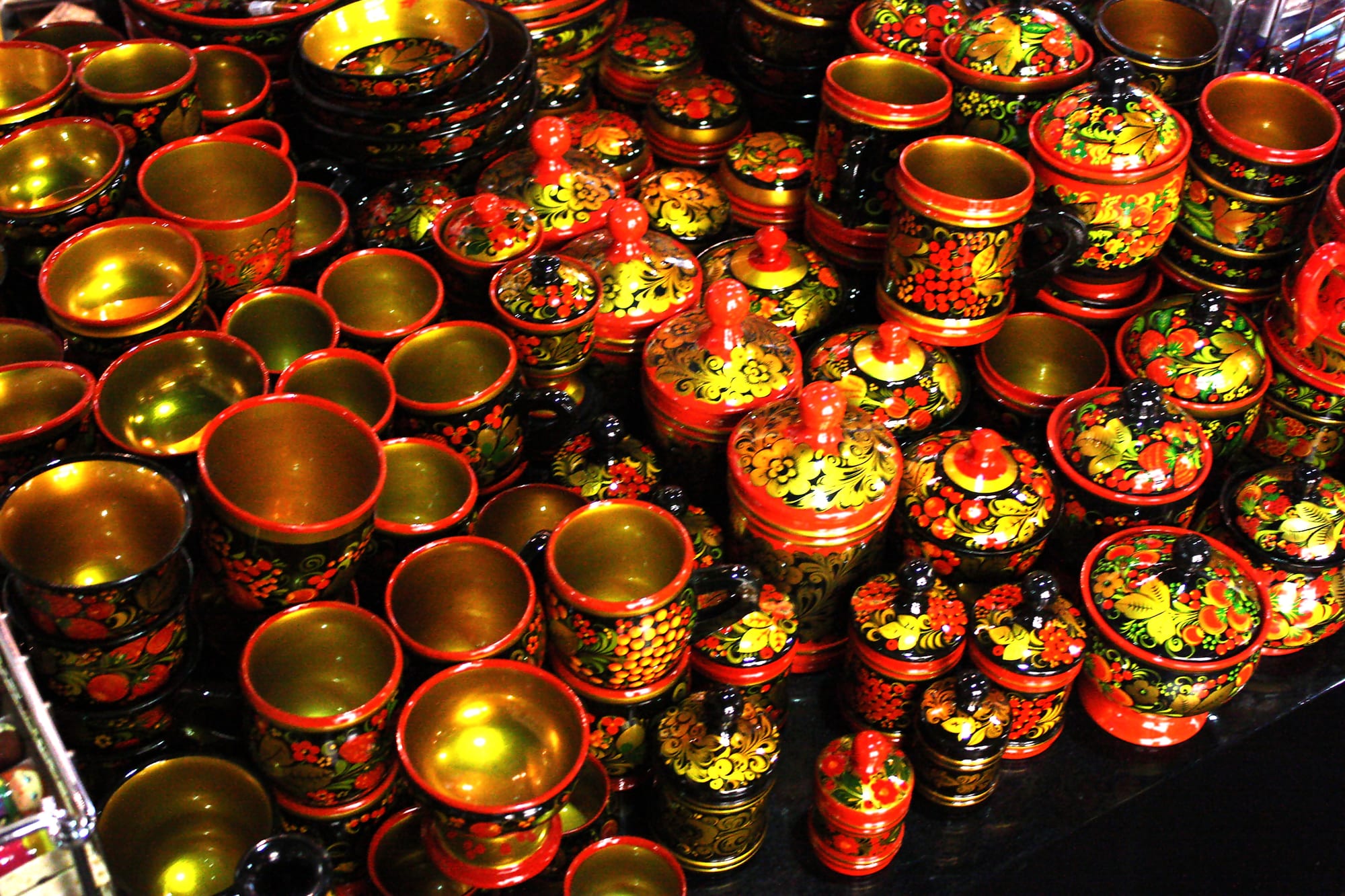
Russia's literature, music, ballet and icon painting are known worldwide, but a vivid folk tradition runs alongside them. Khokhloma ware, dating back to the seventeenth century, is wooden tableware painted with red and black berries and leaves on a lustrous golden ground. Gzhel ceramics are known for their cobalt-blue designs on white, from a pottery tradition near Moscow that goes back centuries, while Palekh miniatures, which appeared in their modern form in 1923, are finely detailed tempera paintings on lacquered papier-mâché boxes. The matryoshka, the nesting doll so often taken as a symbol of the country, is barely more than a century old.
Oral traditions from across the country's many peoples survive too. UNESCO lists Olonkho, the heroic epic of the Yakut people, one of the oldest epic arts of the Turkic world, whose narrators alternate sung verse with spoken passages and need the skills of actor, singer and improvising poet. It also lists the culture of the Semeiskie, Old Believer communities in Siberia whose polyphonic choirs sing songs rooted in medieval Russian church music at family celebrations and festivals.
Dos and don'ts for visitors
- Do check the latest government travel advice before any trip; many Western governments, including the UK and the US, advise against all travel to Russia.
- Do take off shoes when entering a home, and accept the slippers offered.
- Don't shake hands or kiss across a doorway; step inside first.
- Do give flowers in odd numbers, and avoid even numbers, which are reserved for funerals.
- Do remove hats in Orthodox churches (men), and cover the head and dress modestly (women).
- Don't mistake a lack of smiles in public for unfriendliness; reserve with strangers is simply the norm.
- Don't photograph military sites, government buildings or infrastructure; it can lead to espionage charges.
- Don't display rainbow or other LGBT symbols; since the 2023 "extremist" ruling people have been arrested for doing so.
- Don't get visibly drunk; it is considered poor manners, and public intoxication is illegal.
What to take away
Russian customs draw a firm line between the public street and the private home, and the rituals that mark that line — the threshold, the slippers, the counted flowers, the toast — are where the country's reserve gives way to its hospitality.