History · Russia
Russia: The Empire That Keeps Returning
The largest country on Earth — a Moscow principality that grew into a Eurasian empire, collapsed into revolution, rebuilt itself as the Soviet Union, dissolved again in 1991, and reconstituted a centralised state under Vladimir Putin
By Worldlore Editorial · 10 September 2026
A state built on expansion
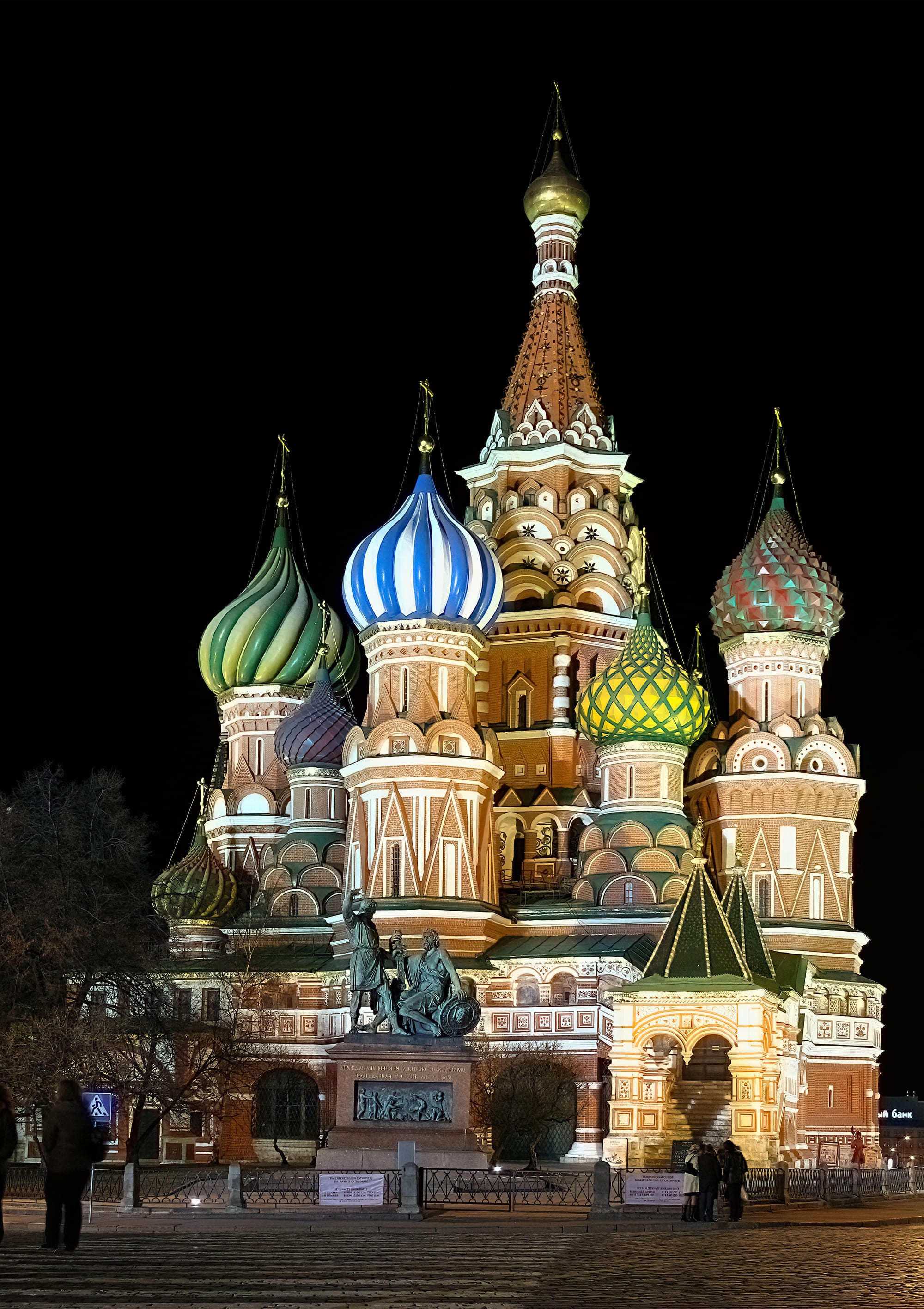
Russia is the largest country in the world by area, spanning eleven time zones from the Baltic to the Pacific, with about 145 million people. Its history is in large part the history of that expansion — from a small forested principality around Moscow to a continental empire — and of a recurring pattern in which a strong central state is built, collapses under strain, and is then rebuilt. This account covers the main stages; on contested matters, particularly in the 20th century and after, it attributes competing interpretations rather than adjudicating them.
A short history
- 882–1240
Kievan Rus
A federation of principalities; Orthodox Christianity adopted in 988.
- 1237–1480
The Mongol period
The Rus principalities pay tribute to the Golden Horde.
- 1462–1584
Ivan III and Ivan IV
Moscow throws off Mongol rule and expands; the tsardom.
- 1613
The Romanovs
A new dynasty after the "Time of Troubles".
- 1682–1725
Peter the Great
Westernising reforms; the founding of St Petersburg; empire proclaimed.
- 1861
Emancipation
Serfdom is abolished.
- 1917
Revolutions
The monarchy falls in February; the Bolsheviks take power in October.
- 1922–1991
The Soviet Union
A one-party communist state; industrialisation, terror, and superpower status.
- 1941–1945
The Great Patriotic War
Around 27 million Soviet dead; victory over Nazi Germany.
- 1991
Collapse
The USSR dissolves into 15 states.
- 2000–
The Putin era
Recentralisation of power; wars in Chechnya, Georgia and Ukraine.
Rus, Mongols, and the rise of Moscow
The first East Slavic state, Kievan Rus, took shape along the rivers between the Baltic and Black Seas from the 9th century, and in 988 its ruler Vladimir adopted Orthodox Christianity from Byzantium — a choice that oriented Russian religion, art and script eastward rather than toward Rome. Rus fragmented into rival principalities and, from 1237, was overrun by the Mongols, whose Golden Horde extracted tribute for over two centuries while leaving local princes in place. The princes of Moscow, initially minor, made themselves the Horde's tax collectors and the seat of the Orthodox metropolitan, and used both roles to absorb their rivals. Ivan III stopped paying tribute in 1480; his grandson Ivan IV ("the Terrible") took the title tsar in 1547, conquered the Muslim khanates of Kazan and Astrakhan, and opened Siberia to Russian advance.
The Romanov empire
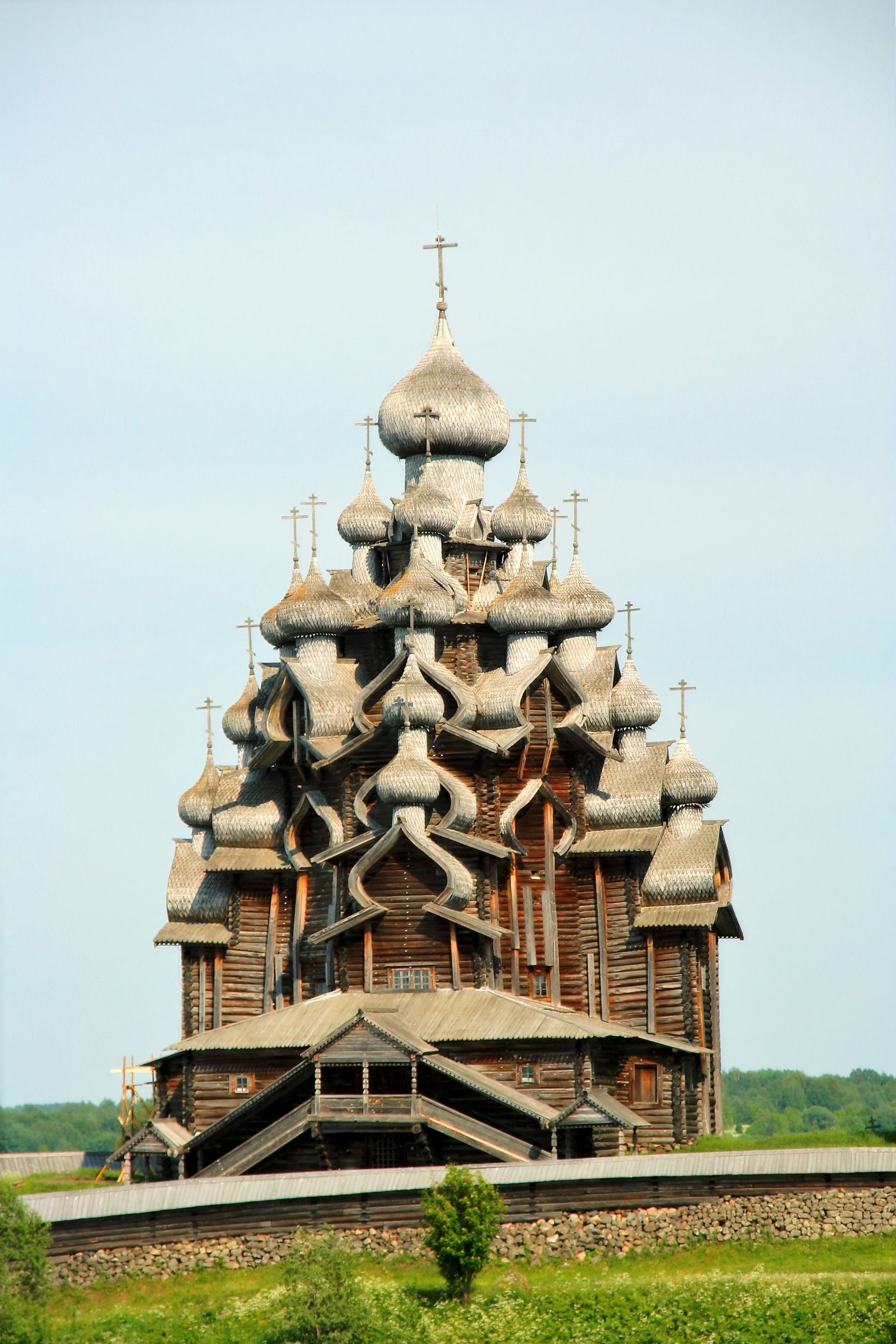
After the chaotic "Time of Troubles", an assembly elected Michael Romanov tsar in 1613, founding a dynasty that ruled until 1917. Peter the Great (r. 1682–1725) forced through a programme of Westernisation — a new army and navy, a reformed bureaucracy, Western dress and technology, and a new capital, St Petersburg, built on Baltic marshland — and had Russia proclaimed an empire in 1721. Catherine the Great extended it south and west, partitioning Poland and annexing Crimea. Nineteenth-century Russia was a great power that defeated Napoleon in 1812 but lagged economically, held back by serfdom until its abolition in 1861 and by an autocracy that resisted constitutional reform. Defeat by Japan in 1905 forced the creation of a weak parliament, the Duma; discontent kept building.
Revolution and civil war
Military collapse and food shortages in the First World War brought down the monarchy in February 1917; Tsar Nicholas II abdicated, and a Provisional Government shared power uneasily with workers' and soldiers' councils (soviets). In October 1917 the Bolsheviks, led by Vladimir Lenin, seized power in Petrograd. They made a separate peace with Germany, dissolved the elected Constituent Assembly, and won a brutal civil war (1918–21) against the "White" armies, foreign interventions and other socialists. The victory was accompanied by the Red Terror, forced grain requisitioning, and a famine in 1921–22. The Union of Soviet Socialist Republics was established in 1922.
The Stalin era
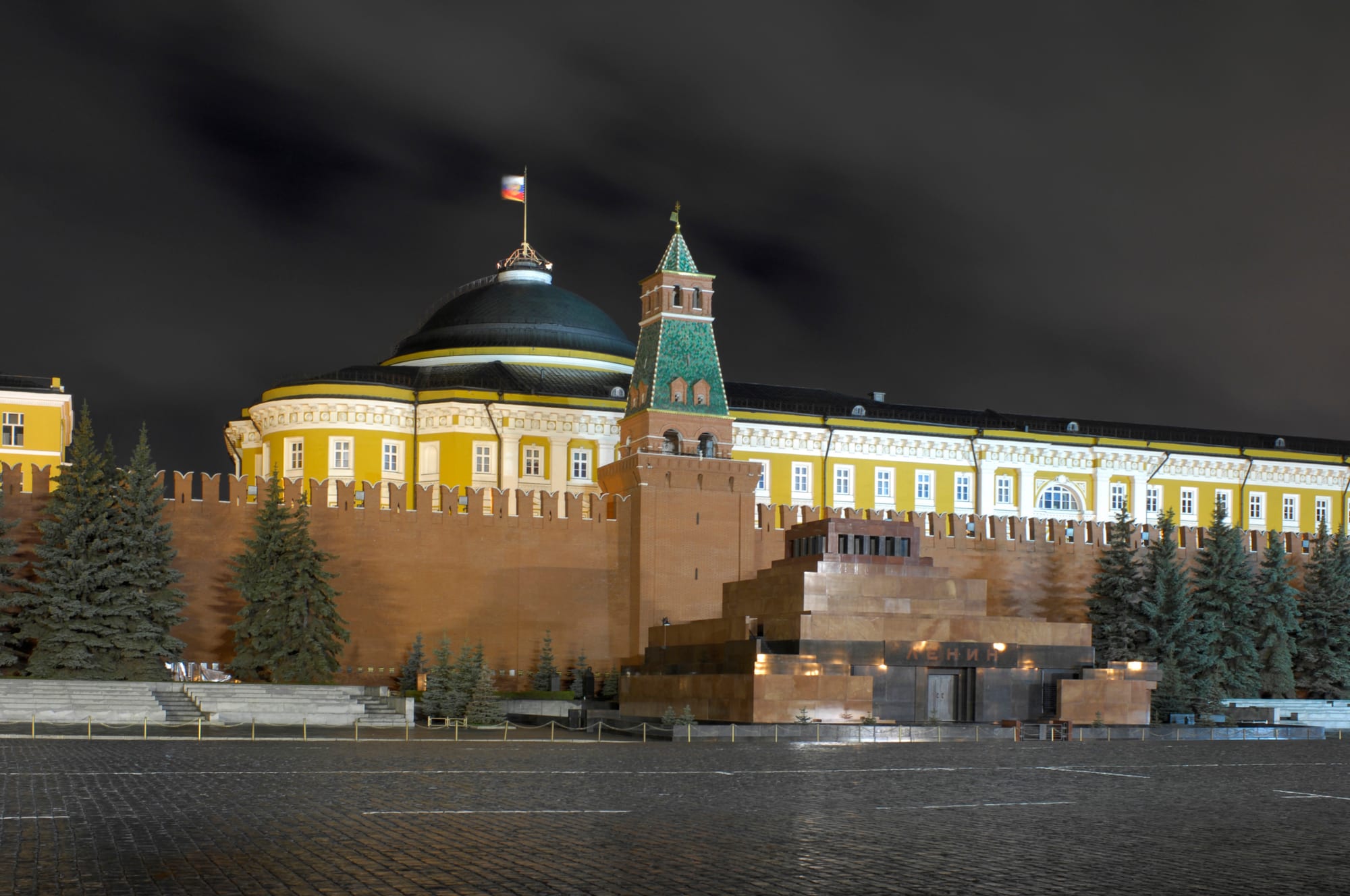
After Lenin's death in 1924, Joseph Stalin outmanoeuvred his rivals and by the late 1920s held effective control. His government carried out forced collectivisation of agriculture and rapid state-driven industrialisation. Collectivisation and grain seizures produced famine in 1932–33 that killed millions, especially in Ukraine (where it is termed the Holodomor and regarded by Ukraine and many other states as a genocide) and Kazakhstan. The "Great Terror" of 1936–38 sent millions to the Gulag labour camps and executed hundreds of thousands. Historians continue to debate the total death toll of the Stalin period and how far it was driven by ideology, circumstance or Stalin personally; estimates of excess deaths range widely into the millions.
The Great Patriotic War and the Cold War
Nazi Germany invaded the USSR in June 1941, breaking the 1939 Molotov–Ribbentrop pact under which the two powers had divided Poland and the Baltic states. The Soviet Union bore the largest share of the fighting in Europe and suffered around 27 million dead, military and civilian, before its forces reached Berlin in 1945. Victory made the USSR a superpower, controlling Eastern Europe and, from 1949, armed with nuclear weapons. The ensuing Cold War with the United States shaped world politics for four decades: an arms race, proxy wars, the space race, and crises over Berlin and Cuba. Domestically, the post-Stalin decades brought a partial "thaw", rising living standards, and then, from the 1970s, economic stagnation.
Collapse and the 1990s
Mikhail Gorbachev, general secretary from 1985, launched reforms — perestroika (restructuring) and glasnost (openness) — to revive the system, but they accelerated its unravelling. Eastern Europe broke away in 1989; Soviet republics declared sovereignty; a hardline coup attempt in August 1991 failed and discredited the centre. The USSR was formally dissolved in December 1991, leaving 15 independent states. Under President Boris Yeltsin, Russia undertook rapid market reforms whose results are sharply disputed: rapid privatisation, the rise of the "oligarchs", a collapse in output and life expectancy, a 1993 armed confrontation between president and parliament, the first Chechen war, and a 1998 financial default.
The Putin era
Vladimir Putin, named acting president when Yeltsin resigned on the last day of 1999, has led Russia as president or prime minister ever since. His governments re-established central control over the regions, media and major companies, using high oil and gas prices to restore state finances and public-sector wages. Western governments and Russian opposition figures describe the system as an authoritarian one that has curtailed independent media, jailed or exiled opponents such as Alexei Navalny, and altered the constitution in 2020 to allow Putin to remain in office into the 2030s; the Russian government characterises it as a "sovereign democracy" defending national stability against foreign interference. Abroad, Russia fought a second Chechen war, went to war with Georgia in 2008, annexed Crimea and backed armed separatists in eastern Ukraine in 2014, and launched a full-scale invasion of Ukraine in February 2022 — the largest war in Europe since 1945, which Russia calls a "special military operation" and most other states condemn as a war of aggression.
What Russia carries
Russian history shows a recurring shape: a centralised state expands across Eurasia, is strained past breaking by war or reform, collapses, and is then rebuilt on a similar centralised model — Muscovy, the Romanov empire, the Soviet Union, and the post-1991 state. Debates about Russia's path — whether it is part of Europe or a distinct civilisation, and how to weigh its imperial reach against the cost to those it ruled and to its own population — are old, and they remain at the centre of how the country and its neighbours understand the present.