Culture & Customs · Romania
Romania: Odd Numbers for the Living
Candles lit side by side for the living and the dead, a bouquet counted before it is given, and a country whose customs keep one foot firmly in the Orthodox calendar and the other in far older village rituals
By Worldlore Editorial · 30 September 2026
Inside an Orthodox church, a woman stops at two metal stands just past the door, each holding a tray of sand. One is marked vii, "the living"; the other morți, "the dead". She lights a thin candle at the first for a daughter working abroad and another at the second for her parents, crosses herself three times and moves on towards the icons. It takes less than a minute, and it captures something that runs through Romanian customs: an unbroken sense of obligation to family, both those still living and those who have gone, carried out through small rituals that almost everyone knows how to perform.
Faith, identity and values
Romania is one of the most religious countries in Europe. At the 2021 census, 73.6 percent of the population identified as Romanian Orthodox, with smaller Protestant and Roman Catholic communities, many of them among the country's Hungarian and German minorities, and fewer than one in a hundred reporting no religion at all. Around half of Romanians say they attend a service at least once a month, and devotion is strongest in the countryside. The state has no official religion, but the clergy of registered faiths are paid partly by the state, and the Orthodox Church remains a visible presence in public life.
Orthodox practice is woven through the year. Many believers keep the fasts before Easter and Christmas, giving up meat and dairy and, for the strictest, alcohol and tobacco too. Icons are kissed, candles lit and the sign of the cross made on entering and leaving a church, and often simply when passing one in the street. At churches and monasteries, shoulders and knees are covered; shorts and short skirts are not welcome, and women may be offered a headscarf at the door, though foreign visitors are rarely pressed to wear one.
Alongside the Church run customs much older than it, and many Romanians see no conflict between the two. Folk beliefs about protection, luck and the spirit world survive, particularly in rural areas. Identity rests heavily on the Romanian language, a Romance tongue surrounded by Slavic and Hungarian neighbours, and on a pride in having kept that identity through centuries of foreign rule. Romanians are often described as warm, animated and opinionated, with a strong sense of humour, and they tend to speak candidly, sometimes with a dry cynicism about politics and public institutions. Family networks are central and are relied on for support in almost every part of life. Older people, shaped by decades of surveillance under communism, can be guarded about personal matters until trust has been established.
Greetings and meeting people
A firm handshake with direct eye contact is the usual greeting in formal settings, and gloves are removed first. Close friends and relatives hug and kiss, usually once on each cheek. Some older men still greet women by kissing their hand, a gesture now regarded as old-fashioned; visitors are not expected to imitate it. With strangers, the greeting follows the time of day: "bună dimineața" in the morning, "bună ziua" through the day, and "bună seara" in the evening. Among friends, a simple "bună" or "salut" is enough.
Titles matter at first. People are addressed as domnule (Mr) or doamnă (Mrs) followed by their surname until they suggest moving to first names. Relationships usually start formally and reserved, then become considerably warmer and more relaxed as people get to know one another.
Name days are often celebrated as enthusiastically as birthdays. Many Romanian first names are linked to a saint, and on that saint's feast day everyone who bears the name is congratulated with "la mulți ani!", "many happy returns", and expected to treat friends or colleagues. The feast of Saint Andrew, regarded as the apostle who brought Christianity to the region, on 30 November, is a public holiday.
Hospitality and being a guest
Pressing food and drink on guests is a point of honour, and an invitation to a Romanian home is taken seriously. Visits are arranged in advance, and bringing along someone who has not been invited is avoided. Shoes are removed at the door. Guests usually bring a gift, such as flowers, chocolates, wine or something for the children, and gifts are opened as soon as they are received. A host may politely refuse a gift at first, and it is fine to insist that it is simply a gesture of friendship.
Flowers carry a strict rule: a bouquet for the living always has an odd number of stems, because even numbers are reserved for funerals and graves. Florists are well aware of this, but it is worth counting.
At the table, the meal begins when the host wishes everyone "poftă bună", the Romanian equivalent of "enjoy your meal". Hands stay visible above the table, though elbows are kept off it. A glass of țuică, the plum brandy, often comes before the food, and drinks are raised with "noroc!", meaning "good luck". Alcohol is offered generously at social occasions, but a polite refusal is generally respected. Clearing the plate shows appreciation, and second helpings can be declined with a compliment to the cook. A meal ends with thanks: "mulțumesc pentru masă", "thank you for the meal", or, from a more traditional guest to a hostess, "sărut mâna pentru masă", literally "I kiss your hand for the meal". Guests who wish to smoke ask the host's permission first.
Festivals and life's big moments
Easter is the most important event of the Orthodox year. Eggs are dyed, traditionally red, in Holy Week, and on the night of Saturday to Sunday crowds gather for the Resurrection service. At midnight, the priest brings out the light and it is passed from candle to candle through the congregation; many people carry their flame home and keep the candle to light in times of trouble. From then on, the greeting "Hristos a înviat!" ("Christ is risen!") is answered with "Adevărat a înviat!" ("Truly, he is risen!"), and red eggs are tapped against each other to see whose cracks first.
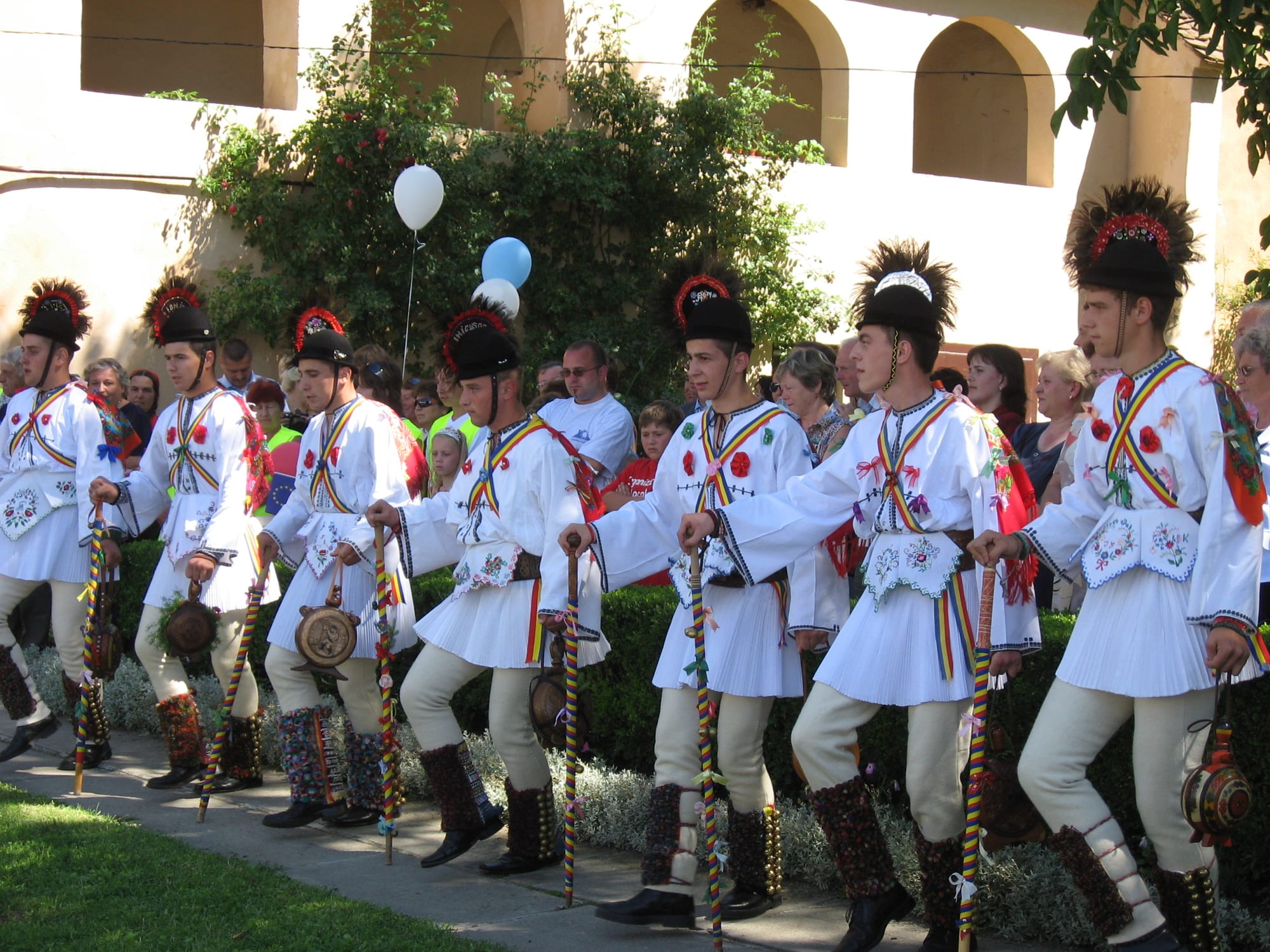
Christmas brings the colindat, carolling from house to house. In one of its oldest forms, now on UNESCO's list, groups of young men, traditionally unmarried, rehearse for weeks and then visit homes on Christmas Eve, singing songs tailored to each household and dancing with its unmarried daughters, which is said to help them find a husband within the year. The hosts reward the singers with ritual gifts and money.
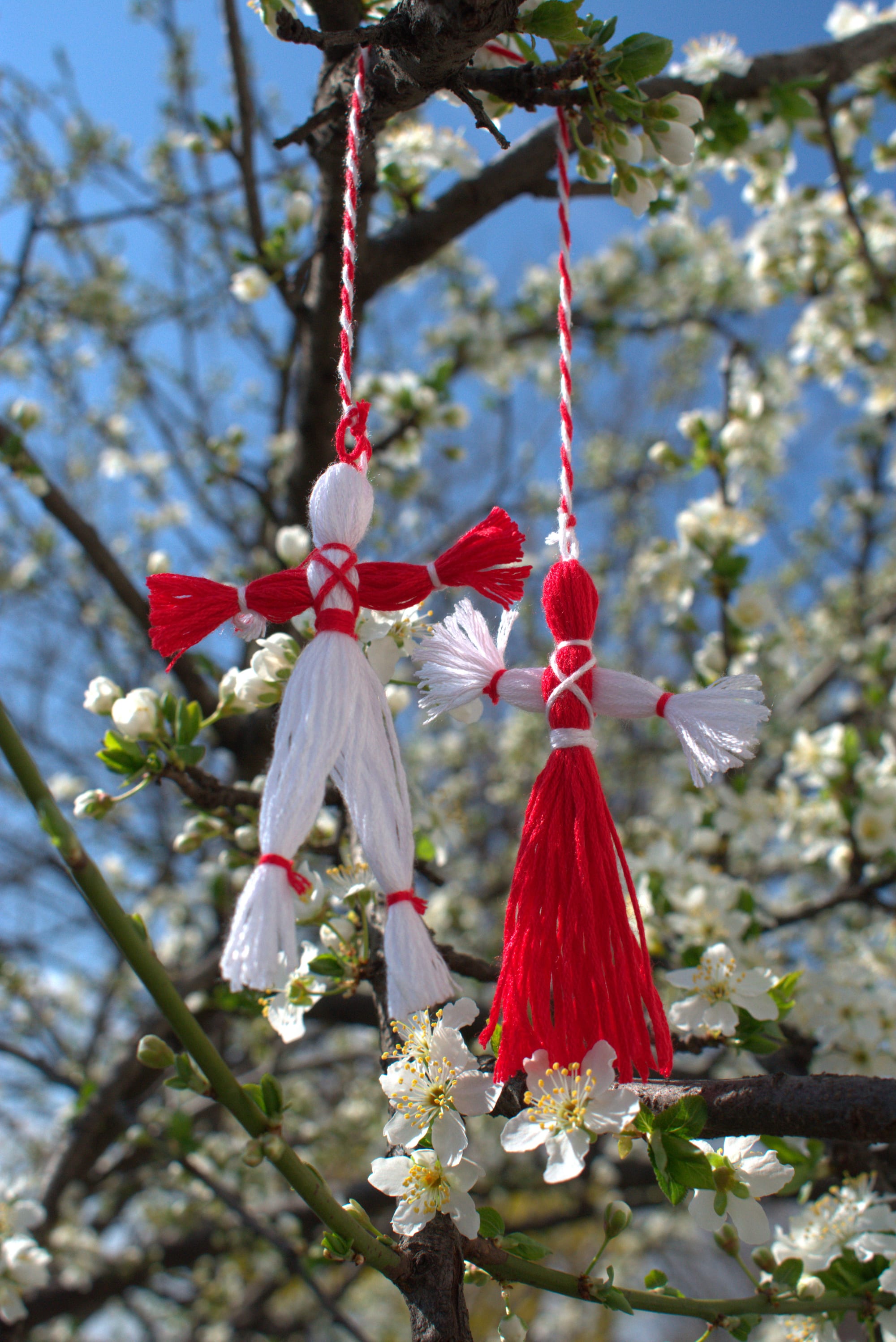
On 1 March comes the mărțișor, a small token on a twisted red and white thread, given as spring begins. It is worn as a protection against the hazards of the changing season and, by tradition, untied once the wearer sees the first blossoming tree, swallow or stork. At Whitsun, the all-male Căluş ritual, probably descended from ancient purification and fertility rites, sees dancers in bells and embroidered costumes perform games, songs and leaping dances, traditionally visiting homes to bring health and prosperity. It is on UNESCO's list and is performed at folk festivals across the country.
Weddings combine a civil ceremony with an Orthodox service and are followed by long, lavish celebrations. A central role falls to the nași, the couple's wedding godparents, who sponsor the marriage and are expected to guide the couple in their new life together. Guests usually give money rather than presents, and dancing the hora, the ring dance, is almost obligatory. A playful custom has also grown up in which friends "kidnap" the bride during the celebrations and the groom must earn her back, often with a ransom of a few bottles of whisky or a public declaration of love.
Death is surrounded by carefully kept obligations. Mourners receive colivă, a dish of boiled wheat with walnuts and sugar, blessed in church and eaten with the words "Dumnezeu să-l ierte", "may God forgive him". Memorial services called parastas, each followed by a shared meal, are held on the third, ninth and fortieth days after a death, then at intervals up to seven years, and families also give pomană, food or gifts offered in the name of the dead. Several Saturdays in the year are set aside for remembering the dead, when colivă is again taken to church.
Arts, crafts and music
Romania has more than ten entries on UNESCO's list of intangible cultural heritage, and many are still part of community life rather than purely stage shows. The doina is a solemn, improvised solo song, sung with or without a flute or bagpipe, that can express anything from love and joy to solitude and grief, and it has traditionally been sung at work, at home and at wakes. The lad's dances are virtuoso men's folk dances performed at weddings and holidays by Romanian, Hungarian and Roma dancers alike, and have long helped young men win standing in their communities. More recently the cobza, a short-necked lute, and the seasonal droving of livestock have joined the list.
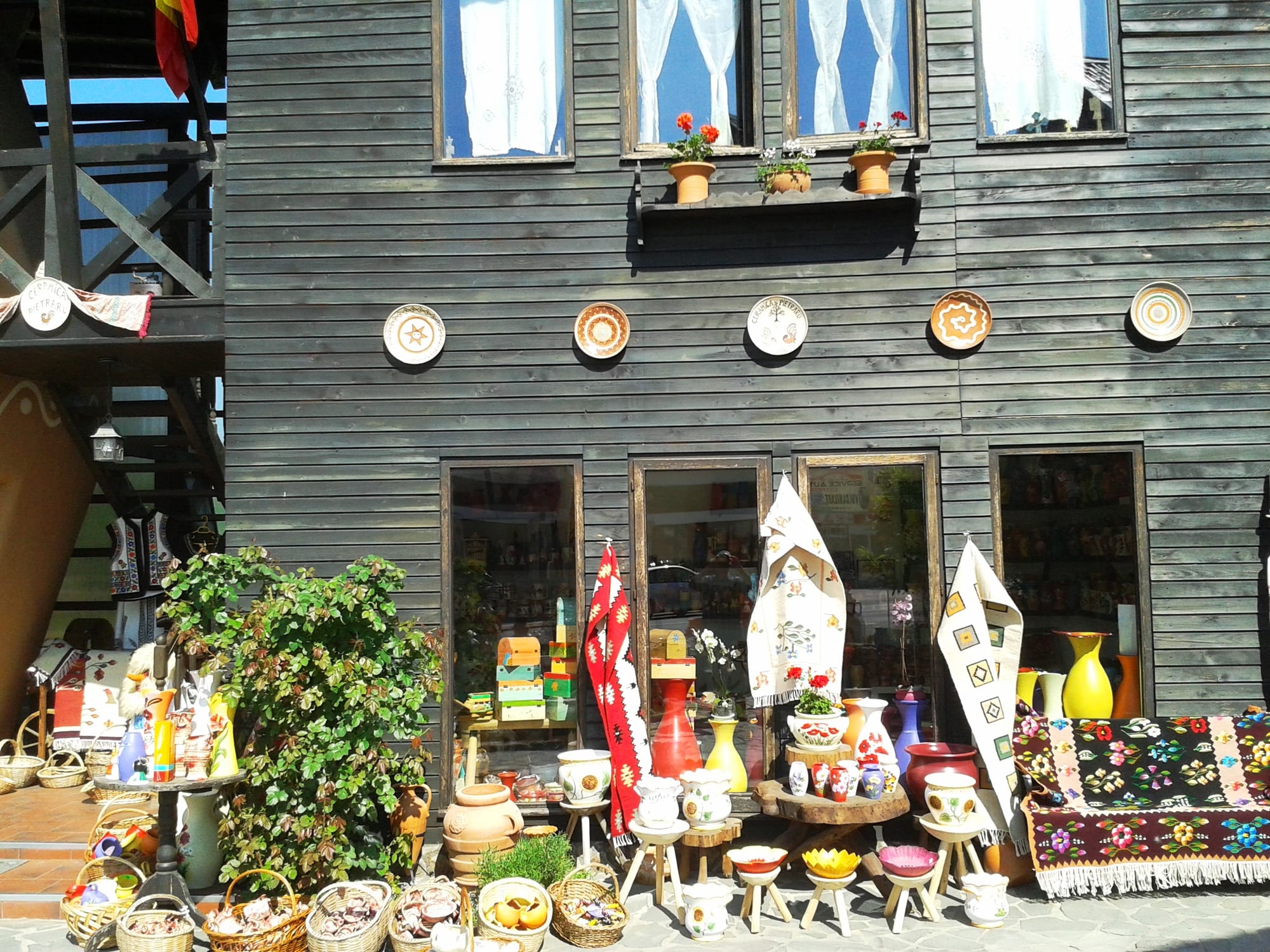
Textile arts are treasured. The ie, the traditional linen blouse with embroidery on the shoulder, is on UNESCO's list, shared with the Republic of Moldova, as is the craft of weaving wall carpets. Pottery is another living tradition. At Horezu, men dig and knead the clay and throw each piece with a finger technique requiring real strength, while women decorate them in dark brown, red, green, blue and a characteristic "Horezu ivory", using tools that include a hollowed bull's horn and a wire-tipped stick. The craft passes through families and from master to apprentice.
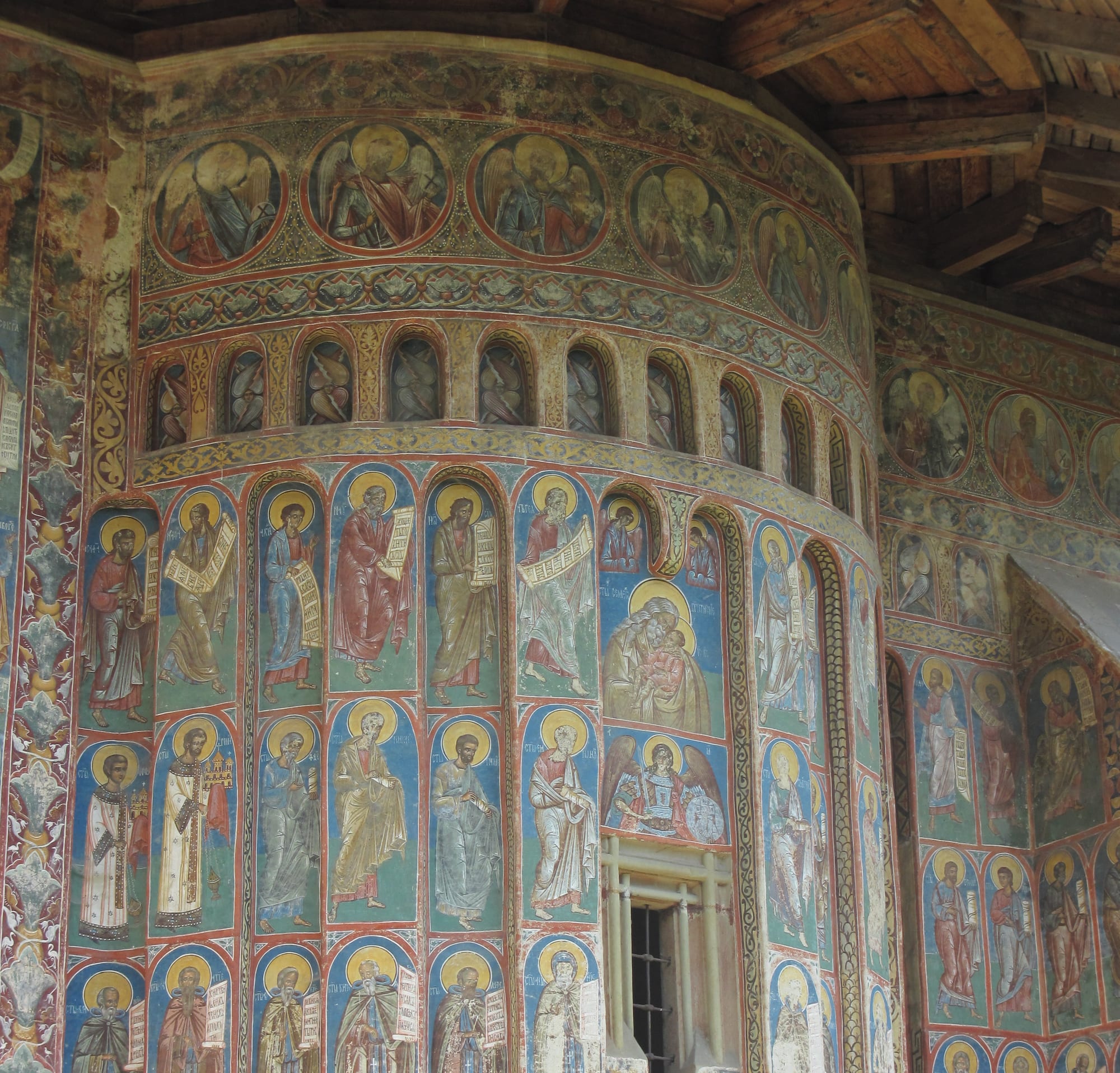
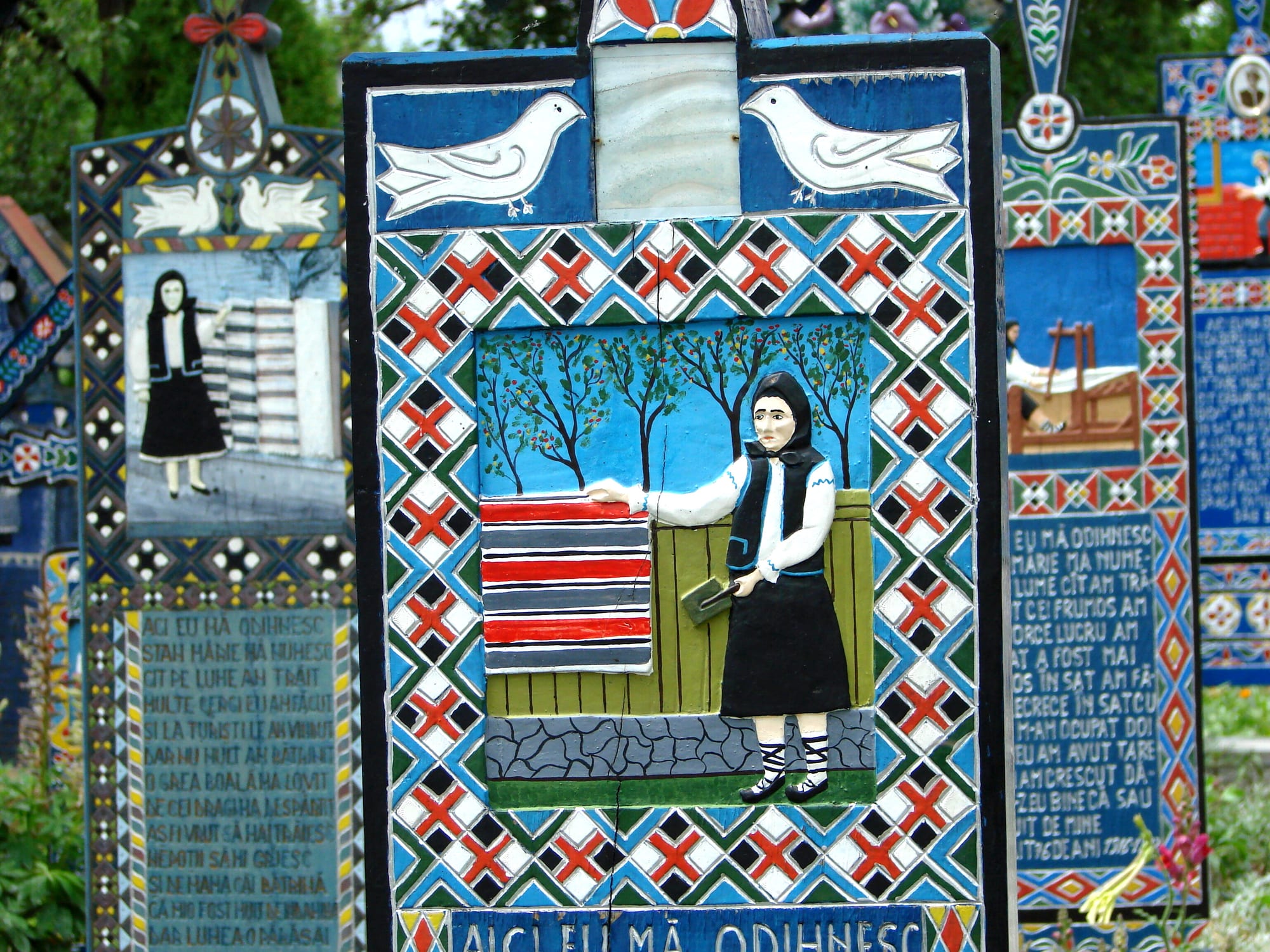
Folk art and religious art often meet. Painted churches, carved wooden church towers and gates, and icons painted on glass are all part of the country's heritage, and even a graveyard can become a gallery.
Dos and don'ts for visitors
- Do greet people with a handshake and eye contact, and use domnule or doamnă with their surname until invited to use first names.
- Do take shoes off at the door of a home and bring a small gift, which will usually be opened straight away.
- Do give flowers in odd numbers only; even numbers are for funerals.
- Do wait for "poftă bună" before eating, keep hands above the table, and raise a glass with "noroc".
- Do cover shoulders and knees in churches and monasteries, and accept a headscarf if one is offered.
- Don't be surprised to be pressed to eat and drink more; a polite refusal of alcohol is generally respected.
- Don't treat Vlad III as a vampire; in Romania he is regarded as a historical figure, and many see him as a national hero.
What to take away
Romanian customs rest on a sense of obligation that reaches in every direction — to guests, to family, to the saints and to the dead — and a visitor who counts the flowers, lights a candle and accepts a second glass will find that obligation extended warmly to them.