Culture & Customs · Réunion
Réunion: Many Gods, One Island
Tamil temples, mosques, Chinese pagodas and Catholic churches within walking distance of one another, a Creole greeting for everyone, and a set of manners built on the habit of respecting other people's sacred ground
By Worldlore Editorial · 30 September 2026
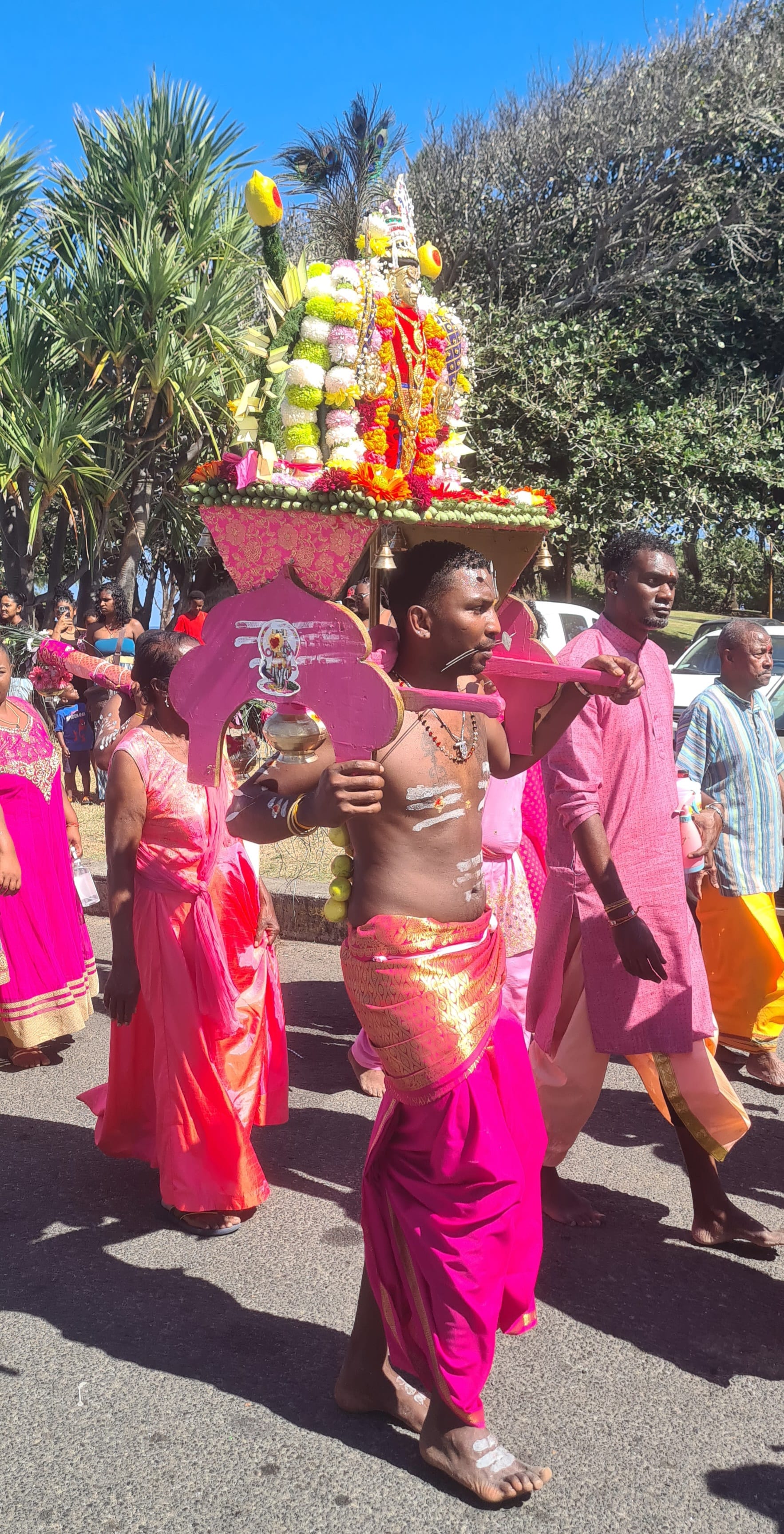
A procession moves slowly down a sunlit street. At its centre walks a barefoot man in pink and gold, carrying on his shoulders a wooden arch heaped with flowers, fruit and small bells. Women in saris walk beside him, relatives follow, and along the pavement stand neighbours of every background: some Hindu, many Catholic, some Muslim, some whose families have kept incense burning before a Chinese deity for generations. Nobody thinks the scene remarkable. On Réunion, a French island in the Indian Ocean that had no people at all until the seventeenth century, every faith that arrived has stayed, and good manners largely come down to knowing how to behave on someone else's sacred ground.
Faith, identity and values
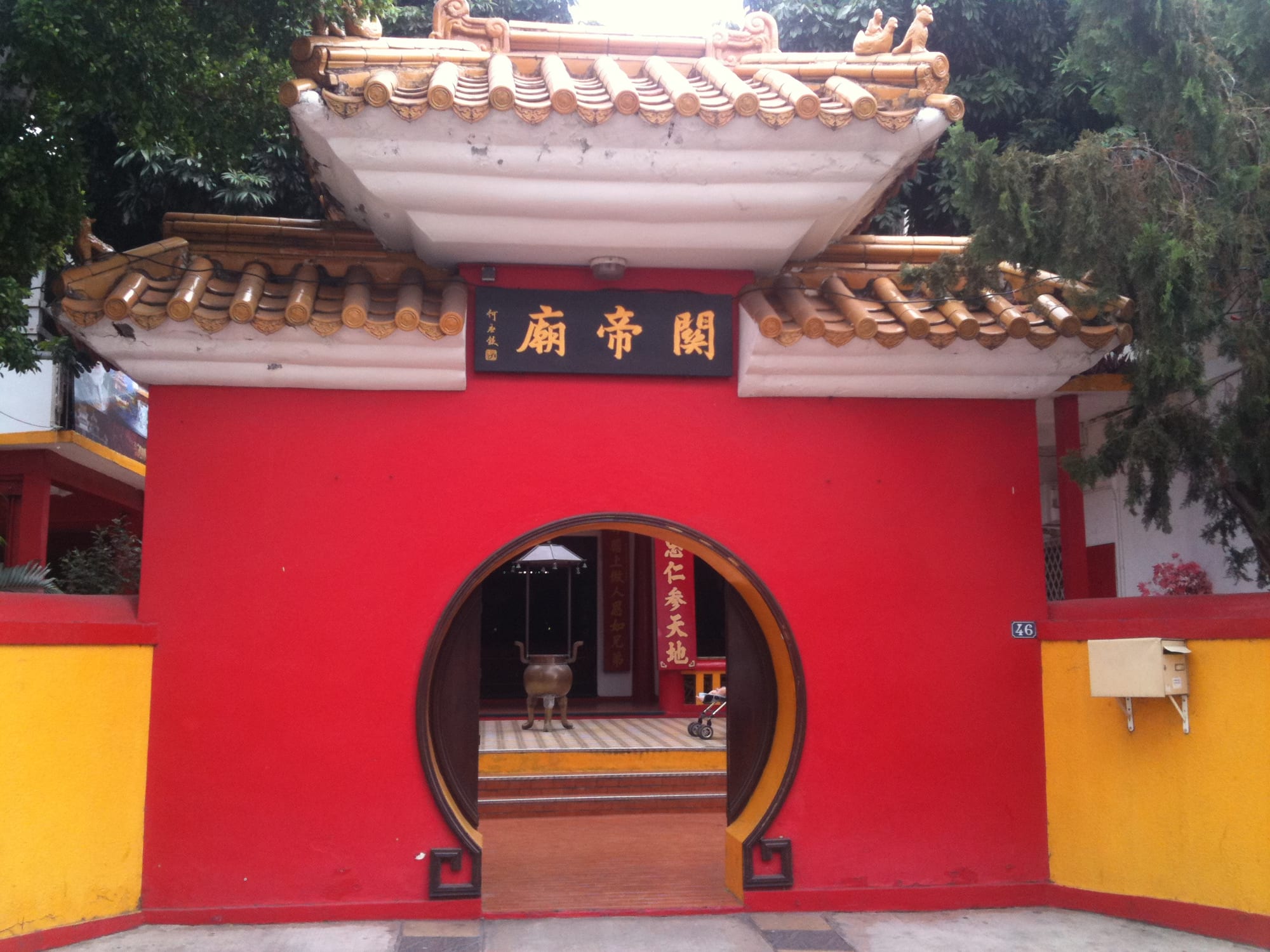
Catholicism is the island's largest religion, with churches in every town, but it shares the landscape with an unusually full set of other traditions. Hinduism, the second-largest faith, is practised mainly by descendants of workers brought from southern India and known locally as Malbars. A Muslim community, often called the Zarabes, traces its roots largely to nineteenth-century arrivals from western India, with others of Comorian and Mahorais origin. The Chinese community is now predominantly Catholic, but pagodas dedicated to Guan Di, a legendary warrior who became a god, still stand in Saint-Denis and Saint-Pierre, where worship blends Confucian, Taoist and Buddhist elements. It is common to find a church, a mosque, a Chinese temple and a Tamil temple in the same town.
Beneath the formal religions runs another current. The servis kabaré is a ceremony held in some families to honour ancestors from Madagascar and Africa, in which music and dance are used to open communication between the living and the dead. Brought by enslaved people and reshaped over generations on the island, it draws on African, Malagasy, Hindu and Muslim influences, and it has seen a revival in recent decades as a reaffirmation of Creole identity. Its music is a form of maloya, and it is a private, family matter rather than a spectacle.
What holds this together is a strongly shared idea of living together, often summed up in French as vivre ensemble. Réunionnais tend to speak of their mixed origins with pride rather than tension, and the island's diversity is treated as part of its identity, not as a problem to be managed. French is the language of the state, the school and the office; Réunion Creole is the language most people turn to among friends, and Tamil, Cantonese and Shimaoré are still heard within their communities. Respect for elders, for the family and for other people's beliefs sits at the centre of everyday values.
Greetings and meeting people
A greeting is expected before anything else, whether entering a shop, boarding a bus or passing someone on a mountain path, and a simple "bonjour" with a smile is close to automatic in public. As in mainland France, a kiss on the cheek is common among family and friends, while a handshake is the safer choice with people met for the first time. A few words of Creole go a long way: "bonzour" for hello, "koman i lé?" for how are you, and "mersi" for thank you. Attempts at Creole, however imperfect, are generally received with warmth.
Conversation is relaxed, and Réunionnais switch readily to the informal "tu", particularly in Creole. This is not overfamiliarity but a signal of closeness, and it is fine to follow the other person's lead. Non-verbal warmth matters: a smile, a nod and a willingness to stop and chat count for more than formality. Visitors who ask questions about local food, music or festivals, and who show real curiosity about the answers, tend to find conversations opening up quickly. Humour is an important part of everyday exchanges, and asking for a joke or expression to be explained is taken as interest rather than ignorance.
Hospitality and being a guest
An invitation to a family meal is a sign of real welcome, and refusing one outright can be poorly received. Guests are expected to come with an appetite and an open mind: accepting what is offered, and trying dishes even when they are unfamiliar or spicy, is itself a form of politeness. Meals with extended family are often long, noisy and generous, and a guest who helps clear up or stays to talk is appreciated. Many social gatherings happen outdoors, and joining in with the shared cooking and eating at a family picnic or barbecue is an easy way to be included.
Respect for different religious rules is part of good manners at the table as well as in temples. Some Hindu families do not eat beef, many Muslim families do not eat pork or drink alcohol, and some people keep periods of vegetarian fasting before religious ceremonies. Guests who are unsure are expected simply to ask, and a host will usually be pleased by the question.
Visiting places of worship follows each community's rules. At Tamil temples, shoes are removed before entering, and leather items such as belts and bags are best left outside, since the cow is sacred in Hinduism. Clothing that covers the shoulders and knees is expected at temples, mosques and churches alike, and more sober dress is appropriate in traditional neighbourhoods and at ceremonies. The inner sanctuary of a Tamil temple should not be photographed without permission, and photographs of people praying or of religious rites should never be taken without asking.
Festivals and life's big moments
The festival calendar belongs to everyone. Dipavali, the Hindu festival of lights, celebrates the victory of light over darkness, and streets in the east of the island fill with lamps and a parade of brightly decorated floats that draws spectators from every community. In the Cavadee, a Tamil festival honouring the god Murugan, devotees who have prepared through fasting and prayer walk in procession carrying the kavadi, a decorated wooden frame borne on the shoulders, some with their cheeks or bodies pierced as an act of devotion. At various times of year, Tamil temples hold fire-walking ceremonies in honour of the goddess Pandialé, in which penitents who have kept a period of fasting walk barefoot across a bed of embers.
The Chinese New Year brings lion dances and firecrackers. The Muslim community marks Eid al-Fitr and Eid al-Adha with shared meals and sweets. Catholic Réunion celebrates Christmas and Easter, holds processions in honour of the Virgin Mary on 15 August, and draws thousands of pilgrims to the shrine of Notre-Dame de la Salette each September. At major occasions, temples, churches and mosques rarely turn curious visitors away, provided they behave with respect.
The 20 December Fèt Kaf, marking the abolition of slavery, is the most distinctly Réunionnais of all. It brings street parades in traditional dress, gatherings around bonfires, meals served on banana leaves, demonstrations of moringue, a combat dance performed to music, and above all maloya, played late into the night at open-air kabars.
Weddings begin, as everywhere in France, with the civil ceremony at the town hall, followed by a religious blessing according to the family's faith. Tamil brides often wear a colourful sari with gold jewellery and henna, Muslim weddings frequently begin with a henna ceremony before the nikah at the mosque. Many unions bring two traditions together, and receptions often end with séga and maloya dancing late into the night. Funerals are marked by a strong sense of solidarity. In Creole families, relatives and neighbours gather at the home of the person who has died for an all-night wake, with prayers, songs, shared stories and coffee kept going until morning. Hindu families generally cremate with codified rites and mantras, Muslim families wash and shroud the body in white for swift burial, and Chinese families burn incense and paper offerings for the soul of the deceased.
Arts, crafts and music
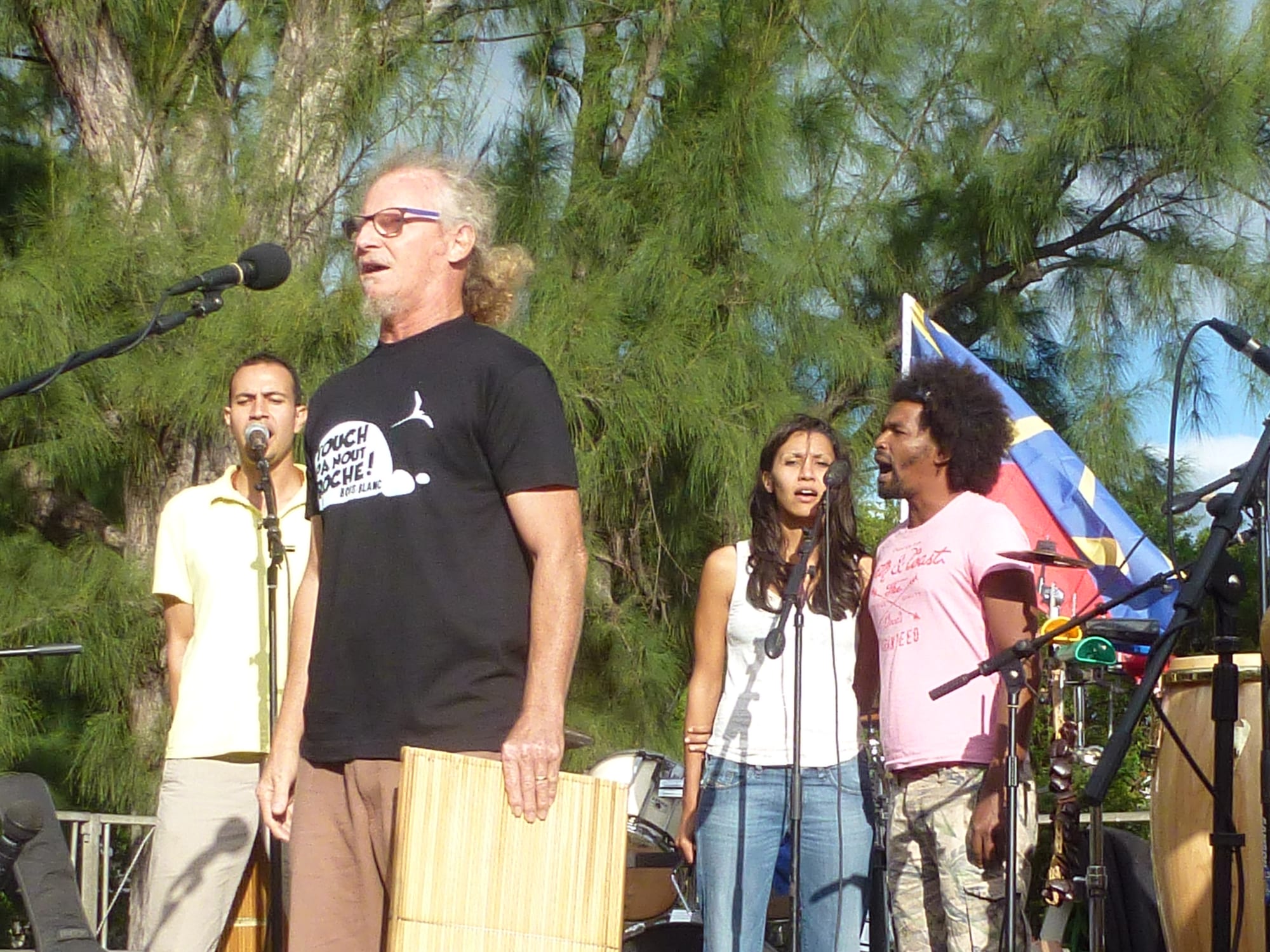
Maloya is the island's defining art. Created on the sugar plantations by enslaved Malagasy and African people, it began as a dialogue between a solo singer and a chorus over percussion, and was once closely tied to rituals honouring the ancestors. Its traditional instruments include the roulèr, a barrel drum that carries the rhythmic bass, and the kayamb, a flat rectangular rattle made of sugar cane flower stems and filled with seeds, shaken back and forth in the hands. Maloya has since become a symbol of Creole pride and a voice for social commentary; it is now heard at almost every cultural, political and social event on the island, and fused by professional artists with rock, reggae and jazz. UNESCO inscribed it on its list of the intangible cultural heritage of humanity in 2009. Séga, lighter and more playful, is the island's other great dance music.
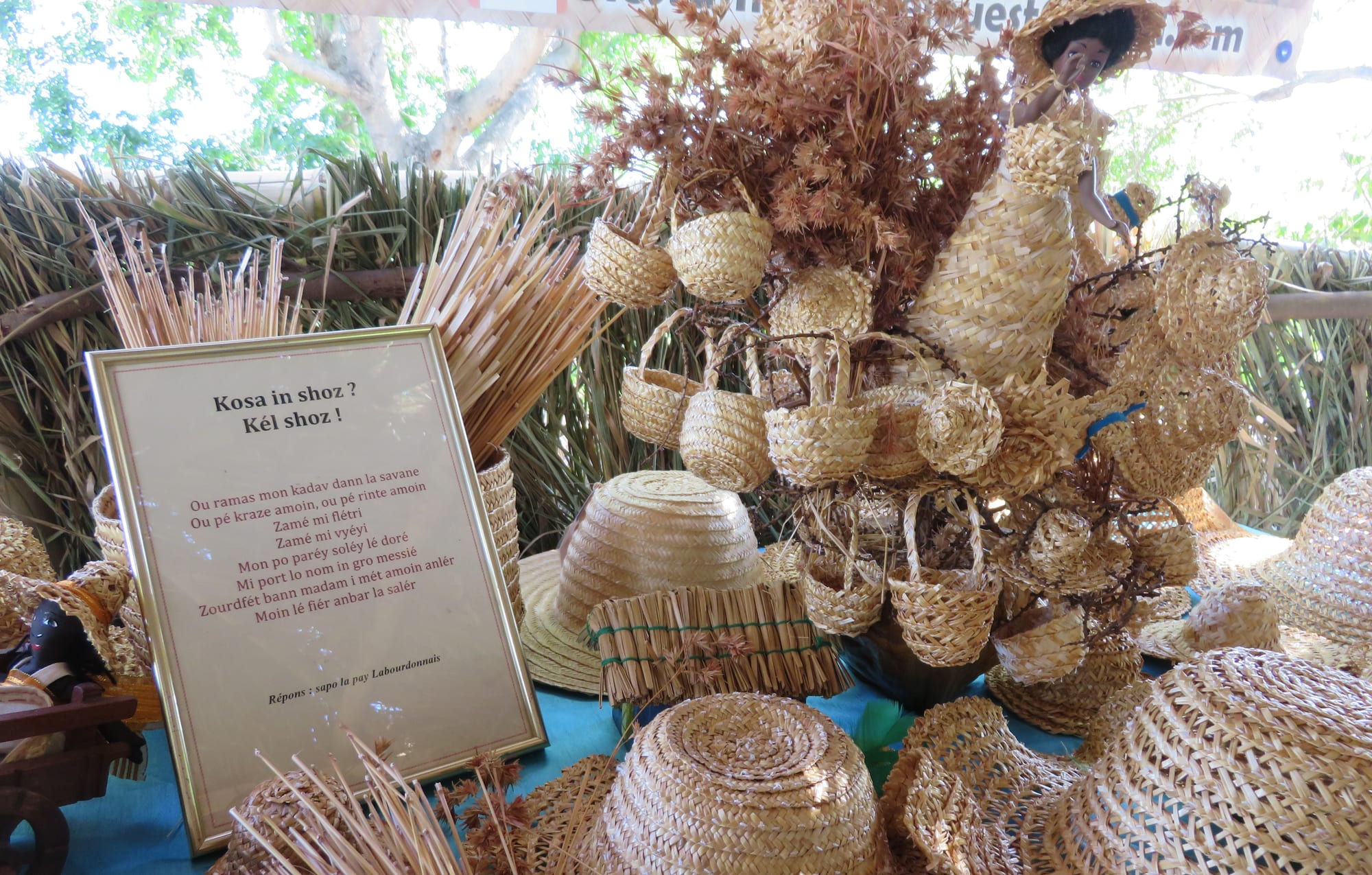
Weaving is the most widespread traditional craft. The tresse vacoa, basketry made from the dried leaves of the vacoa, a species of pandanus, is recorded on France's inventory of intangible cultural heritage. It developed on the plantations, where the plant served as a windbreak for crops such as vanilla, and it has long been practised mainly by women at home and, increasingly, in neighbourhood associations. Its traditional products include the bertel, a shoulder bag, as well as baskets, mats and bundles, while today's weavers also turn out jewellery, bags and other modern accessories. The craft borrows from French, African, Malagasy, Comorian and Asian traditions, a small reflection of the island itself. Other grasses and fibres are woven too, and the carved wooden lambrequins that fringe the eaves of older Creole houses are a much-loved part of the island's architectural heritage.
Dos and don'ts for visitors
- Do greet people with "bonjour" before anything else, and try a few words of Creole such as "bonzour" and "mersi".
- Do remove shoes at Tamil temples and leave leather items such as belts and bags outside.
- Do cover shoulders and knees at temples, mosques and churches, and dress more soberly at religious ceremonies.
- Do accept an invitation to a family meal if you can, and try what is offered with curiosity.
- Do watch festivals such as Dipavali, Cavadee and the Fèt Kaf, but keep a respectful distance from devotees and do not get in the way of processions.
- Don't photograph a temple's inner sanctuary, people at prayer or religious rites without asking first.
- Don't assume anyone's religion or origin from their appearance; families on Réunion often span several traditions.
What to take away
Réunion's customs are the product of people from four continents learning to share a small island, and visitors who show the same respect for each tradition that Réunionnais show one another will find themselves warmly included in its many celebrations.