Culture & Customs · Puerto Rico
Puerto Rico: The Parranda Comes Knocking
Taíno, Spanish and African roots woven into one island identity, a greeting for everyone in the street, a Christmas season that runs from November to the Three Kings and beyond, and music in which the drummer follows the dancer's lead
By Worldlore Editorial · 30 September 2026
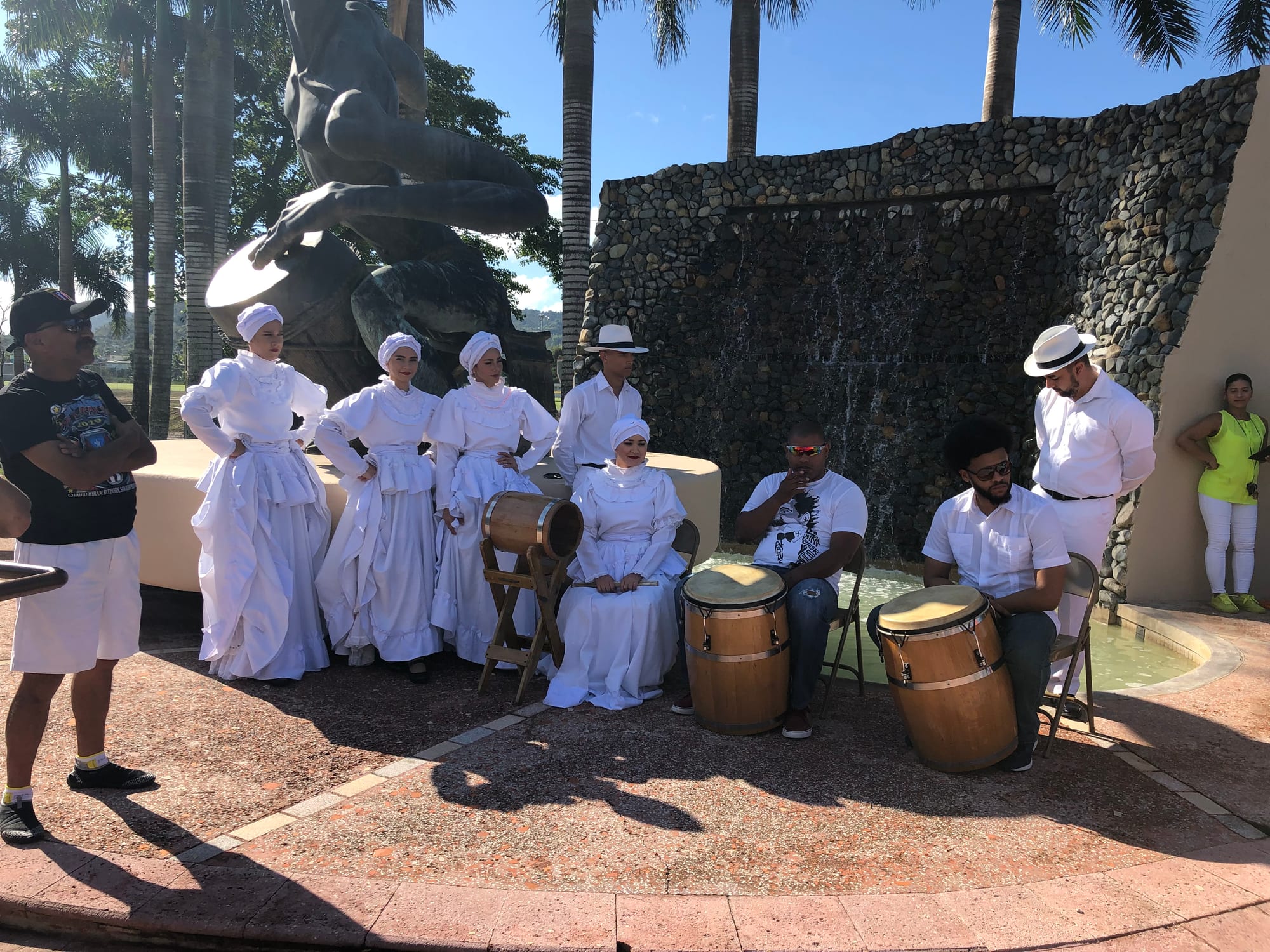
It is late on a December night when the music starts outside the door. A group of friends and neighbours has arrived unannounced, carrying a cuatro and whatever percussion they could find, and they are singing an aguinaldo, a Christmas song, loudly enough to wake the house. This is a parranda, and the right response is to open up, switch on the lights and bring out something to eat and drink. After a while the whole party, now one household larger, moves on up the road to surprise the next family. Some parrandas go on until dawn. Few customs say as much about Puerto Rico: music first, family and neighbours close behind, and a warm welcome for whoever turns up.
Faith, identity and values
Puerto Rico is an island of layered roots. Its Indigenous Taíno inhabitants called it Borikén, the source of the word boricua that Puerto Ricans still use for themselves, and although Taíno society was largely destroyed after the Spanish arrived, it left words such as hamaca and tabaco in everyday Spanish. Four centuries of Spanish rule brought the language, the Catholic Church and the town plaza, and the Africans brought to the island in slavery shaped its music, dance and belief. Since 1898 it has been under United States sovereignty. Today it is an unincorporated US territory, formally a Commonwealth, whose residents are US citizens but cannot vote in presidential elections while living on the island, and its future status, whether as it is, as a state or as an independent country, remains one of the most debated questions in island life. Spanish and English are both official languages, but Spanish is the language of everyday life. More people of Puerto Rican origin now live on the US mainland than on the island, and the link between the two is a constant theme in family life, politics and the arts.
Catholicism remains the largest faith, although it has lost ground. In a major survey by the Pew Research Center, Catholics made up 56 per cent of Puerto Rican adults, with Protestants, many of them in evangelical and Pentecostal churches, forming a large share of the rest; Puerto Rico was one of only two places in Latin America where Catholic identification had already fallen by double digits, 13 points, between 1910 and 1970. Faith often matters even to those without a church: roughly a third of religiously unaffiliated Puerto Ricans told Pew that religion was very important in their lives.
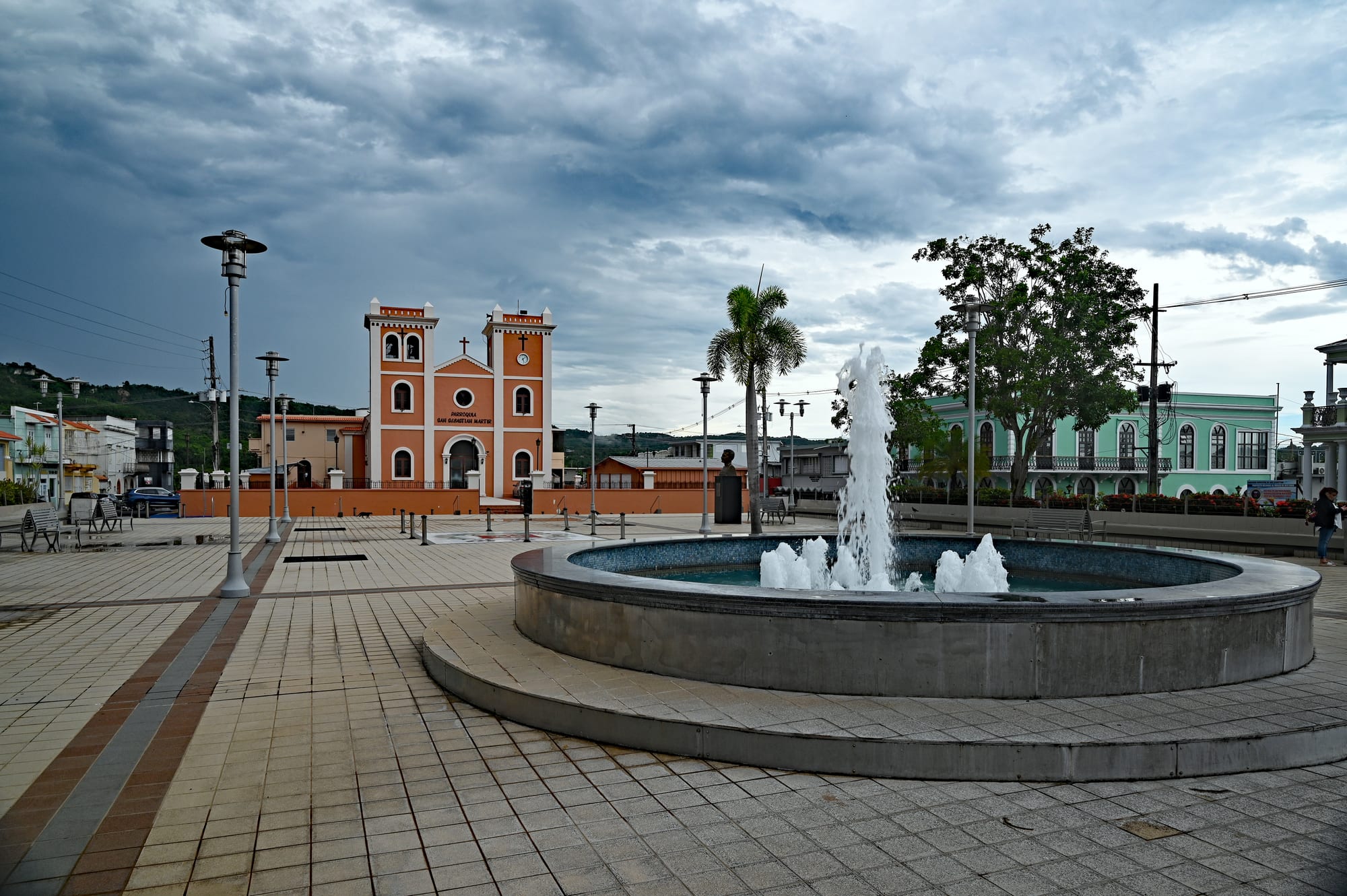
Popular Catholicism has long centred on the home as much as the church. Santos de palo, small carved wooden figures of saints, have long been kept in homes as well as churches, and people pray before them for help in the difficulties of life. Carving them remains a living folk-art tradition on the island. Every town also has its patron saint, whose fiestas patronales bring days of music, dancing, games and dressing up.
Among the island's values, family comes first, and visitors are often welcomed as though part of the extended family. Emotion is expressed openly and warmly. A national folk figure sums up much of the island's self-image: the jíbaro, the independent farmer of the mountainous interior. Although the word can also be used to mock country people as unsophisticated, the jíbaro came to stand for resilience, self-reliance and Puerto Rican identity, and his straw hat, the pava, still turns up in music, fashion and art.
Greetings and meeting people
Everyday courtesy is visible everywhere. People greet one another with "buenos días" in the morning and "buenas tardes" in the afternoon, often even when passing strangers in the street, and it is normal to be greeted by someone new with a hug or a kiss on the cheek. Diners are wished "buen provecho", or "enjoy your meal", by people who sit down near them in a café or restaurant, simply as a matter of courtesy.
Conversation is lively. Puerto Ricans are known for talking with their hands and expressing feelings with intensity, and they speak Spanish quickly and with plenty of island expressions. English is widely understood in tourist areas, and many people move easily between the two languages, but any attempt at Spanish is appreciated; perfection is not the point, and people are patient and happy to help. A simple "gracias" goes a long way.
Hospitality and being a guest
Hospitality is generous and informal, and it is at its most visible in the Christmas parranda, when the household that has been surprised is expected to feed and refresh the musicians before they move on. A guest in a Puerto Rican home can expect to be treated as family, and a friendly "buen provecho" to others at the table, or even at the next table, is part of eating together.
The same courtesy is expected of visitors in shared spaces. Official guidance asks travellers to treat hotel staff with patience and appreciation, to keep noise down in the evenings in hotels and holiday rentals, where quiet hours are common, and to be mindful of neighbours, traffic and privacy in residential streets. Supporting local businesses, artisans and farmers is encouraged as a way of giving something back. On the coast, coral and sea creatures should be admired from a distance: the advice is not to touch them, not to take shells or sea stars, and not to stand on reefs.
Festivals and life's big moments
Christmas in Puerto Rico is a season, not a day. Parrandas, also called asaltos or trullas navideñas, begin in November and continue into January, with small groups arriving at the homes of family and friends late at night to wake them with aguinaldos. The group grows at each house, and the party generally ends around dawn, often with a last pot of asopao de pollo, a chicken and rice stew, at one of the parranderos' homes.
The season does not end on 25 December. On 6 January, the Día de Reyes, the Three Kings bring gifts, and on the eve of the feast children cut fresh grass and leave it in shoeboxes, often under their beds, for the Kings' animals, waking to find small presents in its place. Even then the celebrations continue, with eight more days of music, dancing and gatherings known as the Octavitas, and then the Fiestas de la Calle San Sebastián in San Juan.
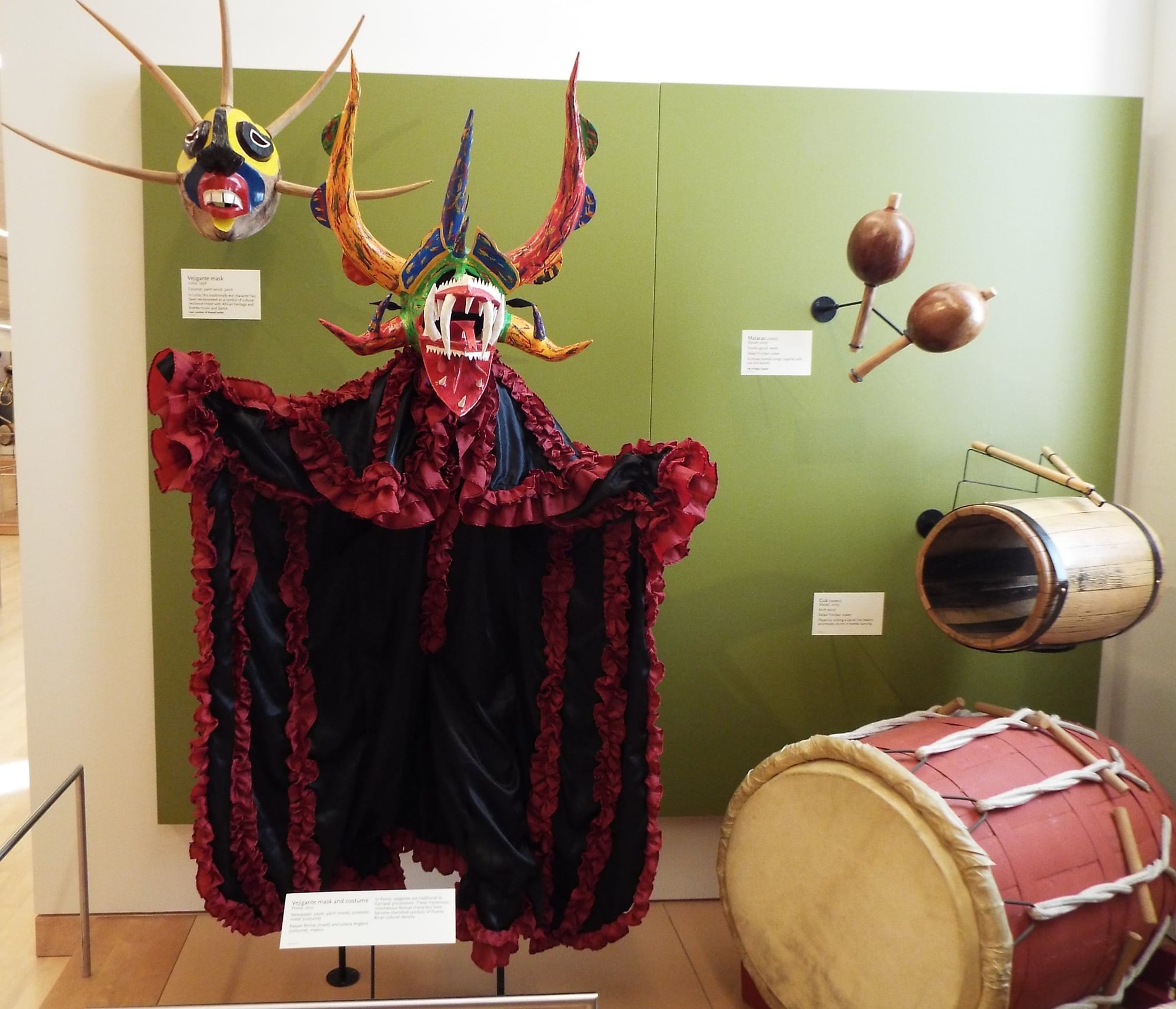
Through the rest of the year, town festivals keep the calendar full. Besides the fiestas patronales, several towns hold carnivals and mask festivals in which vejigantes, masked figures in bright, flowing costumes, dance through the streets. Their horned masks are made from papier-mâché in some towns and from coconut shells in others, and they have become one of the best-known symbols of Puerto Rican heritage.
Weddings mix Catholic tradition with local touches; guests are often given capias, small ribbon keepsakes bearing the couple's names and the date of the wedding. Death, too, has its folk customs. In the past, the death of a young child was marked with a baquiné, a wake at which family and neighbours gathered around the child, a custom with origins in Afro-Puerto Rican culture, grounded in the folk Catholic belief that a baptised child goes straight to heaven. It is the subject of Francisco Oller's painting El Velorio, from 1893, one of the most famous works of Puerto Rican art.
Arts, crafts and music
Music is the island's most powerful form of expression. Bomba, the oldest of its living traditions, grew out of plantation life in the 17th and 18th centuries and carries clear marks of West African dance: interlocking drum patterns, call-and-response singing and, at its heart, a conversation between the dancer and the lead drum. Barrel-shaped drums keep the steady rhythm while a higher-pitched lead drum follows and answers every improvised move of the solo dancer, and a pair of sticks, the cuá, beats time on the side of a drum. For enslaved Africans, bomba was a means of political and spiritual expression, and its songs could carry anger, sorrow and rebellion.
Plena grew out of bomba in Ponce around 1900, played on round frame drums called panderetas. Its songs alternate a group refrain with solo verses, often improvised, about local events, politics and scandal, which earned it the nickname of the "sung newspaper". The danza, an elegant salon music and dance from Ponce, gave the island its anthem, La Borinqueña, which began as a danza. In the 20th century, Puerto Rican and New York Puerto Rican musicians were central to salsa, and reggaeton, which grew in Puerto Rico out of the Spanish-language reggae of Panama, has become one of the most popular musical styles in the world.
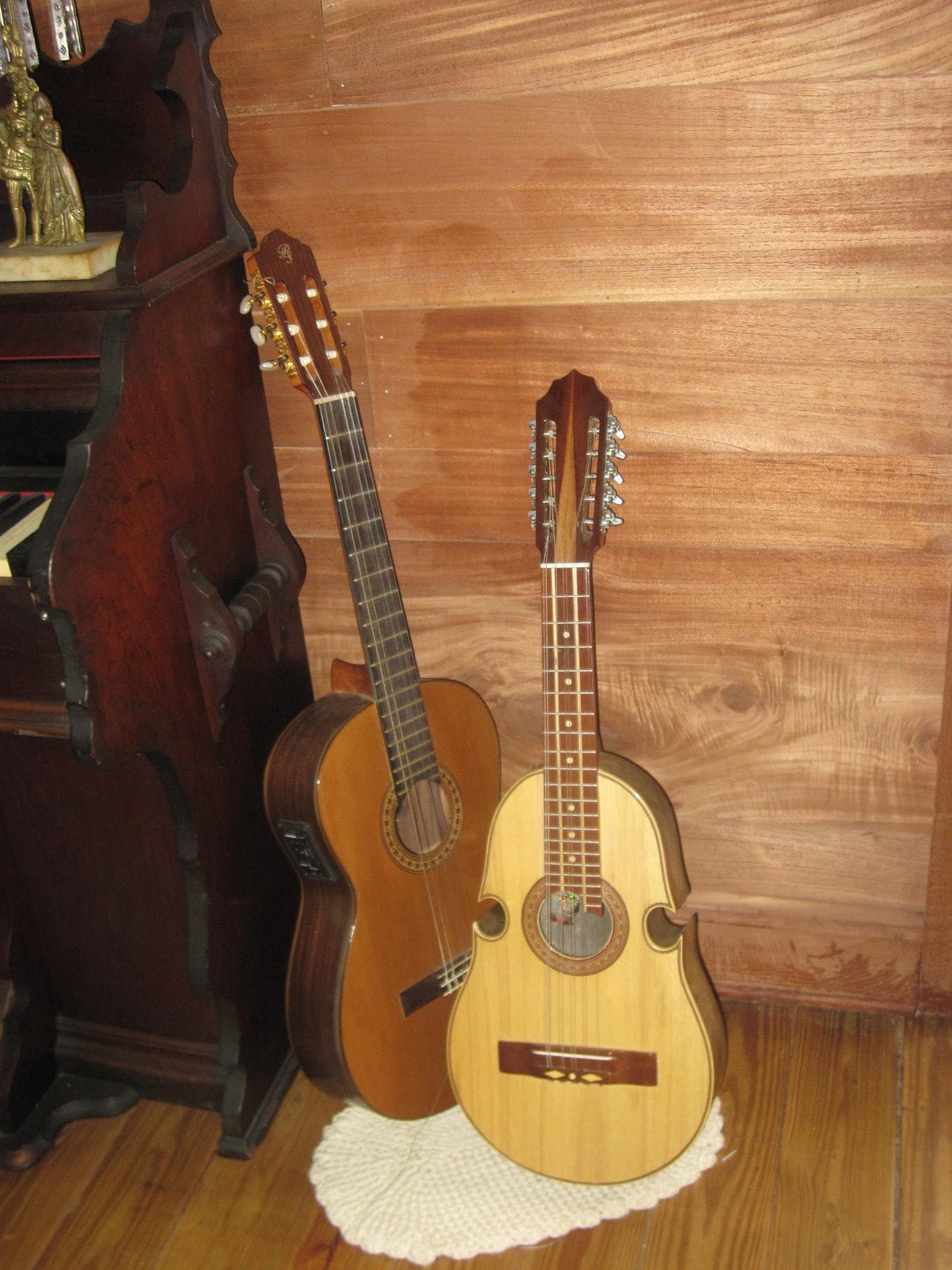
The cuatro, a ten-stringed instrument that most experts believe has existed on the island in some form for about 400 years, is regarded as Puerto Rico's national instrument and is the voice of música jíbara, the country music of the mountain interior. Makers still build cuatros by hand, and for many it carries the weight of a national symbol. Craft traditions include the carving of santos by santeros and the making of vejigante masks, sold across the island as well as worn at festivals.
Dos and don'ts for visitors
- Do greet people with "buenos días" or "buenas tardes", even in passing; a hug or a kiss on the cheek is a common welcome.
- Do wish others "buen provecho" when they are eating, and expect to hear it in return.
- Do try some Spanish; English is official and widely understood, but Spanish is the everyday language and the effort is appreciated.
- Do open the door to a Christmas parranda, and offer the musicians something to eat and drink.
- Do keep noise down at night in hotels, rentals and residential streets.
- Do buy from local artisans, farmers and small businesses.
- Don't touch coral or sea creatures, take shells or sea stars, or stand on reefs.
What to take away
Puerto Rico's customs share the spirit of its music — spontaneous, warm and built on answering one another — and visitors who greet people, try a little Spanish and join in when the drums start will find themselves welcomed like family.