Culture & Customs · Peru
Peru: Where Saints and Pachamama Share the Feast
A Catholic country of purple processions and patron-saint fiestas, where offerings are still made to Mother Earth, greetings come with a kiss on the right cheek, and a guest is expected to leave the plate clean
By Worldlore Editorial · 30 September 2026
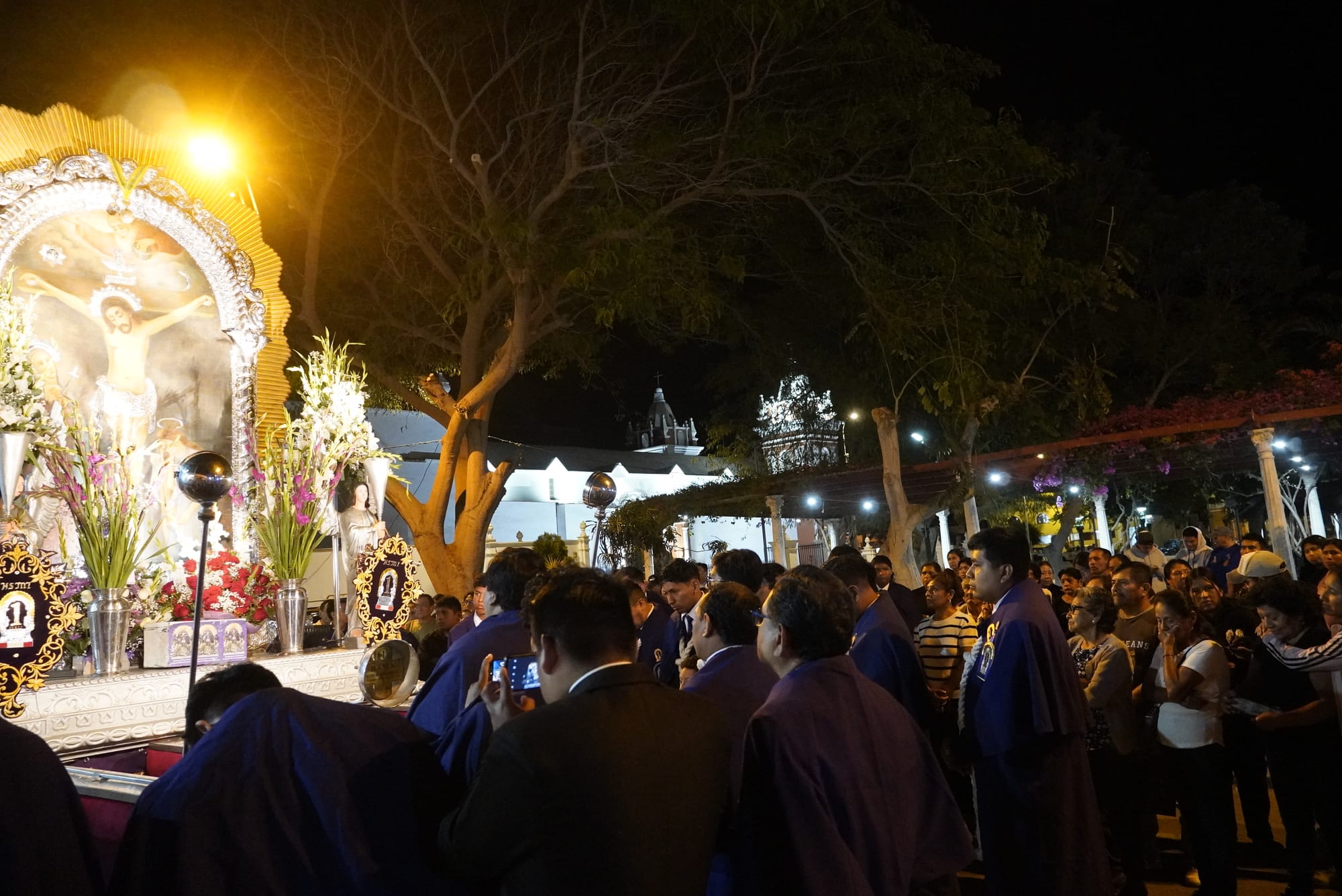
In October, much of Peru turns purple. Devotees of the Señor de los Milagros, the Lord of Miracles, put on purple habits tied with a white cord, and the image of Christ is carried out through the streets on a heavy platform borne by teams of carriers. Ahead of it walk the sahumadoras, women who cloud the path with incense, and the cantoras, who sing hymns without accompaniment. Families leave work to follow the procession, and street stalls sell turrón, a sweet associated with the month. The devotion began in the seventeenth century with an image of Christ painted on a humble wall by an enslaved man from Angola, honoured at first by enslaved Africans and Indigenous people, and it has since spread across the country and wherever Peruvians have settled abroad. It is a fitting emblem for a culture in which faith has always gathered many peoples under one canopy.
Faith, identity and values
Peru is a Christian country, though a changing one. At the 2017 census around 76 per cent of Peruvians aged 12 and over identified as Catholic and 14 per cent as Protestant, mostly evangelical, with about 5 per cent professing no religion; later estimates suggest the Protestant share has continued to grow. Catholicism has played a significant role in social and political life throughout the country's modern history, and the sacraments of baptism, confirmation and marriage remain milestones for most families.
Andean belief did not disappear with the arrival of Christianity; it adapted. Ancient religions that honoured natural forces merged with the new faith, and in many communities the pre-Columbian celebration of the sun at the June solstice became connected in many parts of the Andes with the feast of Saint John the Baptist on 24 June. Village fiestas patronales, held for each community's patron saint, still carry many Andean elements. Offerings to Pachamama, Mother Earth, remain part of the agricultural year. On 1 August, when the Andean world marks the start of the fertile season, an Andean sage arranges coca leaves, wine, flower petals, seeds, sweets and coloured wool on a special cloth or paper, and the offering is burned in thanks for the harvest and in hope of good weather and good crops to come.
Peruvian identity is plural. At the 2025 census about a fifth of the population identified as Indigenous, mestizos form the largest group, and the country recognises more than 50 Indigenous peoples. Quechua and Aymara share official status with Spanish in the areas where they are predominant, although some younger people from Andean families now prefer Spanish to the languages of their parents. Nearly everyone also claims a strong local identity rooted in the place they come from. Social hierarchies still echo colonial patterns, with Indigenous Peruvians facing greater disadvantage, though economic growth has brought more mobility.
Across these divides runs a strongly collective outlook. Families and communities are expected to support their weakest members, especially in rural areas, and acts of kindness, favours and hospitality are expected to be returned. In times of disaster, Peruvians are known for setting aside social and economic differences to help one another.
Greetings and meeting people
A light handshake with eye contact is the usual greeting on first meeting and in formal settings, and male friends and relatives often add a pat on the back. Among people who know each other, the greeting between women, or between a man and a woman, is a hug and a kiss on the right cheek; for less close acquaintances, a single kiss on the right cheek is enough. "Buenos días", "buenas tardes" and "buenas noches" accompany the greeting according to the time of day.
Titles matter. Professionals are addressed by their title, such as doctor or doctora, and older people as Señor or Señora with their surname, or more warmly as Don or Doña with their first name. Friends use first names and, very often, nicknames and affectionate diminutives: a slim friend may be known simply as Flaco.
Conversation tends to be diplomatic and indirect, especially where disagreement is concerned, becoming more direct as a relationship grows. People stand close, often less than an arm's length apart, and stepping back can seem cold. A touch on the arm or back is normal, and friends of the same sex may walk arm in arm. Steady eye contact signals honesty and respect. To call someone over, the palm faces down and the fingers are waved inwards, and directions are often indicated with a movement of the lips rather than a pointing finger.
Hospitality and being a guest
Friends and relatives often drop in on one another unannounced, though a little notice is courteous, and turning down an invitation can be taken as declining the relationship itself. Time is elastic: "hora peruana", Peruvian time, allows for late arrivals at social events, while "hora iglesia", church time, means punctual. A host will always offer drinks and something to eat, and a good guest greets the children of the house and asks after the health of the family.
At the table, guests wait to be shown where to sit, and the meal begins when the host says "salud" or "buen provecho", a wish for a good meal. Guests are expected to eat everything they are served, and any refusal should be explained tactfully. Leaving people out of the conversation is considered rude, a point summed up in a well-known saying: "secretos en reunión es mala educación", it is bad manners to keep secrets in company.
Gifts are appreciated but not required. Fruit, chocolates or a good bottle make suitable presents, nicely wrapped, and they are usually opened on the spot. Knives and other sharp objects are avoided, since they can suggest the cutting of ties. Appearance counts too: Peruvians take care to look presentable in public, and hats and sunglasses come off on entering a church.
Festivals and life's big moments
The national holiday, Fiestas Patrias, falls on 28 and 29 July and commemorates independence. In the second half of July the red and white flag appears on homes and businesses across the country, and many municipalities make displaying it compulsory, with fines for those who do not.
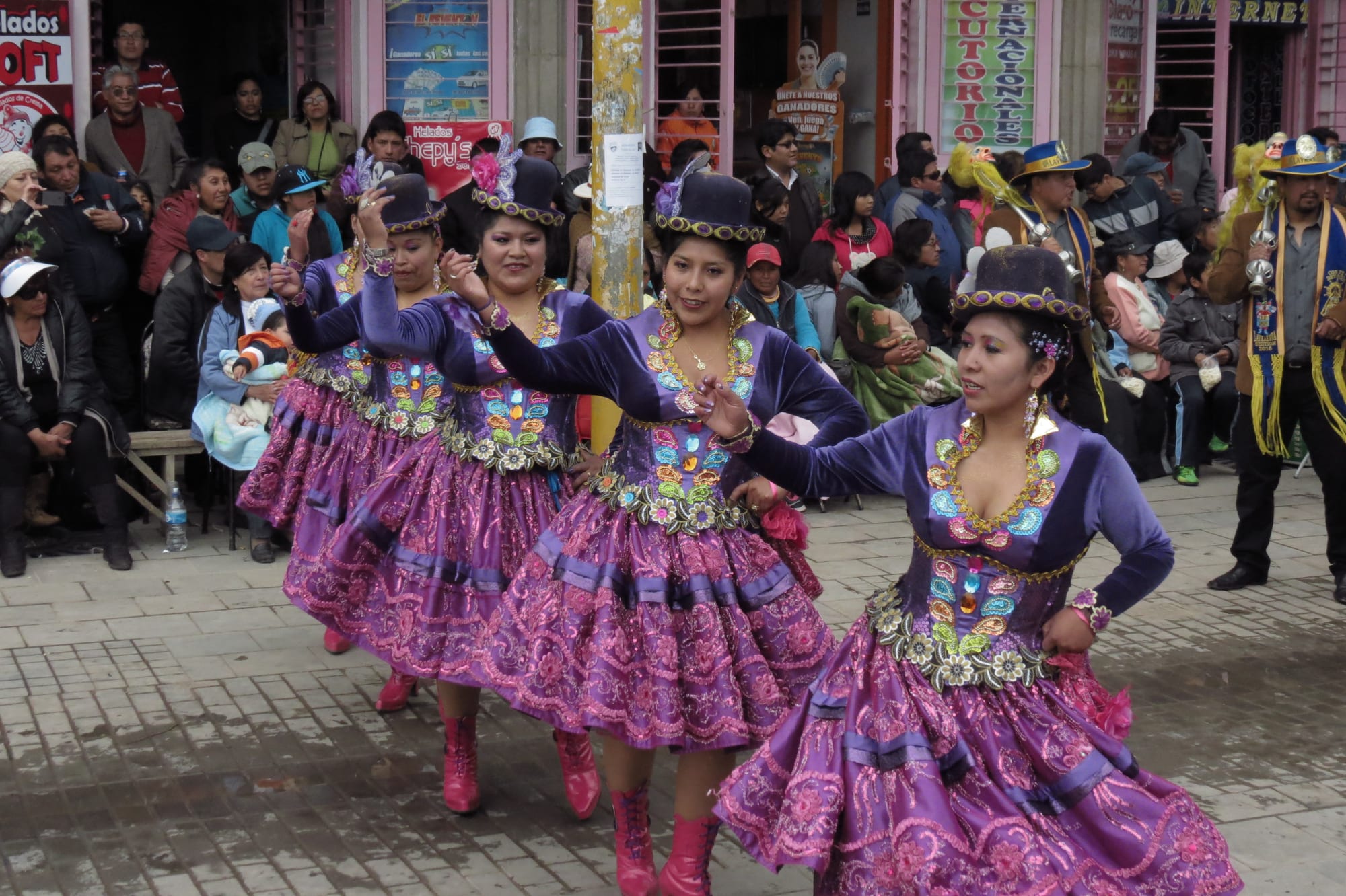
Much of the festive year belongs to the saints. Alongside October's processions for the Lord of Miracles, every town and village keeps its own fiesta patronal, and the greatest of these draw thousands of performers. The Festivity of the Virgen de la Candelaria, on UNESCO's list, brings together thousands of Quechua and Aymara dancers and musicians each February in a celebration that combines Catholic tradition with symbols of the Andean worldview, and months of rehearsals and mask-making workshops pass the skills on to the young.
On 1 and 2 November, All Saints' and All Souls' days, families honour their dead in a blend of Catholic rite and Andean tradition. Many build altars laden with offerings, including tanta wawas, sweet breads shaped like dolls that represent the departed, and small bread horses that symbolise the souls' journey. Families gather at the cemeteries and in their homes, and in Andean belief the souls return to visit on this day.
Family life is widened by padrinazgo, godparenthood. Godparents become something like second parents, responsible for a child's religious upbringing and a source of support for the parents in difficult times. Weddings usually come in two parts: a small civil ceremony, often with only family present, which is required for legal recognition, and a larger church wedding followed by a reception with music, dancing, food and drink. A girl's fifteenth birthday is marked with a quinceañera, celebrated across every level of society, while boys often mark their coming of age at eighteen.
Arts, crafts and music
Weaving and knitting remain living arts in the Andes, and UNESCO has recognised the textile art of one highland island community, Taquile on Lake Titicaca, where men knit and women weave as an everyday activity, using techniques rooted in pre-Hispanic Andean cultures. Its chullo, a knitted hat with ear flaps, and its chumpi, a wide woven belt that depicts the annual cycle of ritual and agricultural life, carry the community's oral tradition and history in their patterns.
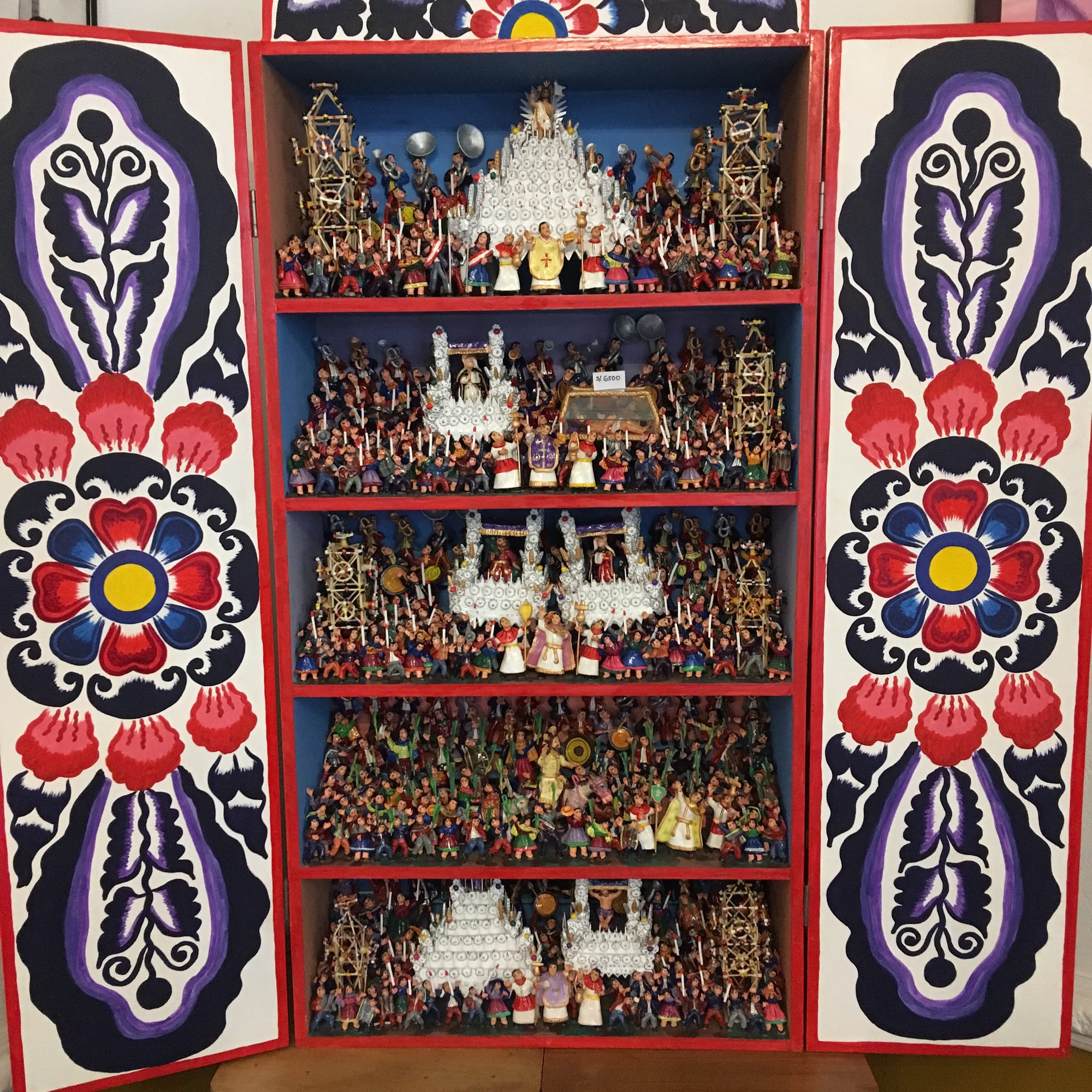
Folk art has its own showpiece in the retablo. These wooden boxes grew out of the portable cases of saints carried by Spanish priests in the colonial period, and in the twentieth century Andean artisans turned them into miniature stages crowded with figures moulded from a plaster-based paste. Alongside nativity and Holy Week scenes, they depict festivals, dances, bullfights and cockfights, and the retablo has been declared part of the Cultural Heritage of the Nation.
Dance and music carry much of the country's spiritual life. The scissors dance, performed by Quechua communities of the south-central Andes and now in cities too, takes its name from the pair of polished iron blades each dancer strikes together in his right hand. Accompanied by a violinist and a harpist, dancers compete in contests that can last for hours, judged on their agility and the skill of their musicians. Tradition once held that the dancers' abilities came from a pact with the devil, and colonial priests regarded the dance with suspicion, yet the dance became part of Catholic festivities all the same. It is one of more than a dozen Peruvian traditions on UNESCO's intangible heritage lists. On the coast, the cajón, a wooden box drum that became a symbol of Afro-Peruvian identity, was declared part of the Cultural Heritage of the Nation in 2001, and it drives the country's creole and Afro-Peruvian rhythms.
Dos and don'ts for visitors
- Do check the latest government travel advice before any trip; some governments advise avoiding the VRAEM valleys and the Colombian border in Loreto, and protests can close roads and sites at short notice.
- Do greet with a handshake on first meeting; among friends, a kiss on the right cheek is usual.
- Do address older people as Señor or Señora, or Don and Doña, and use professional titles.
- Do greet the children when visiting a home and ask after the family's health.
- Do wait to be seated at the table and try to finish what is served; explain politely if not.
- Do remove hats and sunglasses in churches, and dress presentably in public.
- Don't give knives or other sharp objects as gifts; they can suggest cutting ties.
- Don't hold private conversations that leave others out when in company.
What to take away
Peru's customs weave together Catholic devotion, Andean ritual and a deep sense of mutual obligation, and visitors who greet warmly, accept hospitality graciously and respect the sacred in all its forms will find a country eager to share its feasts.