Daily Life · Peru
Peru: A Capital Built Up the Hills
A capital that grew for decades by climbing its own dry hillsides as families arrived from the Andes, an economy in which around seven in ten workers have no formal job at all, and highland communities that still trade labour rather than money to get things built
By Worldlore Editorial · 30 September 2026
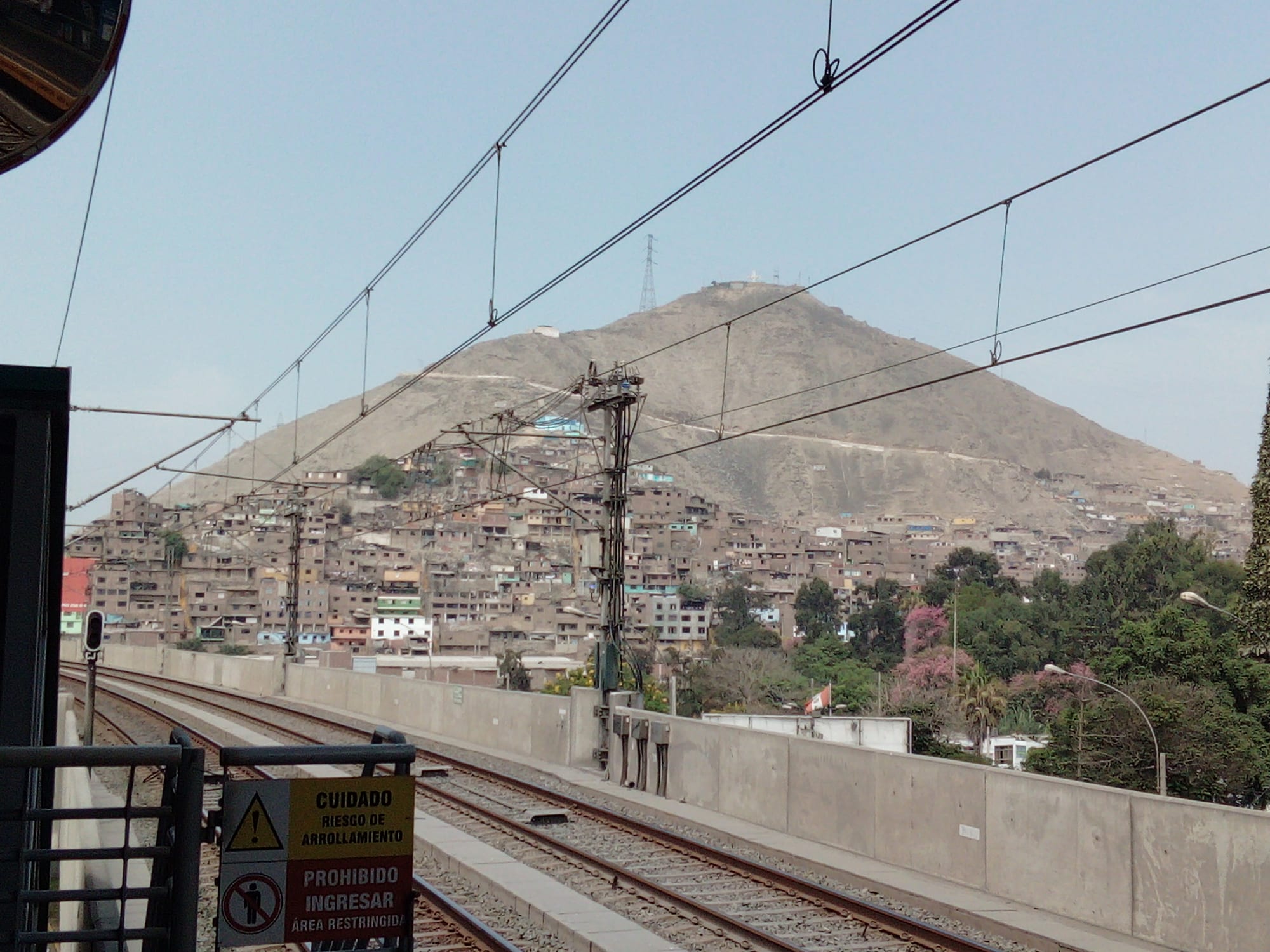
About a third of Peru's population lives in Greater Lima, a desert city that grew for decades as families arrived from the Andean highlands and built new districts up the dry hills ringing the capital, often starting with basic materials and adding permanent construction over years as money allowed. Away from Lima, the country splits sharply into three worlds that share the same flag but not much of the same daily rhythm: the coast and its cities, the Andean highlands where Quechua and Aymara remain living languages, and the Amazon, which covers more than half the national territory but holds only a small fraction of the population. Holding much of it together is an economy in which most people work without a formal job at all.
Family and home life
Family remains the main source of practical support in a country where public services are thin and most work is informal, and it is common for relatives across generations to help each other out financially and with childcare rather than relying on the state. In the Andean highlands, rural communities still practise ayni and minka, systems of reciprocal and communal labour in which households trade work directly rather than money — helping each other plant, harvest or build, and mobilising together to maintain irrigation canals, paths and shared spaces. These highland communities have been emptying for decades as young people leave for Lima and other coastal cities, and many of the capital's hillside districts were built by exactly this generation of migrants and their children, who arrived with little and built their own housing and neighbourhoods from scratch over one or two generations.
Work, school and the rhythm of the day
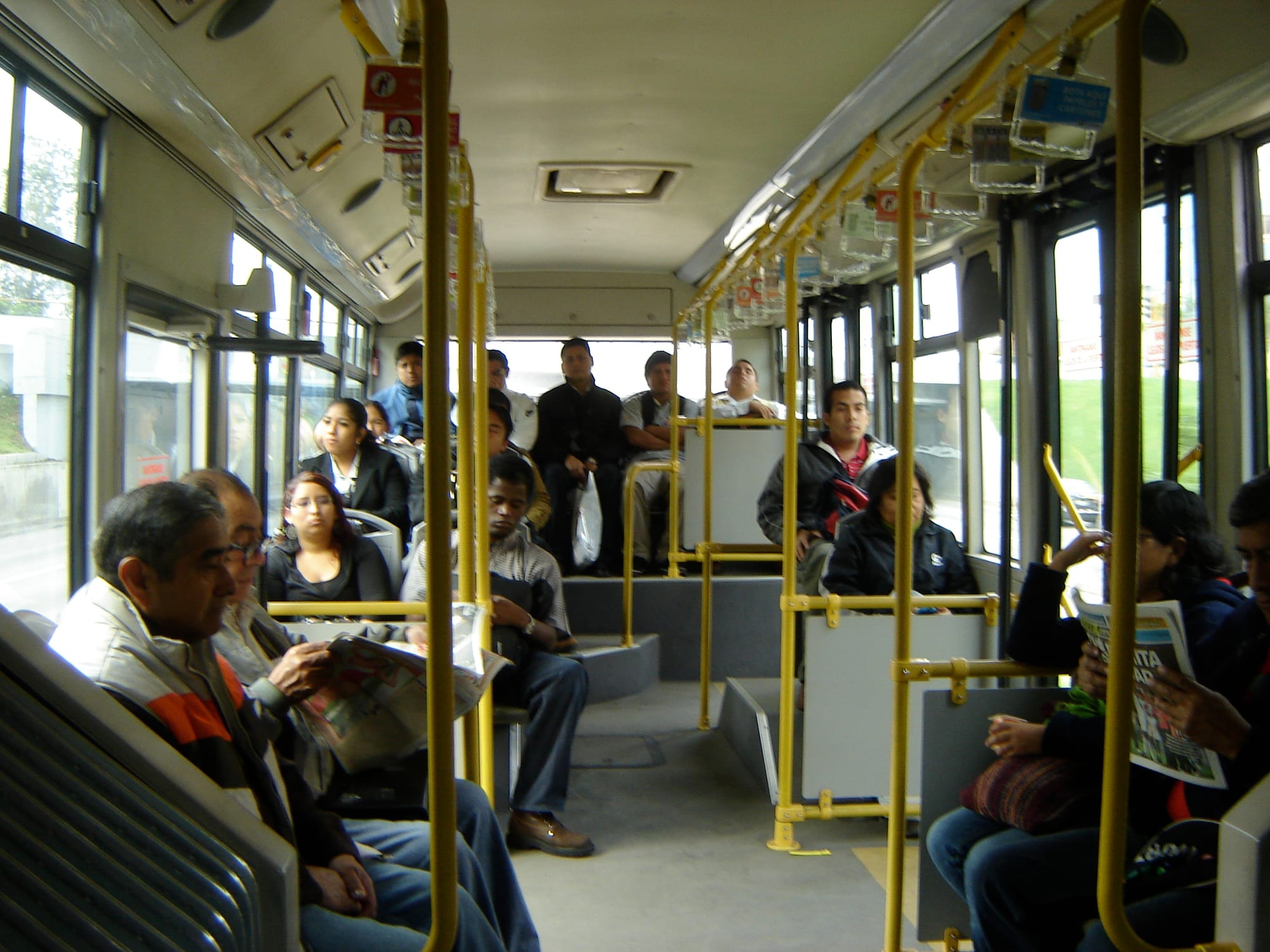
Peru has been a genuine macroeconomic success story by regional standards for two decades, built on copper, gold, fishmeal, gas and farm exports, but most of that growth has not reached the way ordinary people actually work: in 2024, according to the national statistics agency INEI, around 71 per cent of employed Peruvians worked informally, in street vending, small unregistered trade or casual labour without contracts or benefits. Schooling is conducted mainly in Spanish, with Quechua or Aymara co-official and used in schooling where they predominate in the southern and central highlands, though rural schools generally have far fewer resources than urban ones. Commuting in Lima increasingly means the Metropolitano, a dedicated bus rapid transit line that carries hundreds of thousands of passengers a day, alongside privately run combi minibuses that fill in the routes it doesn't cover; heavy traffic congestion is a routine feature of the working day in the capital.
Community life and public spaces
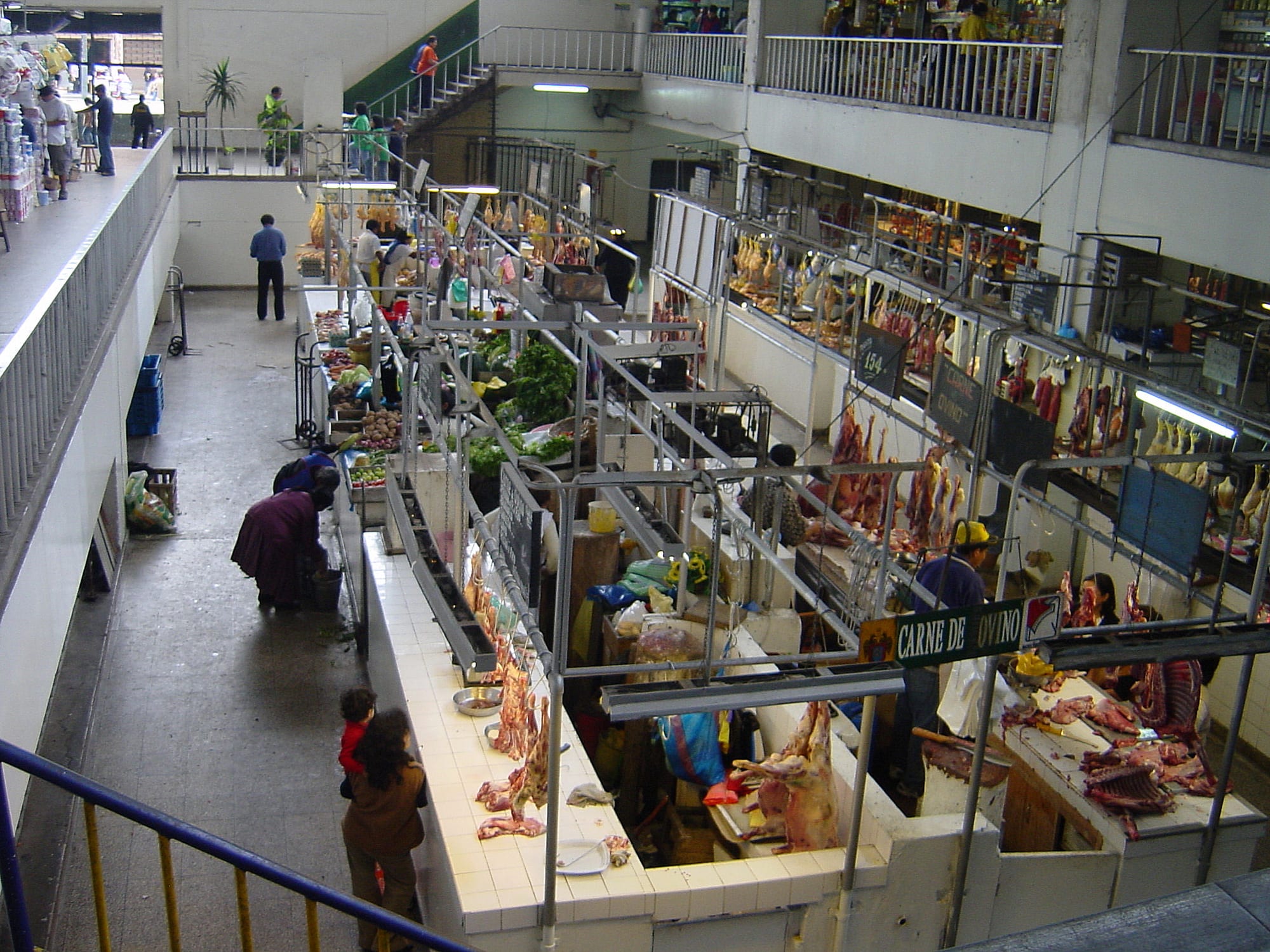
The covered municipal market is the real everyday public space in Peru, found in cities and towns across the country: fresh produce, prepared food and household goods sold from densely packed stalls, with Cusco's San Pedro Market among the best known examples of a format repeated nationwide. In the highlands, the same ayni and minka traditions that organise family labour also organise public infrastructure, with communities mobilising collectively to maintain canals, footpaths and festival grounds rather than waiting for state investment. Beyond Lima, which also has a metro, public transport nationwide runs mostly on combis, colectivos (shared cars and vans) and long-distance buses; passenger trains are few, and most of those that run are tourist routes. Football is the one pastime that reliably draws people out of the house and into a shared public space, watched collectively wherever a screen and a crowd can be found.
Free time and weekends
Football dominates spare time and conversation more than any other pastime, whether played in the street or watched together on television. Sunday is generally kept for family, with a long shared lunch a common ritual. The Andean festival calendar blends Catholic and pre-Hispanic tradition and draws real crowds: Inti Raymi in Cusco each June, the Virgen de la Candelaria in Puno in February, and Qoyllur Rit'i, a pilgrimage that climbs to a glacier near Ausangate, are among the largest shared gatherings in the highland calendar and pull people back from the cities where they now live and work.
A visitor's ordinary day
Peru uses the sol, and cards are widely accepted in cities and tourist areas, but cash is still needed for markets, small towns and much of the Andes; ATMs are common but charge fees. Flying is normal for the long distances involved — Lima to Cusco takes about 75 minutes by air against roughly 21 hours by bus — and Peru's long-distance buses, while excellent by regional standards, are a serious time commitment across the country's size. Use app-based or hotel-arranged taxis rather than hailing one on the street or at the airport, since robbery and so-called express kidnapping of street-hailed taxi passengers is a real and documented risk. Since December 2022, protests and road blockades in the southern Andes have repeatedly closed Machu Picchu and Cusco's airport for days at a time, so it is worth checking the current situation before travelling in that region, and altitude in Cusco and around Lake Titicaca is a genuine practical concern worth acclimatising for before any serious activity.
What to take away
An ordinary day in Peru is still shaped by a divide between three landscapes that share little beyond a flag, and by an economy in which most people get through the day on family support and informal work rather than on the state, a country's coast, mountains and jungle held together less by institutions than by the people doing exactly that.