Culture & Customs · Paraguay
Paraguay: A Culture Woven in Two Languages
A deeply Catholic country that speaks Guaraní as readily as Spanish, keeps its promises to the Virgin on foot, shares one drink around the circle, and gave the world a day for friendship
By Worldlore Editorial · 30 September 2026
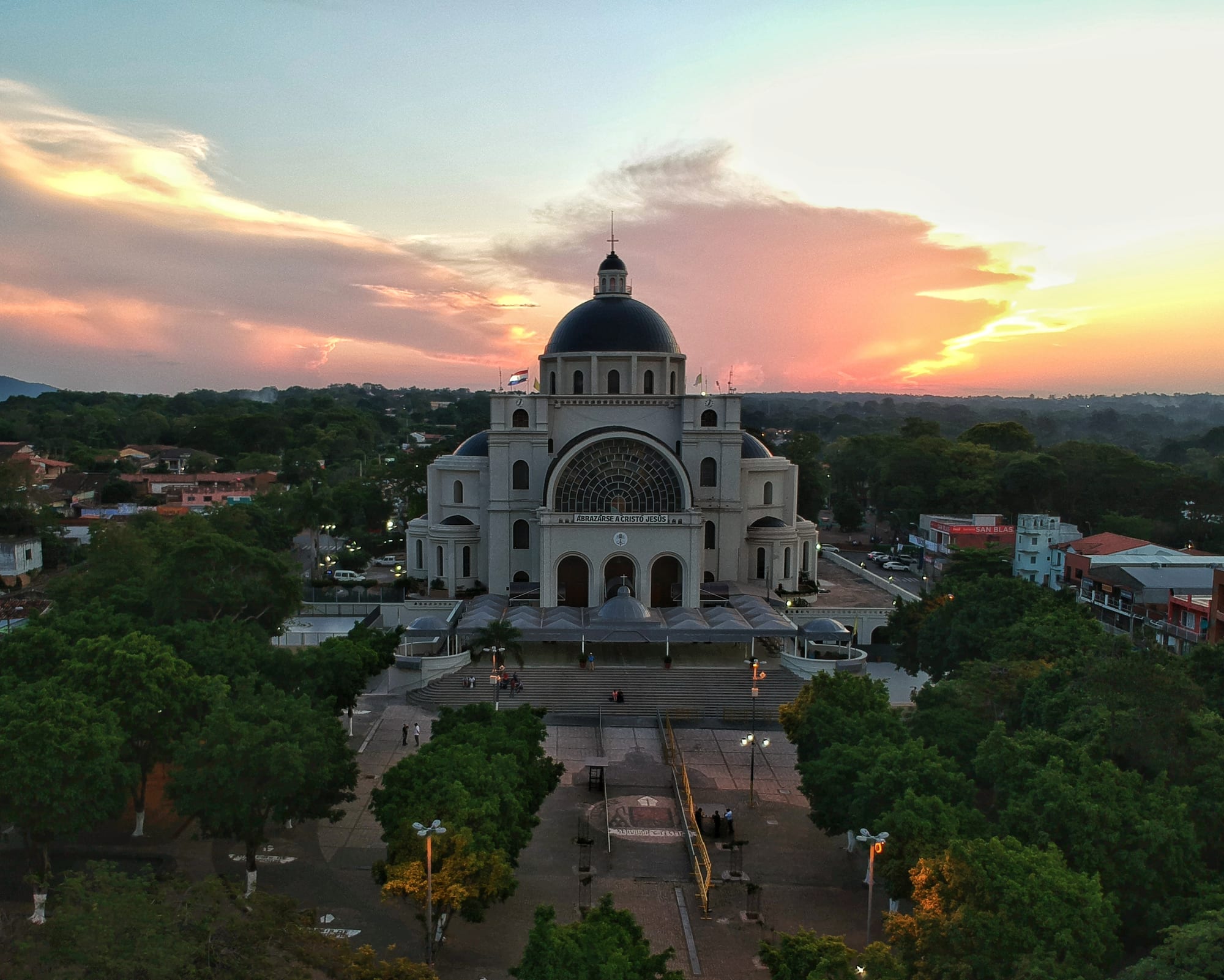
On the night before 8 December, the roads of Paraguay fill with people walking. They set out from towns and villages across the country, often travelling through the dark to avoid the heat, heading for the basilica of the Virgin of Caacupé. Some walk barefoot; a few travel part of the way on their knees. Many are keeping a promesa, a promise made to the Virgin in a hard moment, and some wear a white tunic with a light blue mantle to show it. Along the way, neighbours, parishes and volunteers set up stalls to hand out water, food and first aid to strangers. Faith, endurance and a readiness to look after whoever happens to be passing: the pilgrimage gathers into one night much of what Paraguayans value most.
Faith, identity and values
Paraguay is overwhelmingly Roman Catholic, and the faith is lived as much through popular devotion as through formal worship. Folk Catholicism is strong, and while men dominate the formal structures of the Church, women play a central part in keeping popular devotion alive. The Virgin of Caacupé is recognised as the country's patron and a focus of national devotion, and 8 December, the Feast of the Immaculate Conception, is a public holiday marked by her pilgrimage.
What sets Paraguay apart in the Americas is language. Guaraní, the language of the region's Indigenous people, became an official language alongside Spanish under the 1992 constitution, and it is spoken across every class, by the descendants of Spanish settlers and Guaraní alike. The centuries-long mixing of the two peoples produced a distinctly Spanish–Guaraní culture, and the Guaraní language has become the clearest marker of Paraguayan identity: a way of asserting unity and of saying, simply, that one is from here.
That national Guaraní is not the same thing as Indigenous life. The 2022 Indigenous census counted about 140,000 Indigenous people, belonging to 19 peoples in five language families. Just over half belong to the Guaraní language family, but others speak languages quite unrelated to it, and nearly nine in ten live in rural areas. These communities keep their own languages and traditions, distinct from the mainstream Paraguayan culture that borrowed so much from their ancestors.
Everyday values lean towards warmth, humour and time spent together. Peace Corps guidance for its volunteers describes Paraguayans as friendly, curious and quick to laugh, fond of jokes and stories, and generous with invitations to a football match, a family event or a round of tereré. Good-natured teasing is common, and taking it in good spirit, and returning it, is one of the surest ways to be accepted. Unstructured time with others matters more than a tightly kept schedule.
Greetings and meeting people
Greetings are warm and physical. Among social equals in middle-class and upper-class circles, women greet one another with a kiss on each cheek, whether they are old friends or meeting for the first time, and men and women who know each other greet in the same way. Men of every class shake hands in formal situations, and leave-taking follows the same forms as arrival, so a gathering ends with a round of goodbyes rather than a wave from the door.
Curiosity is part of making friends. Newcomers may be asked frank questions about anything from their clothes and appearance to what things cost, and such remarks are usually meant as interest rather than rudeness. A relaxed answer, and a question in return, goes a long way.
Appearance counts. Cleanliness and a neat personal presentation are important to Paraguayans, and Peace Corps guidance notes that shorts, tank tops and flip-flops are regarded as inappropriate outside the home or recreation, particularly when dealing with officials or in offices and schools.
Hospitality and being a guest
Hospitality in Paraguay is built around sharing. Social gatherings often centre on an asado, where beef is roasted over an open fire, and the religious holidays bring out larger feasts for family and neighbours. Yet the most common act of hospitality is far simpler: an invitation to join the circle for tereré.
Tereré is cold water poured over yerba mate in a single vessel, the guampa, and drunk through a metal or cane straw, the bombilla. The water is often infused with pohã ñana, medicinal herbs crushed in a mortar, each credited with its own benefits in knowledge passed down through families. UNESCO, which added the practice to its list of humanity's intangible heritage in 2020, describes its preparation as an intimate ritual governed by a set of established codes, and the time given to it as a way of fostering inclusion, friendship, dialogue, respect and solidarity. In practice, the same guampa is refilled and passed from person to person around the circle, which often forms among people of the same gender or age. In cooler weather, and first thing in the morning, the same ritual is carried out with hot water as mate.
Being handed the guampa is a sign of inclusion, and joining the circle, even briefly, is the easiest way for a guest to show goodwill. Peace Corps volunteers are told that much of their integration into a community takes place in exactly this setting, over conversation about the weather, the harvest, recipes and local news. Invitations of every kind tend to be generous and frequent, and accepting them in the same spirit matters more than any particular rule of etiquette.
Festivals and life's big moments
The religious calendar gives the year its shape. In Holy Week, families gather to bake chipa in large quantities, often in the traditional clay oven, the tatakua. On Maundy Thursday or Good Friday many visit seven churches to meditate on the path of Christ, and Good Friday is kept with silence and fasting, the Stations of the Cross, the veneration of the cross, and the traditional chants of the estacioneros, singers whose religious songs are one of the most distinctive sounds of the week. Easter Sunday brings Mass and a family feast.
In June the fiestas of San Juan light up the winter with fire, seen as burning away sorrow and bringing renewal. The traditional games are not for the faint-hearted: pelota tatá, a rag ball soaked in fuel, set alight and kicked around like a football; the toro candil, a mock bull decorated with lit candles; and the Judas kái, a satirical effigy burned at the end of the night. Tables fill with cassava-based snacks and cocido, a sweet drink of toasted yerba mate. On 30 July, Friendship Day, people exchange gifts and messages, and the amigo invisible, a secret-friend gift exchange, is a favourite in offices and among groups of friends.
Independence is celebrated on 14 and 15 May, and 15 May doubles as Mother's Day, a pairing that joins the idea of the mother to that of the motherland. Families gather for a meal and give their mothers gifts while the country marks its founding with public events.
Family ties reach well beyond blood through compadrazgo. Parents choose godparents for a child's baptism, confirmation and marriage, and the godparents take on lasting responsibilities towards the child, while forming a bond with the parents that is expected to endure even beyond the godchild's death. Marriages may be religious, civil or informal unions, though church weddings predominate. When someone dies, families have traditionally kept a novena, nine days of prayer, although the custom is fading in the cities. On All Saints' Day, families visit the cemeteries, decorate the tombs of their relatives and gather to remember them.
Arts, crafts and music
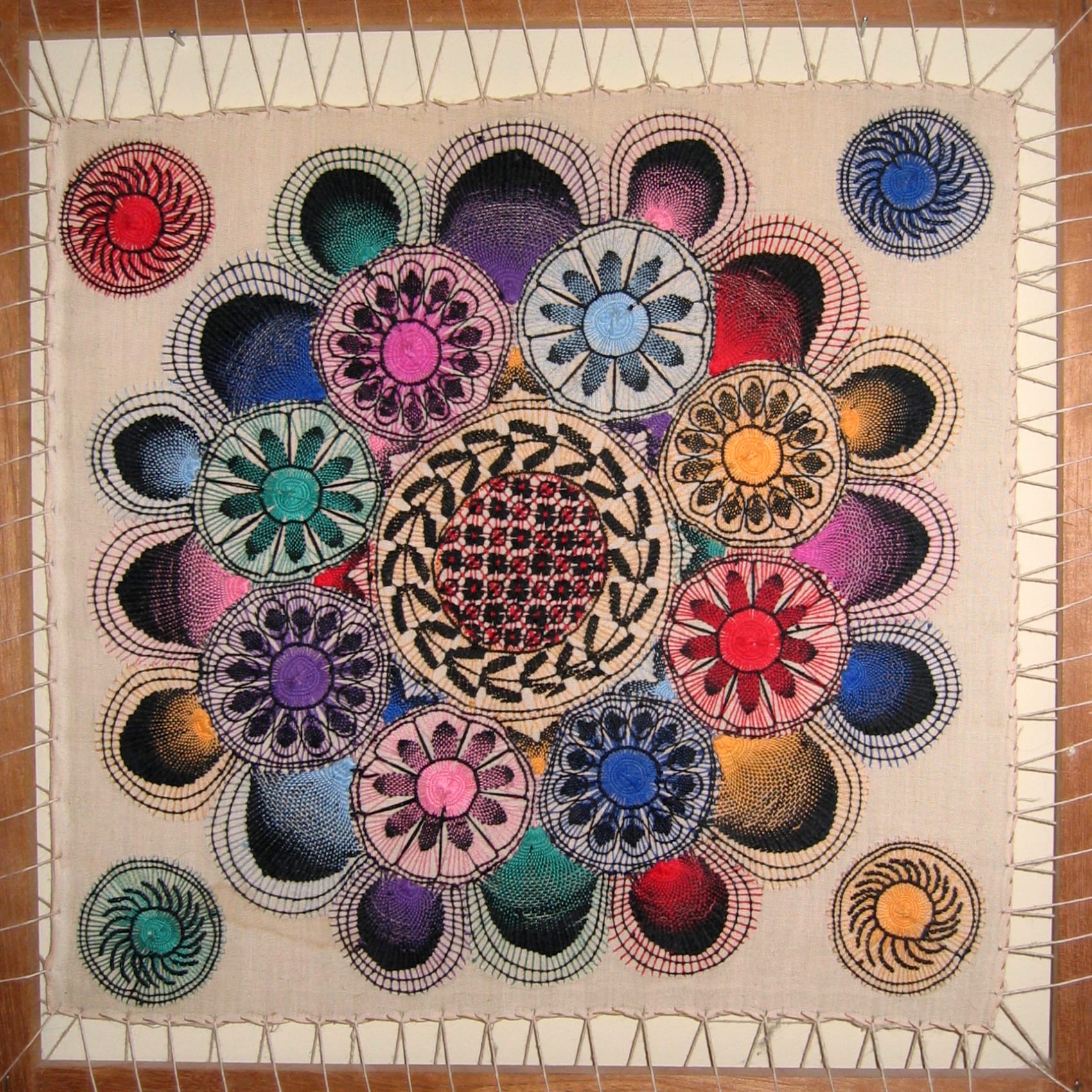
Paraguay's best-known craft is ñandutí, Guaraní for "spider web". It is a needle lace built up on a frame: a pattern is drawn on cloth, radiating threads are stitched across it and woven into round medallions, and the backing cloth is finally cut away and the lace starched with cassava starch. The technique is thought to have arrived with the Spanish during the colonial era, and it was revived after the devastation of the War of the Triple Alliance by surviving lacemakers who taught others. Alongside it come ao po'i, a fine embroidered cloth, and ceramics. Two traditional crafts are now on UNESCO's list of heritage in need of urgent safeguarding: the poncho para'i of sixty stripes, woven in cotton by women who each specialise in one stage of the work and pass the skill from mother to daughter, and the ancestral ceramic craft of ñai'ũpo, inscribed in 2025.
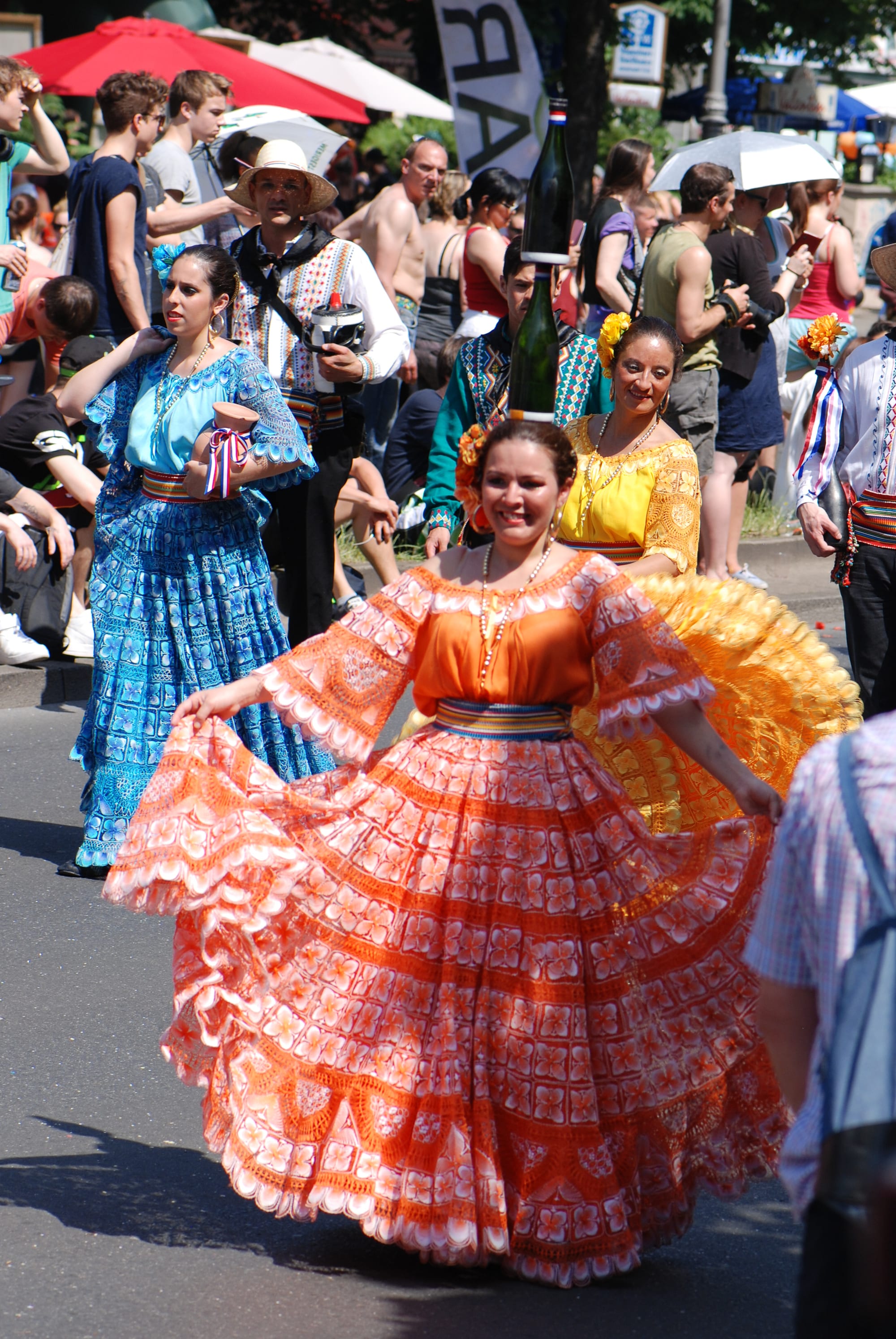
Music is dominated by the harp and the guitar, often in slow and melancholy pieces. The Paraguayan harp, widely regarded as the national instrument, is a light, many-stringed harp played with the fingernails. The polka paraguaya is the traditional dance music, and its rhythms inspired the guarania, a slower genre created by José Asunción Flores in 1925 and often sung in Guaraní. UNESCO, which inscribed it on its list of humanity's intangible heritage in 2024, describes it as part of family and community life and as a symbol of resilience and Paraguayan values. Folk dance keeps its showpieces too, among them the bottle dance, in which women dance with bottles balanced on their heads.
Dos and don'ts for visitors
- Do check the latest government travel advice before any trip; some governments advise against non-essential travel to the northern border departments because of drug-trafficking violence.
- Do greet everyone on arrival and say goodbye to each person when leaving; women commonly greet with a kiss on each cheek, men with a handshake in formal settings.
- Do accept an invitation to share tereré, and drink from the guampa when it comes round the circle.
- Do take good-natured teasing in the same spirit, and feel free to return it.
- Do dress neatly; shorts, tank tops and flip-flops are best kept for home and leisure.
- Don't take frank questions about appearance or prices as rudeness; they are usually a sign of friendly curiosity.
- Don't assume national Guaraní and Indigenous identity are the same; Paraguay's 19 Indigenous peoples keep their own languages and traditions.
What to take away
Paraguay's customs are woven from two cultures and held together by generosity, so visitors who accept the guampa, take a joke kindly and honour the country's faith and its Guaraní voice will find themselves quickly drawn into the circle.