Culture & Customs · Papua New Guinea
Papua New Guinea: The Gift That Binds
Hundreds of peoples and languages, a near-universal Christian faith laid over older beliefs, and a way of life in which almost every gift, meal and greeting creates a debt that will one day be repaid
By Worldlore Editorial · 30 September 2026
At many weddings in Papua New Guinea, the bride price is laid out for all to see. The groom's relatives arrive with what they have gathered together: pigs, food, shell valuables and, increasingly, banknotes. Uncles, cousins and clan members have each contributed a share, and once the payment is handed over, the bride's family divides it in turn among its own people. The exchange is loud, public and carefully counted, because it is not really a transaction between two people at all. It is the start of a relationship between two groups, each of which now owes the other something. That idea runs through Papua New Guinean life far beyond weddings: what is given is remembered, and what is received must, sooner or later, be returned.
Faith, identity and values
Papua New Guinea is less a single culture than hundreds of them. Across the eastern half of New Guinea and more than 600 islands, around 840 languages are spoken, and Cultural Atlas notes that "Papua New Guinean" works more as a national label than as a description of one people. Ancestry, clan and place of birth remain the heart of how most people understand who they are, and while Tok Pisin serves as a shared language across the country, first loyalties tend to stay local.
The idea that holds these many worlds together is wantok, Tok Pisin for "one talk". A person's wantoks are, at root, those who share their language or clan, but the term now stretches to anyone bound to them by kinship, geography or personal connection. Wantoks are expected to help one another, and the help is not free: assistance creates an obligation that something of equal value will be returned. Land follows the same collective logic. It is held by groups rather than individuals, and a person's rights to it come from being born into a particular clan.
Leadership in many communities has traditionally rested on generosity rather than inheritance. A "big man" earns standing by acquiring wealth and sharing it with kin and supporters, and the pattern survives in modern form in the businessperson or politician expected to provide for those who back them.
Christianity is the religion of the overwhelming majority. At the 2011 census, around 96 per cent of people identified as Christian, spread across many churches: Roman Catholics are the largest group, followed by Evangelical Lutherans, Seventh-day Adventists, Pentecostals and the United Church, with smaller Evangelical Alliance, Anglican and Baptist congregations. The faith spread through contact with European missionaries from the late nineteenth century onwards, and it did not simply replace what came before. Indigenous belief systems, in which ritual is needed to keep a person well in body and spirit, persist in many communities, and spiritual practitioners are still consulted over illness, approaching death or troubling behaviour. Many communities work to blend and reconcile church teaching with older custom, and those beliefs tend to remain rooted in their own particular place.
Greetings and meeting people
The everyday greeting is a handshake, usually with the question "yuorait?", Tok Pisin for "how are you?". Handshakes take many forms. People may clasp hands, grasp one another around the hips, or shake hands and then hold the joined hands against the chest, a gesture of friendship and respect. A nod of acknowledgement can be enough in passing, and a firm but gentle handshake suits most formal settings, while a softer grip is often more appropriate away from the towns.
A greeting is rarely rushed. Meeting someone means stopping to talk rather than exchanging a word on the move, and elders are shown deference: they are greeted first, listened to carefully and not interrupted or contradicted. People of standing are best addressed by title and full name, although first names are usually acceptable in ordinary settings.
Much is said without words. Many Papua New Guineans point with the chin rather than a finger, and pointing at someone outside the conversation can be taken as a sign of gossip. To call someone over, the fingers are pointed downwards and moved in a scratching motion, and a short hiss with a sideways movement of the head signals disgust. Eye contact is generally expected, since avoiding it can suggest dishonesty, but a direct gaze between people who are not close can read as aggressive, and between men and women it can carry unwanted meaning. Friends of the same sex often hold hands, while couples keep affection out of public view and men and women usually keep about an arm's length apart. Criticism, especially between men, is often passed on through a third person rather than delivered face to face.
Hospitality and being a guest
Visiting is relaxed and usually unannounced, except for special occasions such as funerals. Friends and relatives drop in on one another freely, and a delay of half an hour or so is accepted as "PNG time". Invitations carry weight: turning one down is considered more discourteous than accepting and then not appearing. Bringing food to someone's home is appropriate, though not required, and gifts are usually presented with both hands as a sign of respect. Practical items and food make better gifts than cash, which belongs to formal ceremonies.
Meals are commonly shared, eaten sitting on the floor or, in towns, at a table, with a spoon or with the hands. Two points of table etiquette stand out. Asking for a second helping can offend a host by implying that not enough was provided in the first place, and stepping over food is regarded as very rude. Alcohol plays a small part in daily life for many families and is restricted in some areas. Some foods are also governed by relationships and status: in some communities, for example, a son-in-law may not eat certain foods in the presence of his mother-in-law. A guest who watches what others do, and follows their lead, will rarely go wrong.
Festivals and life's big moments
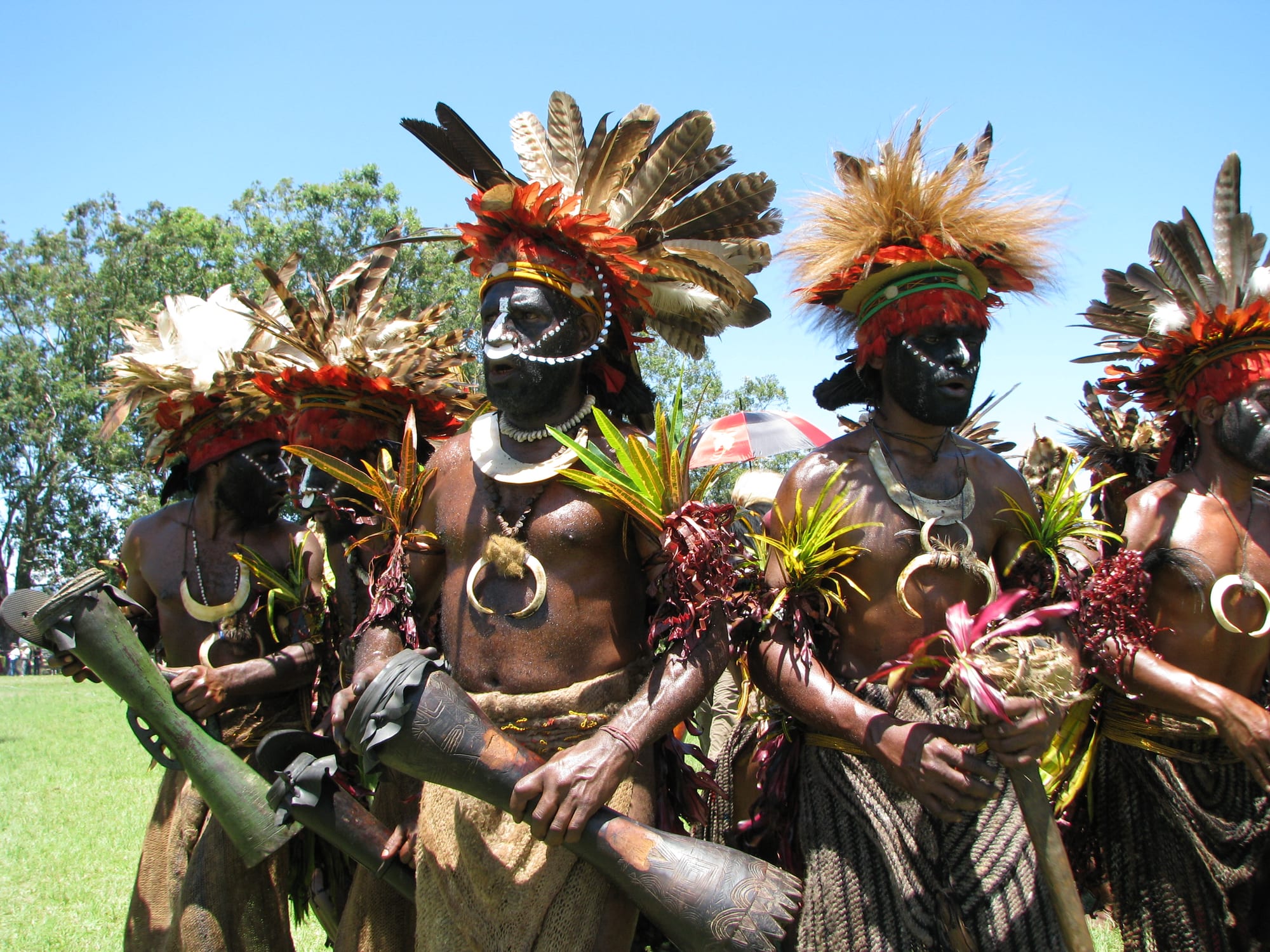
Independence Day, on 16 September, is the most anticipated date in the national calendar. The anniversary opens with flag-raising ceremonies, and the celebrations that follow bring festivals, shows and fireworks. The months either side of it form the country's show season, when provincial cultural shows and festivals, from Highlands gatherings to the National Kenu and Kundu Festival of canoes and drums, draw performers from wide areas. At the centre of them all is the sing-sing, a display of customary dance, music and ceremonial dress in which groups perform in feathers, paint, shells and leaves, each representing its own community.
Life's turning points are marked with elaborate ritual, and the national tourism authority lists deaths, feasts, marriages, compensation ceremonies and initiation rites among the occasions that call for it. Marriage has traditionally been a matter of clan strategy as much as personal choice. Customs vary from region to region, and in some areas a dowry passes from the bride's side instead, but where it is paid, the bride price, paid in pigs, food, shells and, more recently, money, draws in the groom's extended family as contributors and the bride's family as recipients, and in doing so it binds the two clans in a web of obligations. The custom is not without its critics, and women increasingly challenge it.
Death brings the haus krai, the "house of crying". From the time a person dies until the burial, which can be weeks later, relatives, friends and colleagues visit the family's home to pay their respects. Visitors bring gifts of money and food, and pigs carry particular significance. Attending is regarded as an obligation rather than a choice, and hosting the many mourners who come can place a real financial strain on the bereaved family.
Arts, crafts and music
Drums sound through almost every ceremony. The kundu, an hourglass-shaped hand drum, is shaped by carving and burning a log, then covered at one end with a skin that may come from a monitor lizard, sea snake, cassowary, pig or shark, among other animals. Kundu is the general name, and many groups have their own word for it. The garamut, a large slit drum hollowed from a single log through a narrow opening along the top, can carry its voice over long distances, and it has long been used to announce meetings, pass on messages, call individuals and issue warnings. Both are heard at ceremonies marking births, deaths, the completion of a house and the launching of a canoe, and for many communities drums represent the voices of spirits and ancestors. The garamut has long been associated with spiritual power, and in some communities it is carved out of sight of women and girls.
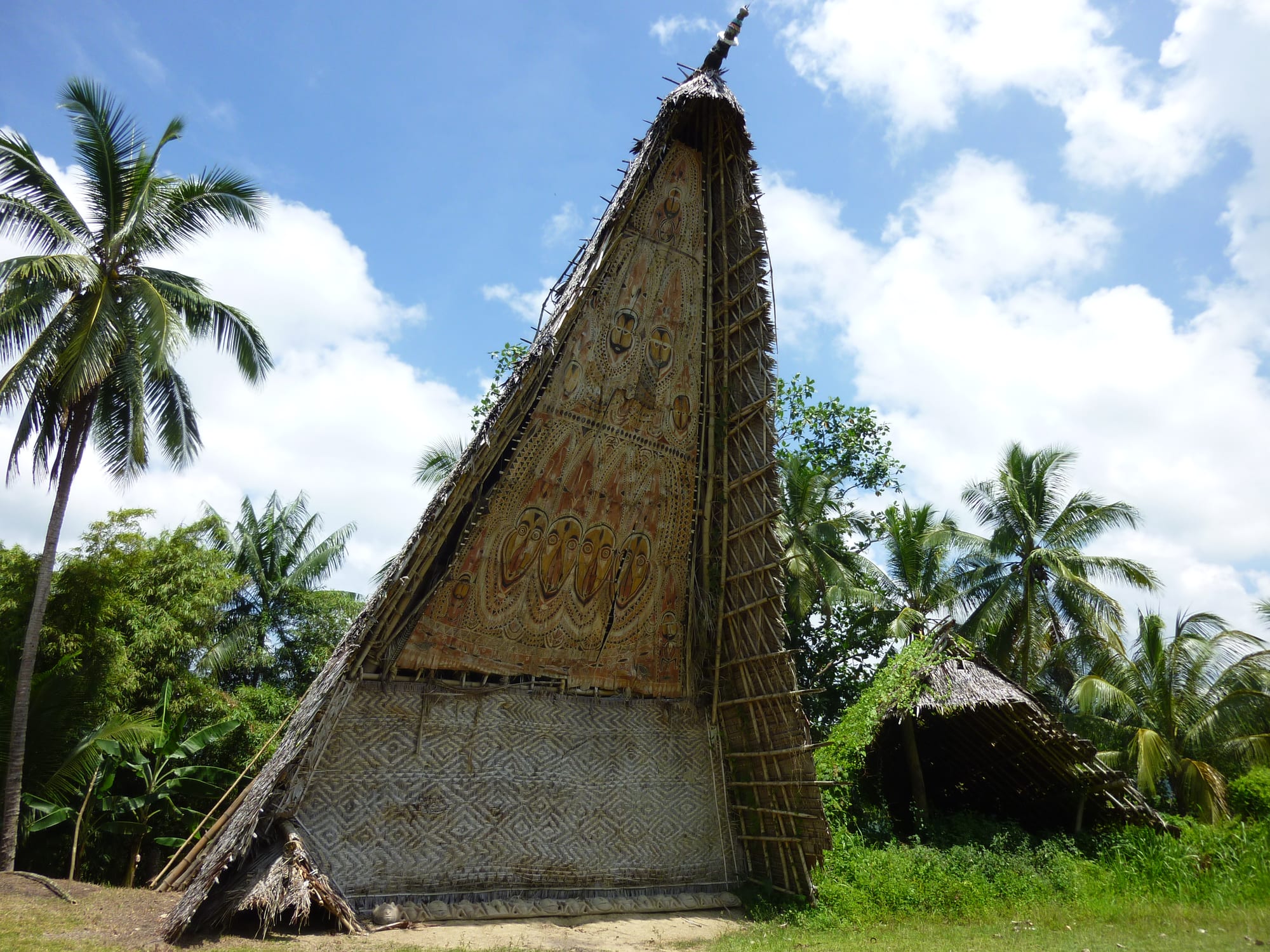
The bilum is the country's best-known craft, and among the most personal. These string bags are made mainly by women using a looping technique, with two-ply string spun by rolling fibres between hand and thigh. Bark fibre was the traditional material, and today makers also work in wool, cotton and even plastic, choosing fibres for colour or for durability in wet conditions. Bilums range from large, stretchy carryalls to small, dense bags, and they carry garden produce, money and betel nut, babies, and precious things such as amulets or keepsakes of the dead. They can signal gender, mark relationships at weddings and initiations, and, since independence, stand as a symbol of national unity. For many women, making and selling them is also an important source of income.
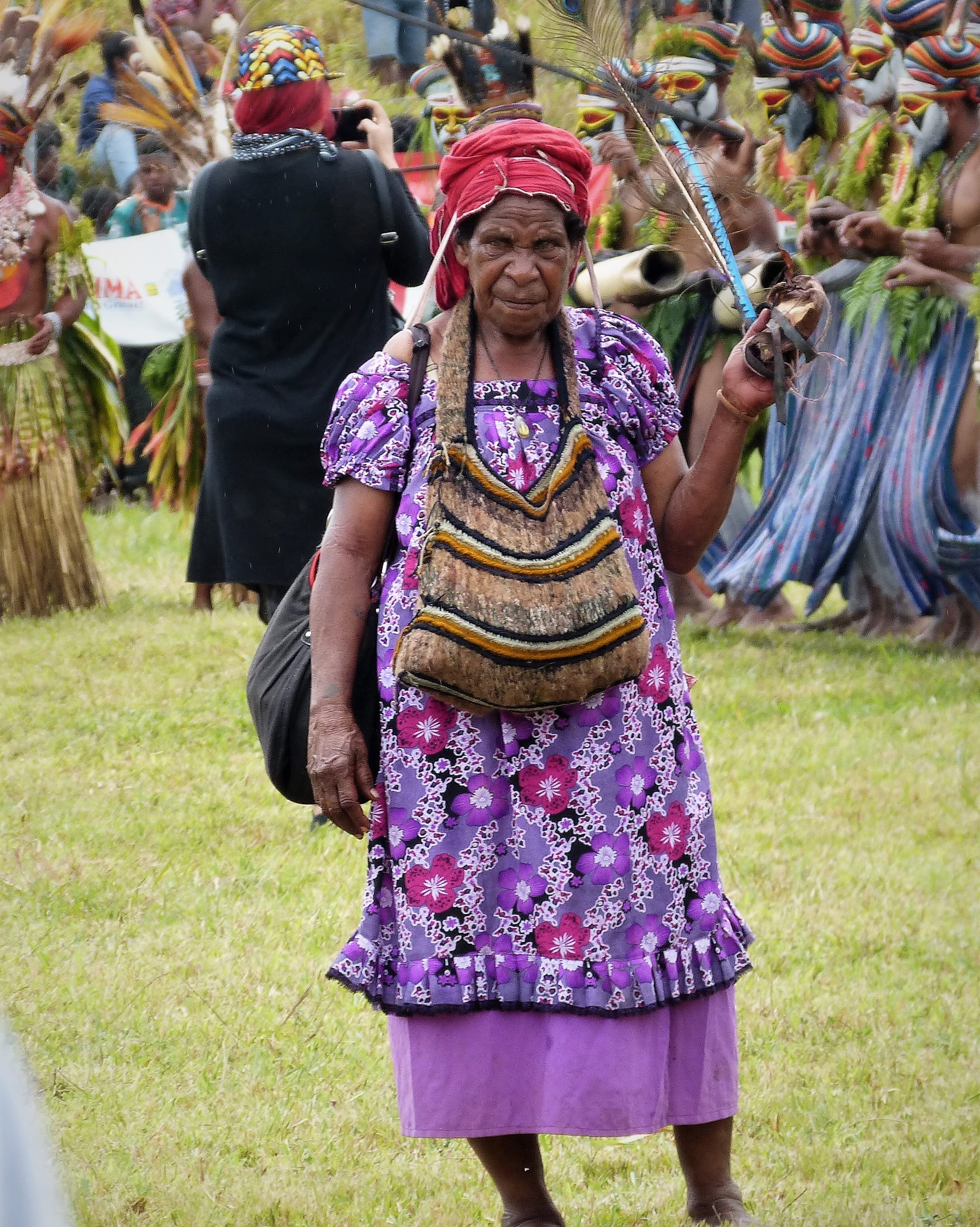
Carving remains a living art, from masks, figures and decorated drums to the painted façades of spirit houses, and the country's markets and shows are among the best places to see it alongside contemporary art. Many of these objects are made for use rather than display, and their meanings belong to the communities that make them.
Dos and don'ts for visitors
- Do check the latest government travel advice before any trip; the UK government advises against all but essential travel to the Highlands provinces of Hela and Southern Highlands and most of Enga because of tribal fighting.
- Do shake hands and stop to talk when greeting people, and greet elders first.
- Do ask permission before photographing people, especially in villages or during ceremonies, and follow local guidance at sacred sites.
- Do dress modestly, especially away from the towns; women in particular are advised to wear long skirts or dresses.
- Do give and receive gifts with both hands; food or practical items are better than cash.
- Don't step over food, or ask for a second helping when eating in someone's home.
- Don't point at people with a finger; a lift of the chin is the local way to indicate someone.
What to take away
In Papua New Guinea almost nothing is given without meaning, and visitors who greet people properly, accept hospitality graciously and remember that every kindness belongs to a web of give and take will find that web opens readily to them.