History · Panama
Panama: The Isthmus and the Canal
A narrow neck of land between two oceans — a Spanish crossing point for Peruvian silver, a province of Colombia, a country created in 1903 so the United States could build a canal, and a nation that spent a century getting the canal back
By Worldlore Editorial · 10 September 2026
A country shaped like a route
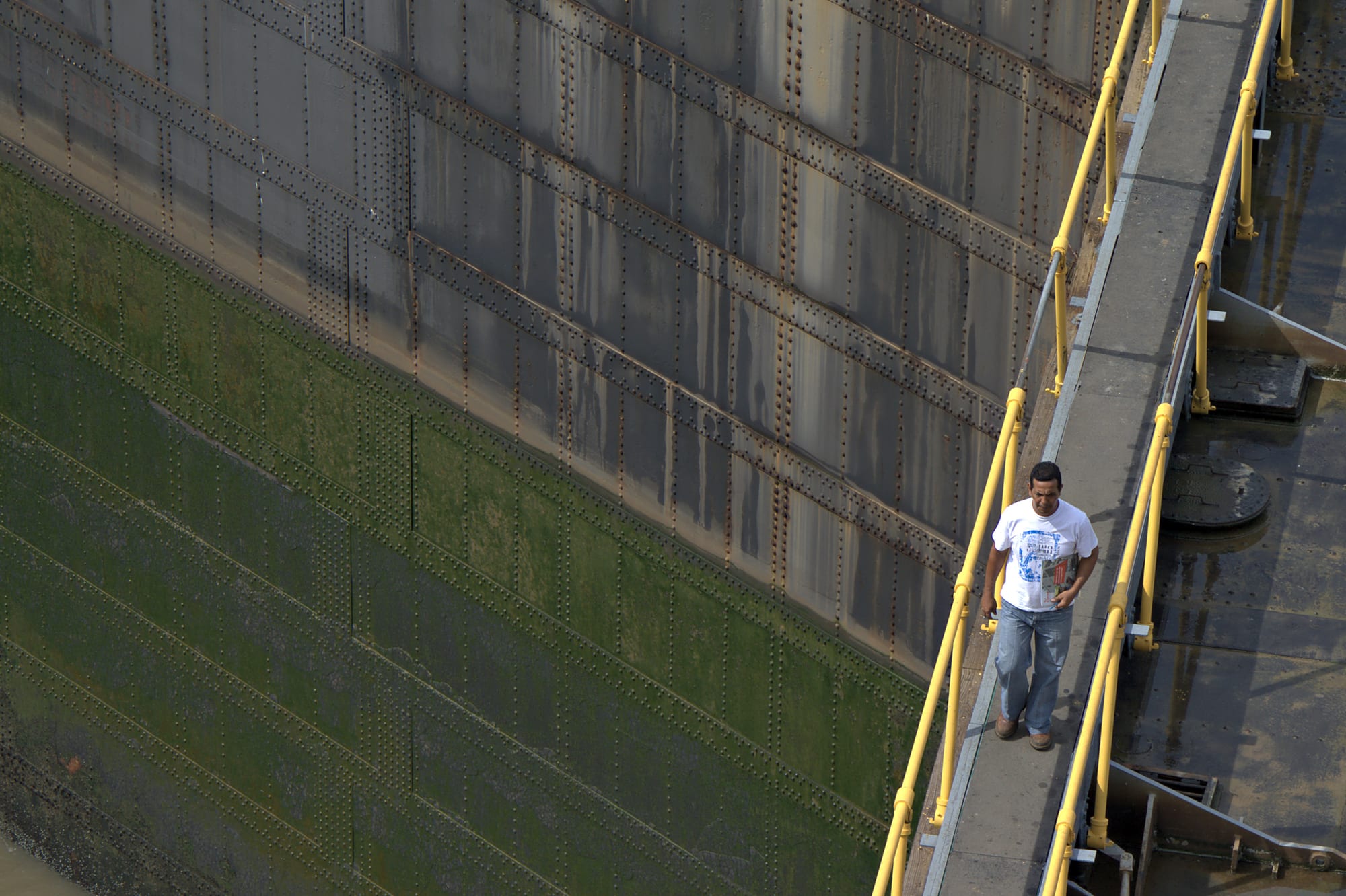
Panama is the S-shaped isthmus joining Central and South America, about 4.4 million people on a strip of land as little as 50 kilometres wide. For five centuries its history has been about crossing it: Spanish mule trains carrying silver, a gold-rush railway, a failed French canal, and finally the American canal that ran through the middle of the country — literally, as a US-controlled zone — from 1914 to 1999. Panama's politics have revolved around who controls that passage and the revenue it generates.
A short history
- pre-1500s
Chiefdoms
Goldworking societies; trade between the continents.
- 1513
Balboa
The first European crossing to the Pacific.
- 16th–18th c.
The Camino Real
Panama City and Portobelo handle Peru's silver.
- 1821
Independence from Spain
Panama joins Simón Bolívar's Gran Colombia.
- 1855
The Panama Railroad
Built for the California gold rush.
- 1881–1889
The French canal
De Lesseps's company collapses; over 20,000 workers die.
- 1903
Secession
Panama breaks from Colombia with US backing; the canal treaty is signed days later.
- 1914
The canal opens
The US governs the Canal Zone as sovereign territory.
- 1977
Torrijos–Carter treaties
The US agrees to hand the canal over by 2000.
- 1989
US invasion
"Operation Just Cause" removes Manuel Noriega.
- 1999
The handover
Panama takes full control of the canal.
The Spanish crossing
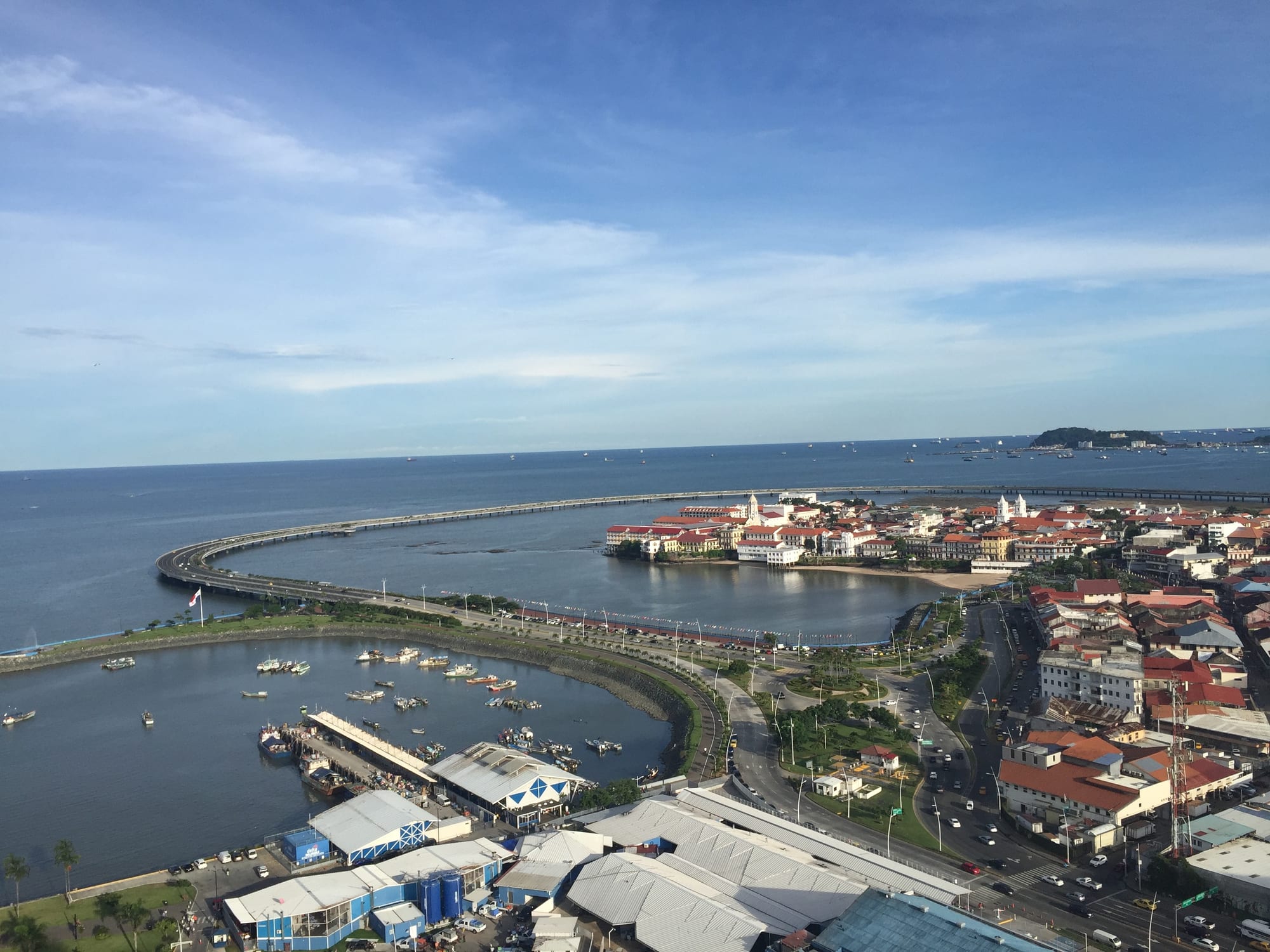
Panama's chiefdoms worked gold and sat astride trade between the Andes and Mesoamerica. In 1513 Vasco Núñez de Balboa crossed the isthmus and became the first European to see the Pacific from the Americas. Under Spain, Panama City (founded 1519) and the Caribbean port of Portobelo became the hinge of the empire's richest route: silver from Peru was shipped up the coast, carried across the isthmus by the Camino Real, and loaded onto the treasure fleets for Spain. The route drew pirates — Henry Morgan sacked Panama City in 1671 — and declined once Spain switched to sailing around Cape Horn.
The French disaster, and the American canal
The California gold rush made the crossing valuable again, and a US company built the Panama Railroad in 1855. In 1881 Ferdinand de Lesseps, builder of the Suez Canal, began a French sea-level canal across Panama. Landslides, engineering misjudgement and, above all, yellow fever and malaria killed more than 20,000 workers; the company went bankrupt in 1889 in a scandal that shook French politics. The United States picked up the project. When Colombia's senate rejected the canal treaty in 1903, Washington backed a Panamanian secession: a near-bloodless revolt on 3 November 1903, protected by a US warship, and recognition within days. The new republic's representative — a Frenchman, Philippe Bunau-Varilla — signed a treaty granting the US a canal zone "in perpetuity" as if it were sovereign.

The Zone, and the road to handover
For most of the 20th century a 16-kilometre-wide Canal Zone bisected Panama, administered by the US with its own police, courts, schools and 65,000 residents, and off-limits to Panamanians except as workers. Resentment was constant and sometimes lethal — in January 1964, riots over the flying of the Panamanian flag in the Zone left more than 20 Panamanians dead. The nationalist military leader Omar Torrijos negotiated the 1977 treaties with President Jimmy Carter, under which the Zone was dissolved and the canal itself would pass to Panama at the end of 1999.
Noriega and the invasion
Torrijos died in a 1981 plane crash, and by the mid-1980s real power lay with General Manuel Noriega, the intelligence chief — a long-time US and CIA asset who was also indicted in Florida for drug trafficking. As relations broke down, Noriega annulled a 1989 election and had an opposition figure beaten on camera. In December 1989 the US invaded with 27,000 troops in "Operation Just Cause", removing Noriega — who was tried and jailed in the US — at a cost of several hundred Panamanian deaths and the destruction of a Panama City neighbourhood.
The canal, and after
Panama took full control of the canal on 31 December 1999 and has run it through an autonomous authority ever since, generally regarded as competent and profitable; a major widening, adding a third set of locks, opened in 2016. Canal fees and a large banking and shipping-registry sector make Panama one of Latin America's richest countries per head, though inequality is wide and corruption scandals — the "Panama Papers" leak of 2016 among them — recurrent. Drought affecting canal water levels and renewed US political claims on the waterway have kept it at the centre of national life.
What Panama carries
Panama was assembled around a transit route and, in 1903, as a country whose independence and first treaty were arranged to suit a canal it would not control for another 96 years. Getting the canal back — through the flag riots, the 1977 treaties, and finally the 1999 handover — is the spine of the national story. The waterway is now Panama's to run, but its water supply, its traffic and its strategic value keep making it everyone else's business too.