Culture & Customs · Panama
Panama: Lace, Masks and the Tamborito
A Catholic, family-centred country where courtesy comes before candour, carnival arrives in a spray of water, devils dance at Corpus Christi, and three drums and a clapping chorus keep the national dance alive
By Worldlore Editorial · 30 September 2026
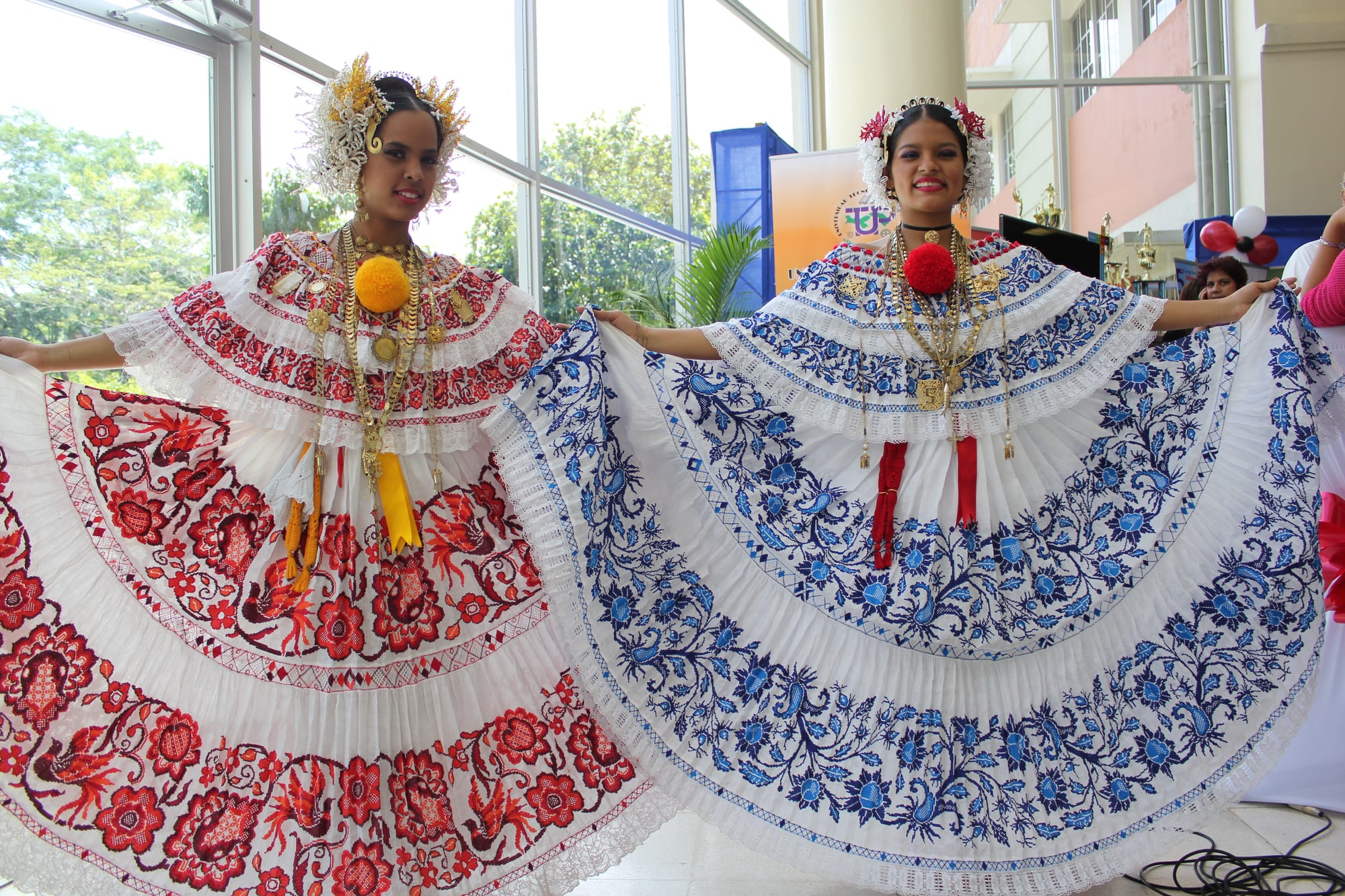
Three drums begin. The caja keeps the beat, struck with two wooden sticks; the deeper pujador fills in beneath it; and the repicador, higher and sharper, calls a couple out into the circle. A woman with a strong voice, the cantalante, sings a verse, and a chorus of women answers her, clapping in time. The couple dance towards each other and away again, the woman in a pollera of white lace and embroidery. This is the tamborito, regarded as Panama's national dance above all others, and it holds much of the country in one small circle: Spanish song and dress, African drumming, a crowd that joins in rather than simply watching. Panama is often seen as little more than a canal between two oceans, but its customs reveal a society with deep roots of its own.
Faith, identity and values
Panama is a predominantly Catholic country, though not uniformly so. A 2022 national survey cited by the U.S. State Department found around two-thirds of respondents identifying as Catholic and just over a fifth as evangelical Christians, with a small share professing no religion. Its position as a crossroads of trade and migration also shows in its smaller Jewish, Muslim, Hindu and Buddhist communities. Religious practice tends to be more visible in rural areas than in the cities, and the Catholic calendar still shapes the country's great festivals, from Corpus Christi to the carnival days that end on Ash Wednesday.
The population is the product of many arrivals and much mixing. Spanish colonial culture forms one strand; another comes from the Africans brought in bondage during the colonial era, whose descendants keep the Congo tradition alive; a third comes from the West Indian workers who arrived later, and whose descendants give parts of the country an English-speaking, Afro-Caribbean character. Indigenous peoples, including the Guna, Ngäbe and Emberá, live across the country, many in self-governing territories known as comarcas. In Guna Yala, the General Congress is the supreme political authority, and each community is led by a saila, or chief.
Family is the foundation of social life. Extended family networks matter, and many people remain closely tied to their relatives long after leaving home, with obligations to family shaping expectations of loyalty and responsibility. Society is broadly conservative: Panamanians tend to value rules and established hierarchies, and good manners are taken seriously. Communication is polite and avoids open confrontation, so a positive answer may reflect courtesy rather than a firm agreement, and tone, context and a gentle follow-up question often reveal more than the words themselves.
Greetings and meeting people
With strangers, Panamanians can seem reserved at first. Public greetings are kept to a minimum and manners tend towards the formal, but once a newcomer has been accepted into a social circle, the welcome is warm and people readily draw new friends into their networks.
A handshake is the standard greeting when meeting someone in a formal or business setting, and it is polite to shake hands with everyone present, beginning with the most senior person. Among friends and close acquaintances, a hug or a kiss on the cheek may follow, depending on the relationship. "Buenos días" and "buenas tardes" are the correct formal greetings, while a quick "buenas" is the everyday informal version.
Titles carry weight. Older people and those in authority are addressed as Don or Doña, and professionals by their title, such as Doctor or Doctora, or Profesor or Profesora. First names are best left until an invitation to use them is offered.
Appearance matters as well. Dress tends to be formal despite the tropical climate, neatness is noticed, and revealing clothing is frowned upon in towns and cities, even if attitudes are more relaxed on the beach and in some Caribbean and Indigenous areas.
Hospitality and being a guest
Food and company go together, and a shared meal is often where people relax, speak more openly and come to trust one another. Social invitations are worth accepting, and when a Panamanian host issues one, the host generally expects to pay. A small gift is not essential but is appreciated, and something from the guest's home country is often the best choice, since it cannot be found locally; chocolates or crafts are also well received. Recipients may open a gift on the spot, and it is gracious to let them do so.
In the Indigenous comarcas, visitors are guests in a territory with its own authorities and its own rules. In Guna Yala, a visitor tax is collected on the islands, although it may be included in the price of a trip. On the inhabited islands, visitors are expected to cover up and refrain from public displays of affection. Photography is restricted on some islands, and permission should be sought before taking pictures of people, homes or anything connected with community ceremonies.
Everyday transactions have their own conventions. Tipping is expected mainly in more expensive establishments or where service has been exceptional. Haggling is not usual in shops, though prices are more open to negotiation in markets.
Festivals and life's big moments
Carnival is the high point of the festive year: four days of celebration leading up to Ash Wednesday, usually in February or March. It opens on the Friday night with the crowning of a carnival queen, and the days that follow bring parades of queens accompanied by costumed troupes and rival groups of supporters. By day come the culecos, when tanker trucks spray the crowds with water to the sound of live music.
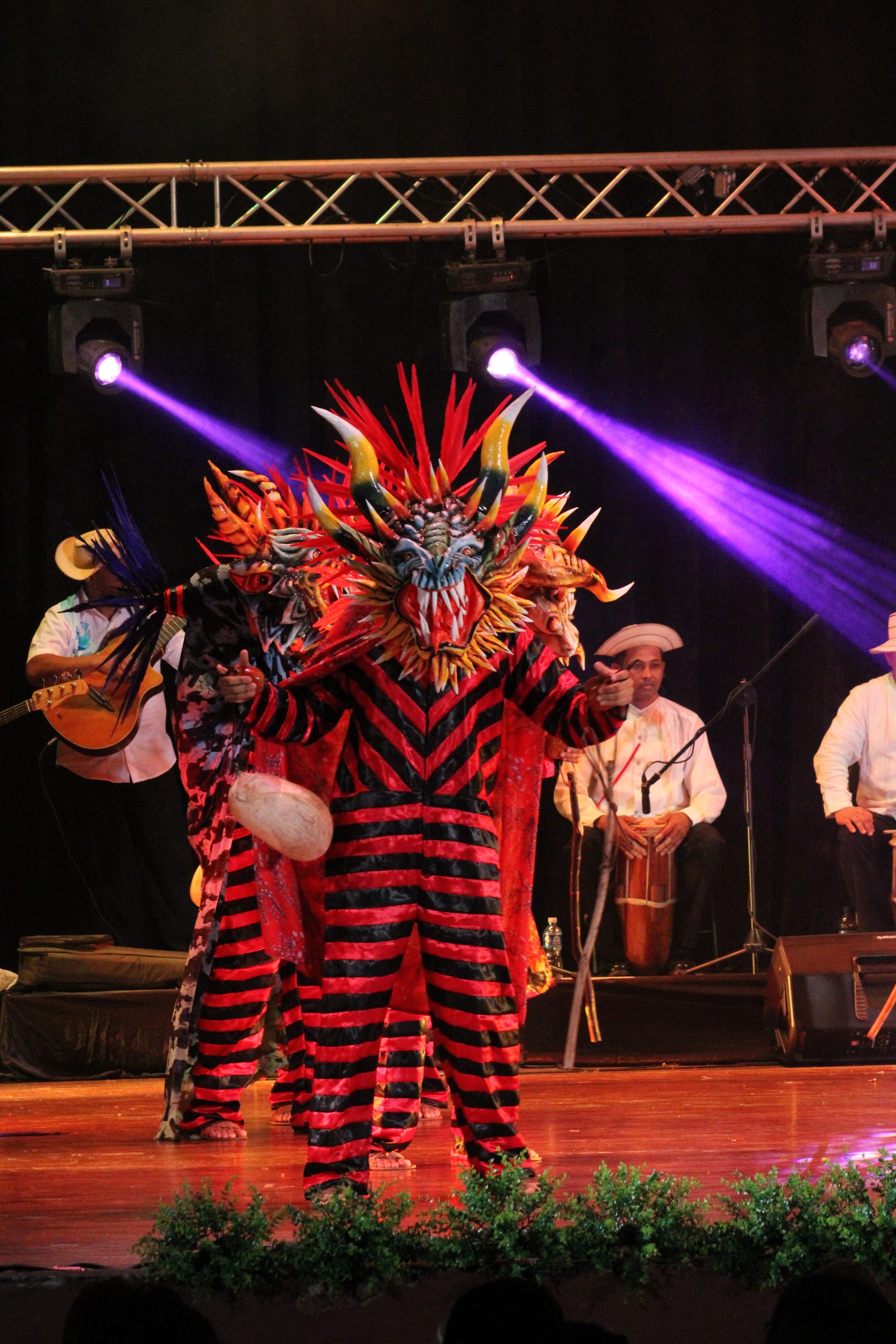
For Afro-Panamanian communities, the same weeks belong to the Congo season, which ends on Ash Wednesday. Congo groups are organised around a queen and her court, and their barefoot dances, drumming and songs recall the resistance of enslaved Africans and their descendants. Masked devils play a central role, and at the close of the season the devils are ritually baptised. The ritual and festive expressions of the Congo culture were inscribed on UNESCO's list of intangible cultural heritage in 2018.
Corpus Christi, whose dances and expressions UNESCO inscribed in 2021, brings the devils out again. On the eve of the festival, a performance stages the battle between good, in the form of St Michael the Archangel, and evil, represented by the great devil and his legion, for the human soul. On the day itself, masked and costumed dancers follow the priest in procession, then dance through the streets. Young people learn the tradition by joining dance groups, mask-making teams and the teams that lay carpets of coloured sawdust along the route.
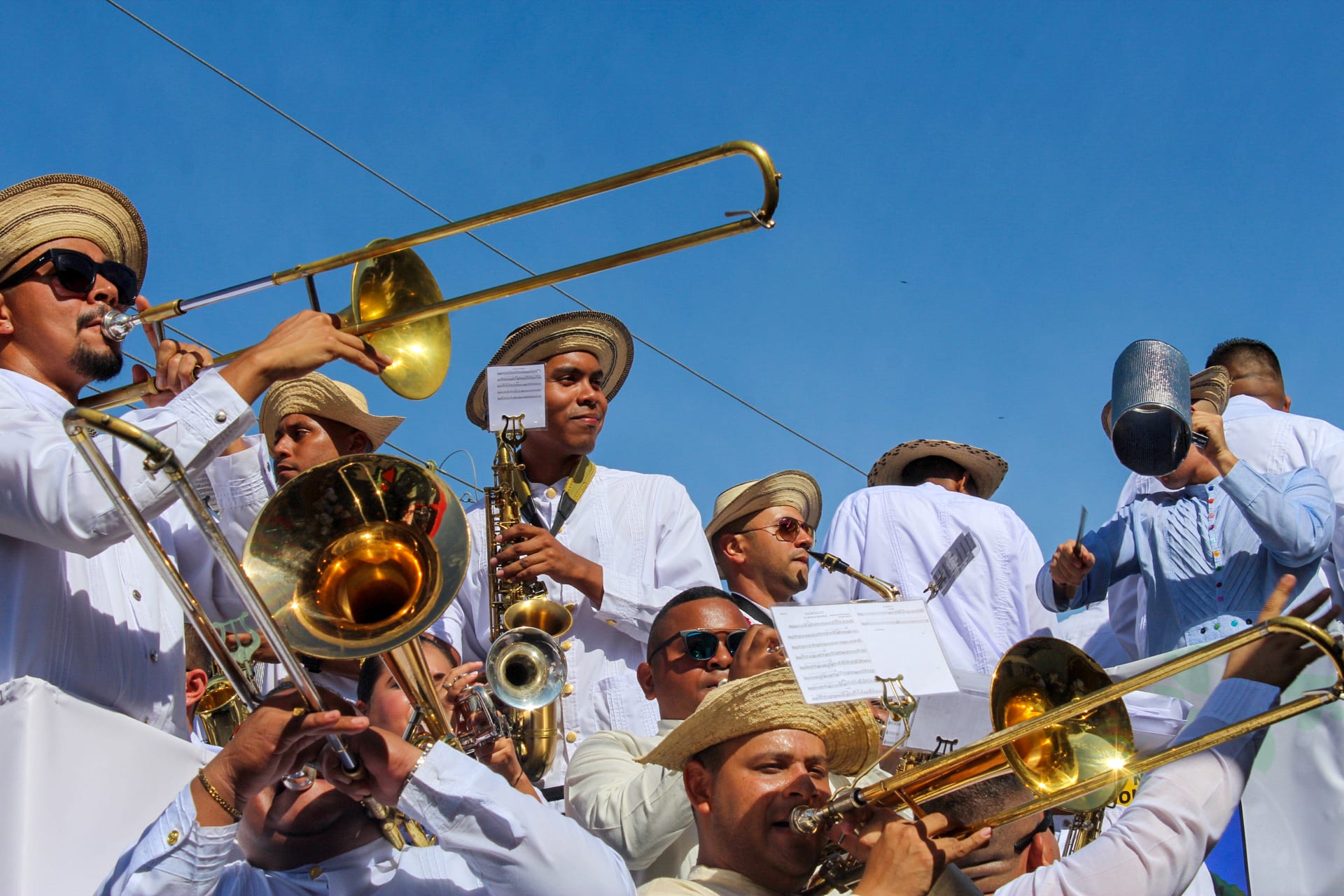
November is the patriotic month. The 3rd marks Panama's separation from Colombia in 1903 and the 4th is the Day of the National Symbols, and on both days school marching bands and independent bands parade through the streets in their dozens. National pride also has its own day for dress: the National Day of the Pollera honours the national costume in all its regional forms and the artisans who make it.
Life's milestones follow the Catholic pattern. Baptisms are important family occasions, marked with a celebratory meal, and godparents become part of the wider family circle. When someone dies, the wake is traditionally held at home or at a funeral parlour, and the rosary is prayed for the soul of the deceased. For Catholic families, the burial is followed by the novenario, nine days of prayer, often led by a rezador, or prayer leader. Coffee or tea and bread are served to those who attend, and the ninth and final day brings a fuller meal. The custom remains strongest in rural areas, although fewer prayer leaders are available than in the past.
Arts, crafts and music
The pollera is the national dress and a source of intense pride. Worn at festivals, parades and folk performances, it comes in several forms, from the elaborate pollera de gala to the simpler montuna and the pollera congo. A full outfit is completed by tembleques, delicate ornaments worn in the hair, and by layers of traditional gold jewellery. Making a pollera and its adornments is a specialist art, and a parade of women in polleras is one of the proudest sights of the festive calendar.
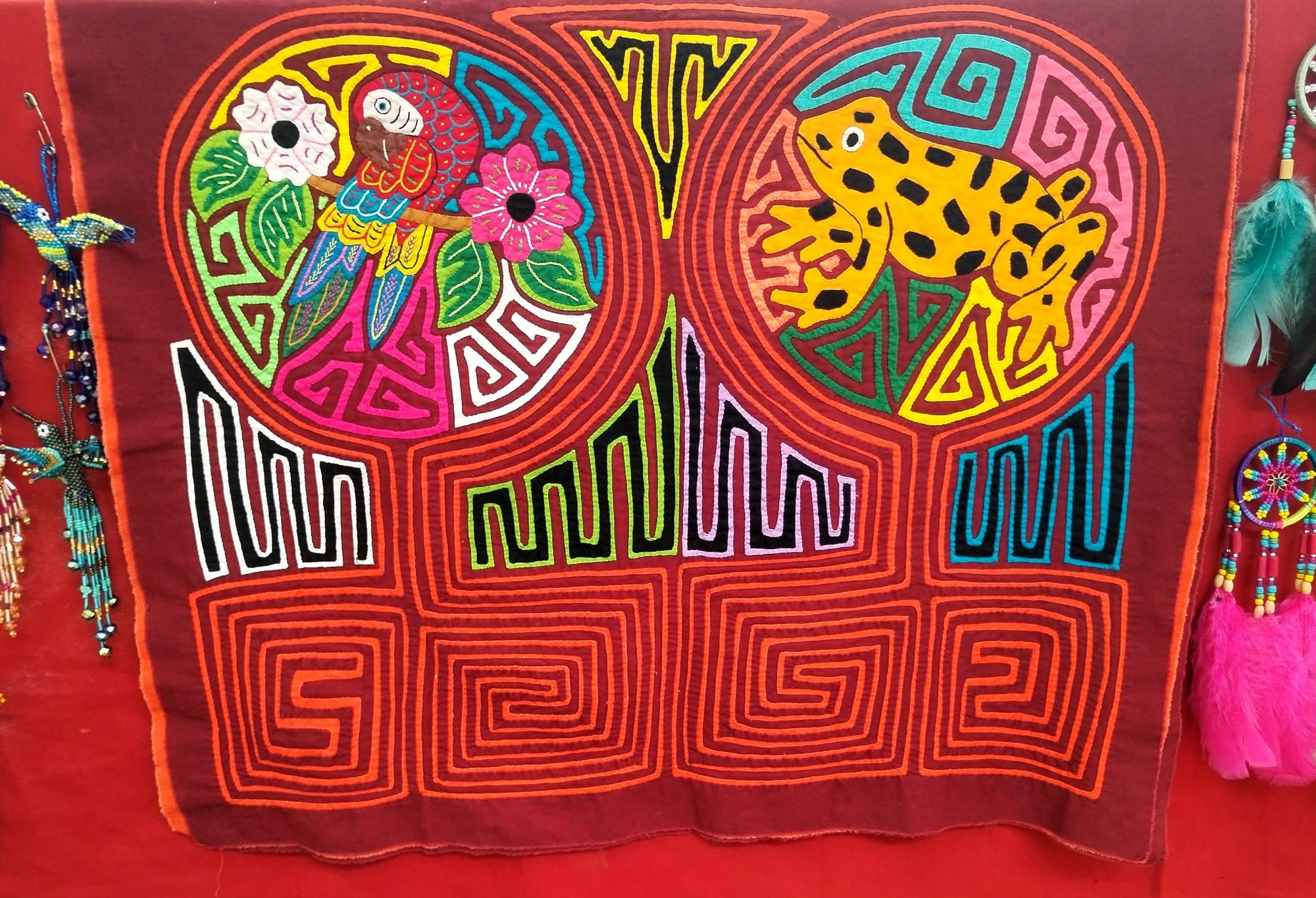
The mola is the best-known craft of the Guna. Made almost exclusively by women, who learn the skill in adolescence and keep sewing throughout their lives, it uses reverse appliqué: layers of coloured cotton are basted together, a design is cut into the top layer, and the edges are folded under and stitched down to reveal the colours beneath. Molas form the front and back panels of a woman's blouse, worn with a wrap skirt, a red and yellow headscarf and beaded bands on the arms and legs. Designs range from traditional geometric patterns to birds, animals and scenes of daily life. The Emberá, for their part, are known for very fine basketry and for carvings in tropical hardwoods.
Another national emblem is worn on the head. The pinta'o hat, with its dark bands woven into pale fibre, is part of regional dress across the country and is worn for traditional dances and community festivities. Its making is entirely manual, using fibres prepared from five plants and swamp mud, and more than 400 artisans practise the craft today, many of them organised in cooperatives. The hat has its own national day, and the craft was inscribed on UNESCO's list in 2017.
Music binds all of this together. The tamborito, with its lead singer, clapping chorus and three drums, is widely performed and brings together people of many backgrounds, and its sung verses are known as coplas. Carnival has its brass bands, while in the cities, reggaeton and Spanish-language reggae have a strong following.
Dos and don'ts for visitors
- Do check the latest government travel advice before any trip; the Darién Gap and the Colombian border region are dangerous, and independent travel there is strongly advised against.
- Do shake hands with everyone present, starting with the most senior person, and use Don, Doña or professional titles until invited to use first names.
- Do dress neatly in towns and cities; revealing clothing is frowned upon away from the beach.
- Do accept invitations to share a meal, and bring a small gift from home if visiting someone.
- Do pay the visitor tax in Guna Yala, cover up on the inhabited islands and avoid public displays of affection.
- Don't photograph people, homes or ceremonies in Indigenous communities without first asking permission.
- Don't take a polite "yes" as a firm commitment; courtesy often comes before a direct refusal.
- Don't expect to stay dry at a carnival culeco, where water trucks spray the crowd.
What to take away
Panama's customs reward those who meet its formality with courtesy of their own, and behind the handshakes and titles lies a country that dances, sews and celebrates its many roots with extraordinary pride.