History · Palau
Palau: The Rock Islands Republic
A scatter of limestone islands at the western edge of Micronesia — a matrilineal society ruled in turn by Spain, Germany, Japan and the United States, the scene of one of the Pacific War's bloodiest battles, and now a small state in free association with America
By Worldlore Editorial · 10 September 2026
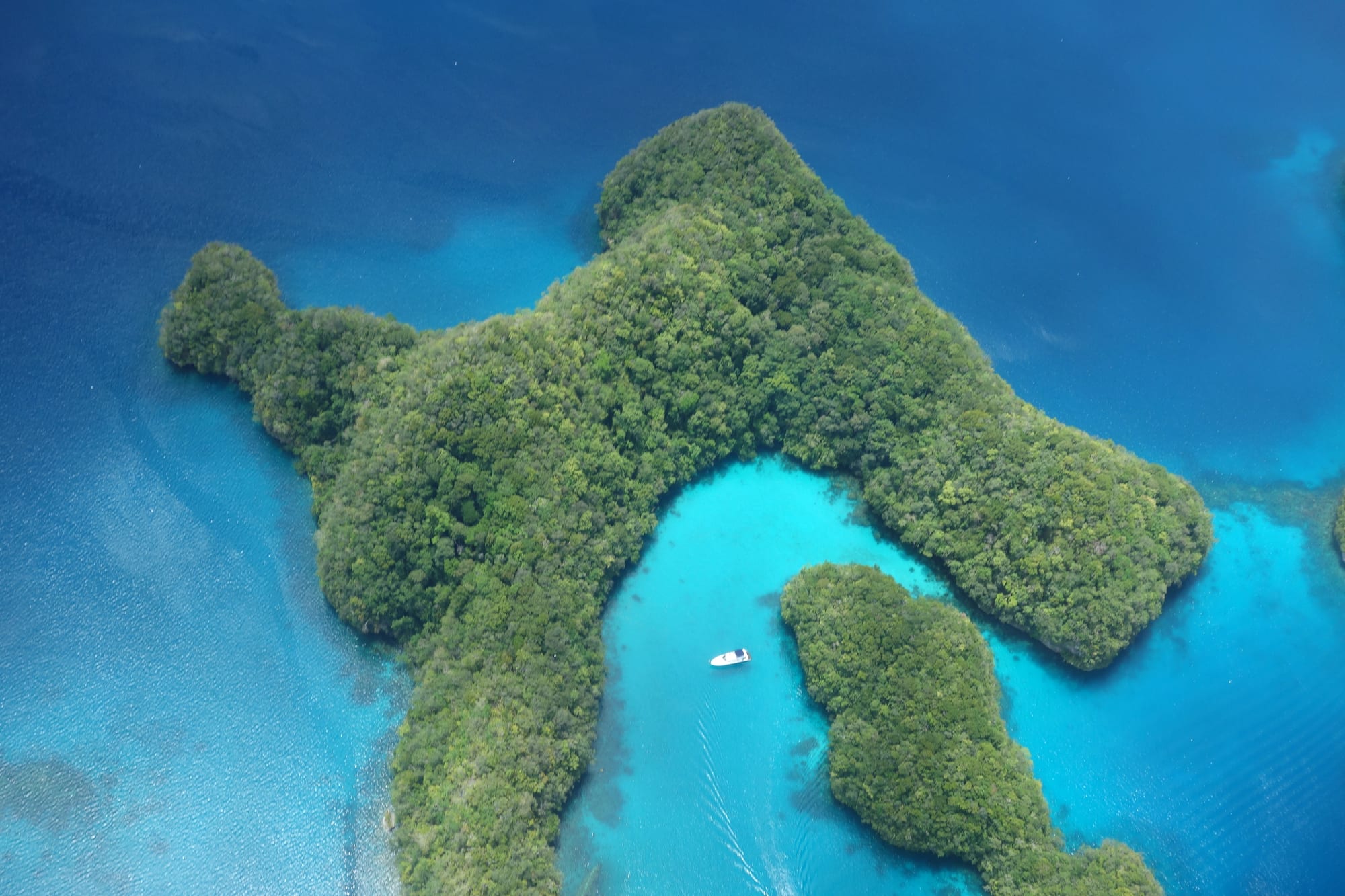
The far west of Micronesia
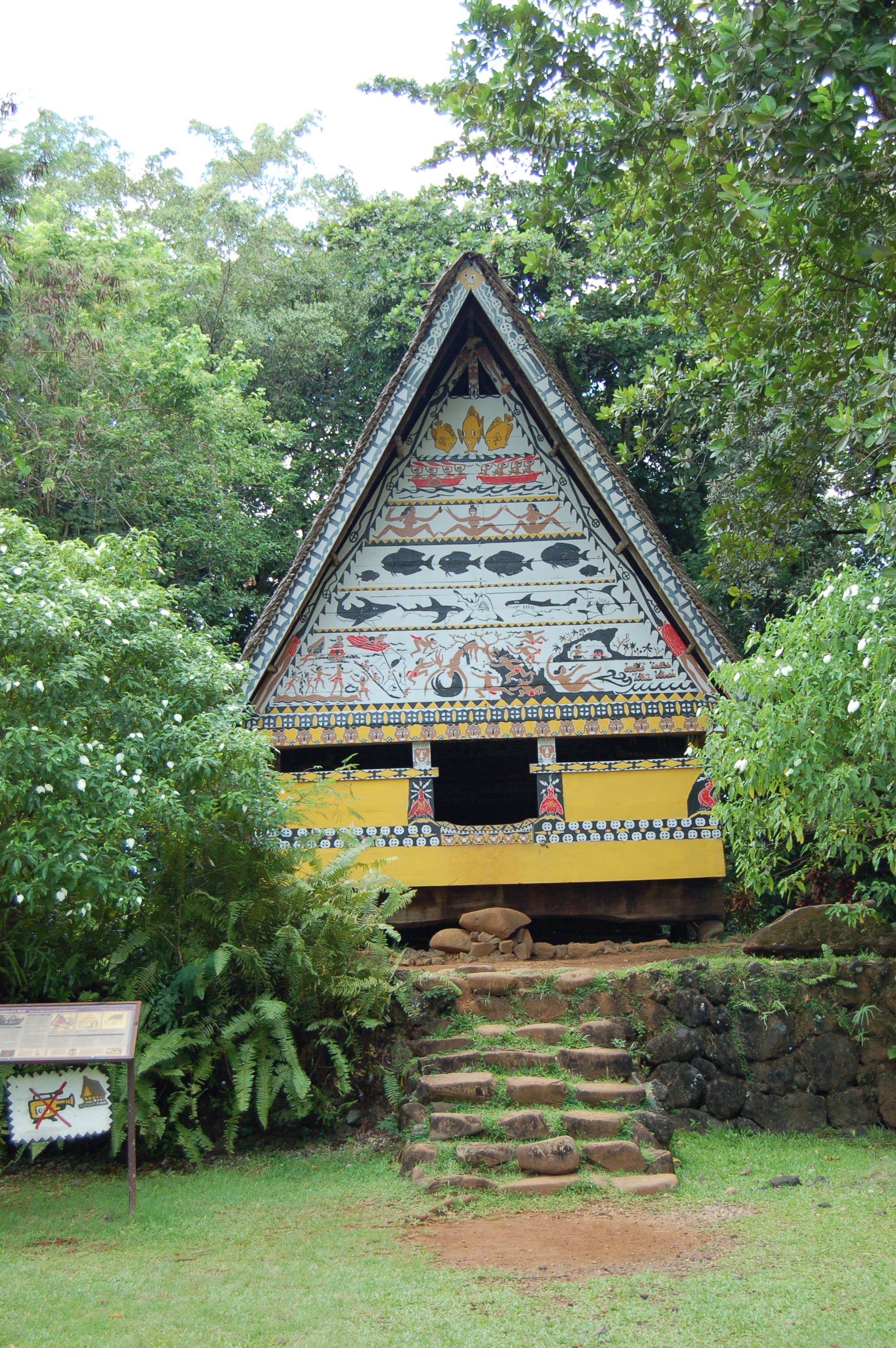
Palau is an archipelago of several hundred islands at the western end of the Caroline chain, closer to the Philippines and Indonesia than to most of Micronesia. Around 18,000 people live there, most on Koror and the "big island" of Babeldaob. Palauan society is matrilineal, organised around clans and, historically, men's club-houses called bai, with title-holding chiefs chosen by senior women. Like its neighbours, Palau spent the late 19th and 20th centuries passing from one empire to another before negotiating a form of independence tied closely to the United States.
A short history
- c. 1000 BCE
Settlement
Voyagers from island Southeast Asia settle the islands.
- 1783
Wreck of the Antelope
An English ship is wrecked; sustained European contact begins.
- 1885
Spanish claim
Confirmed by the Pope after a dispute with Germany.
- 1899
Sold to Germany
Spain sells the Carolines and Palau after 1898.
- 1914–1944
Japanese rule
Koror becomes the capital of Japan's South Seas Mandate.
- 1944
The Battle of Peleliu
A costly US assault on the southern island.
- 1947–1994
US Trust Territory
Administered for the UN with the rest of Micronesia.
- 1979–1994
The constitution fight
Palau's nuclear-free clause delays the Compact through many votes.
- 1994
Independence
The Compact of Free Association takes effect.
Clans, clubs and the first outsiders
Palau was settled around three thousand years ago, and developed a dense society of competing villages linked by exchange of shell and bead money and organised through the bai. In 1783 the English East India Company packet Antelope was wrecked on a reef; its crew was helped by the high chief of Koror, and one of his sons, Lebuu, sailed to England, where he died of smallpox — an episode that made Palau briefly famous in Britain. Spain asserted a claim to the Carolines in 1885, but its rule was thin, and after losing the Spanish–American War it sold the islands to Germany in 1899. Germany began organised phosphate mining.
The Japanese decades
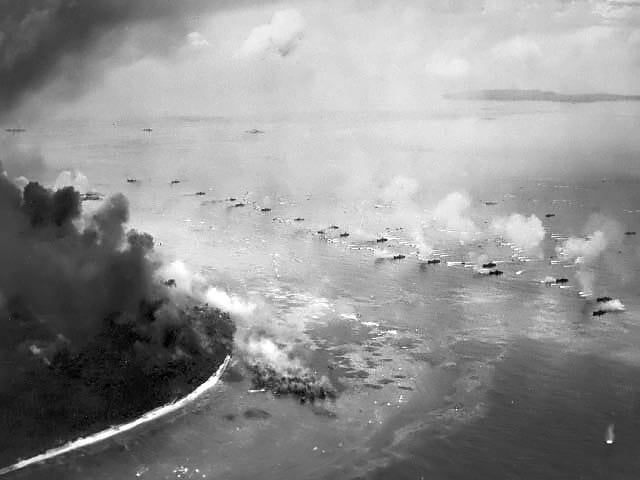
Japan took the islands in 1914 and held them under a League of Nations mandate. Koror grew into a substantial town, the administrative hub of Japan's entire Micronesian territory, with tens of thousands of Japanese and Okinawan settlers who came to outnumber Palauans, working bonito fishing, phosphate and agriculture. As the Pacific War turned, the islands were fortified. In September 1944 US forces invaded Peleliu, in Palau's south, expecting a quick operation; instead the Japanese garrison, dug into caves and ridges, held out for over two months. Around 2,000 Americans and more than 10,000 Japanese died, and the battle's value has been debated ever since, as the airfield it secured was barely used.
Trusteeship and the long vote
After the war Palau became a district of the US-administered Trust Territory of the Pacific Islands. When the trusteeship was wound down in the 1970s and 1980s, Palau drafted a constitution — adopted in 1981 — that banned nuclear, chemical and biological weapons and their transport through the country without a 75 per cent popular vote. That clause clashed with the Compact of Free Association the US offered, which reserved military rights, and Palauans voted on the question seven times between 1983 and 1990 without reaching the required supermajority. The constitutional threshold was eventually lowered, and the Compact was approved in 1993.
Palau now
The Compact of Free Association took effect on 1 October 1994: Palau is a sovereign state and UN member, runs its own affairs, and receives US financial support, while the United States is responsible for its defence and can operate military forces there. Palauans may live and work in the US and serve in its armed forces, which many do. The economy depends on tourism — heavily marketed around the Rock Islands and the jellyfish lakes — plus fishing licences and US aid. Palau has taken a prominent role in ocean conservation, creating one of the world's largest marine sanctuaries in 2015, and has aligned closely with Washington and Taiwan amid growing Chinese pressure in the region.
What Palau carries
Palau's colonial century was other people's — Spanish, German, Japanese, American — and its defining modern experience was a battle fought over it, not by it. The long fight over the nuclear-free constitution was Palau insisting, repeatedly and at cost, on setting its own terms for the American relationship it ultimately chose. Free association gave it sovereignty and a security guarantee; the price is a country whose defence, and much of whose budget, is decided in Washington.