Culture & Customs · Palau
Palau: A Culture Built on Omengull
A small island nation where respect is a core value, clan obligations are met with food and traditional money, and the painted meeting house remains the great emblem of custom
By Worldlore Editorial · 30 September 2026
A young woman who has recently given birth to her first child is ready to be presented to her family and her clan. For weeks she has followed a course of hot baths and herbal treatments prepared by her own relatives, each clan keeping its own recipes and protocols, and the final stage takes place in a steam bath before she appears in public. The gathering that follows is at once a celebration of a new life and a demonstration of how Palauan society works: her family, her husband's family and their wider clans all have roles to play, food and money change hands according to long-established rules, and everyone present understands exactly what is owed to whom. Few rituals capture so neatly the country's core value of omengull, or respect, and the web of mutual obligation that sustains it.
Faith, identity and values
Christianity is the majority faith. According to the 2020 national census, cited by the US State Department, around 47 per cent of the population is Roman Catholic, about a quarter belongs to evangelical churches and around 5 per cent are Seventh-day Adventists. About 5 per cent follow Modekngei, an Indigenous faith that combines older animist belief with Christianity, and around 5 per cent are Muslim.
Beneath these faiths runs a social order that remains distinctively Palauan. Society is matrilineal: lineage and inheritance are traced through the female line, women control clan land and finances, and senior women select and can remove the male chiefs. Villages are guided by a council of chiefs, with a parallel council of women, and at national level a Council of Chiefs advises the president on traditional law and custom and its relationship to the constitution. The two traditional federations are headed by paramount chiefs, the Ibedul and the Reklai, each with a female counterpart. Chiefs continue to enjoy considerable prestige, receiving both respectful behaviour and gifts of local produce from their people.
The value that binds all of this together is omengull, respect: for elders, for title holders, for place and for family name. Palau's oral histories, carried in chants and legends, repeatedly return to it. The same attitude extends to the natural world. The traditional bul, a moratorium placed on fishing or harvesting to let resources recover, is seen as a forerunner of modern conservation measures such as the national marine sanctuary, and a deep sense of the connection between people and nature runs through Palauan culture. Palauans also take pride in a long history of traditional navigation by the stars, wind and sea.
Greetings and meeting people
The everyday greeting is "alii", used for "hello" and "welcome", and "ungil tutau" means "good morning". English is widely spoken alongside Palauan, and visitors will find people friendly and courteous, if often reserved on first meeting.
Respect shapes how people carry themselves. Elders and title holders are treated with particular deference, and the respect shown to chiefs is visible in behaviour as well as in words. Government travel advice asks visitors to dress conservatively, to behave discreetly and to respect religious and social traditions, and a modest, unhurried manner goes a long way in a small society where most people know one another and family connections matter a great deal.
Hospitality and being a guest
Hospitality in Palau is closely tied to the system of customary exchange known as siukang, a set of obligations to family and clan that are often considerable. At the heart of many ceremonies is a division of roles between families linked by marriage. At an ocheraol, a gathering traditionally held to help a family meet a major expense such as building a house or a canoe, the relatives of the lineage head's wife provide food, while his own relatives and the men married to his sisters contribute Palauan money. The same pattern of exchange runs through first-child ceremonies, weddings and funerals.
Food is central to these occasions, and taro holds a special place. Its cultivation in wetland patches has long been a measure of women's wealth, and taro is part of Palauan ceremonies from birth through to death. Palauan money, udoud, takes the form of pieces of glass and ceramic, and women's udoud necklaces have long signified status. Commentators at the Micronesian Seminar note that customary exchanges have grown more frequent and more costly in recent decades, placing real financial strain on some families.
For visitors, the most important courtesies are practical ones. Drinking alcohol in public places is prohibited, and the legal drinking age is 21. Villages and their chiefs still oversee what happens on village land, so visiting a bai or a traditional site is best done with a local guide or as part of an organised cultural tour.
Festivals and life's big moments
Alongside Christmas and the other Christian holidays, Palau's national calendar reflects values particular to the country. Youth Day, Senior Citizens Day and Family Day are all national holidays. On Senior Citizens Day in May, communities in each of the country's sixteen states hold celebrations with music, dancing and shared meals to honour elders for their contributions to families, villages and the nation.
The customs of the life cycle are the true high points of Palauan social life. The birth of a first child is marked by a sequence of rituals, the omesurech hot-bath treatment followed by the omengat steam bath, which usually take place one to three months after the birth. Preparations are taken care of by the new mother's parents and clan relatives, and the closing celebration, sometimes called ngasech, is a public presentation of the mother and a joyful occasion for both families. Younger Palauans have helped to revive and sustain these ceremonies.
Death is marked by a series of customs that can extend over months. The kemeldiil, the wake and funeral, brings together relatives and clans. It is followed by further gatherings, including the sis, with offerings of food to the spirit of the deceased, and, some months later, the cheldecheduch, at which debts are settled and the family's affairs put in order. Palau's first mortuary, opened in recent years, was designed to accommodate these practices, and village chiefs still approve funeral arrangements held on their land.
Arts, crafts and music
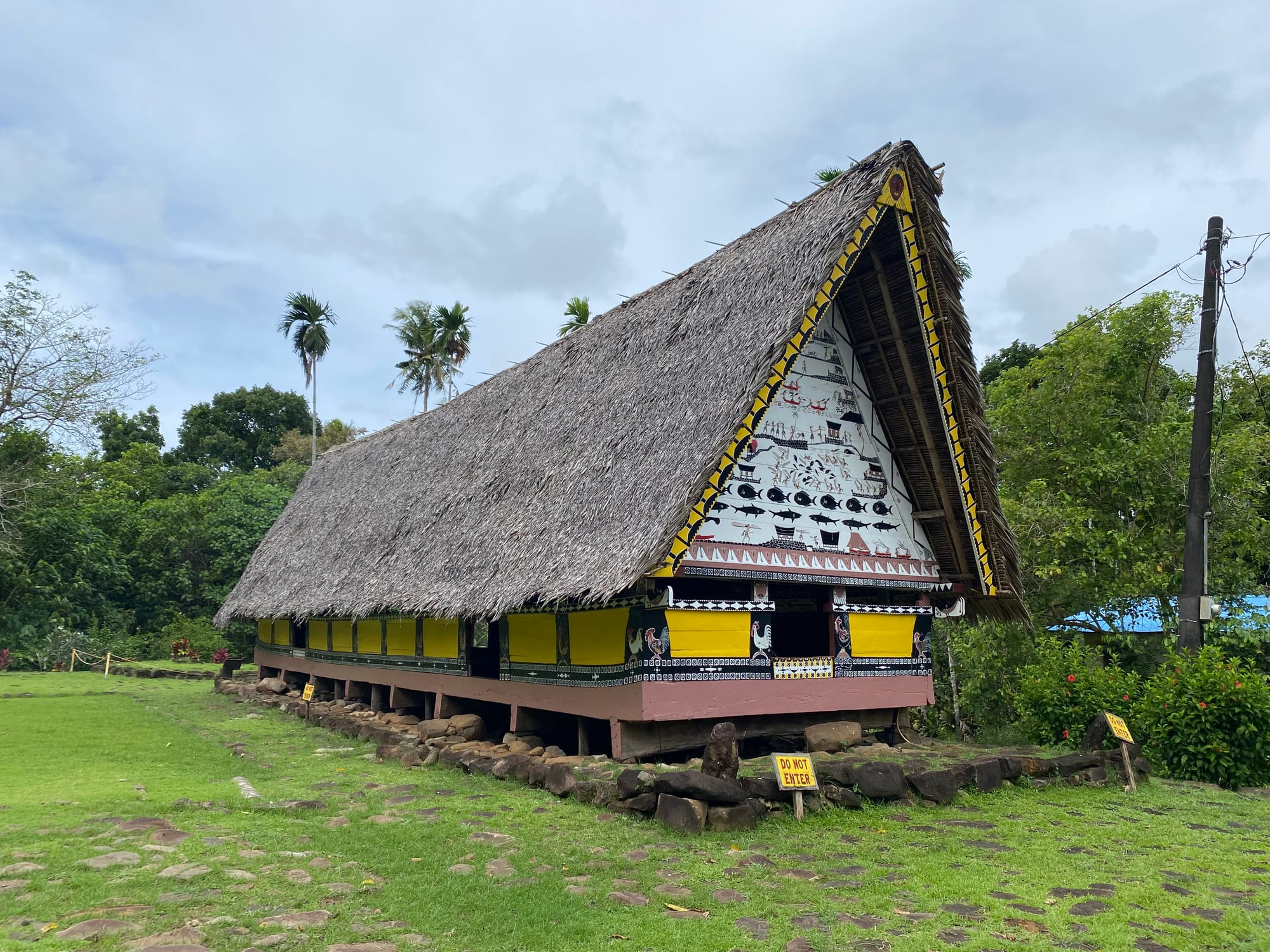
The bai is Palau's great architectural and artistic achievement. These meeting houses, where chiefs gather to decide the affairs of their clans and villages, were once numerous; only a handful survive today. Their gables and interior beams were decorated with two kinds of imagery: standard symbolic designs, such as roosters, clams, spiders and symbols of money, and pictographic narratives that served as reminders of the myths and events important to each community. The paints were made from lime, soot and ochre mixed with plant oil, and the buildings were traditionally assembled without nails. Weaving the thatched pandanus roofs is a craft still demonstrated today.
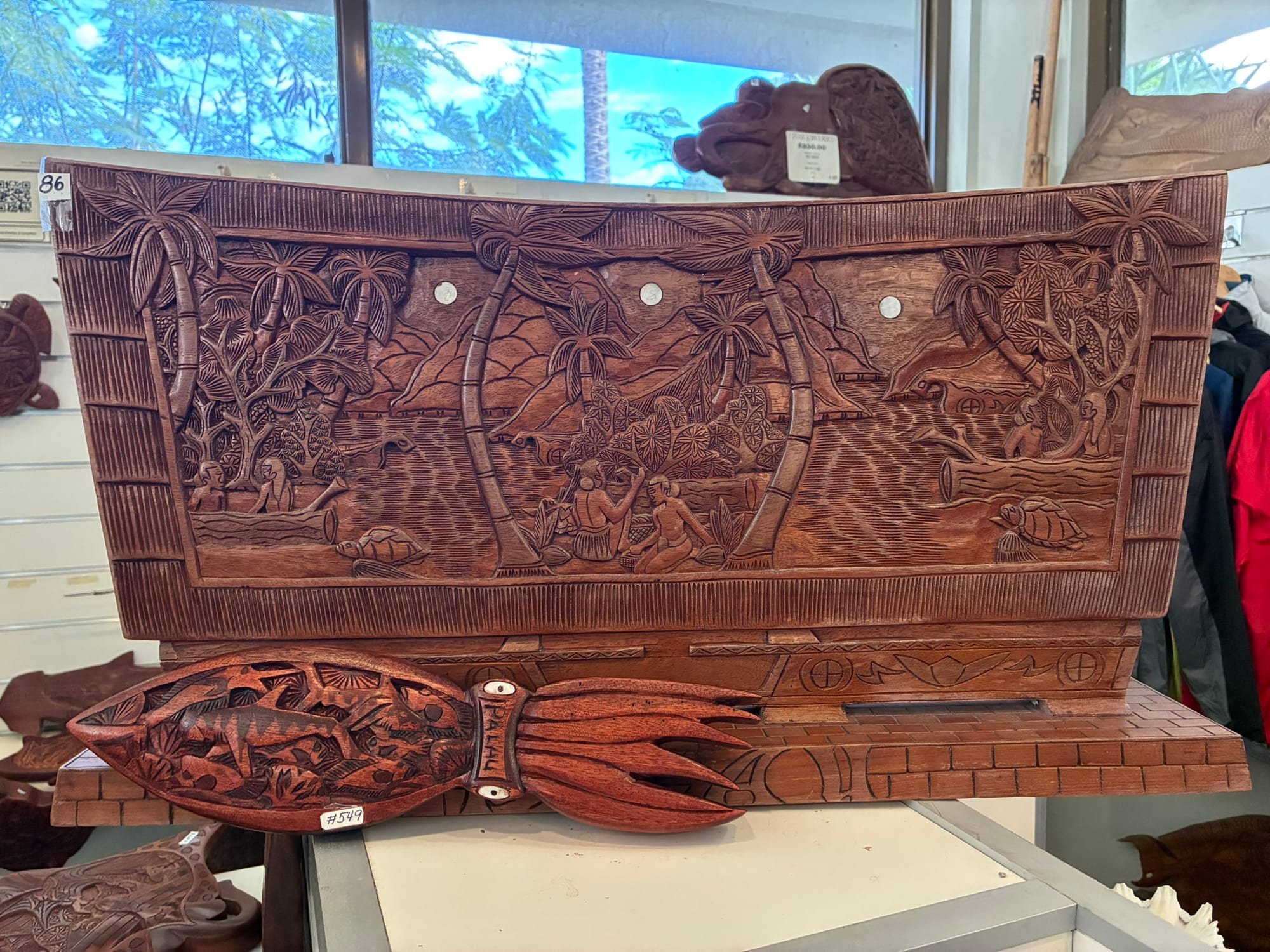
Storyboards carry the same legends in portable form. Carvers work scenes from stories such as the tale of the breadfruit tree and other legends into wooden planks, some painted in soft earth tones and others deeply carved and left unpainted. Master carvers keep their own styles and train apprentices through imitation, and the Belau National Museum has mounted exhibitions tracing the history of the art.
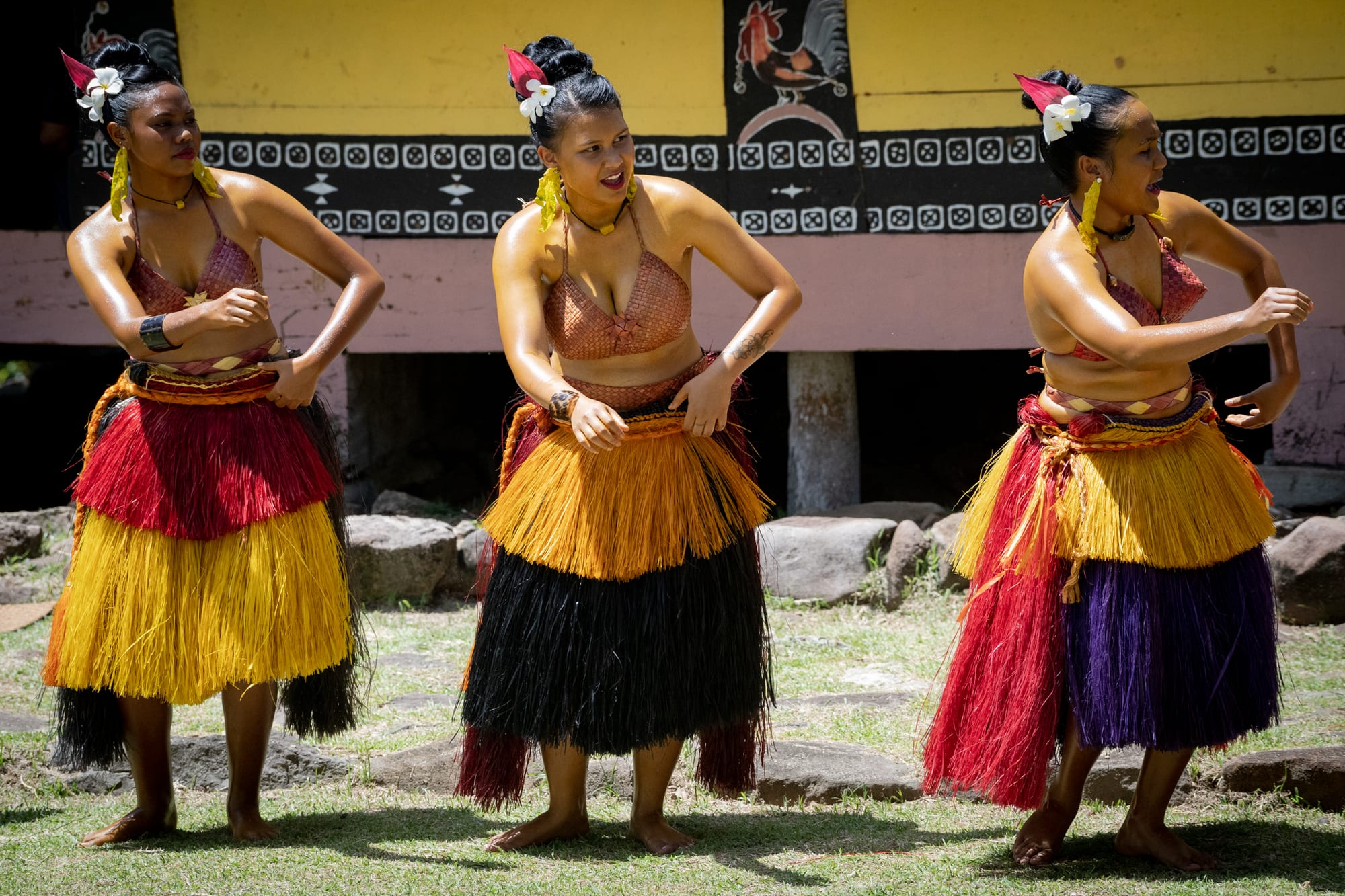
Women's weaving is equally valued: mats, baskets and decorated bags are made from coconut and pandanus leaves, and clay pottery is also part of the craft tradition. Dance and chant are the living voice of Palauan history. Performances combine fluid, graceful movement with chanting, and chants have long served as a form of social commentary as well as a way of handing down stories from one generation to the next.
Dos and don'ts for visitors
- Do sign and honour the Palau Pledge on arrival, and use only reef-safe mineral sunscreen.
- Do greet people with "alii", and show particular respect to elders and title holders.
- Do dress conservatively away from the beach, behave discreetly and respect religious and social traditions.
- Do visit bai and village sites with a local guide or on an organised cultural tour.
- Do buy the required permits before visiting the Rock Islands or Jellyfish Lake.
- Don't drink alcohol in public places, where it is prohibited; the legal drinking age is 21.
- Don't bring or use e-cigarettes or vaporisers, which are banned.
- Don't remove anything from Second World War wrecks, which is illegal.
What to take away
In Palau, respect for elders, for clan and for the reef all spring from the same root, and visitors who move gently through this small island nation will find that courtesy warmly returned.