History · Norway
Norway: The Long Country
A coastline of fjords that launched the Viking age — four centuries under Denmark, a union with Sweden, independence in 1905, wartime occupation, and an oil fund that made a small nation one of the world's richest
By Worldlore Editorial · 19 September 2026
A country stretched thin
Norway runs some 1,750 kilometres from the North Sea to the Arctic, most of it mountain, forest and a coast frayed into thousands of islands and fjords. Its 5.5 million people are among the wealthiest and longest-lived in the world, cushioned by a sovereign wealth fund built from North Sea oil and gas. For most of its recorded history, though, Norway was a poor and thinly peopled fringe of Europe, ruled from Copenhagen or Stockholm, and its full independence is barely a century old.
A short history
- c. 793–1066
The Viking age
Raiding, trading and settlement from Ireland to Russia.
- c. 872–930
Unification
Harald Fairhair brings the petty kingdoms under one crown.
- c. 1000–1030
Christianisation
Olaf II; his death at Stiklestad makes him Norway's patron saint.
- 1349
The Black Death
Perhaps half the population dies; the kingdom weakens.
- 1397
The Kalmar Union
Norway, Denmark and Sweden under one monarch.
- 1537–1814
Danish rule
Norway is governed as a province of Denmark.
- 1814
The constitution
Norway writes a constitution, then enters a union with Sweden.
- 1905
Independence
The union is dissolved peacefully; a Danish prince becomes king.
- 1940–1945
German occupation
Quisling's collaborationist regime; a resistance movement.
- 1969
Oil
The Ekofisk field is found; Norway becomes a petroleum state.
Vikings and kings
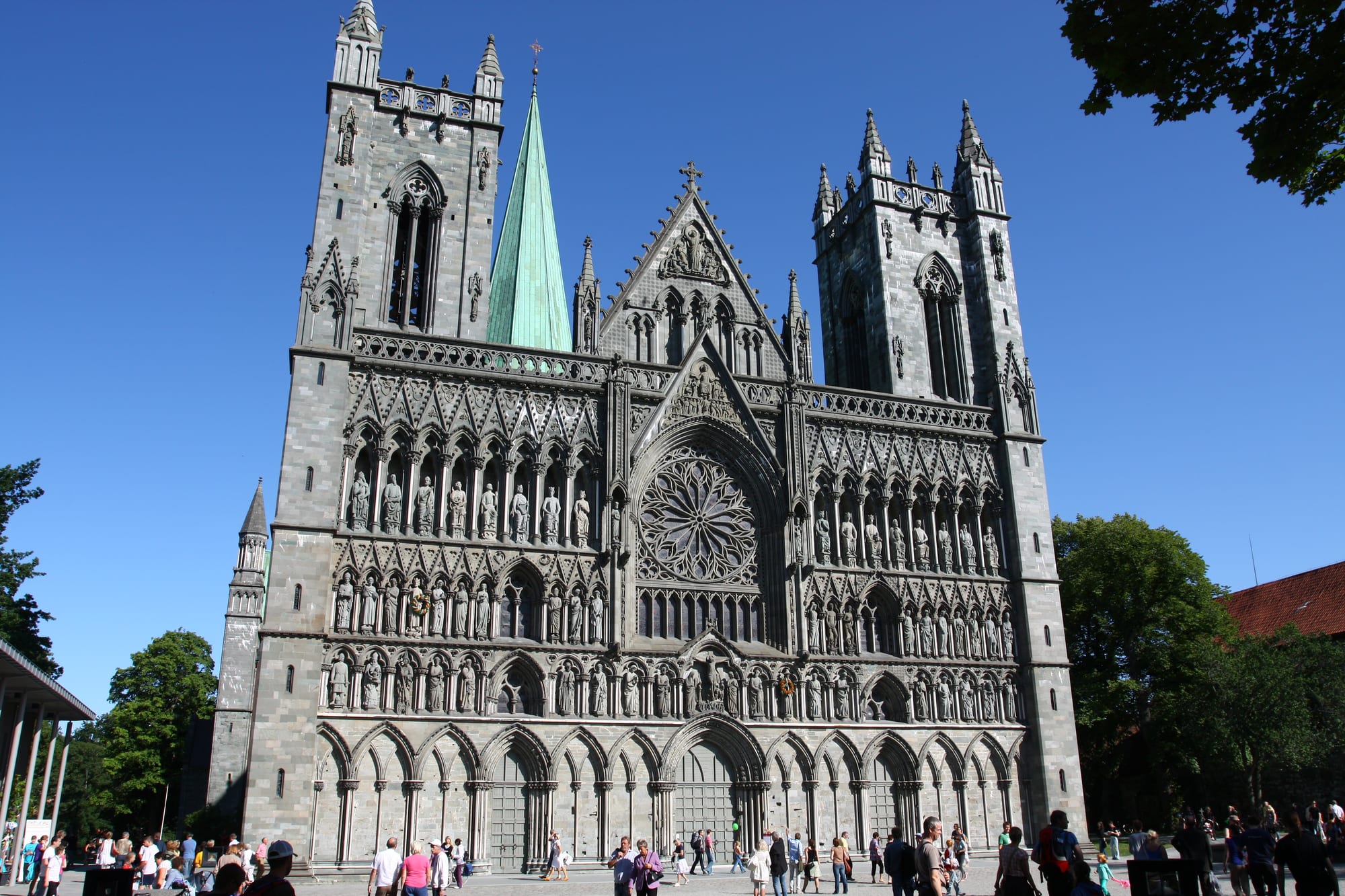
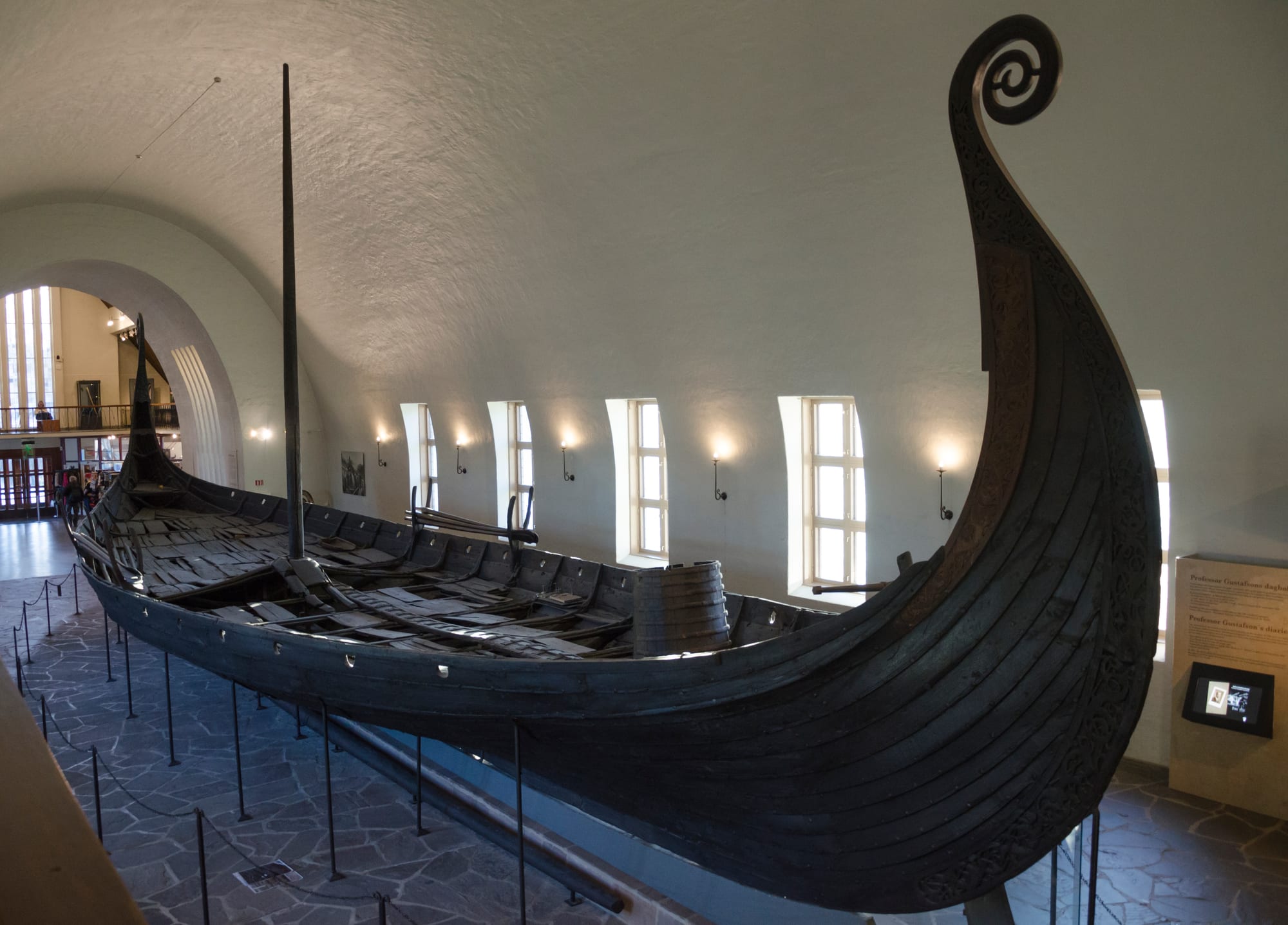
From the 790s, Norse seafarers in fast, shallow-draught ships raided monasteries and towns across the British Isles and the Frankish empire, then settled Iceland, the Faroes, parts of Britain and Ireland, and reached Greenland and briefly North America. At home, Harald Fairhair is traditionally credited with uniting the coastal kingdoms around 900. Christianity was imposed over the following century, above all by Olaf Haraldsson, killed at Stiklestad in 1030 and quickly made a saint; his shrine at Nidaros (Trondheim) became a major pilgrimage centre.
The long night
The Black Death of 1349 hit Norway exceptionally hard, killing perhaps half the people, wiping out much of the landed nobility and clergy, and leaving the kingdom too weak to stand alone. In 1397 the three Scandinavian crowns were joined in the Kalmar Union under Danish leadership; Sweden broke away in the 1520s, but Norway did not, and from 1537 it was reduced to a Danish province, its church Lutheranised by royal decree and its affairs run from Copenhagen. Danish became the written language. The centuries were not uniformly bleak — timber, fish and, later, shipping brought prosperity to coastal towns like Bergen, long a Hanseatic trading post — but Norway had no capital, university or institutions of its own until the 1810s.
1814, and 1905
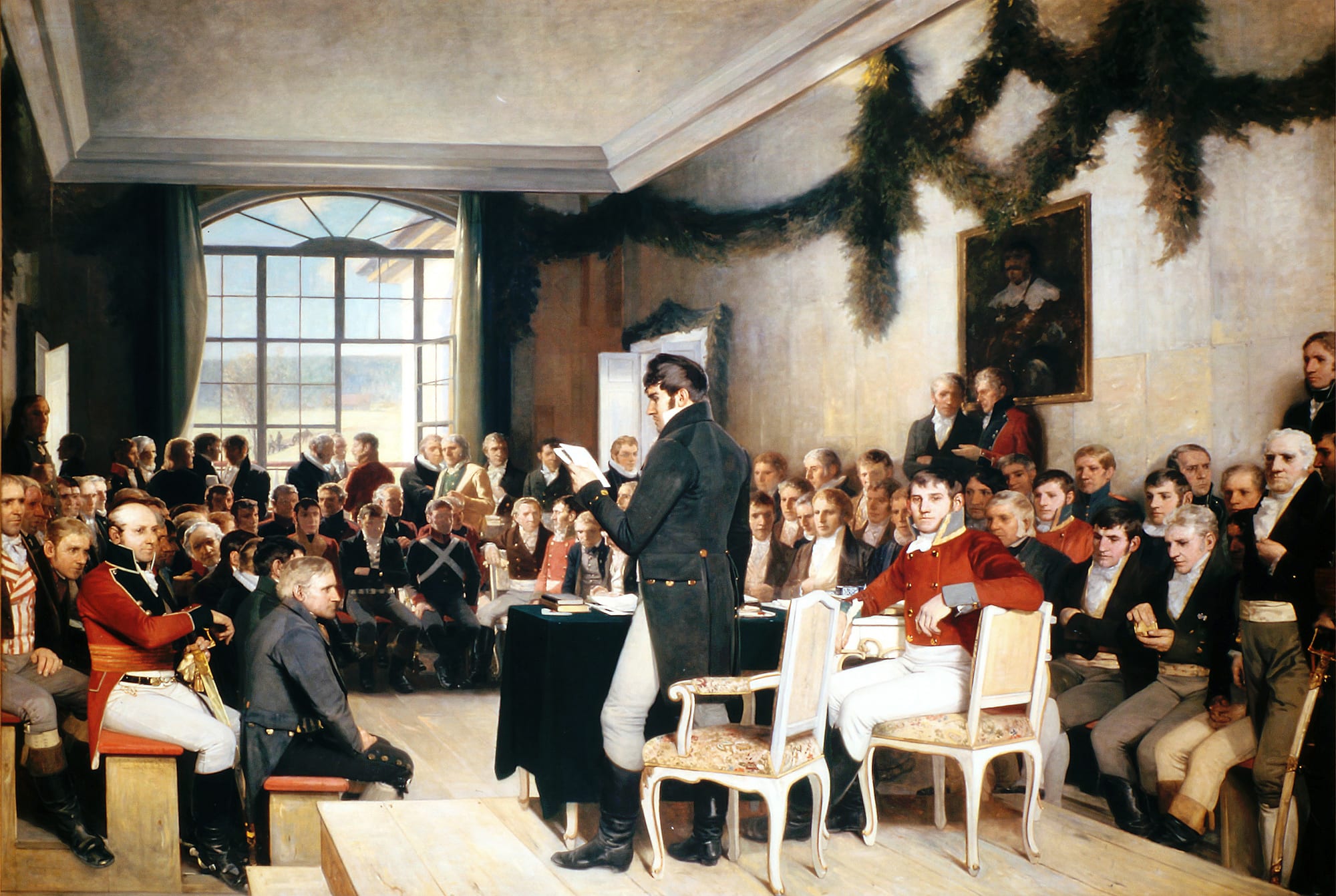
When Denmark, allied with Napoleon, lost the wars of 1814, it was forced to cede Norway to Sweden. Norwegians responded by convening an assembly at Eidsvoll, which declared independence and adopted a liberal constitution on 17 May 1814. Sweden enforced the transfer by a short war but accepted the constitution, and for 91 years Norway was a self-governing kingdom sharing only a monarch and foreign policy with Sweden. Friction over consular representation and national symbols grew until, in 1905, the Norwegian parliament unilaterally dissolved the union; a referendum endorsed it overwhelmingly, Sweden agreed, and Norway invited a Danish prince to reign as King Haakon VII.
Occupation, and the welfare state
Norway stayed neutral in the First World War. In April 1940 Germany invaded; the king and government escaped to London with the merchant fleet, while Vidkun Quisling led a collaborationist administration whose name became a byword for treason. Resistance, sabotage — including the destruction of heavy-water stocks sought for a German atomic programme — and a harsh occupation lasted five years. Post-war Norway, governed for decades by the Labour Party, built a comprehensive welfare state, joined NATO in 1949, and twice — in 1972 and 1994 — voted in referendums against joining the European Community and then the EU.
The oil age
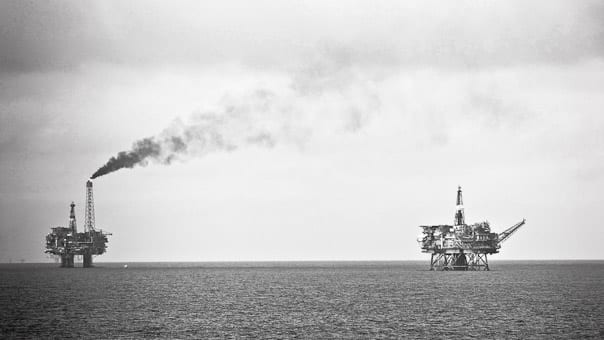
The Ekofisk discovery in 1969 turned Norway into a major petroleum exporter within a decade. Crucially, the state kept majority control through the company later called Equinor and a firm tax regime, and from 1996 began depositing the surplus in the Government Pension Fund Global, which by the 2020s held over a trillion dollars — roughly $200,000 for every citizen — invested entirely abroad to avoid overheating the domestic economy. The oil wealth underwrites one of the world's most generous welfare systems, though it also leaves Norway exposed to the global shift away from fossil fuels and open to the charge of profiting from a product it tells others to stop using.
What Norway carries
Norway's history is short as a sovereign state and long as someone else's province. The Viking centuries and the medieval kingdom are the deep past; the working country was built after 1814 and especially after 1905, by people who had to invent national institutions almost from scratch. The oil that arrived in 1969 gave that young, once-poor country an unusual problem — how to hold on to a fortune without being changed by it — and the wealth fund is its answer.