Attractions & Natural Wonders · Norway
Norway: Nine Attractions and Natural Wonders
Fjords cut a thousand feet deep by ice, a rock ledge hanging over open air, a medieval wharf of leaning timber warehouses, and a sky that turns green and violet through the long Arctic winter
By Worldlore Editorial · 19 September 2026
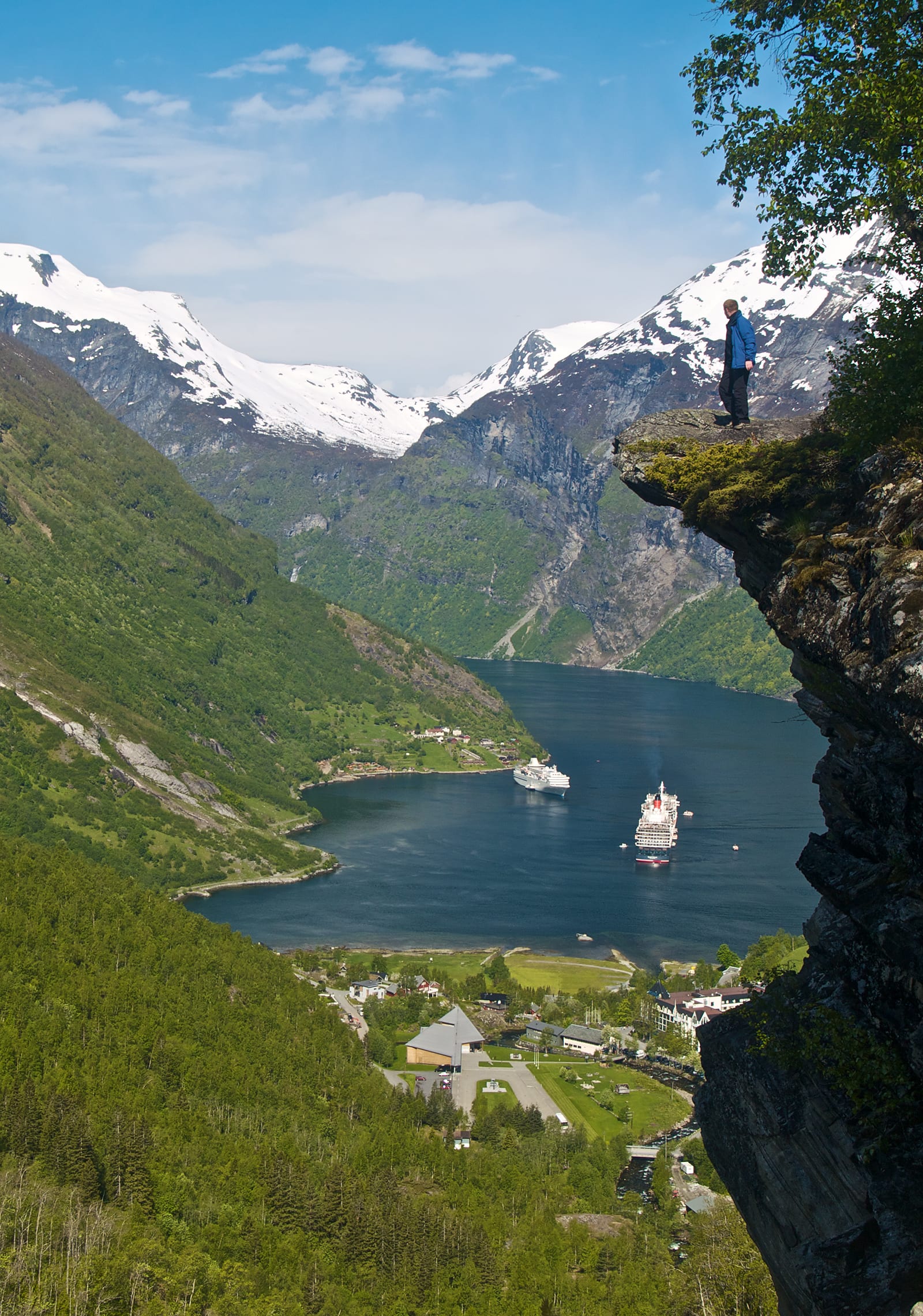
The land of the fjords
Norway, stretching far up into the Arctic along Scandinavia's western coast, is defined by the fjords that ice-age glaciers carved deep into its mountains — along with a long, indented coastline, the northern lights, the midnight sun, and one of the world's highest standards of living, funded in large part by North Sea oil wealth channelled into a sovereign wealth fund. It is an outdoors-first culture: hiking, skiing, and boating are woven into daily life as much as they are drawn tourists from abroad.
The nine below run from the western fjord country to Oslo and the far Arctic north. Summer (June–August) brings long daylight and the best hiking; winter (roughly October–March) in the north brings the aurora and reliable snow.
1. Geirangerfjord
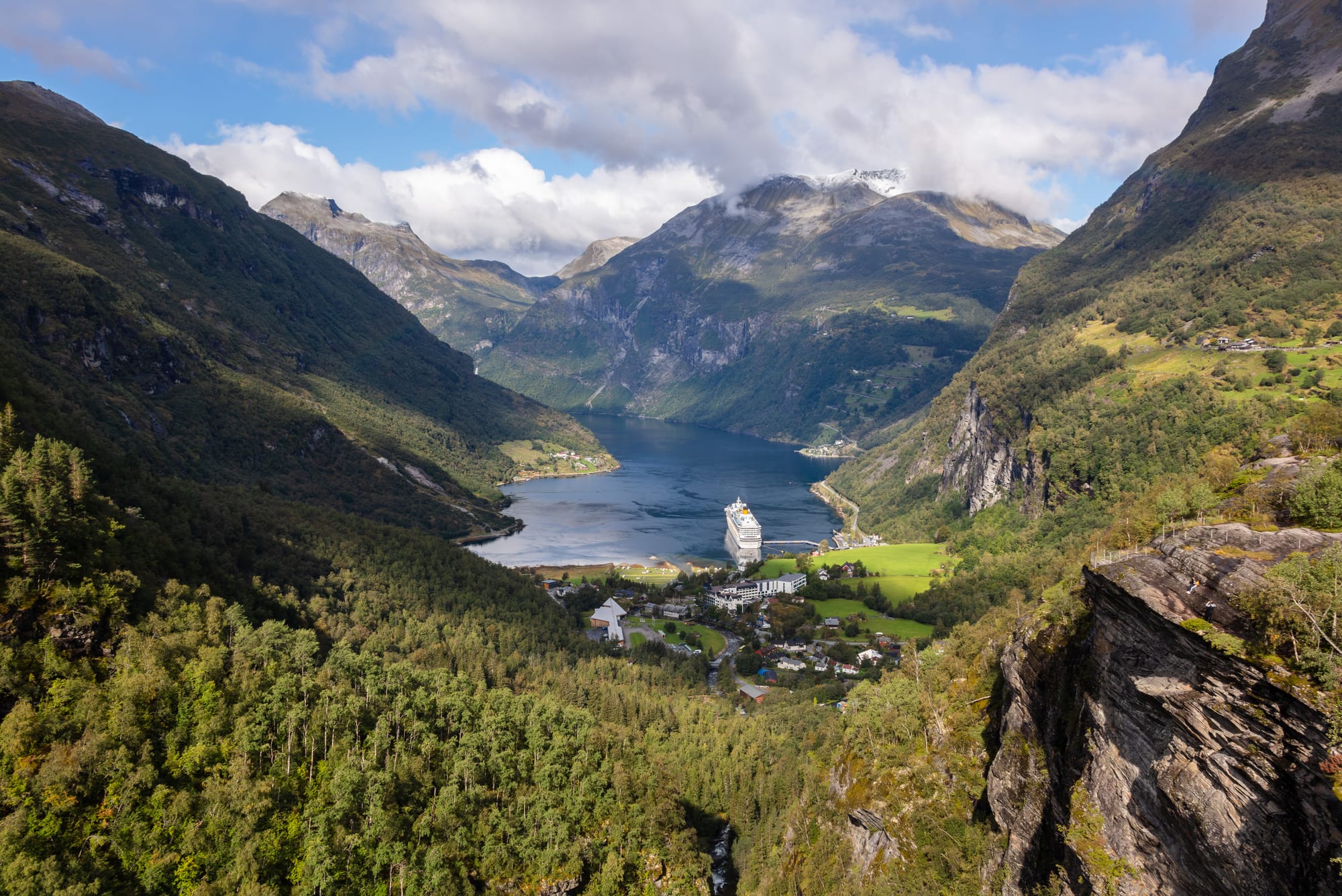
Geirangerfjord, a narrow arm of water hemmed in by near-vertical mountainsides and waterfalls including the Seven Sisters, is one of Norway's most visited natural sights and a UNESCO World Heritage Site alongside the nearby Nærøyfjord. Cruise ships, ferries, and kayaks all ply the fjord beneath cliffs that rise well over a thousand metres from the water.
The switchback road up to the Ørnesvingen ("Eagle Bend") viewpoint gives one of the classic overlooks.
2. Preikestolen (Pulpit Rock)
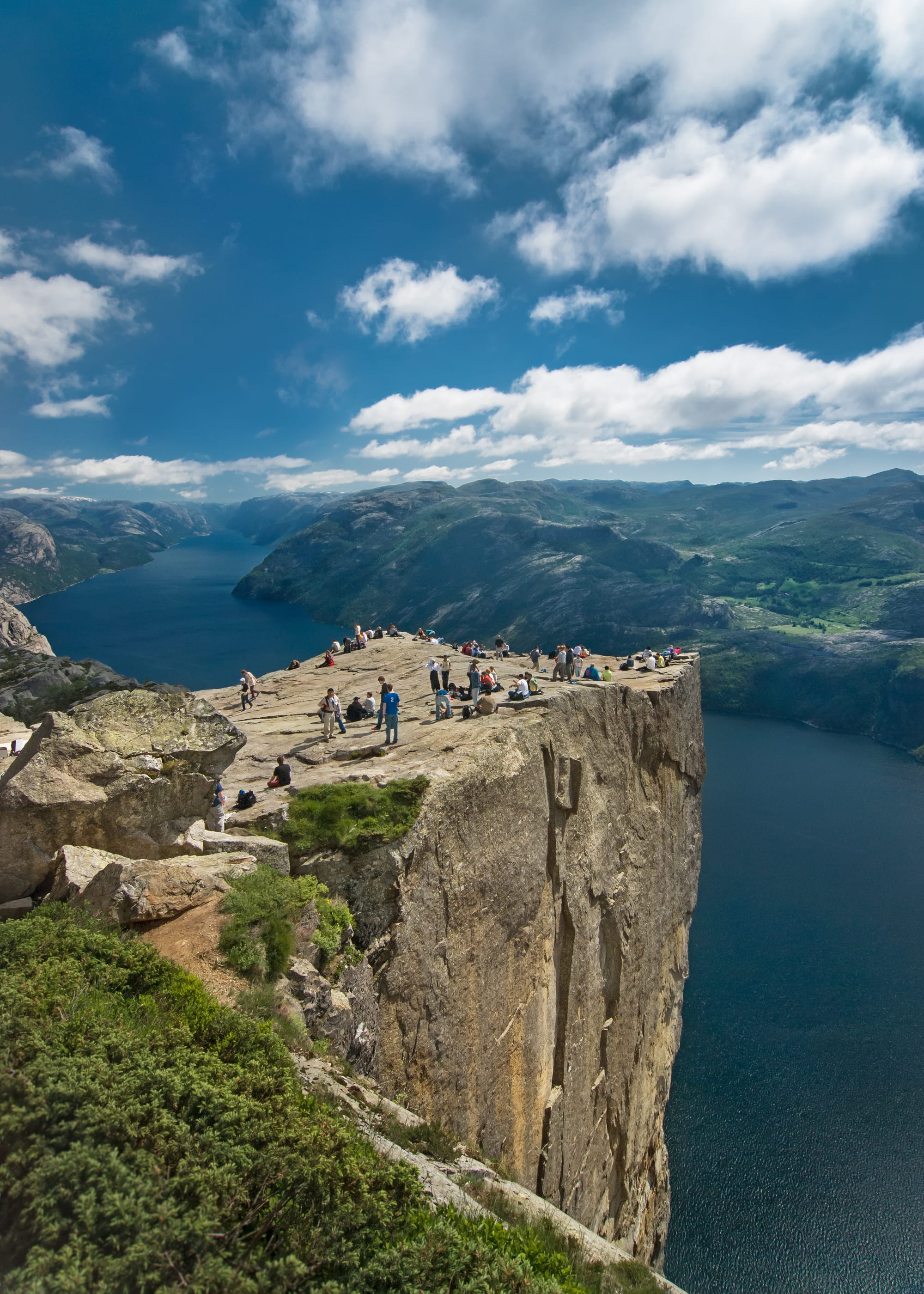
Preikestolen, a nearly flat rock plateau jutting out 604 metres above Lysefjord with no railing, is one of Norway's most photographed hikes — a moderate round trip of roughly four hours rewarded with a sheer drop-off view down to the fjord below. It draws large numbers of hikers in summer, and can also be reached, at more effort, as a winter hike.
Trolltunga, further along the same fjord region, offers a longer and more demanding version of the same kind of dramatic ledge (see below).
3. The Lofoten Islands
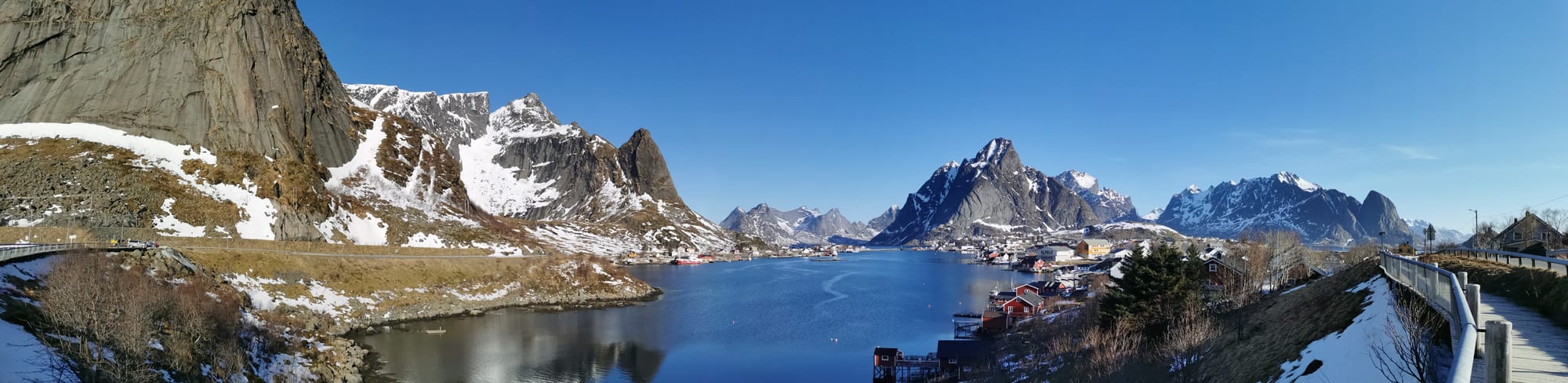
Lofoten, an archipelago well above the Arctic Circle, combines some of Norway's sharpest mountain scenery with a working cod-fishing culture largely unchanged for centuries — red rorbuer fishing cabins, drying racks hung with stockfish, and beaches of white sand beside water cold enough to make swimming a brief affair even in summer. Surfing, hiking, and midnight-sun kayaking are all popular here in season.
The islands also see the northern lights in winter, when the mountains are snow-covered.
4. Bryggen, Bergen
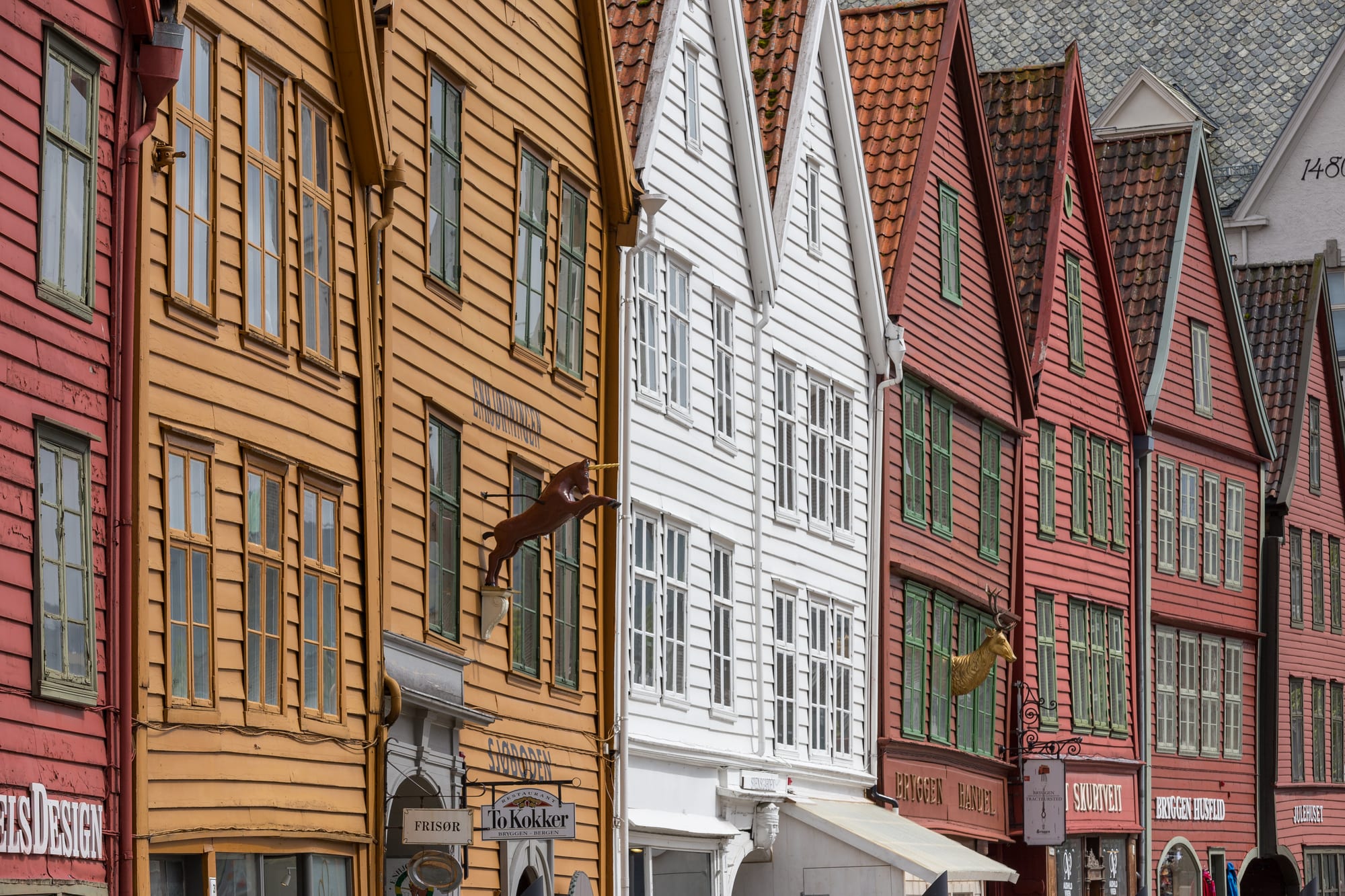
Bryggen, Bergen's old wharf, is a row of narrow, gently leaning wooden merchant houses that once formed a Hanseatic trading post, rebuilt after fires several times on the same medieval layout and now a UNESCO World Heritage Site housing galleries, shops, and workshops. Bergen itself, ringed by seven mountains and reached by a funicular up Mount Fløyen, is the traditional gateway to the western fjords.
Bryggen's narrow alleys and creaking floors are worth a slow wander rather than a quick photo stop.
5. The Northern Lights
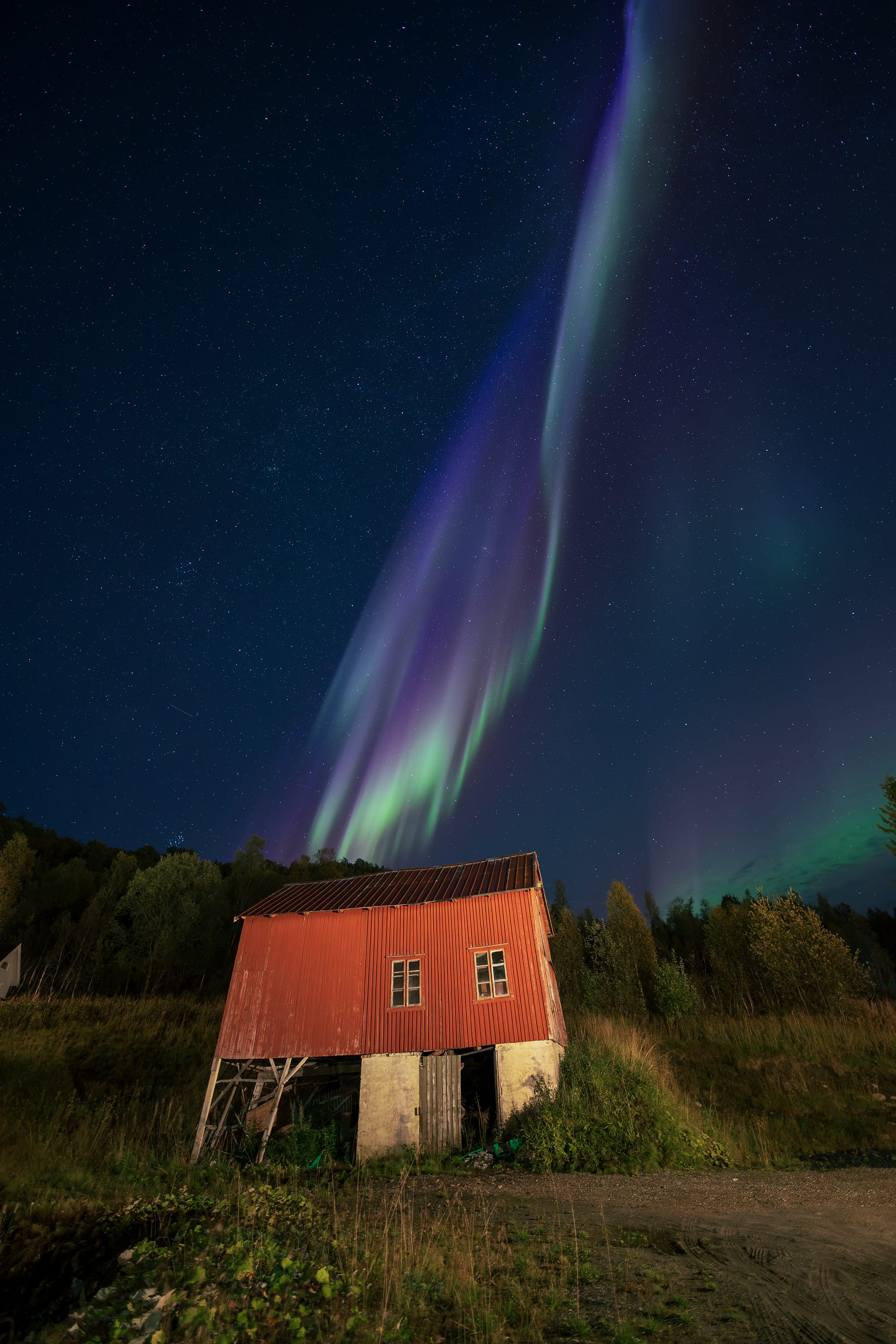
Northern Norway, from Trondheim upward, sits within one of the most reliable aurora borealis zones on earth — the Tromsø region in particular has built a substantial winter tourism industry around aurora chasing, husky sledding, and the polar night, when the sun does not rise for weeks. The Arctic Cathedral in Tromsø, with its distinctive triangular glass facade, is a common base-city landmark.
Clear, dark nights between roughly September and March give the best chances of a sighting.
6. Trolltunga
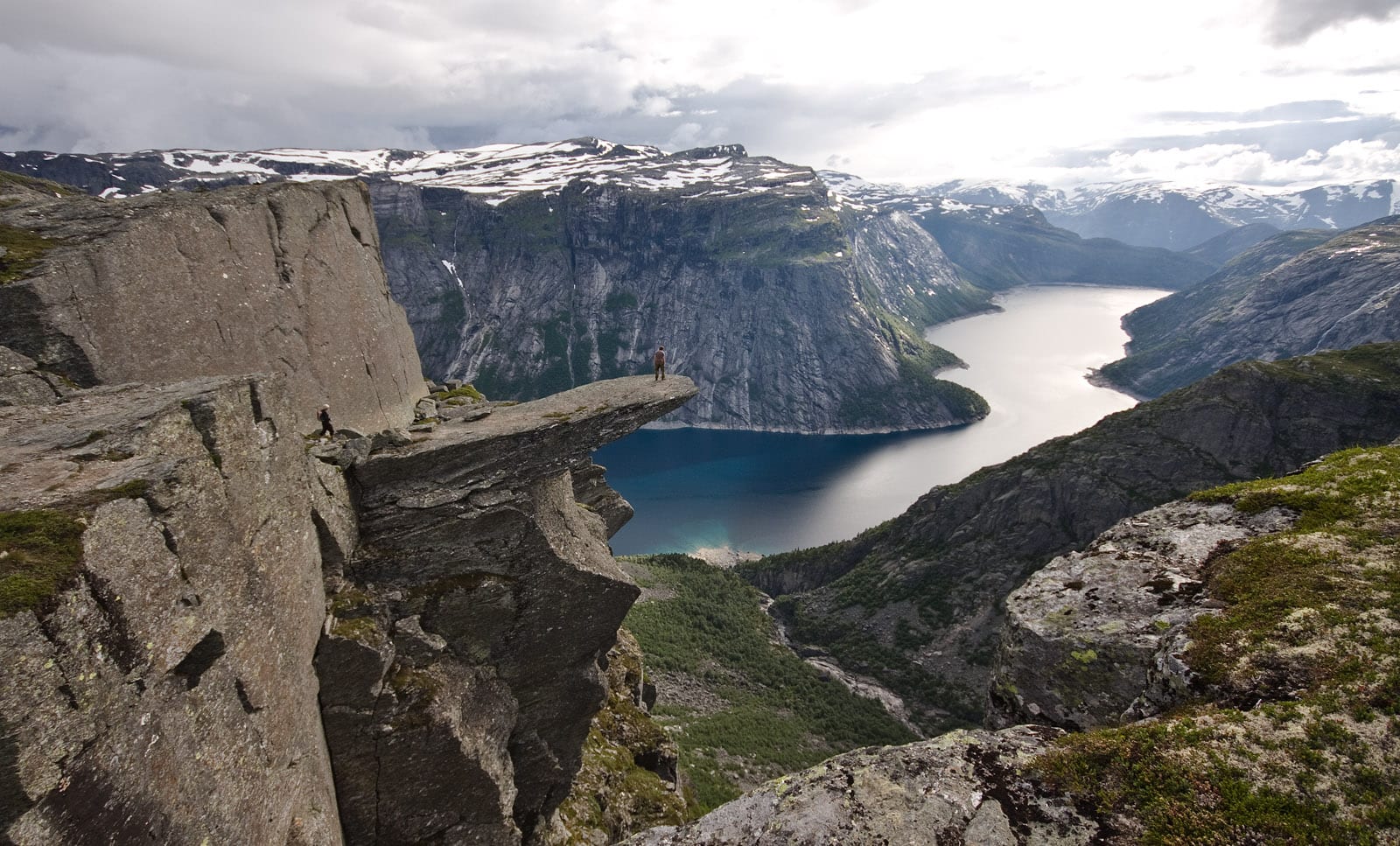
Trolltunga is a strenuous full-day hike — roughly 10 to 12 hours round trip — to a narrow horizontal rock ledge jutting out over open air nearly 700 metres above the lake below, now one of Norway's most sought-after (and most Instagrammed) hikes. It demands real fitness, proper gear, and a very early start; several hikers each year are rescued after underestimating its length.
Guided options and a shuttle to the trailhead help make it more manageable.
7. Vigeland Sculpture Park, Oslo
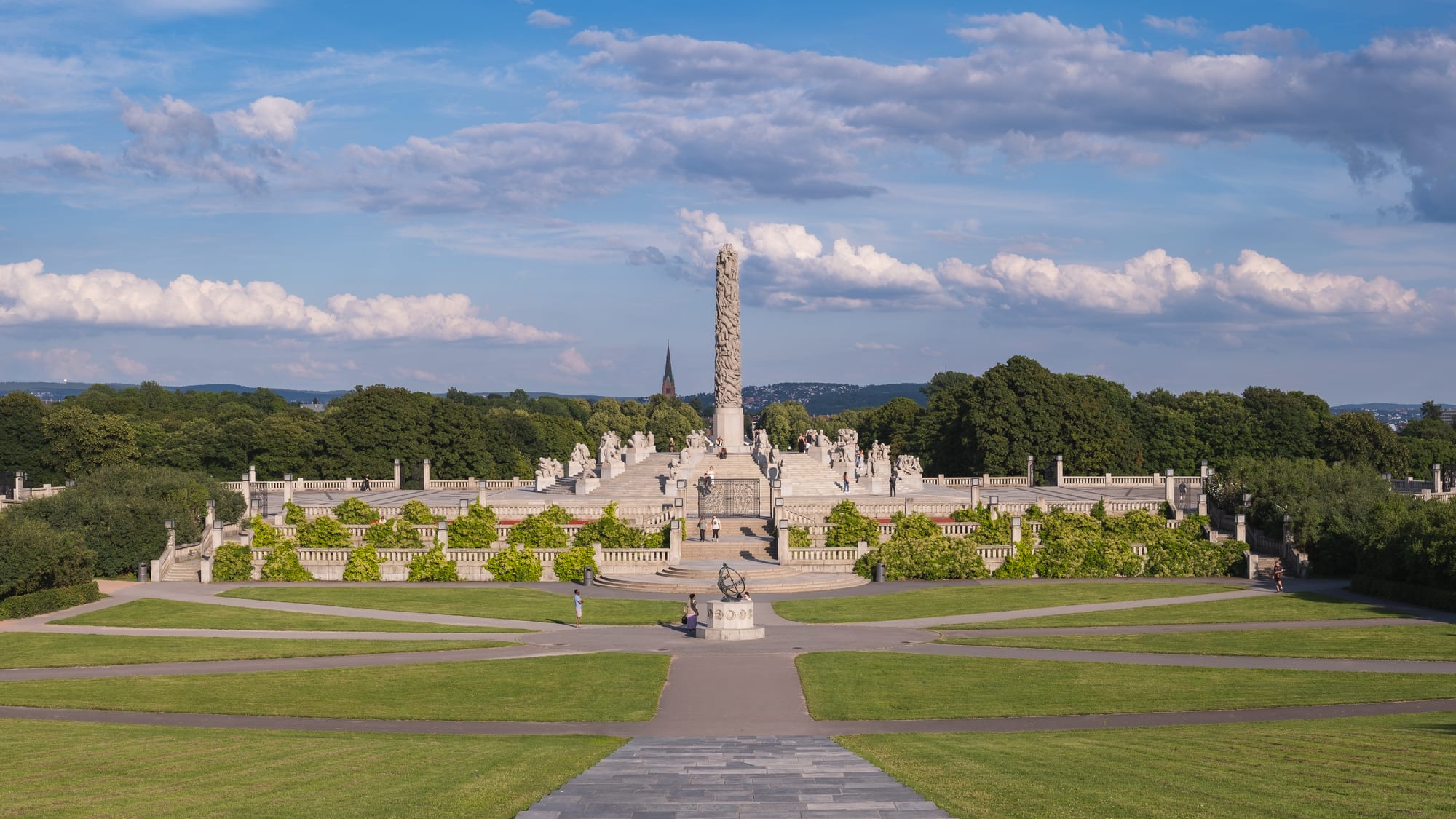
Vigeland Park in Oslo's Frogner district is the life's work of a single sculptor, Gustav Vigeland — over 200 bronze and granite figures depicting the human life cycle, culminating in the 14-metre granite Monolith crowded with 121 intertwined figures. It is free, open year-round, and functions as much as a public park for locals as a tourist sight.
Oslo's other major draws — the Viking Ship Museum, the Munch Museum, and the striking angular Opera House on the harbour — are all an easy tram or walk away.
8. Oslo Opera House
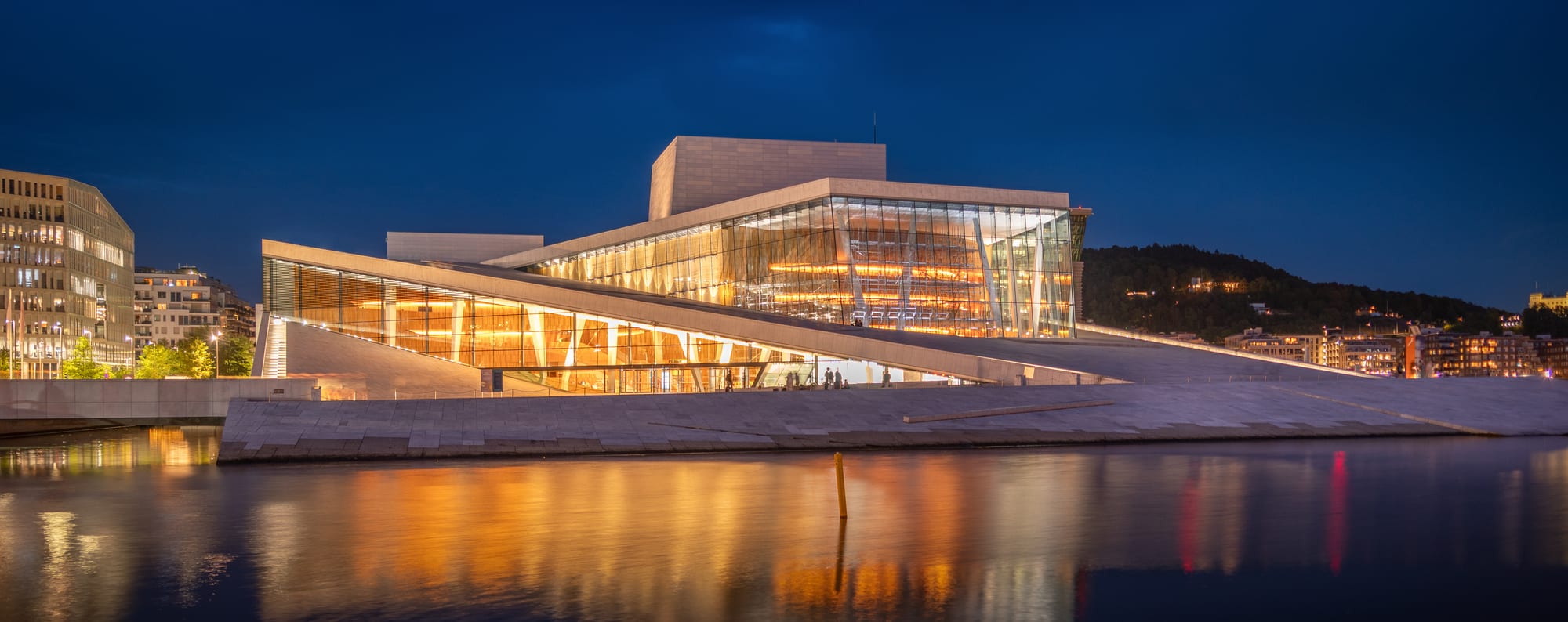
Oslo's Opera House, opened in 2008, was designed so its sloped white marble and granite roof could be walked on like a public plaza rising straight out of the fjord — one of the more unusual pieces of contemporary architecture in Scandinavia, and now as much a gathering spot and viewpoint as a performance venue. It sits at the head of the Oslofjord in the city's redeveloped harbour district.
9. Svalbard
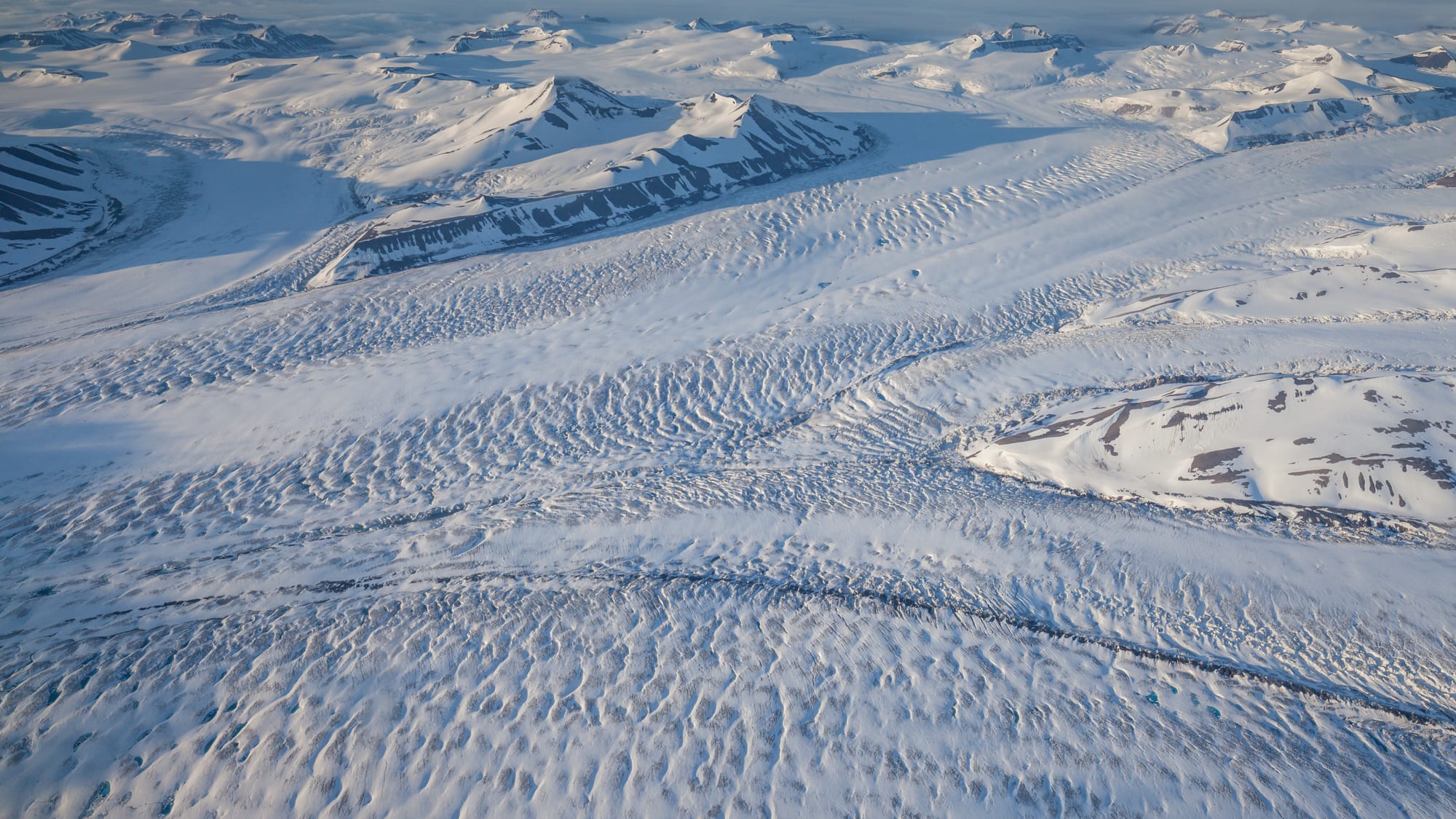
Svalbard, a remote Arctic archipelago governed by Norway under an international treaty, is about as far as scheduled flights go toward the North Pole — glaciers, polar bears (more numerous here than people), the midnight sun in summer, and total winter darkness, all administered from the small settlement of Longyearbyen. It is a genuinely extreme, expedition-style trip rather than a casual add-on to a mainland Norway itinerary.
Guided tours are effectively mandatory outside town for safety, given the polar bear population.
Norway rewards time: a fjord-and-Bergen loop can be done in a week, but adding Lofoten or Svalbard turns the trip into a genuine two-to-three-week journey from Arctic north to temperate south.