Daily Life · Norway
Norway: A Life Built Around the Cabin
A working day that ends early enough to collect the children from barnehage, a wooden cabin in the family for a great many households, and a country that empties its cities every weekend it can
By Worldlore Editorial · 30 September 2026
An ordinary working day in Norway tends to start and finish early: offices empty out by mid-afternoon so parents can collect children from barnehage, the state-subsidised kindergarten that most families use from around age one, and evenings are usually spent at home rather than out. Prices are high and wages generally keep pace, cards and the Vipps payment app have all but replaced cash, and public trust runs high enough that queuing, paperwork and official life move with a minimum of friction. Underneath the working week sits a second, unofficial calendar built around the outdoors — a walk, a ski trip, or a weekend at the family cabin — that many Norwegians treat as no less essential than the job itself.
Family and home life
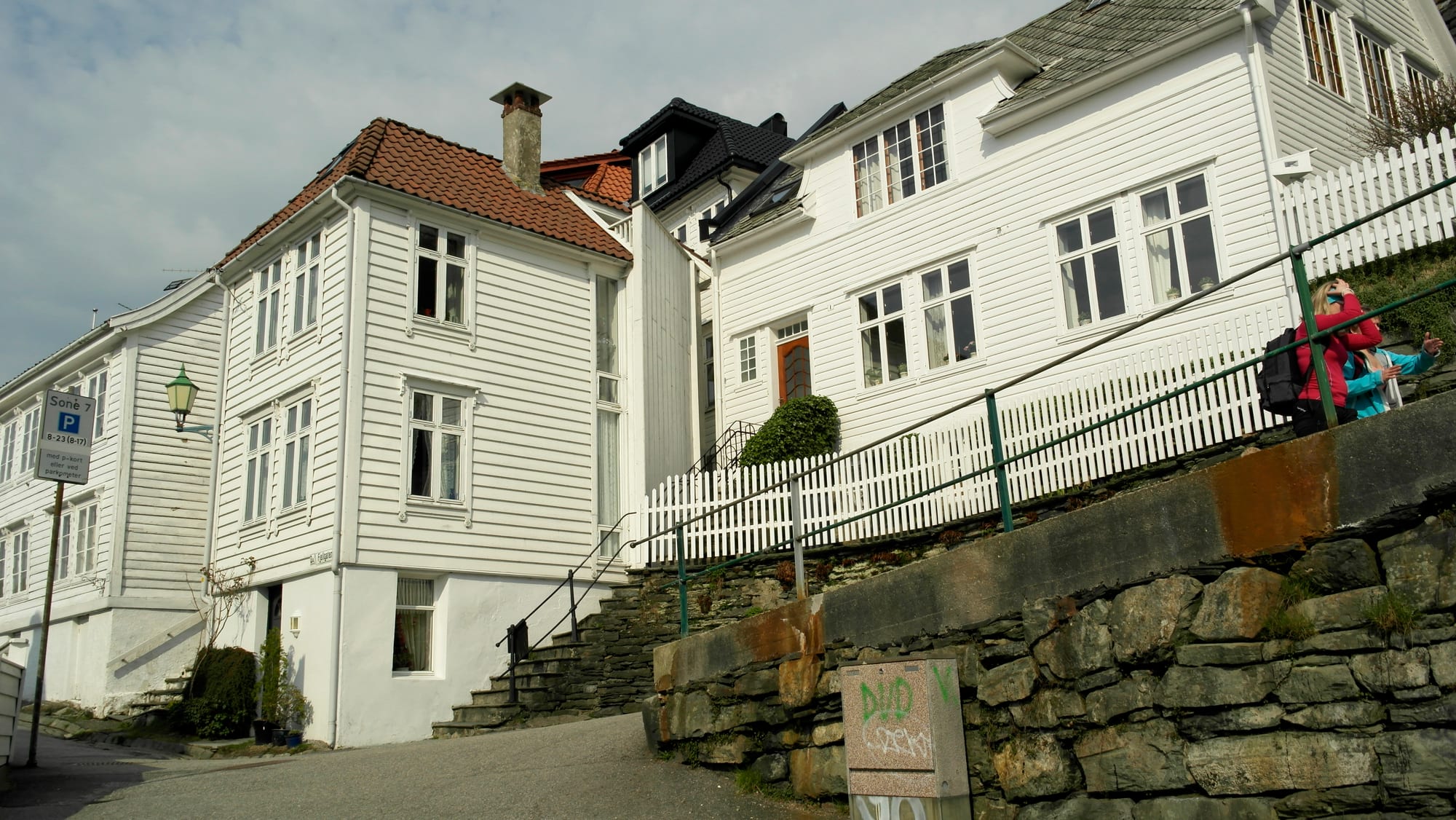
Most people live in flats or terraced housing in and around Oslo, Bergen, Trondheim, Stavanger and Tromsø, with detached houses more common outside the largest cities. Norwegian households are generally small and equal between partners: parental leave can run to 49 weeks at full pay or 61 weeks at 80 per cent, split between both parents with a portion reserved specifically for fathers on a use-it-or-lose-it basis, and it is entirely ordinary for either parent to leave work in the mid-afternoon for school or kindergarten pick-up. Dugnad, unpaid communal work such as a shared clean-up of a stairwell, garden or sports-club ground, is a genuine fixture of neighbourhood and family life rather than a formality, and turning up is treated as a normal part of belonging to a building or a community.
Work, school and the rhythm of the day
Working hours are fairly fixed, and working noticeably longer than the agreed day is unusual rather than admired. Most children start in barnehage around one year old, typically open nine to ten hours a day, commonly from around seven in the morning to four or five in the afternoon, and parents are entitled to paid days off to stay home with a sick child on top of the standard holiday allowance. School itself starts at six, runs a shorter day than in many countries, and leans heavily on outdoor activity and free play, particularly in the early years. Alcohol and cars are both taxed heavily, and stronger drinks are sold only through the state Vinmonopolet shops, which shapes everyday spending as much as any wage.
Community life and public spaces
Public space in Norway leans outdoor and informal rather than centred on a single square or market: a harbourfront, a ski trail from the edge of town, or a stretch of coastal path does the job that a plaza or bazaar might do elsewhere. Supermarkets — Kiwi and Rema 1000 chief among them — are where most everyday shopping and casual neighbourhood contact happens, since independent shops and open-air markets are comparatively rare outside the largest cities. Public transport is well used and reliable in and around the cities, trams and buses in particular, while a car remains close to essential in rural areas and along the fjords.
Free time and weekends
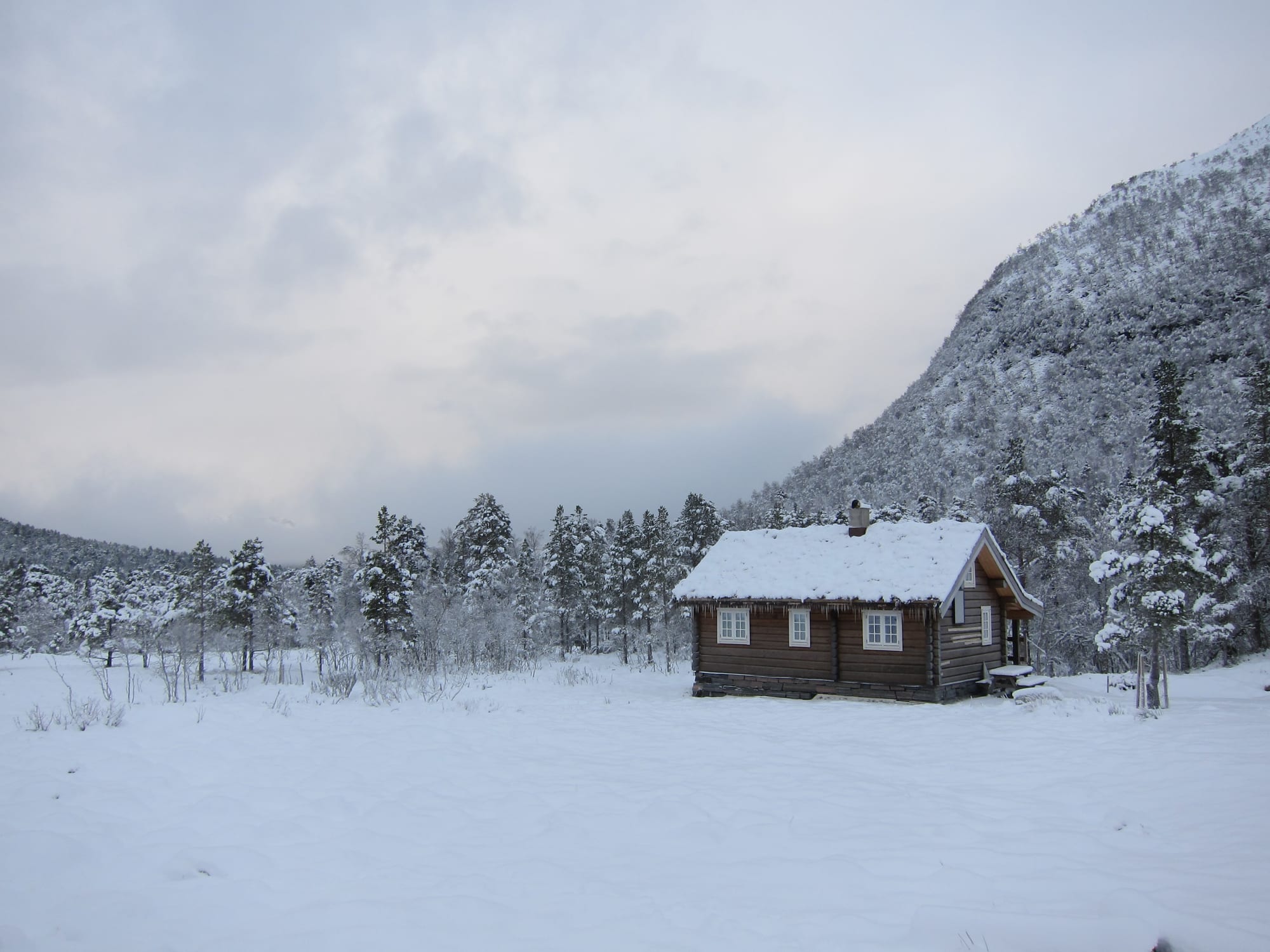
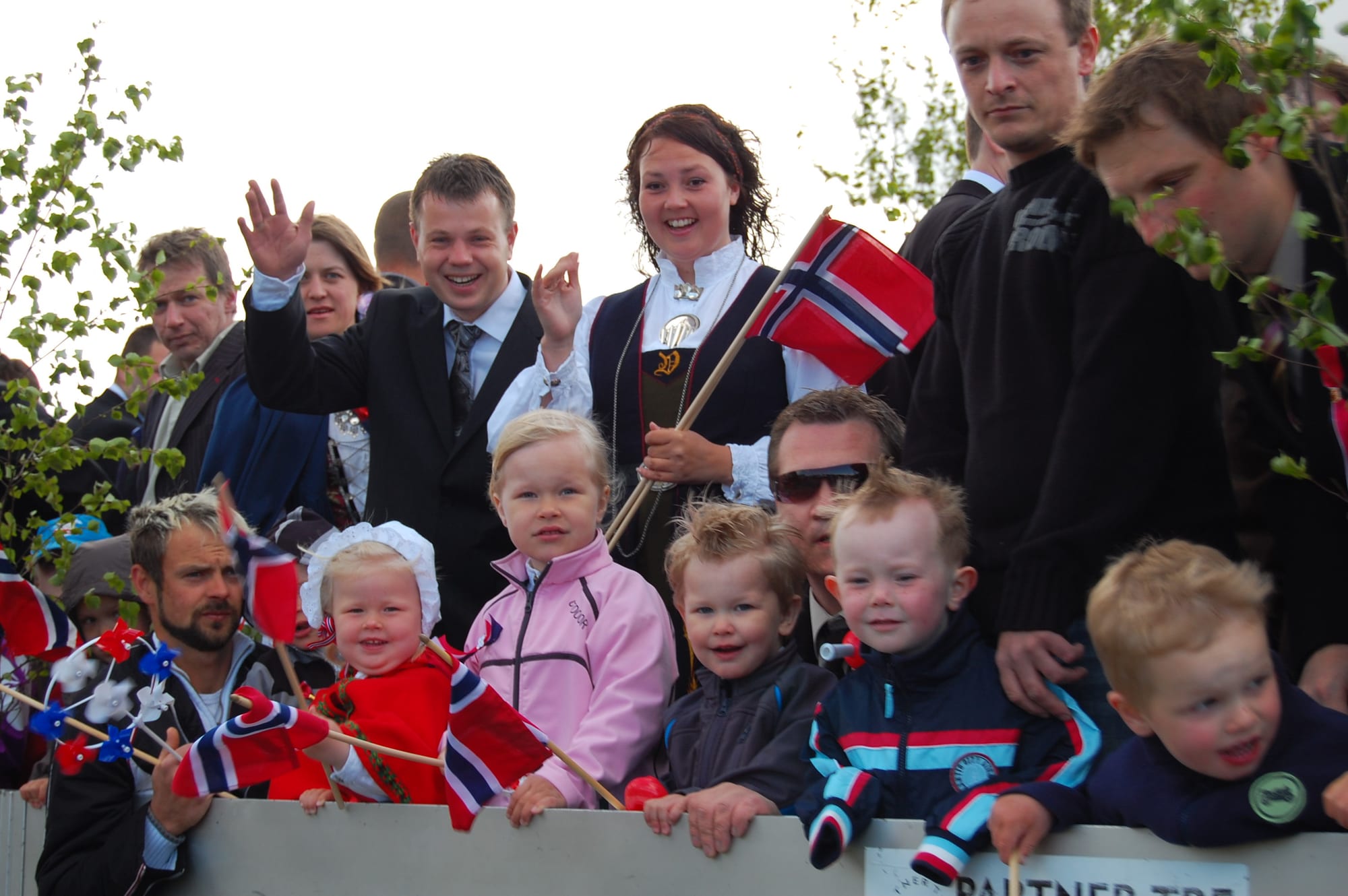
Weekends and the long, light summer are given over to the outdoors almost as a matter of principle, a value known as friluftsliv: hiking, fishing, berry-picking, and, above all, time at the hytte, the family cabin that a large share of households own and many more borrow or share. Cross-country skiing is close to a birthright in winter, taught early and followed avidly at the elite level, and 17 May, Constitution Day, empties offices and schools nationwide for children's parades, marching bands and national costume rather than any military display. Football and winter sports draw the biggest crowds, but a quiet Sunday walk, known simply as a tur, is just as central to how Norwegians actually spend their free time.
A visitor's ordinary day
Norway is close to a fully cashless society: a contactless card works almost everywhere, and carrying cash is rarely necessary even for small purchases. Shops generally keep shorter hours than in much of Europe and most are closed on Sundays, so plan grocery runs around that. Public transport in the cities is straightforward and well signed in English, while distances between towns mean a hire car, train or the coastal ferry all have their place depending on the route. Tap water is safe and good everywhere, so a refillable bottle saves real money over a trip.
What to take away
An ordinary day in Norway is organised around getting outside rather than staying in — a short walk if nothing else, a weekend at the cabin if there is time — and it is that outdoor habit, more than any single custom, that Norwegians treat as close to non-negotiable.