History · Northern Mariana Islands
Northern Mariana Islands: The Islands That Voted In
A Chamorro and Carolinian archipelago ruled in turn by Spain, Germany, Japan and the United States — the launch point for the atomic bombings, and the one Pacific territory that chose union with America rather than independence
By Worldlore Editorial · 19 September 2026
The other half of the Marianas
The Northern Mariana Islands are a chain of 14 islands in the western Pacific, stretching north from Guam, with about 47,000 people, most of them on Saipan. They share the Chamorro people and much of their history with Guam, but a quirk of 19th-century imperial dealing separated the two: Guam went to the United States in 1898, while the northern islands passed from Spain to Germany to Japan and only became American after the Second World War. In 1975 their people voted to join the United States permanently — the only Pacific islanders to choose that over independence or free association.
A short history
- c. 1500 BCE
Settlement
Chamorro ancestors arrive from island Southeast Asia.
- c. 900 CE
The latte period
Stone-pillar houses; a dense village society.
- 1521
Magellan
The first European contact, at Guam.
- 1668–1698
The Spanish reduction
Missions and war cut the Chamorro population catastrophically.
- 1899
Sold to Germany
Spain sells the northern islands after losing Guam and the Philippines.
- 1914–1944
Japanese rule
A League of Nations mandate; a sugar-plantation economy.
- 1944
Saipan and Tinian
US invasions; Tinian becomes the atomic-bomb air base.
- 1947–1978
US Trust Territory
Administered for the UN with the rest of Micronesia.
- 1975
The Covenant
Voters approve Commonwealth union with the United States.
- 1986
Commonwealth
The status takes full effect; islanders become US citizens.
The latte builders, and the reduction
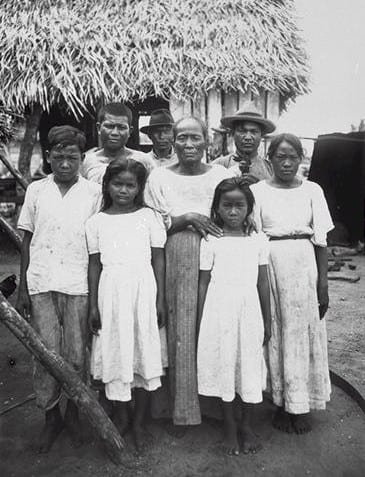
The Chamorro settled the Marianas around 3,500 years ago and by about 900 CE were raising the latte — paired rows of stone pillars capped with hemispherical stones that held up their largest buildings. Ferdinand Magellan made landfall at Guam in 1521, and Spain claimed the whole chain, but only in 1668 did Jesuit missionaries and soldiers arrive in force. Three decades of mission wars, Spanish reprisals and introduced disease reduced the Chamorro from tens of thousands to a few thousand, and the survivors of the northern islands were forcibly resettled on Guam. The northern islands were later repopulated, partly by Carolinians migrating north after typhoons.
Germany, then Japan
German rule was brief and light-handed. When the First World War broke out, Japan seized Germany's north Pacific islands, and in 1920 received them as a League of Nations "Class C" mandate. Japan invested heavily: Saipan and Tinian were cleared for sugar cane worked by tens of thousands of migrants from Okinawa and Korea, and the town of Garapan on Saipan became a substantial Japanese city. By the late 1930s the islands were being fortified, in breach of the mandate's terms.
1944, and the bomb
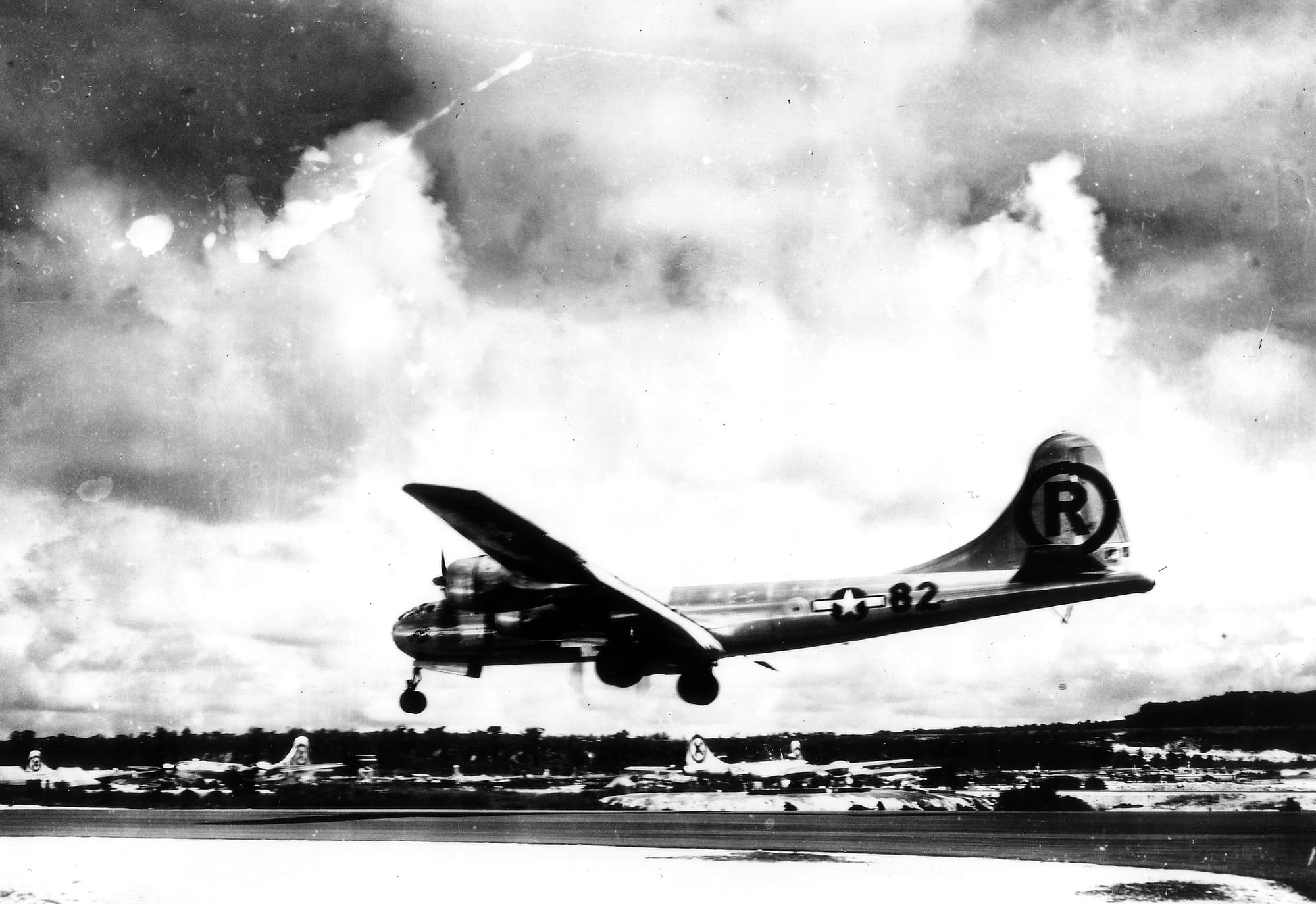
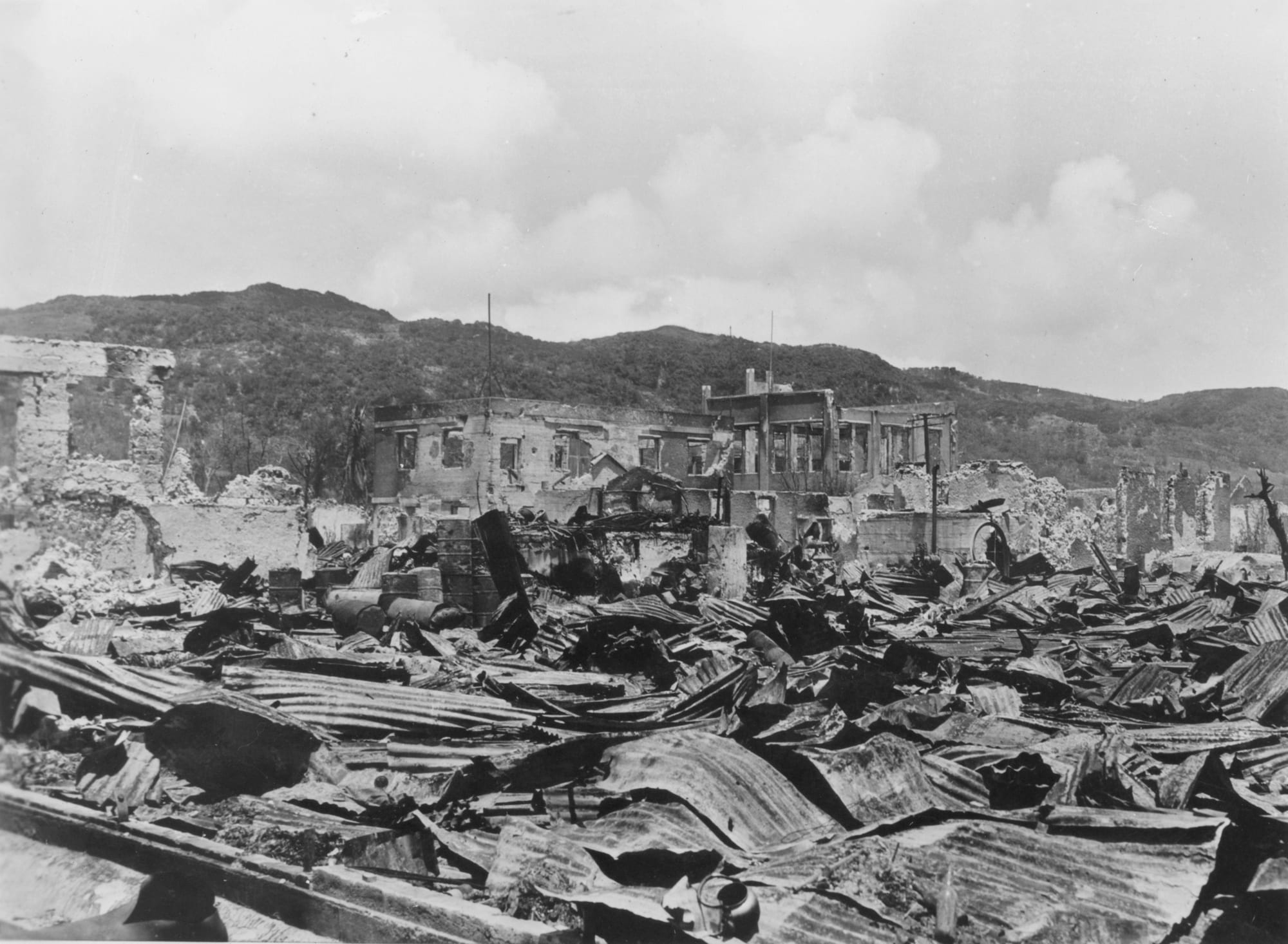
American forces invaded Saipan in June 1944 and Tinian in July. The capture of Saipan put Japan's home islands within range of B-29 bombers and brought down the Tojo government in Tokyo. On Tinian the US built what was briefly the largest airfield in the world; it was from North Field on Tinian that the B-29s Enola Gay and Bockscar took off in August 1945 to drop the atomic bombs on Hiroshima and Nagasaki. The islands' own people, interned during the fighting, emerged into a landscape remade by war.
Trust Territory and Commonwealth
After the war the United States administered the northern Marianas, with the Marshall Islands, the Carolines and Palau, as the UN Trust Territory of the Pacific Islands. As that trusteeship wound down in the 1970s, the other districts moved towards independence or free association, but the Marianas negotiated separately for full political union. A Covenant with the United States was approved by 78.8 per cent of voters in a 1975 plebiscite; it took effect in stages, and in 1986 Trust Territory status ended and the islanders became US citizens. The Commonwealth has its own governor and legislature but is subject to federal sovereignty, and since 2009 its immigration has been federalised.
What the Northern Marianas carry
The Northern Mariana Islands were passed between four empires in a century, and their strategic value peaked at the moment two aircraft left Tinian in 1945. When the choice finally came, in 1975, they did not follow their Micronesian neighbours towards sovereignty; they chose to become American, betting that the security and citizenship were worth the loss of independence. The garment industry that once drove the economy has gone, and the Commonwealth now depends on tourism, much of it Chinese, and on its federal relationship.