Daily Life · Northern Mariana Islands
Northern Mariana Islands: Bound by Water, Held by Family
A commonwealth of fourteen islands where most people live within sight of Saipan's lagoon, a Sunday still built around the Catholic church, and a small plane rather than a bridge is what keeps family on Tinian and Rota within reach
By Worldlore Editorial · 30 September 2026
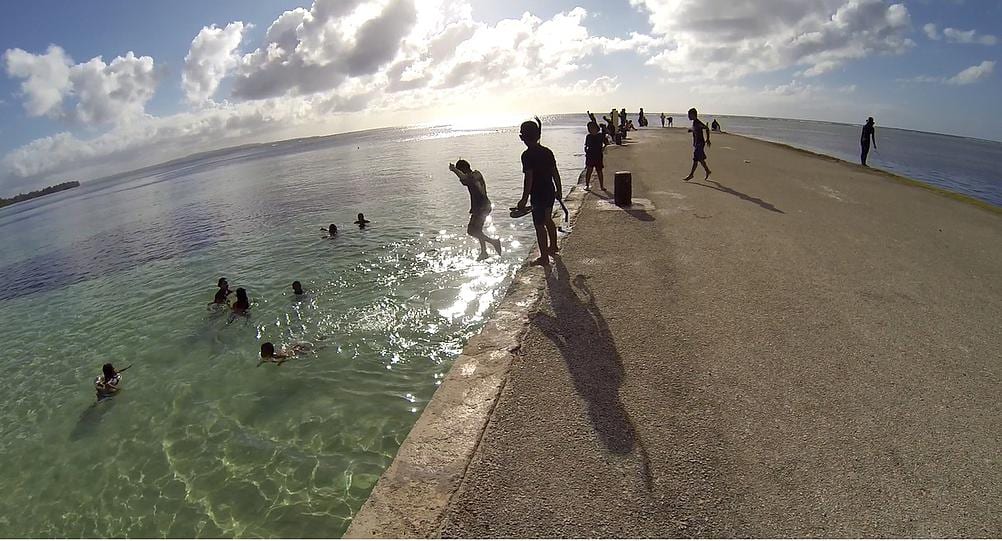
Life in the Northern Mariana Islands runs on island time in the literal sense: nearly everyone lives on Saipan, within a short drive of the lagoon, and the day tends to end there, in the water or beside it, once school or work is done. As American citizens, CHamoru and Carolinian families move easily to Guam, Hawaii or the mainland, and many do, which means an ordinary household here is as likely to include a relative working abroad as one living down the road. Tinian and Rota, a short flight rather than a short drive away, keep a slower, smaller version of the same rhythm, close enough to feel part of the same community and far enough that a visit usually means booking a seat on a small plane.
Family and home life
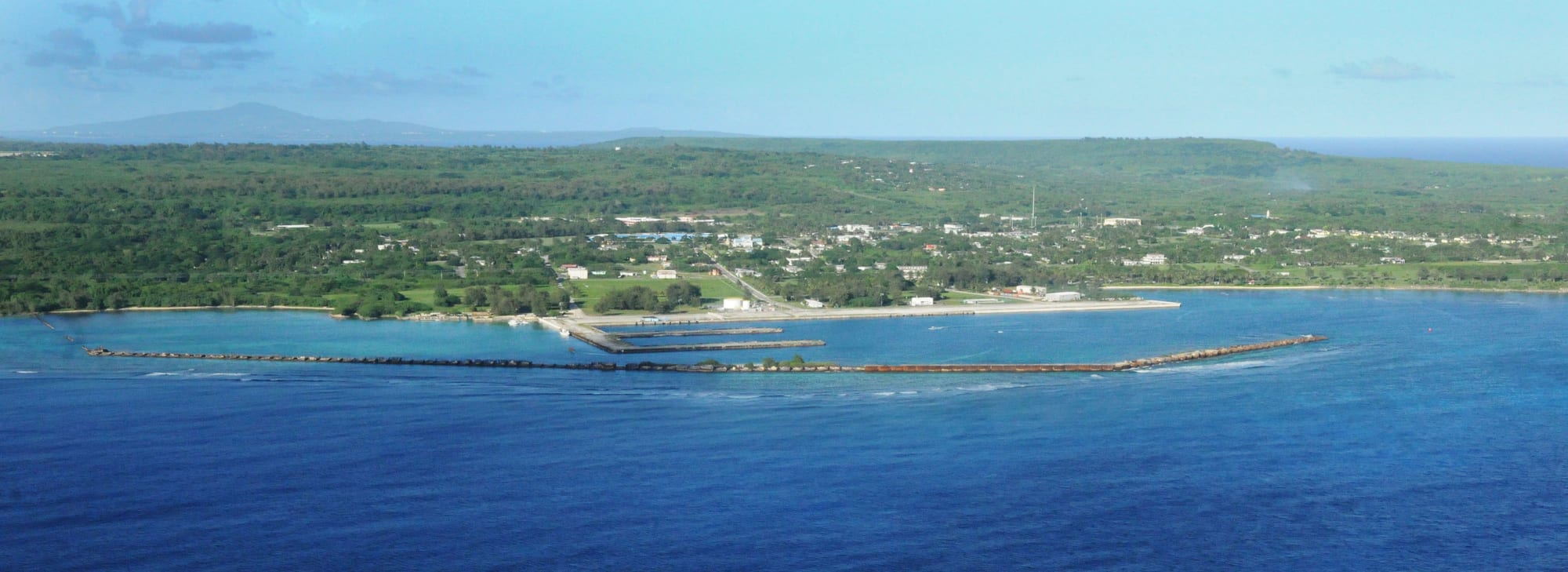
Extended family, not the immediate household alone, is the basic unit of CHamoru and Carolinian life: the word for parents, saina, has a plural form covering not just mothers and fathers but their siblings, grandparents and even godparents, and everyday obligation runs through that whole network rather than stopping at the front door. In many families it is still a daughter, often the eldest, who is expected to take on the care of ageing parents, even as sons traditionally carried more authority in public affairs, and rosaries, weddings, funerals and birthday parties routinely double as gatherings of dozens of relatives rather than a handful. Most people live on Saipan in small, low-rise settlements strung along the coast; Tinian and Rota keep the same pattern on a smaller scale, a scattering of houses around one or two village centres rather than anything resembling a city.
Work, school and the rhythm of the day
Government jobs, tourism and hospitality employ much of the resident workforce, while foreign labour, much of it from the Philippines, has long made up a striking share of the people actually working: in the mid-2010s, foreign workers still accounted for roughly half of everyone employed in the CNMI, even after a long decline from the garment-industry years. Wages sit at the low end for US jurisdictions — the federal minimum wage only reached the islands in 2018, after a decade of phased increases — and many households combine a government or tourism job with fishing, farming a small plot or a side business to make ends meet. Schools follow a standard American school day and calendar, and, as US citizens, CNMI students who go on to college often do so on Guam, in Hawaii or on the mainland.
Community life and public spaces
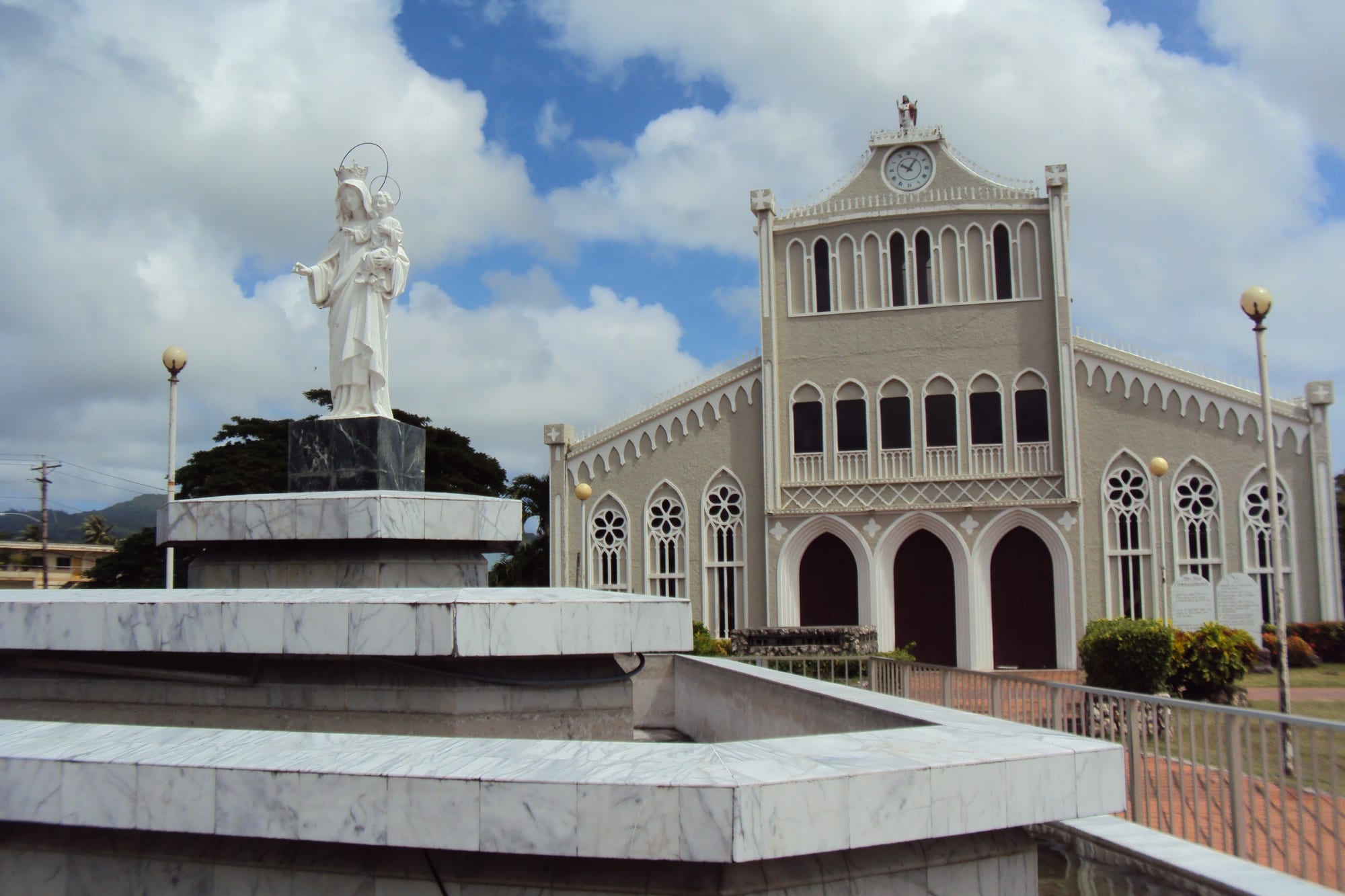
The Catholic church remains the clearest anchor of community life, its reach dating to the Spanish era and still visible every Sunday in packed Masses and in the round of village fiestas that mark each parish's patron saint with a feast day, open houses and food enough for the whole neighbourhood. Beyond the church, small family-run stores, roadside barbecue stands and the fish market are where an ordinary day's errands and conversation happen, more than any single formal plaza. Saipan's Beach Road and the Garapan strip carry most of the everyday traffic and tourist business together, while Tinian and Rota get by with far less passing traffic and a correspondingly quieter public life.
Free time and weekends
The lagoon does double duty as the islands' main public park: swimming, fishing and small-boat outings fill weekend afternoons for residents as much as for visitors, and a stretch of shoreline near Chalan Kanoa or Garapan is as likely to be full of local families as tourists. Village fiestas, baseball and basketball leagues, and karaoke, a genuinely popular pastime across the islands, round out the weekend calendar, and a trip to Managaha islet or over to Tinian or Rota counts as a proper occasion rather than a routine outing given the boat or flight it takes to get there. Typhoon season, roughly July to November, adds its own rhythm: tracking a storm's path and stocking up on supplies becomes, for a few weeks a year, everyone's shared weekend concern.
A visitor's ordinary day
The US dollar is the currency and US entry rules apply, with a joint Guam-CNMI Visa Waiver Program admitting additional nationalities for short tourist stays. Cards work at hotels and larger shops on Saipan, but small eateries and stalls, and almost everything on Tinian and Rota, run on cash. A rental car is close to essential on Saipan, since public transport is limited to taxis and a small public bus service with thin schedules, and reaching Tinian or Rota usually means booking one of the small, infrequent flights. Shops and government offices keep standard daytime hours, but small, family-run eateries often stay open later and more flexibly than any posted sign suggests.
What to take away
An ordinary day in the Northern Mariana Islands is shaped less by the clock than by water: the lagoon that closes out the afternoon, the flight or boat that separates a family on one island from a family on another, and a Sunday that, for most households, still runs through the parish church.