History · North Macedonia
North Macedonia: The Contested Name
A landlocked Balkan republic at the crossroads of Greek, Slavic, Ottoman and Albanian worlds — a nationhood recognised late, a 27-year dispute with Greece over its name, and a near civil war settled by power-sharing
By Worldlore Editorial · 19 September 2026
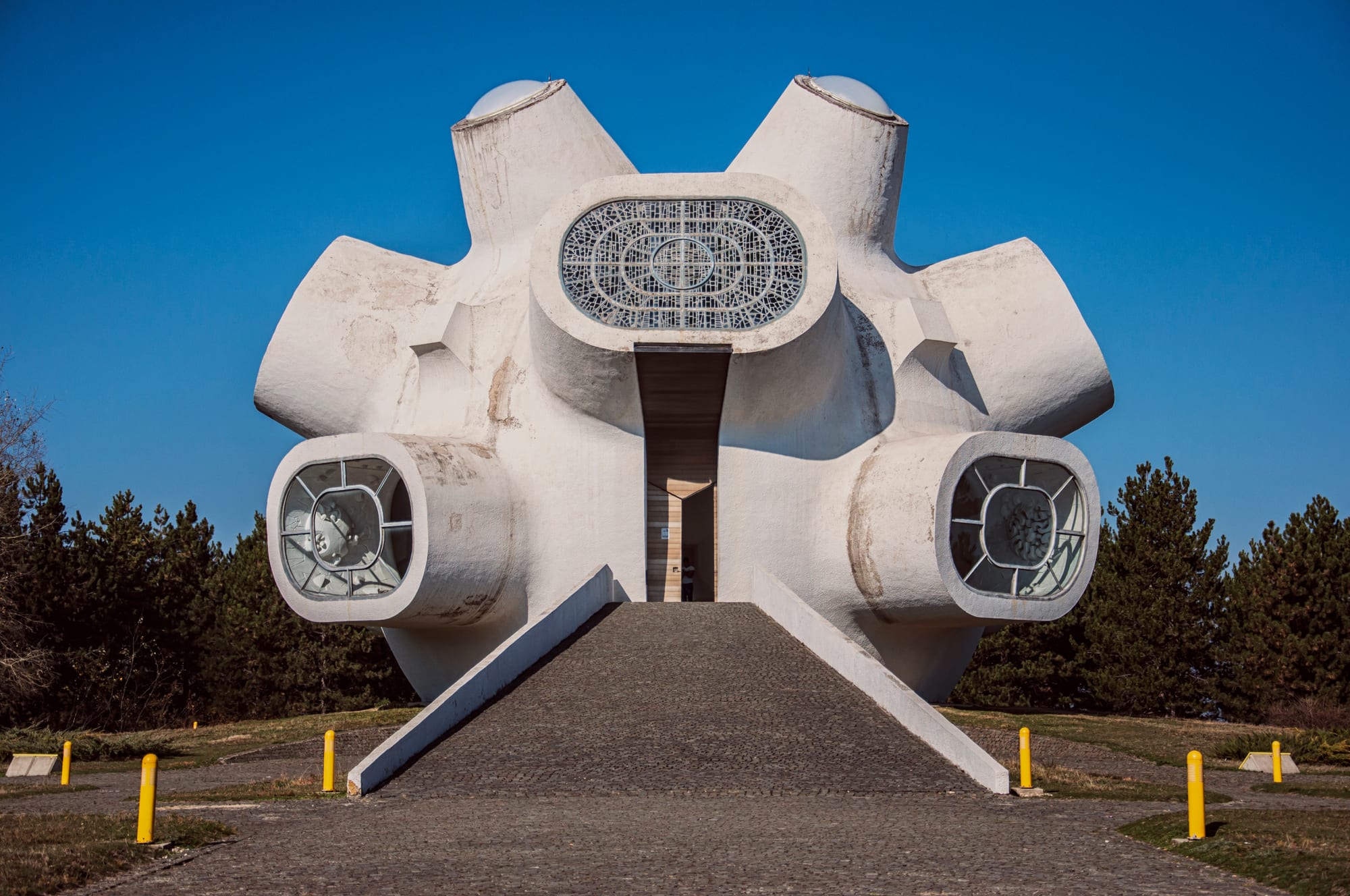
A small country with a large argument
North Macedonia is a landlocked republic of about 1.8 million people in the centre of the Balkan peninsula, roughly a quarter of them ethnic Albanians. Its Slavic-speaking majority calls itself Macedonian; that name, and the heritage it implies, was the subject of a bitter 27-year dispute with Greece that blocked the country's path into NATO and the European Union until it agreed, in 2019, to add "North" to its title. The region has been a borderland for two millennia, fought over by every power that has passed through south-eastern Europe.
A short history
- 4th century BCE
Ancient Macedon
Philip II and Alexander the Great; the heartland lay mostly in today's Greece.
- 6th–7th c. CE
Slavic settlement
Slavs settle the region; Ohrid becomes a religious centre.
- 1395–1912
Ottoman rule
Five centuries within the Ottoman Empire.
- 1903
The Ilinden uprising
A short-lived revolt against Ottoman rule at Kruševo.
- 1912–1913
The Balkan Wars
Ottoman Macedonia is partitioned among Greece, Serbia and Bulgaria.
- 1944
Yugoslav republic
A Socialist Republic of Macedonia is created within Yugoslavia.
- 1991
Independence
Macedonia leaves Yugoslavia peacefully.
- 1993–2019
The name dispute
Greece objects; the country joins the UN as "FYROM".
- 2001
Albanian insurgency
Fighting ends with the Ohrid power-sharing agreement.
- 2018–2019
Prespa Agreement
The country is renamed North Macedonia; NATO membership follows in 2020.
Crossroads
The name Macedonia comes from the ancient kingdom of Philip II and Alexander, whose core territory lay largely in what is now northern Greece; the modern republic's land was its northern marches, later thoroughly Romanised and then Byzantine. Slavs settled the region from the 6th century, and in the 9th and 10th centuries Ohrid, under the disciples of Saints Cyril and Methodius, became a cradle of Slavonic literature and Orthodox learning. The Ottomans conquered the area by 1395 and held it for over five centuries, leaving mosques, bridges, bazaars and a lasting religious and ethnic patchwork.
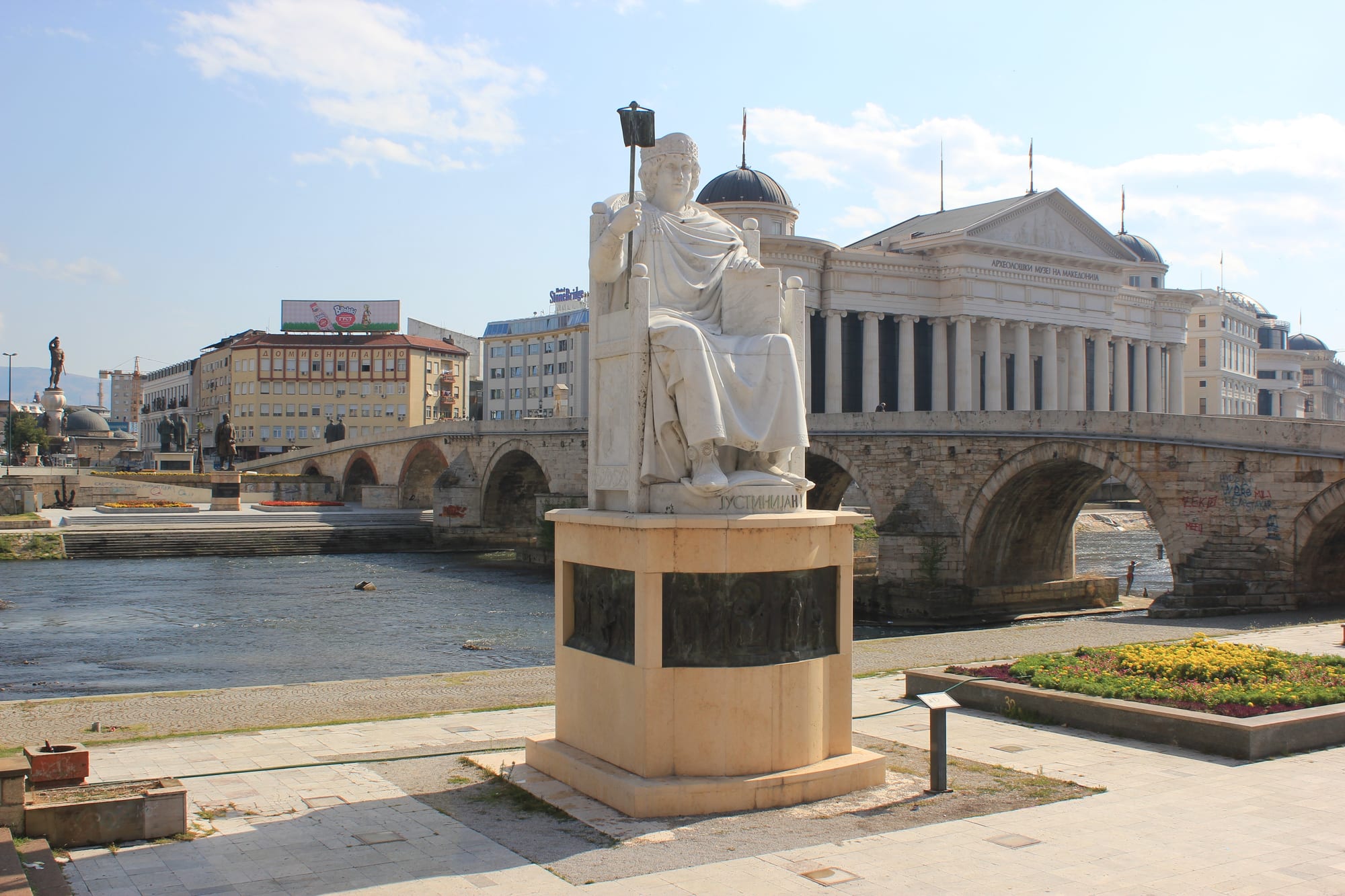
Uprising and partition
As Ottoman power weakened, the "Macedonian Question" — which neighbouring nation the region's Slavs belonged to, and which state should inherit the land — became the most dangerous problem in European diplomacy. The Internal Macedonian Revolutionary Organisation (VMRO) led a rising on Ilinden (St Elijah's Day) in 1903, briefly holding the town of Kruševo before it was crushed. The Balkan Wars of 1912–13 expelled the Ottomans and then divided the region: Greece took the south (Aegean Macedonia), Serbia the north (Vardar Macedonia, the modern republic), and Bulgaria a smaller eastern piece. Vardar Macedonia was governed as "South Serbia" between the world wars.
The Yugoslav republic
In 1944 Yugoslavia's communist partisans established a Socialist Republic of Macedonia as one of the federation's six republics — the first time the Slav-Macedonian identity had been given a state, a standardised literary language and an autocephalous Orthodox church. Under Tito the republic was among Yugoslavia's poorest and received development transfers. When the federation broke up, Macedonia held a referendum and became independent in September 1991 without the wars that engulfed Croatia and Bosnia — the only Yugoslav republic to leave peacefully.
The name, and the Albanians
Greece objected that the name "Macedonia" implied a claim on its own northern province and appropriated Greek heritage, and it blocked the new state's international recognition. The country joined the UN in 1993 under the provisional name "the former Yugoslav Republic of Macedonia". Separately, in 2001, an insurgency by ethnic-Albanian fighters seeking greater rights brought the country to the edge of civil war; the Ohrid Framework Agreement ended it that August with a power-sharing settlement — decentralisation, official use of Albanian, and proportional representation of communities in public bodies.
Resolution and after
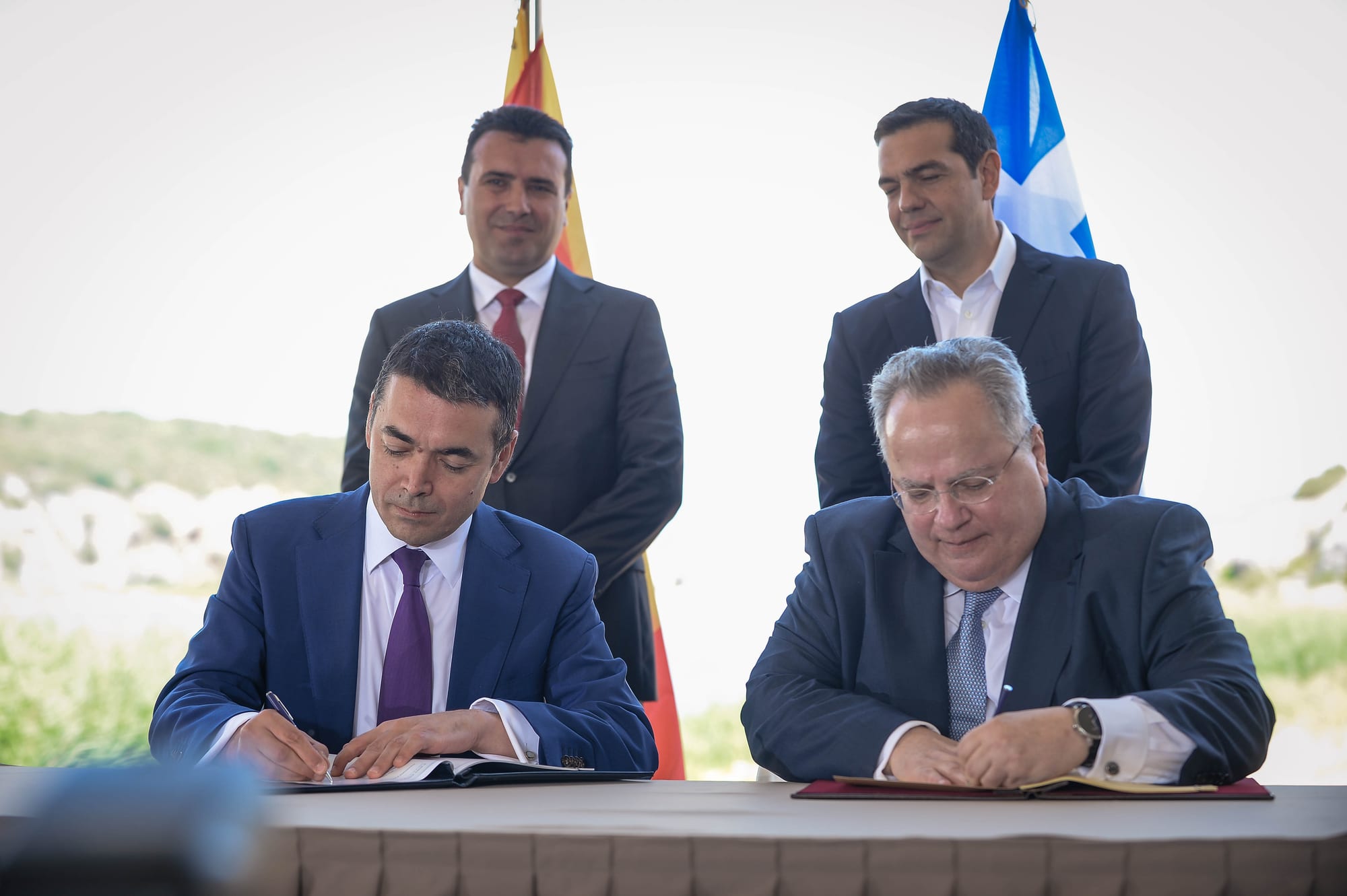
After years of failed talks, the 2018 Prespa Agreement between Prime Minister Zoran Zaev and his Greek counterpart Alexis Tsipras settled the dispute: the country would be renamed the Republic of North Macedonia, in exchange for Greece dropping its veto. Both governments faced fierce domestic opposition and Zaev pushed the change through after a boycotted referendum. North Macedonia joined NATO in March 2020. EU accession talks opened but were then held up by a fresh set of demands from Bulgaria over language, identity and history.
What North Macedonia carries
North Macedonia's modern history is a long negotiation over recognition — first of whether a Macedonian nation exists at all, then of what it may call itself, then of how it shares power with its large Albanian minority. It left Yugoslavia without a war and settled its internal conflict by agreement, but each step towards Europe has required conceding something about its name or its past to a neighbour.