History · Nigeria
Nigeria: The Giant of Africa
The continent's most populous country — ancient art and Sahel caliphates, kingdoms of the forest, a colony assembled by a chartered company, a civil war over Biafra, decades of military rule, and an oil economy that never trickled down
By Worldlore Editorial · 10 September 2026
One country, three hundred peoples
Nigeria holds one in every six Africans and more than 250 ethnic groups, dominated numerically by three: the Hausa-Fulani of the mostly Muslim north, the Yoruba of the south-west, and the Igbo of the south-east, largely Christian. It is Africa's biggest economy and biggest oil producer, and yet most Nigerians are poor. The country was drawn on a map by Britain, joining regions with little in common, and the tension between those regions — and between the oil wealth and the people — has defined its politics.
A short history
- c. 1500 BCE–500 CE
Nok culture
Iron-working and terracotta sculpture on the Jos Plateau.
- c. 1000–1897
Forest kingdoms
Ife, then Benin and the Yoruba states; Igbo village democracies.
- c. 1100–1900
The north
Kanem-Bornu and the Hausa city-states; the 1804 Sokoto jihad.
- 16th–19th c.
The slave trade
The Bight of Benin and Biafra ship millions across the Atlantic.
- 1861–1914
British conquest
Lagos annexed; the Royal Niger Company; north and south amalgamated.
- 1960
Independence
A federation of three regions.
- 1967–1970
The Biafran war
The Igbo east secedes; around a million die, mostly of hunger.
- 1966–1999
Military rule
Coups and counter-coups; a brief Second Republic (1979–83).
- 1999
The Fourth Republic
Return to civilian government.
- 2009–
Boko Haram
A jihadist insurgency in the north-east.
Kingdoms and caliphates
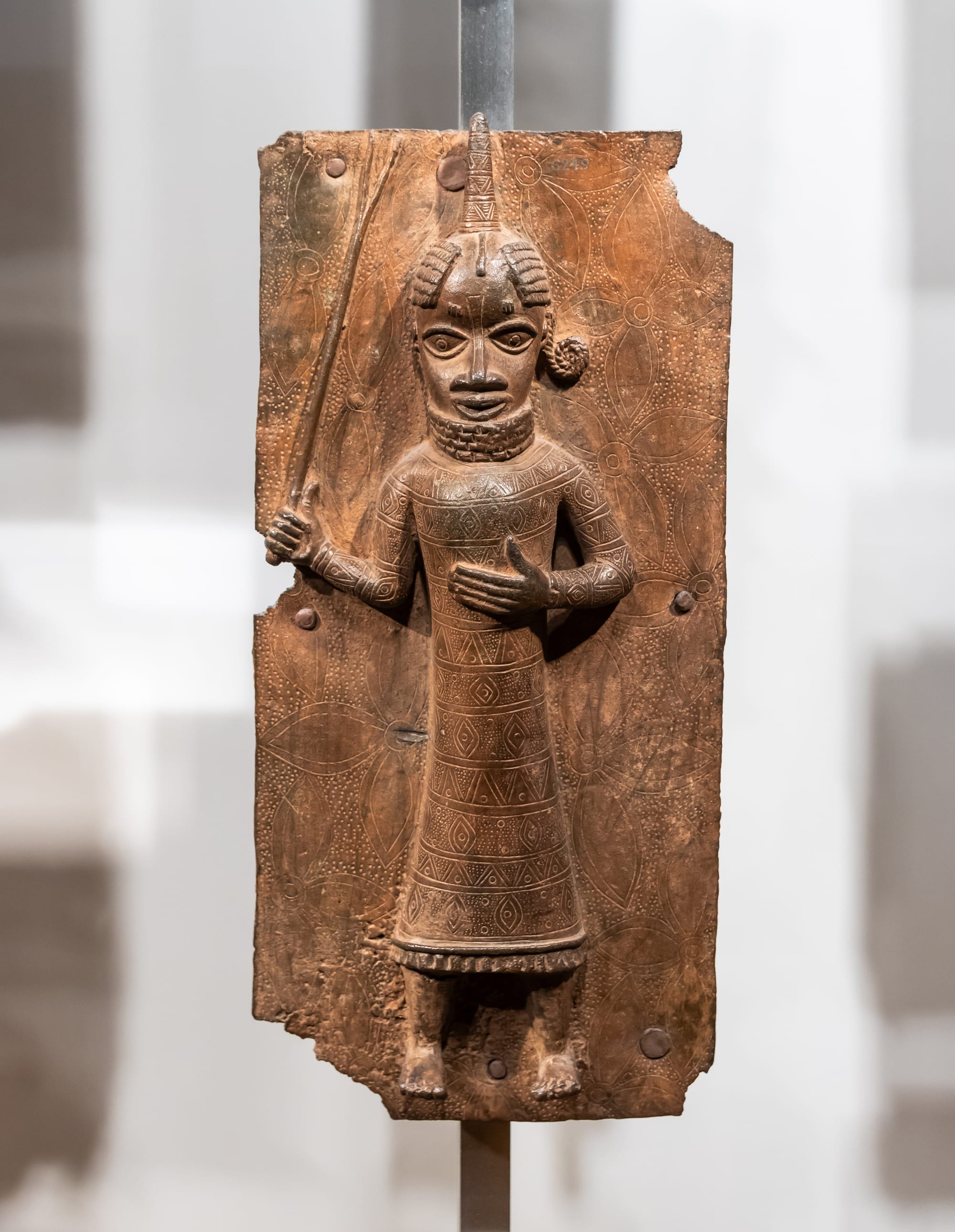
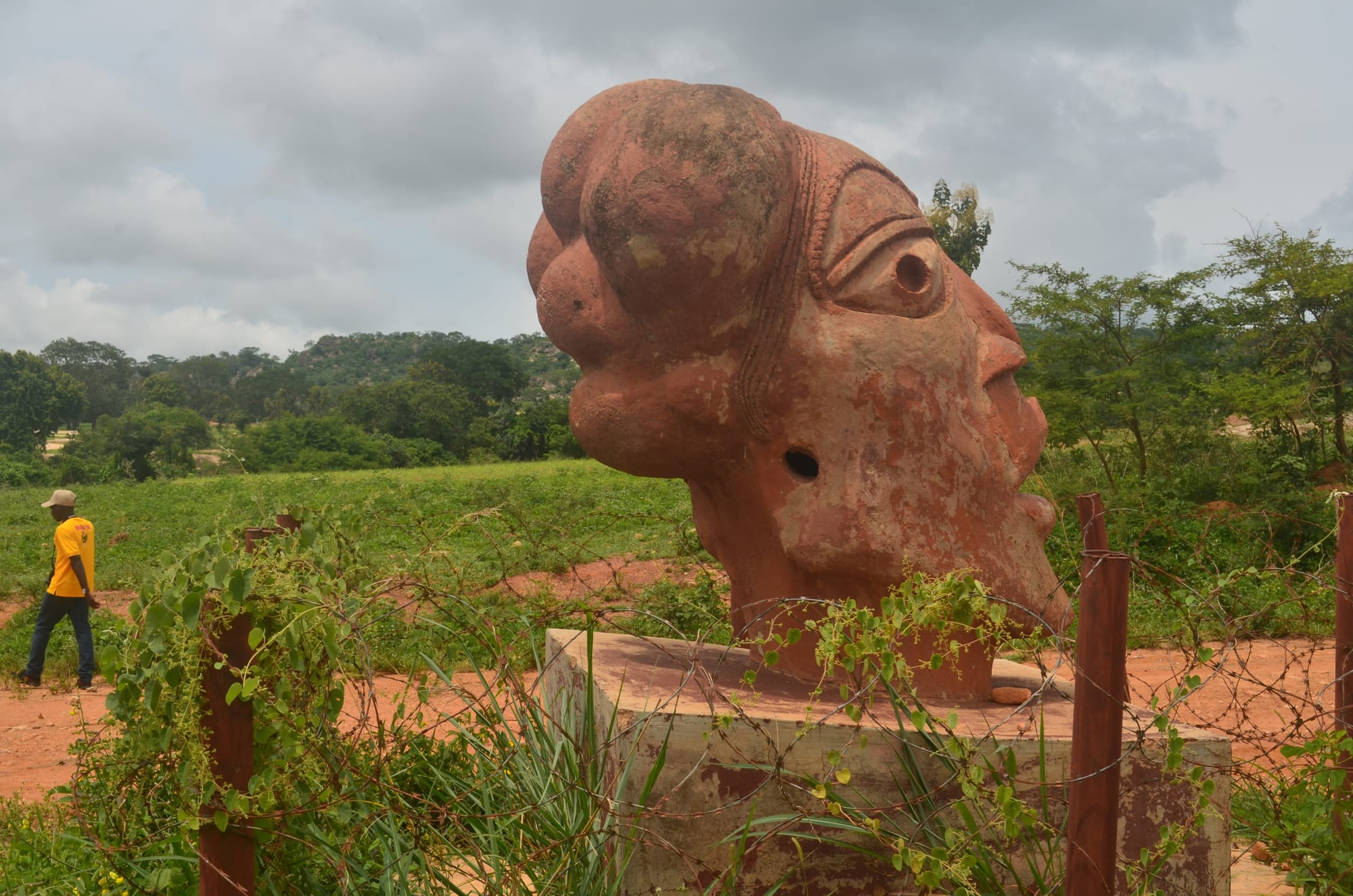
Nigeria has one of Africa's deepest art histories: the Nok terracottas from before 500 CE, the naturalistic bronze and terracotta heads of Ife from around 1300, and the celebrated brass and ivory work of the Kingdom of Benin. In the north, Kanem-Bornu and the Hausa city-states such as Kano and Katsina were commercial and Islamic centres on the trans-Saharan routes; in 1804 the Fulani scholar Usman dan Fodio launched a jihad that created the Sokoto Caliphate, the largest state in 19th-century Africa. The coast, meanwhile, was one of the Atlantic slave trade's main sources.
The making of a colony
Britain annexed Lagos in 1861, chartered the Royal Niger Company to push up the river against French and German rivals, and by 1903 had conquered the Sokoto Caliphate. In 1914 the Colonial Office amalgamated the Northern and Southern Protectorates into a single Colony and Protectorate of Nigeria, governed cheaply through "indirect rule" — working through existing emirs and chiefs, and inventing "warrant chiefs" where, as among the Igbo, there had been none. The north was kept insulated from Christian missions and Western schooling, entrenching a developmental gap between the regions that independence inherited.
Independence and Biafra
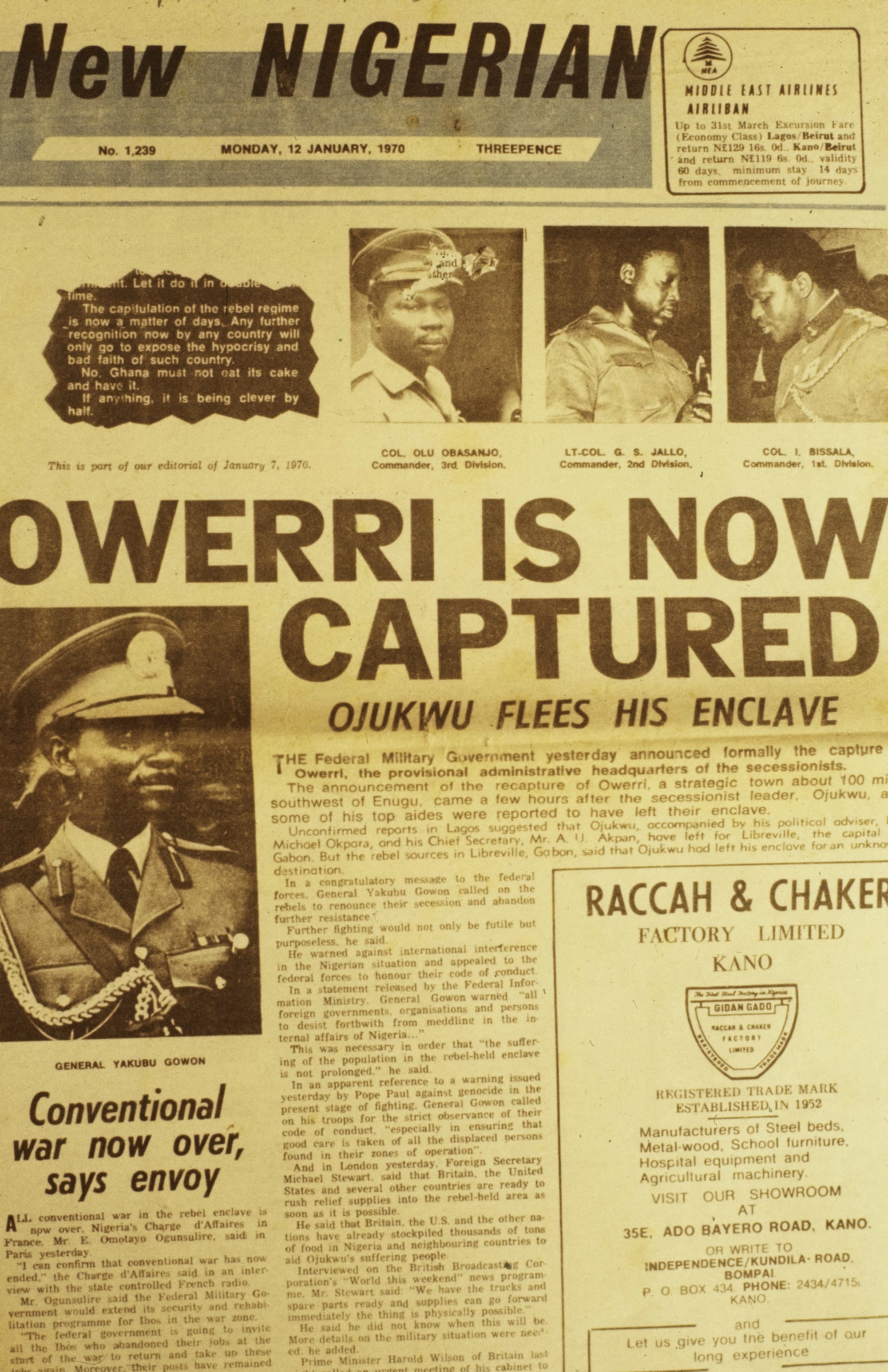
Nigeria became independent on 1 October 1960 as a federation of three large regions, each dominated by one ethnic group — a structure that made every national contest a zero-sum fight between them. A disputed census and election, then a January 1966 coup led mostly by Igbo officers, a counter-coup by northerners, and pogroms against Igbos in the north, culminated in the eastern region declaring itself the Republic of Biafra in May 1967.
Oil, and the generals
Large-scale oil production began in the Niger Delta in the late 1950s, and by the 1970s petroleum was the overwhelming source of government revenue. The boom funded a new capital at Abuja and a bloated state, but also entrenched corruption, "resource curse" dependence, and the neglect and pollution of the Delta itself. Military governments ruled for all but four years between 1966 and 1999 — the most notorious being that of Sani Abacha (1993–98), which hanged the writer and Ogoni activist Ken Saro-Wiwa in 1995 and looted billions. Abacha's sudden death opened the way to elections.
The Fourth Republic
Since 1999 Nigeria has held continuous civilian rule and, in 2015, its first electoral defeat of an incumbent president. But the Fourth Republic has struggled with the same fault lines: an informal north–south rotation of the presidency, mass poverty despite oil, endemic corruption, and overlapping security crises — the Boko Haram and Islamic State insurgency in the north-east, which has killed tens of thousands and displaced millions since 2009; farmer–herder violence in the middle belt; kidnapping-for-ransom; and separatist agitation in the Igbo south-east. Youth protests against police brutality (the "EndSARS" movement) were met with force in 2020.
What Nigeria carries
Nigeria is an assembly of nations that Britain bolted together and left, and its history is the argument over whether that federation can be made to work fairly — an argument that once became the Biafran war and now runs through every election, every revenue-sharing formula, and every debate over which region holds power. Oil gave the country the means to paper over the question for decades. It did not answer it.