Culture & Customs · Nigeria
Nigeria: Home Training and Big Celebrations
Two great faiths and hundreds of peoples, greetings that always begin with the eldest, and a love of ceremony that turns every wedding, naming and funeral into an occasion for the whole community
By Worldlore Editorial · 30 September 2026
The hall is already full when the celebrants' family arrives. Dozens of guests are dressed in the same fabric, bought from the family weeks before and tailored into as many different styles as there are wearers: this is the aso ebi, a visible sign of who stands with whom. A young man crosses the room to greet an elderly relative and drops almost to the floor; a young woman beside him bends her knees and lowers her head. Only once the elders have been greeted, one by one and without hurry, does anyone think about finding a seat. Much of Nigerian etiquette is contained in that moment: a deep regard for age and family, a pride in dressing well, and a conviction that the big occasions of life belong to the whole community, not only to the people at the centre of them.
Faith, identity and values
Nigeria is home to more than 250 ethnic groups and some 500 languages. The three largest peoples, the Hausa-Fulani, the Yoruba and the Igbo, are only part of a much larger picture that includes the Tiv, whose theatre is described below, and hundreds of other peoples, each with its own language, customs and traditional leaders. English is the official language, and Nigerian Pidgin serves as a common tongue between many of them.
Religion is woven through almost every part of life. Figures from the Pew Research Center, cited by the US State Department, put the population at roughly half Muslim and just under half Christian, with around 2 per cent following other faiths or none. Neither community is uniform: Muslims and Christians belong to many different traditions, and many people combine their faith with elements of older Indigenous belief. Those older traditions remain very much alive. Among the Yoruba, the Ifa divination system, recognised by UNESCO, is still consulted when an important personal or collective decision has to be made. A diviner, the babalawo, casts sacred palm nuts or a divination chain to arrive at one of 256 signs, each linked to a vast body of verses that carry Yoruba history, beliefs and moral teaching.
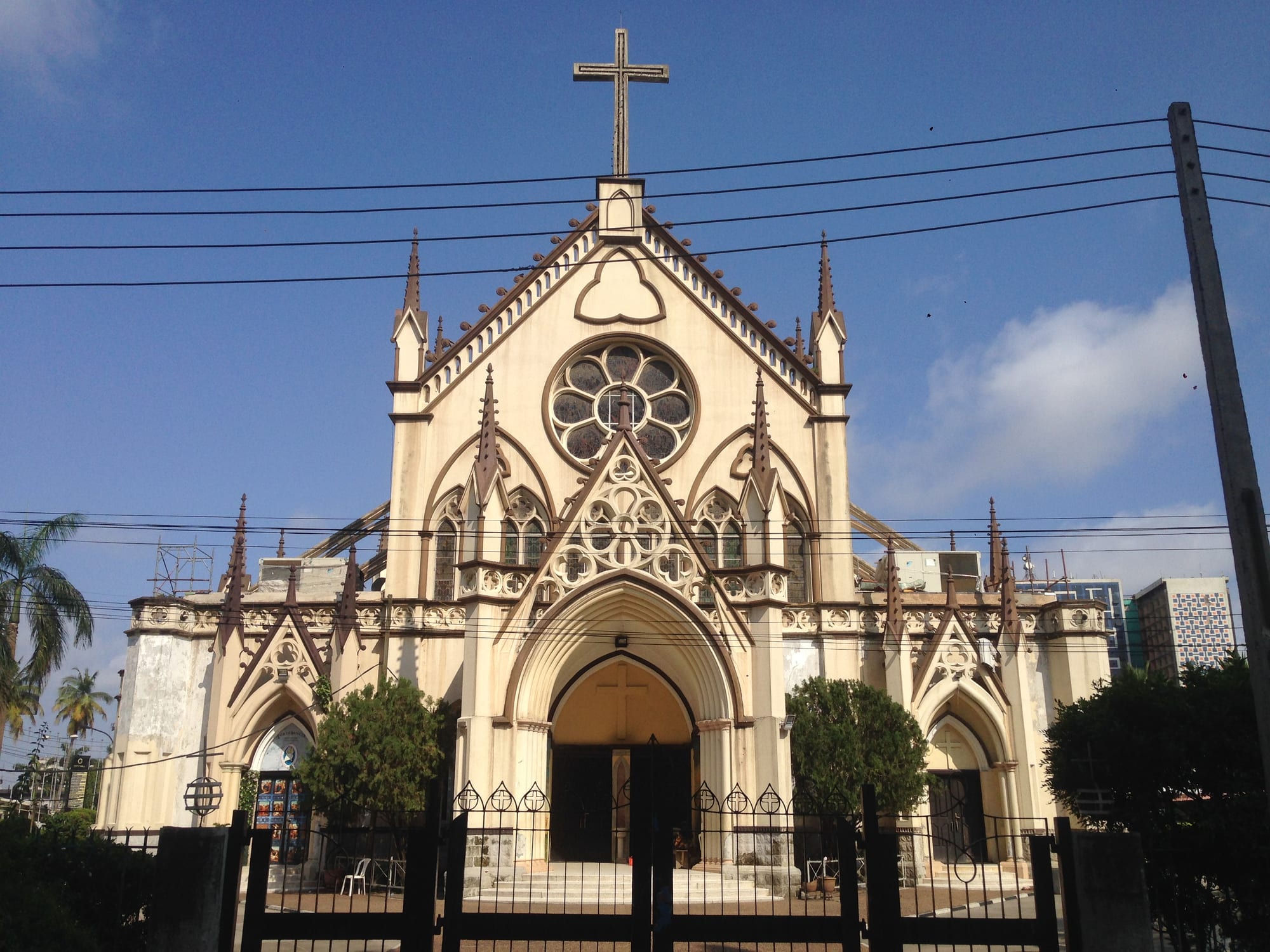
Across these differences, a set of shared values shapes everyday behaviour. Age and seniority command respect, and deference to elders is expected in speech, posture and the order in which people are greeted or served. The extended family is the centre of social life, and loyalty and responsibility towards relatives run deep. Nigerians often speak of "home training": good manners, above all towards older people, are taken as a reflection of how a person was brought up, so poor behaviour reflects on the whole family rather than on one individual. Community generally comes before the individual, and traditional rulers, from emirs to obas and chiefs, continue to hold real social standing alongside the institutions of the modern state.
Greetings and meeting people
Greetings matter more than almost anything else in Nigerian social life, and they are never rushed. It is polite to greet each person individually, to begin with the eldest or most senior person present, and to ask after someone's health and family before moving on to any other business. A handshake is the usual greeting between adults, often accompanied by a warm smile and a lingering conversation, and in business the first minutes of a meeting are usually given over to personal enquiries.
The way younger people greet their elders shows the country's diversity. Among the Yoruba, young men traditionally prostrate themselves, lying low or almost flat on the ground, while young women kneel. Among the Igbo, younger people may clasp their hands or place one over the other with a slight bow. In Hausa-Fulani communities, greetings are shaped by Islamic custom, with phrases such as "As-salamu alaykum" and a lowered voice as a sign of respect. Across all these traditions, lowering the head slightly when greeting an older person conveys the same deference.
Titles are important. Elders should not be addressed by their first name unless they invite it; "Sir", "Ma", "Uncle" and "Aunty" are used widely, and people may be addressed as Chief, Doctor or Engineer, or as Alhaji and Hajia in the case of Muslim men and women who have made the pilgrimage to Mecca. Respectful eye contact means looking towards someone without staring directly at them, particularly when speaking to an older person. The left hand is traditionally regarded as unclean, so the right hand, or both hands together, is used for shaking hands, passing objects, giving gifts and handling money. Conversation is often lively and expressive, rich in humour and storytelling. Timekeeping for social events is famously relaxed, though punctuality is expected in business.
Hospitality and being a guest
Hospitality is highly valued, and turning up at someone's home empty-handed is best avoided. A small gift, such as fruit, drinks or biscuits, is appropriate, offered with the right hand or with both hands. The recipient may not open it straight away. Shoes are removed if the host asks, and a guest is expected to accept the hospitality that follows with good grace: turning down food or drink altogether can be read as rejecting the host rather than simply declining a snack, so it is better to accept a little.
At the table, hands are washed before and after the meal, especially when the food is eaten by hand. It is customary to wait for the eldest person present to begin eating before starting. When food is shared from a common dish, each person eats from the portion directly in front of them rather than reaching across. Only the right hand is used for eating and for passing dishes. Leaving a little food on the plate signals that the guest has had enough; a completely clean plate may simply prompt the host to serve more. In restaurants, a modest tip is appreciated. During Ramadan, visitors are advised to be discreet about eating, drinking and smoking in public during daylight hours, out of respect for those who are fasting.
Festivals and life's big moments
The national calendar reflects the country's two great faiths. The federal government declares public holidays for Good Friday, Easter Monday, Christmas and Boxing Day, and for the Muslim festivals of Eid el-Fitr at the end of Ramadan, Eid el-Kabir and the Prophet's birthday, Eid el-Maulud. Both Christmas and the Eids are times for family visits, new clothes and generous hospitality.
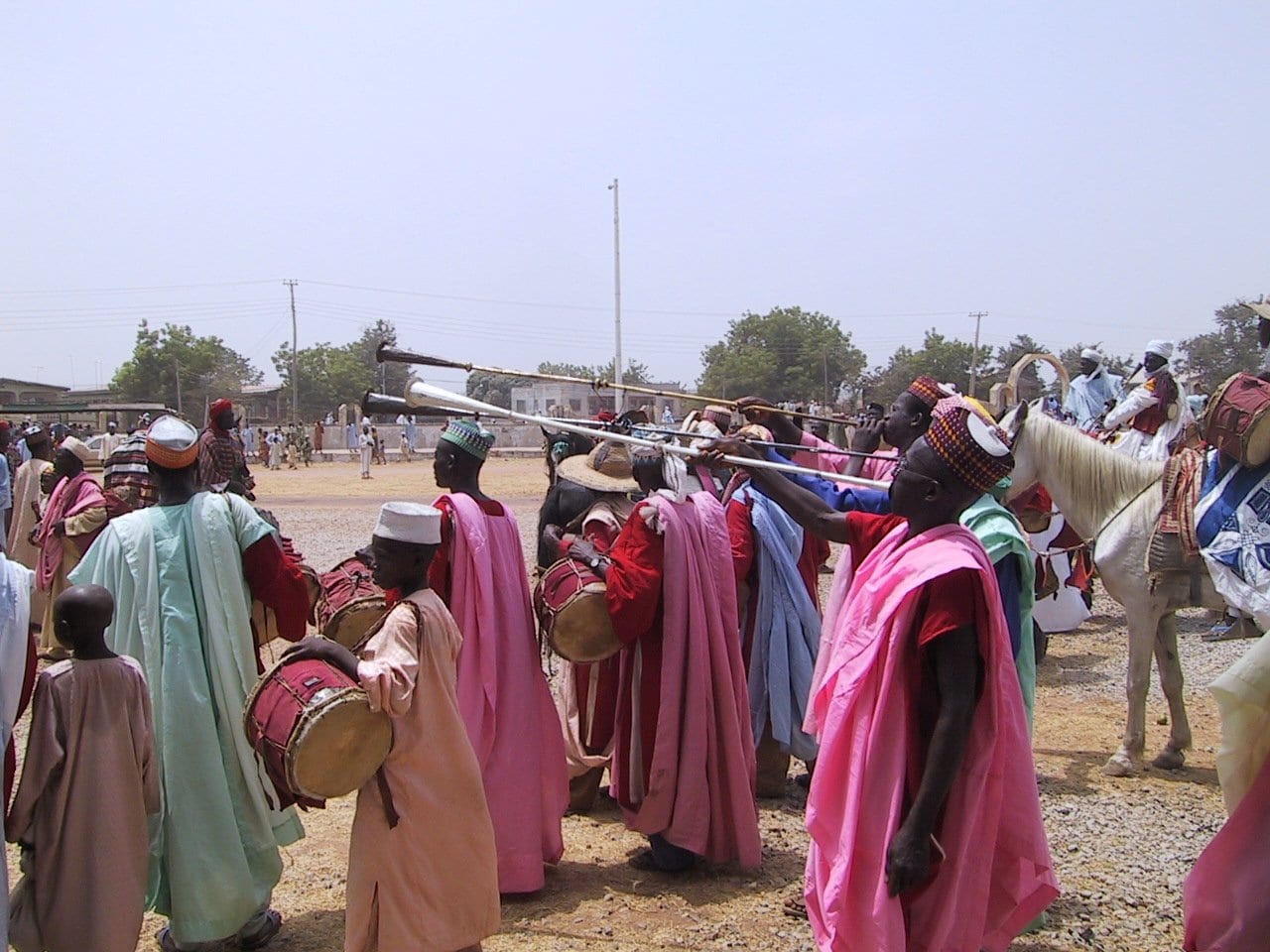
Some of the country's most spectacular festivals are on UNESCO's list of intangible cultural heritage. The Durbar in Kano, held during the two great Eid festivals, brings around 10,000 riders and people on foot into a series of processions centred on the emir and his court. Horsemen in elaborate robes and headdresses ride alongside drummers and musicians, and the festival showcases the leatherwork, weaving, dyeing and embroidery skills passed on through hands-on practice, while also serving as a public display of loyalty to traditional leadership. The Argungu fishing and cultural festival is a four-day event of hand-fishing contests, canoe racing and traditional wrestling, in which men and boys compete while women perform songs and dances of encouragement.
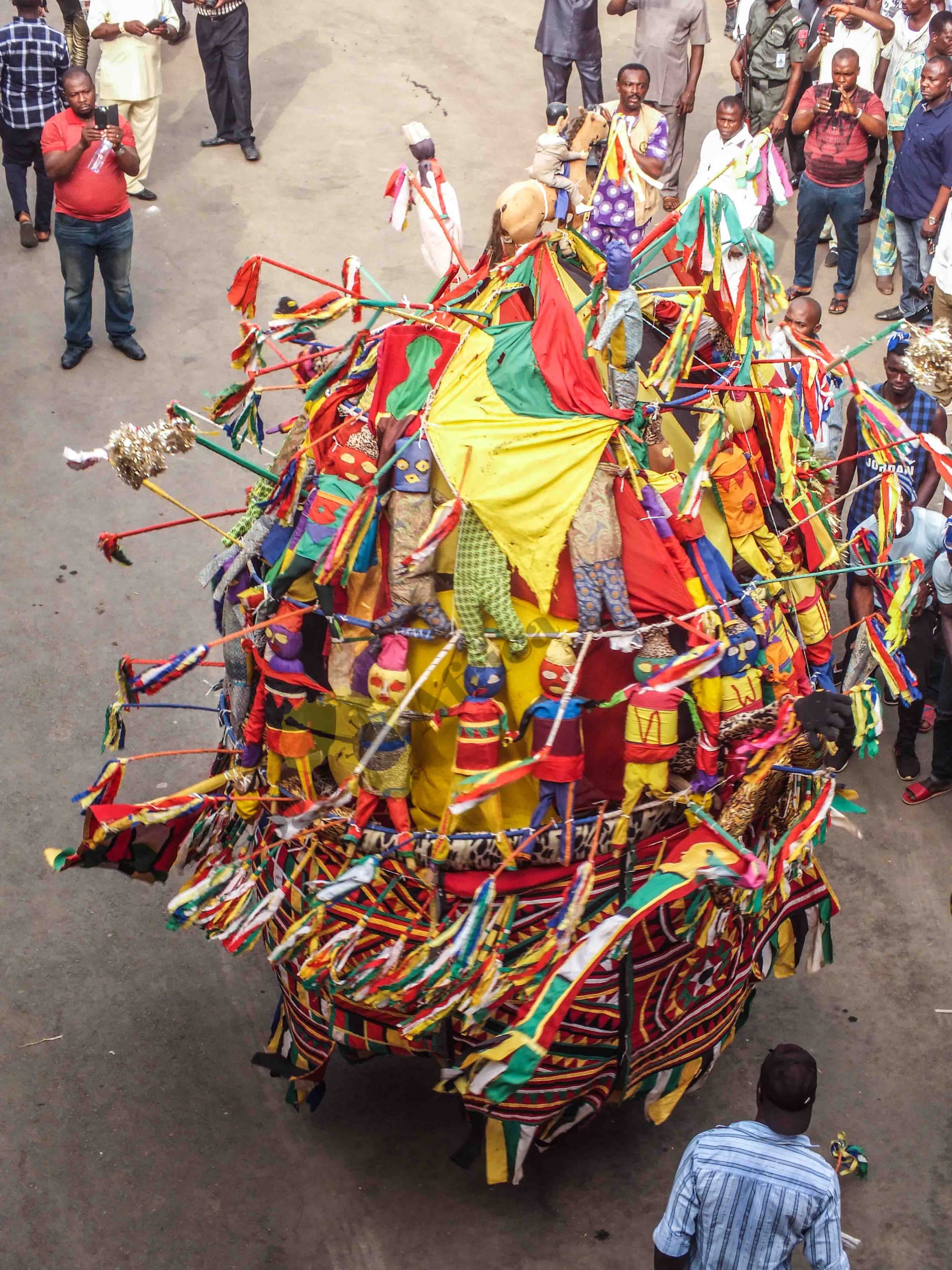
Masquerades play a central part in the life of many communities, with spiritual and political as well as entertainment value. The Ijele masquerade of the Igbo, also on UNESCO's list, appears at celebrations, burials and other special occasions, marking solemn and festive moments alike and giving communities a chance to reaffirm loyalty to a chief or king. Its mask stands about four metres tall and takes a hundred men six months to prepare.
The milestones of family life are marked with equal energy. A newborn is formally named about a week after birth: Muslim families generally hold the ceremony on the seventh day, often with the sacrifice of a ram or goat, while other communities follow their own customs for the day. At a Yoruba naming, the child's lips are touched with symbolic foods such as honey, salt and kola nut, each carrying a wish for the child's future, and Christian families often add a thanksgiving service in church.
Weddings are frequently a sequence of ceremonies rather than a single day. Most begin with a formal visit from the groom's family to the bride's, and continue with a traditional engagement at which the groom's side presents gifts listed by the bride's family, often including kola nuts, drinks, yams and cloth, together with a bride price. The couple may then hold a church wedding, an Islamic ceremony or a civil registration as well. At the traditional ceremony, women typically wear the gele, an elaborate tied head wrap, and men the agbada, a flowing embroidered robe; guests who have not been given aso ebi wear their finest traditional clothes, and white is left to the bride. Throwing banknotes over dancers, known as spraying, has long been part of the fun, but spraying naira notes is an offence under the Central Bank of Nigeria Act, and the authorities have prosecuted offenders in recent years.
Funerals depend very much on the age of the person who has died. The death of a young person is mourned, but the funeral of someone who lived to old age is often treated as a celebration of a life well lived, especially among the Yoruba, with bands, dancing, printed souvenirs bearing the deceased's photograph and, very often, burial in the family's home town or village.
Arts, crafts and music
Nigeria's creative traditions run from ancient sculpture to one of the world's busiest film industries. Masquerade is one of its great living arts, combining sculpture, costume, music and dance. Alongside Gelede and Ijele, UNESCO recognises Kwagh-Hir, a theatrical tradition of the Tiv people that grew out of storytelling and now brings together puppetry, masquerade, poetry, music and dance, with skills passed on through apprenticeship within each troupe.
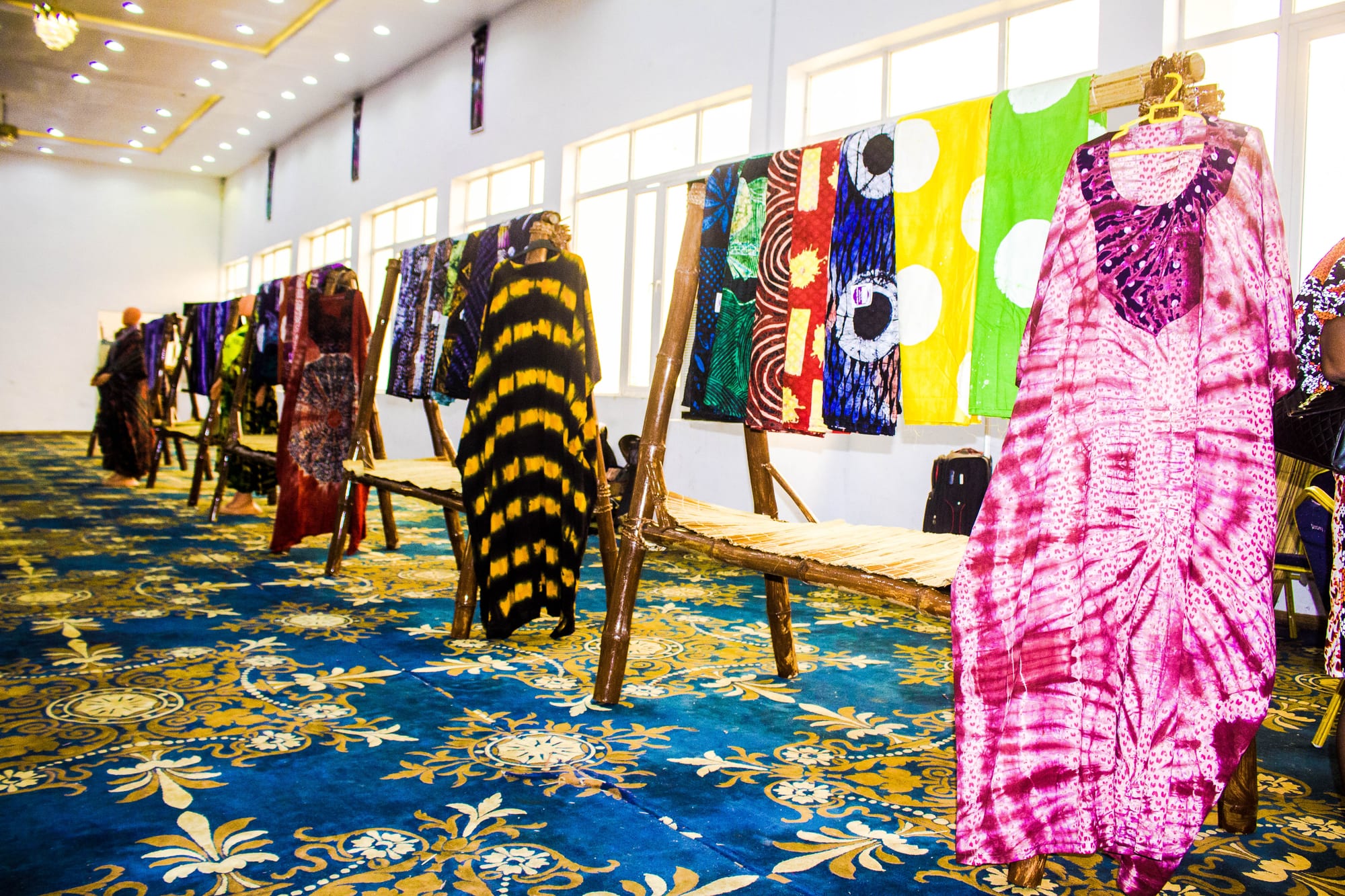
Textiles carry great prestige. Adire, the indigo-dyed cloth made by Yoruba women, is patterned by folding, tying or stitching the cotton before dyeing, or by painting starch onto it by hand so that the covered areas resist the dye. Aso oke, a traditional woven cloth, is, with heavy lace and brocade, among the prestige fabrics for agbada robes and other ceremonial dress, and the choice of fabric for aso ebi is itself a matter of great care.
In film, the country's reach is global. A survey by the UNESCO Institute for Statistics found that in 2006 Nigeria's film industry, widely known as Nollywood, produced 872 feature-length productions, more than the United States and second only to India, with more than half made in local languages rather than English. Music is just as central to national life, heard at every celebration from naming ceremonies to funerals, and the oral poetry of Ifa, the chants of Gelede and the drumming of the Durbar show how deeply performance is rooted in older traditions.
Dos and don'ts for visitors
- Do check the latest government travel advice before any trip; governments advise against all travel to parts of the country, including the north-east, and against travel to other areas because of kidnapping and armed violence.
- Do greet people individually and without hurry, starting with the eldest or most senior person, and ask after their family.
- Do address elders and seniors with a title such as Sir, Ma, Chief or Doctor rather than by their first name.
- Do use the right hand, or both hands, to eat, shake hands, pass things and handle money.
- Do dress conservatively, especially at places of worship and in states that apply sharia law, and be discreet about eating and drinking in public during Ramadan.
- Don't refuse food or drink outright in someone's home; accepting a little is a sign of respect.
- Don't spray naira notes at celebrations, as doing so is an offence under the Central Bank of Nigeria Act.
- Don't photograph airports, government buildings, police or military sites, and ask before photographing people.
- Don't overlook the law on same-sex relationships: same-sex sexual activity is a criminal offence carrying up to 14 years in prison, and in northern states that apply sharia law the penalties can be far harsher; the Same Sex Marriage (Prohibition) Act, signed into law in 2014, also bans same-sex unions and public displays of same-sex affection.
What to take away
Nigeria's hundreds of peoples and two great faiths share a common instinct to honour elders, to greet properly and to celebrate together, and visitors who show that same respect will find themselves welcomed with remarkable warmth.