Culture & Customs · New Zealand
New Zealand: The Sharing of Breath
A call across the marae, a pressing of noses that joins host and guest, and a relaxed, modest national manner built on two founding peoples and many newer ones
By Worldlore Editorial · 30 September 2026
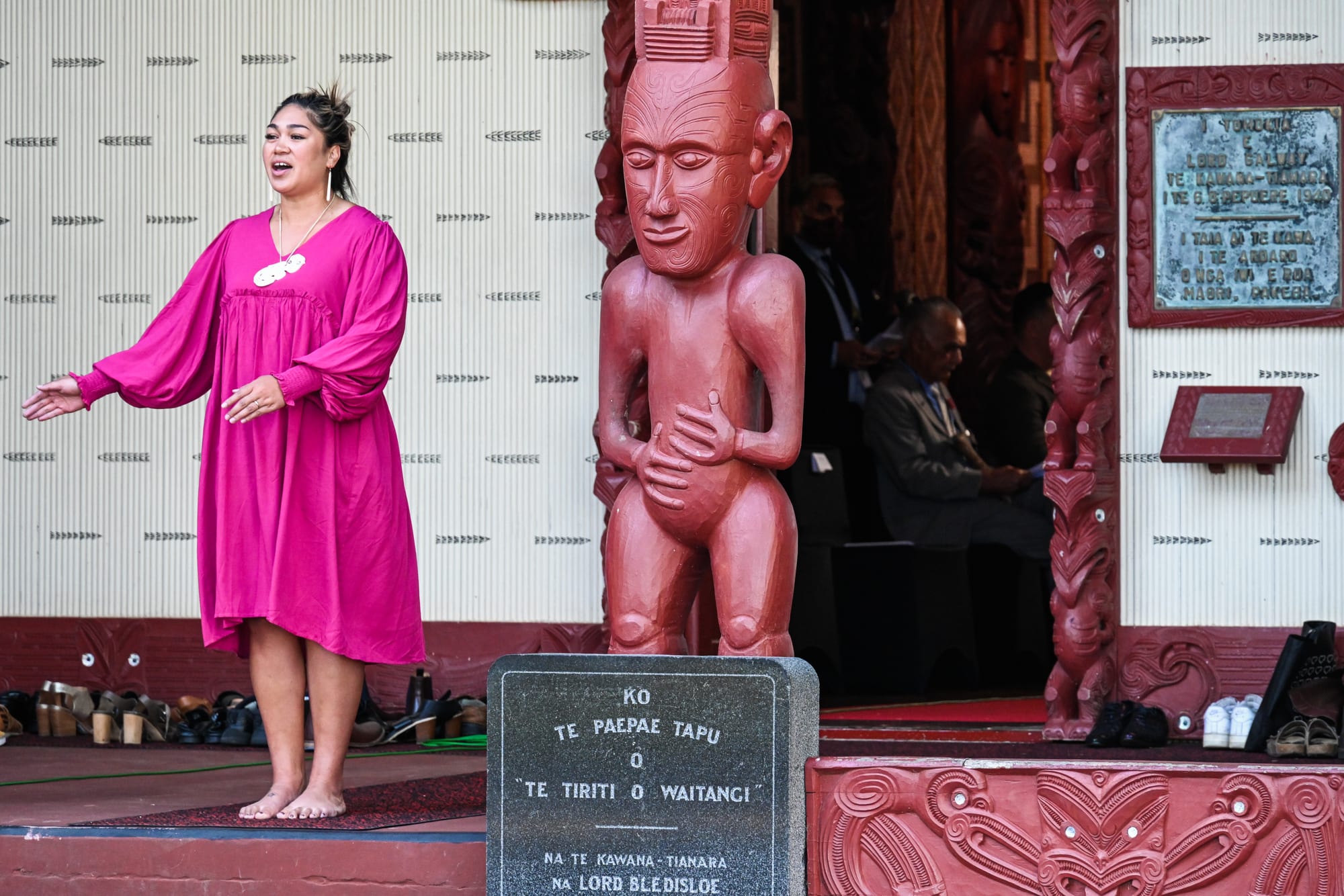
A group of visitors waits at the edge of a marae, the open ground in front of a carved meeting house. From the hosts' side a woman's voice rises in a long, high call, the karanga, and a woman among the visitors answers. The group moves forward slowly and together and takes its seats. Speeches follow, each rounded off with a song, and a gift is laid on the ground. Then, one by one, hosts and visitors step forward, clasp hands and gently press their noses together: the hongi, the sharing of breath. Only after food has been shared is the ceremony complete. The pōwhiri, as this welcome is called, is the most formal expression of a principle that runs through New Zealand life — that guests should be received properly, with their identity acknowledged and their place in the gathering made clear.
Faith, identity and values
New Zealand's culture rests on two founding peoples: Māori, the tangata whenua or "people of the land", and Pākehā, New Zealanders of European descent. Their relationship is framed by the Treaty of Waitangi of 1840, and te reo Māori is an official language alongside English and New Zealand Sign Language. Around them sit large Pacific and Asian communities that have made the country increasingly multicultural.
It is also one of the most secular countries in the world. At the 2023 census, 51.6 per cent of people said they had no religion — the first time this group outnumbered Christians, who fell to 32.3 per cent. Catholics, Anglicans and Presbyterians are the largest Christian groups, and Hindus, Muslims and Buddhists are established minorities. Some 1.3 per cent recorded Māori religious beliefs, and two Māori Christian movements have long histories: Rātana, founded in the 1920s with an emphasis on healing through faith, and Ringatū, founded in 1868 by Te Kooti, which generally holds its services in tribal meeting houses rather than church buildings. The state is formally separate from religion, and faith is generally treated as a private matter.
Māori life is guided by tikanga, the body of customs and protocols governing the right way to do things, and by a set of connected ideas. The world is divided between tapu, the sacred or restricted, and noa, the ordinary. Mana is prestige and authority, earned through age, achievement or connection. Utu is reciprocity, the restoring of balance between people. Identity starts with whānau, the extended family, and with whakapapa, genealogy, which links people to their ancestors, their tribe and the land. The head is the most tapu part of the body, which is why touching someone's head without permission, passing food over it or sitting on a pillow used for sleeping can cause offence, and why it is also taboo to sit on tables or other surfaces used for food.
Mainstream Kiwi culture prizes egalitarianism: wealth brings advantages, but not social superiority. Those who promote themselves too loudly risk being cut down to size, a habit known as tall poppy syndrome, so modesty and self-deprecating humour are the norm. A do-it-yourself streak of practical inventiveness is a point of pride, and so is a wide outlook on the world despite the country's isolation. Communication tends to be polite and indirect, with confrontation avoided: "yeah, nah" signals a gentle reluctance, while a sarcastic "yeah, right" is a firm no. Māori are often comfortable with silence, and may avoid sustained eye contact as a mark of respect.
Greetings and meeting people
Everyday greetings are informal. "Hi, how are you?" is a greeting rather than a real question, and the expected answer is a brief "good, thanks". First names are used almost from the start, even in fairly formal settings, though titles may be used with elders. Between people meeting for the first time, a firm handshake with eye contact is standard.
"Kia ora", the Māori greeting that also serves as thanks and acknowledgement, is heard everywhere. More formally, one person is greeted with "tēnā koe", two with "tēnā kōrua" and three or more with "tēnā koutou". The hongi is the traditional Māori greeting: two people clasp hands and press their noses and foreheads together, breathing in at the same time. It signifies the sharing of breath and of life, recalling the creation story in which the god Tāne breathed life into the first woman. It is used most often among Māori and on formal occasions such as a pōwhiri, and anyone offered a hongi should simply follow the host's lead.
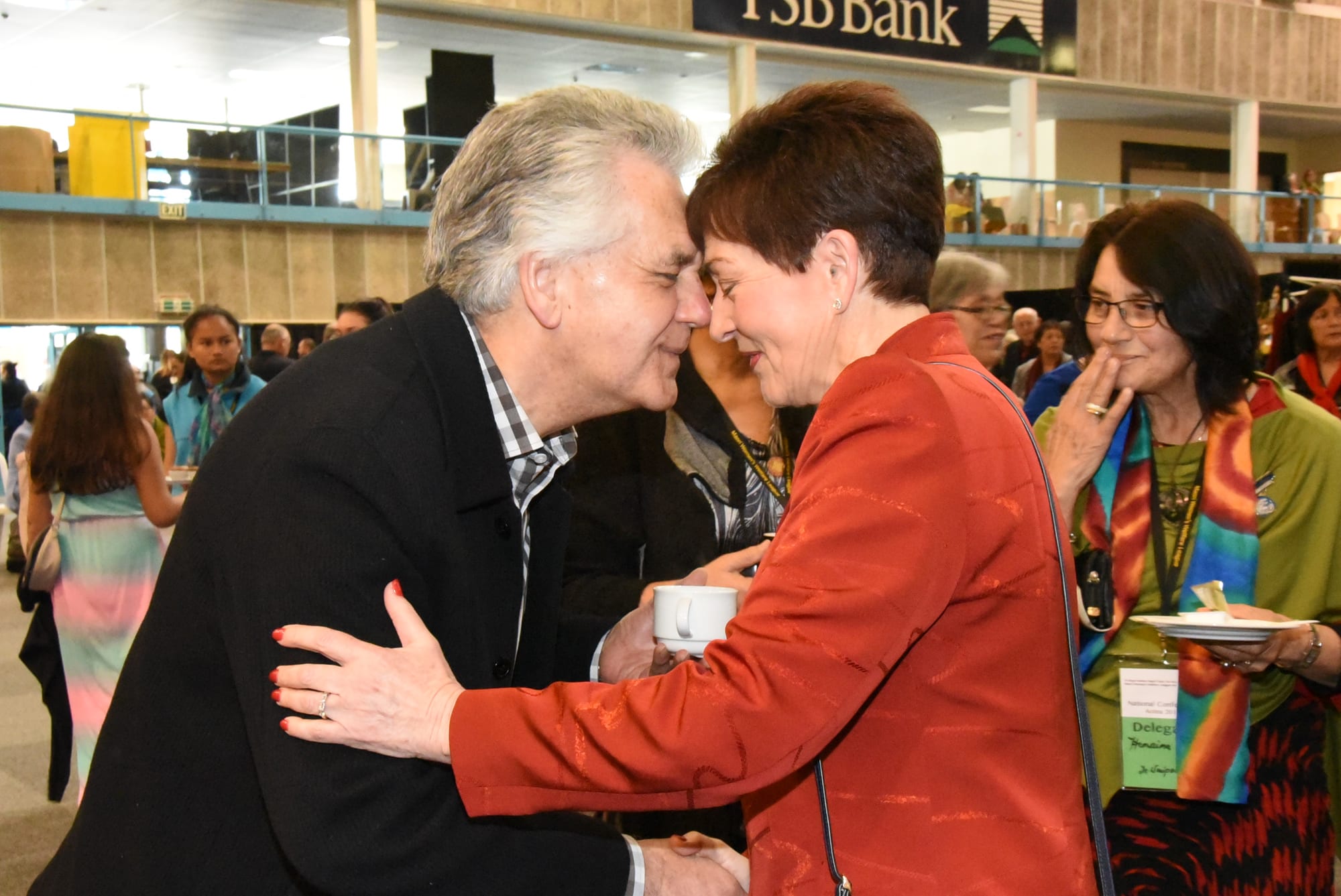
The pōwhiri follows a set sequence. Visitors, the manuhiri, gather outside and wait to be called on. The karanga, always performed by a woman, greets them, asks who they are and why they have come, and acknowledges the dead. The visitors walk on slowly as a group, with women leading in some areas and men in others, and are seated, men generally in the front row. Then come the whaikōrero, formal speeches in te reo Māori, usually by men, each followed by a waiata, a song sung by the speaker's group. The visitors' final speaker places a koha, a gift that is usually money, on the ground. At the close, manuhiri come forward to shake hands and hongi with the hosts, and the shared meal that follows lifts the tapu of the ceremony and returns everyone to ordinary life. Throughout the welcome, it is disrespectful to talk, eat or drink, or to walk between the speakers.
Hospitality and being a guest
Visiting a marae always requires permission, and visitors are expected to arrive early, since entering during a welcome is impolite. Dress is formal, with women usually asked to wear skirts that fall below the knee, and phones are switched off. Shoes come off before entering the wharenui, the meeting house, which is a highly tapu space: food is never taken inside, and photographs should only be taken with permission. In the wharekai, the dining hall, hands are washed before eating, the meal waits for a karakia, a blessing, and it is courteous to thank those who cooked and served. The koha from a visiting group is laid down by its final speaker; some marae suggest an amount, but it remains a freely given gift rather than a charge.
In homes, the style is casual but has its own rules. Visits are arranged rather than made unannounced, and guests arrive on time or within a few minutes of it. Being asked to "bring a plate" means bringing a dish to share, not an empty plate, and invitations often specify BYO, bring your own drinks. Guests offer to remove their shoes at the door, especially in Māori homes, and wait to be invited in after knocking. A small gift such as wine, chocolate or flowers is appreciated, and presents are usually opened in front of the giver. When eating or drinking out with friends, bills are often split, and rounds of drinks — a "shout" — are taken in turn; being seen as stingy is a real social failing.
Festivals and life's big moments
Waitangi Day, 6 February, is the national day, marking the first signing of the Treaty of Waitangi in 1840. At the Treaty Grounds the day begins with a dawn service in Te Whare Rūnanga, the carved meeting house, followed by a free festival of performances and market stalls; elsewhere it is a public holiday of family gatherings and events. Anzac Day, 25 April, commemorates those killed in war. First observed in 1916, it opens with dawn services at local war memorials, timed to the landings at Gallipoli in 1915, with wreath-laying, the Last Post and a silence.
Matariki has become the country's newest shared celebration. The predawn rising of the Matariki star cluster, also known as the Pleiades, in the midwinter sky marks the Māori New Year, a time to remember those who have died since its last rising, to give thanks for the present and to look to the year ahead. On 24 June 2022 it became the first public holiday to recognise the Māori world.
Every two years the country's leading kapa haka groups, from New Zealand and Australia, compete at Te Matatini, the national festival of Māori performing arts. It grew from a competition first held in 1972, is hosted by a different region each time, and runs over several days.
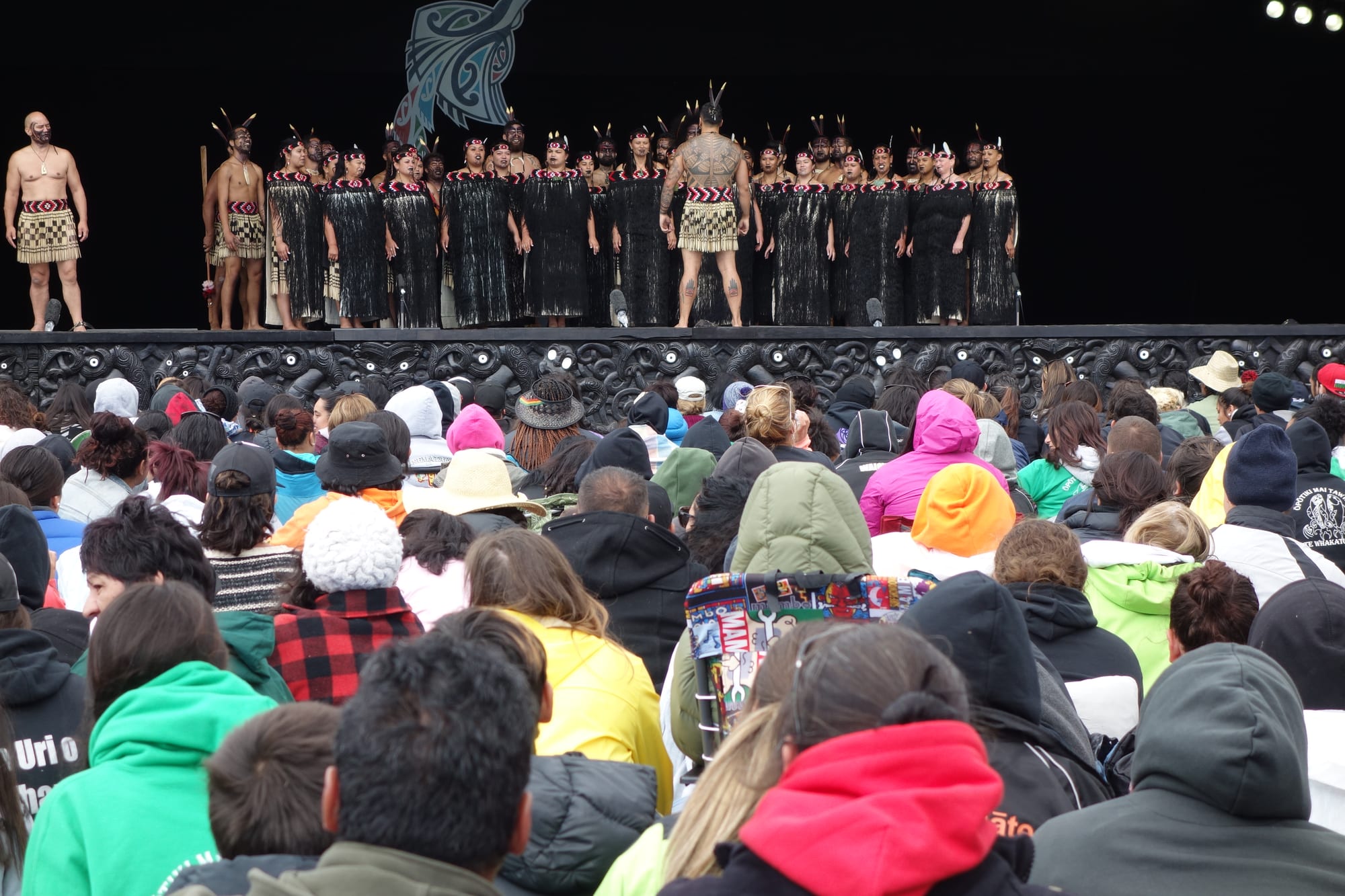
Haka are performed at the great moments of Māori life, including weddings, welcomes and funerals, as an expression of respect and of the mana of the occasion. Of all life's events, however, it is death that draws the fullest ceremony. A tangihanga, the Māori funeral, usually lasts around three days, traditionally longer for a person of high standing. The body, the tūpāpaku, lies in state on the marae in an open coffin and is never left alone. The closest family, the whānau pani, sit beside it throughout, while groups of mourners are called onto the marae to farewell the dead with speeches and songs. Families bring koha, usually money, to help meet the costs of hosting and feeding everyone who comes, before the burial on the final day.
Arts, crafts and music
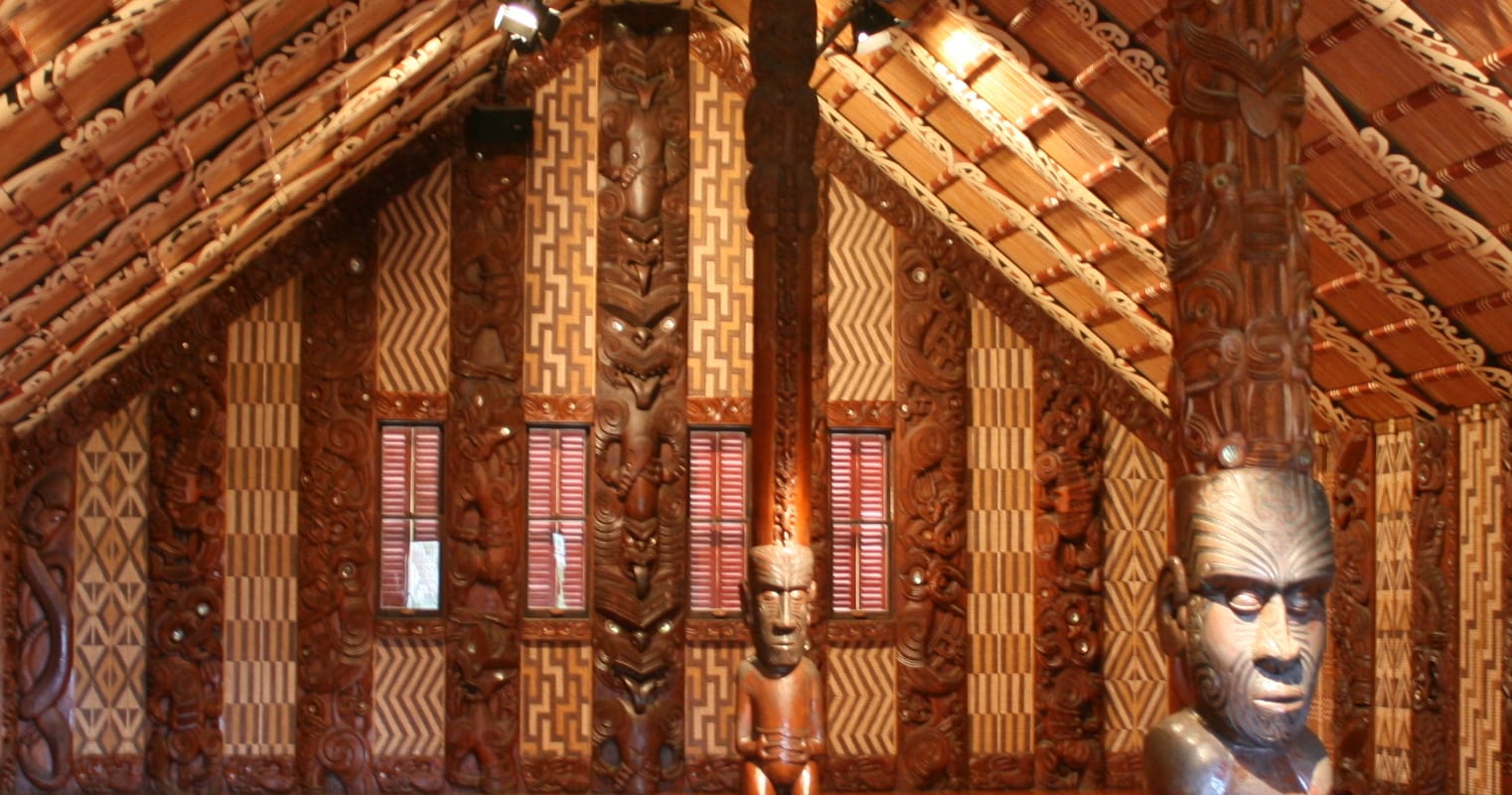
The traditional Māori arts include whakairo, carving in wood, stone and bone; raranga, weaving, used to make kete, woven bags, and food baskets; tā moko, tattooing; kapa haka, group performance; and whaikōrero, oratory. Their patterns and figures record whakapapa and belief, so a carved meeting house or a tā moko design carries the history of a people as well as decoration. Traditional tā moko was cut into the skin with chisels of albatross bone dipped in natural pigments, and it has been widely revived.
The haka is the best-known Māori art abroad. It is not a single dance but a family of performances, used for centuries to welcome guests, farewell the dead, celebrate weddings and prepare warriors for battle. The most famous, "Ka Mate", was composed around 1820 by the chief Te Rauparaha after he escaped pursuing enemies by hiding in a kūmara storage pit; its best-known lines translate roughly as "it is death, it is death; it is life, it is life". It is familiar worldwide as the haka performed by the All Blacks before rugby internationals.
Pounamu, New Zealand greenstone, is carved into pendants that are often given as gifts and passed down through families. Anyone curious about a piece being worn may ask its story, and many New Zealanders are glad to share it.
Dos and don'ts for visitors
- Do ask permission before entering a marae, and during a pōwhiri stay quiet, keep phones off and never walk between the speakers.
- Do take shoes off before entering a wharenui, and never take food inside or photograph without permission.
- Do return a hongi if one is offered, following the host's lead; a firm handshake is the standard greeting elsewhere.
- Do bring a koha, usually money, when visiting a marae as part of a group.
- Don't touch anyone's head, pass food over someone's head, or sit on tables and other surfaces used for food.
- Do ask before photographing Māori people or their taonga, their treasured possessions.
- Do "bring a plate" when asked, and offer to take shoes off on entering a home.
- Don't boast; modesty and self-deprecating humour are valued far more than self-promotion.
What to take away
New Zealand's customs, from the formality of the marae to the easy informality of a backyard barbecue, share a respect for people as equals and guests as honoured — and visitors who arrive humbly, follow their hosts' lead and share in the food will find themselves genuinely welcomed.