History · Netherlands
The Netherlands: The Land Made by Water
A low country drained and diked into existence — a republic of merchants that ran the 17th-century world economy, a colonial empire built on spices and slaves, occupation and flood, and a modern welfare state
By Worldlore Editorial · 19 September 2026
A country below sea level
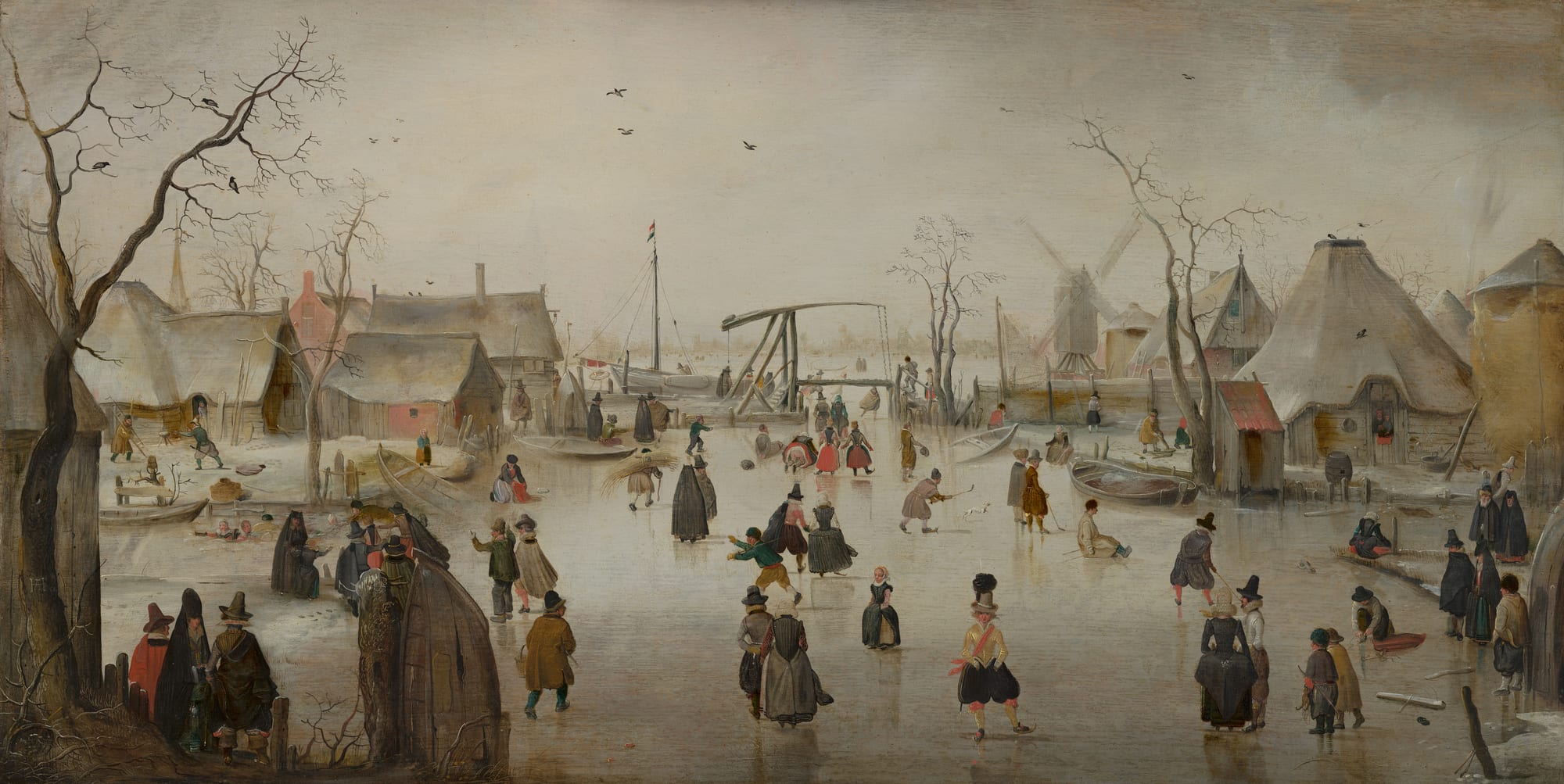
The Netherlands — "the low countries" — is a river delta on the North Sea, and about a quarter of it lies below sea level, kept dry by dikes, dunes and pumps. Around 18 million people live there at one of the highest population densities in Europe. The struggle to hold back the water shaped everything: the co-operative water boards that are among the oldest democratic bodies in the world, the polders reclaimed field by field, and a temperament often summed up in the saying that God made the world but the Dutch made the Netherlands.
A short history
- from c. 1000
Reclamation
Peasants and monasteries dike and drain the peat bogs; water boards form.
- 1477–1543
The Burgundian-Habsburg Low Countries
Seventeen provinces are joined under one crown.
- 1568–1648
The Dutch Revolt
The northern provinces fight free of Spain.
- 1588–1795
The Dutch Republic
A merchant oligarchy; the Golden Age.
- 1602
The VOC
The Dutch East India Company, the first multinational.
- 1795–1813
Batavian and French rule
Revolution, then annexation by Napoleon.
- 1815
The Kingdom
A monarchy under the House of Orange-Nassau.
- 1940–1945
German occupation
Rotterdam bombed; the "Hunger Winter"; the deportation of the Jews.
- 1949
Indonesian independence
The loss of the East Indies.
- 1953
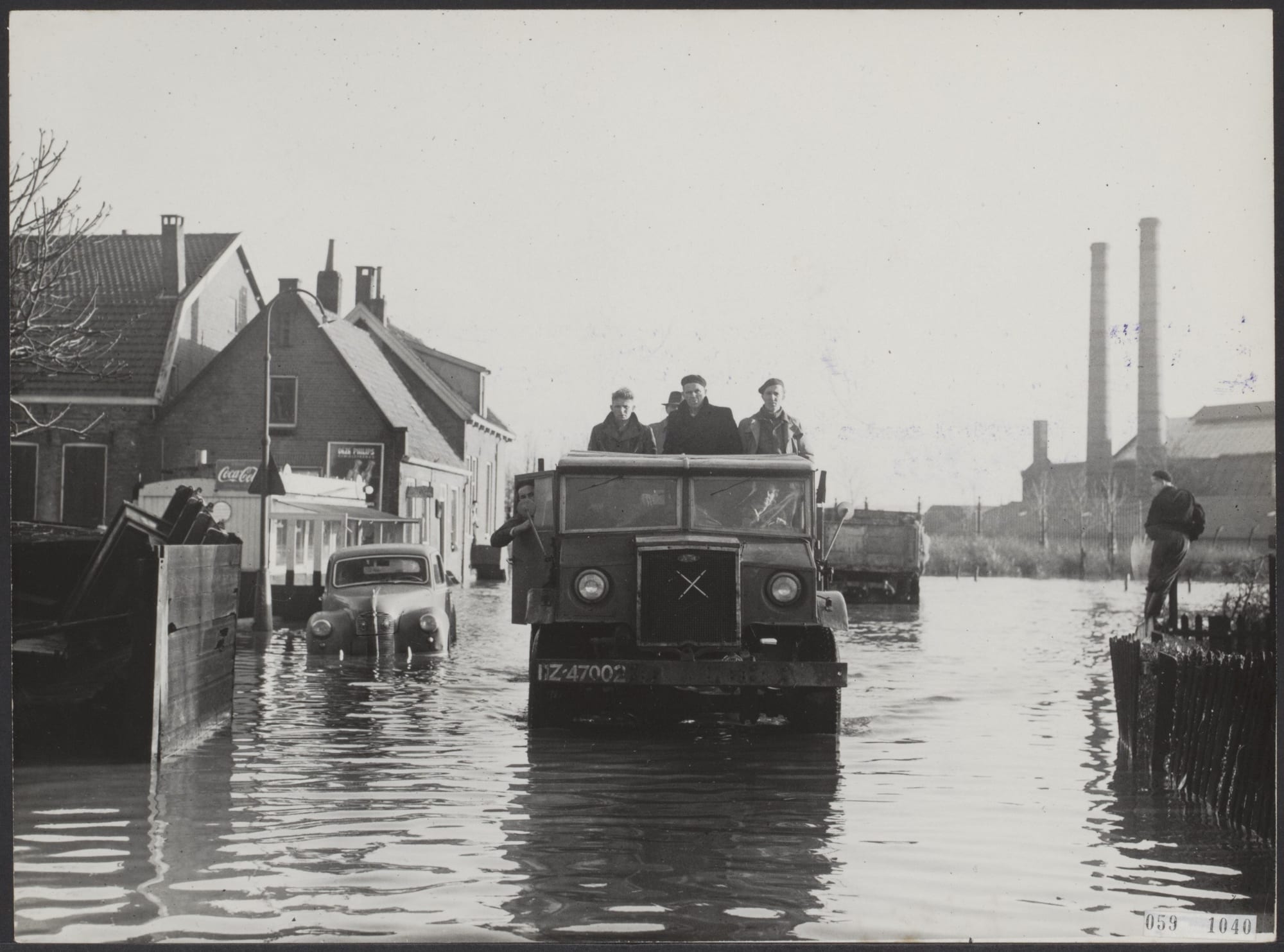
The flood
1,836 dead; the Delta Works begin.
Reclaiming the land
Medieval Dutch farmers drained the coastal peat bogs, which then sank, forcing ever higher dikes and, from the 15th century, windmill-driven pumps that turned lakes into farmland — the polders. Managing this needed collective institutions: elected water boards levied taxes and organised labour across lordly boundaries centuries before national democracy. Prosperous trading towns — Bruges, Ghent, Antwerp, then Amsterdam — grew rich on cloth, herring and Baltic grain, and in the 15th century the dukes of Burgundy and then the Habsburgs assembled the seventeen provinces of the Low Countries into a single, wealthy, heavily urbanised dominion.
The revolt, and the republic
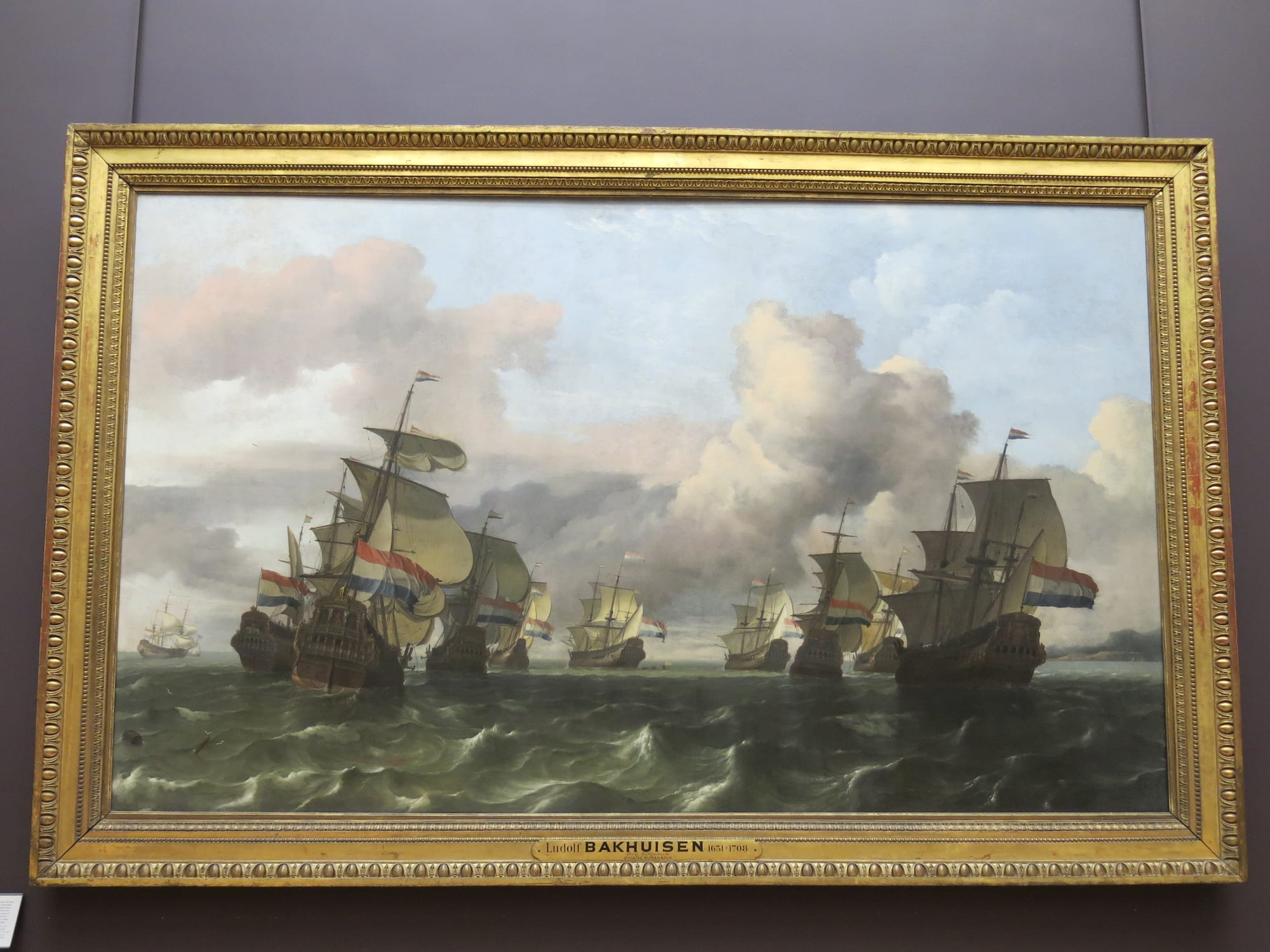
Philip II of Spain inherited the Low Countries and tried to centralise government and crush Protestantism. Resistance to new taxes, the Inquisition and Spanish garrisons escalated into the Dutch Revolt in 1568, led by William of Orange. The seven northern provinces declared independence as the Dutch Republic and, after eighty years of intermittent war, won formal recognition at the Peace of Westphalia in 1648. The southern provinces stayed Catholic and Spanish, and became, in time, Belgium.
The Golden Age and its costs
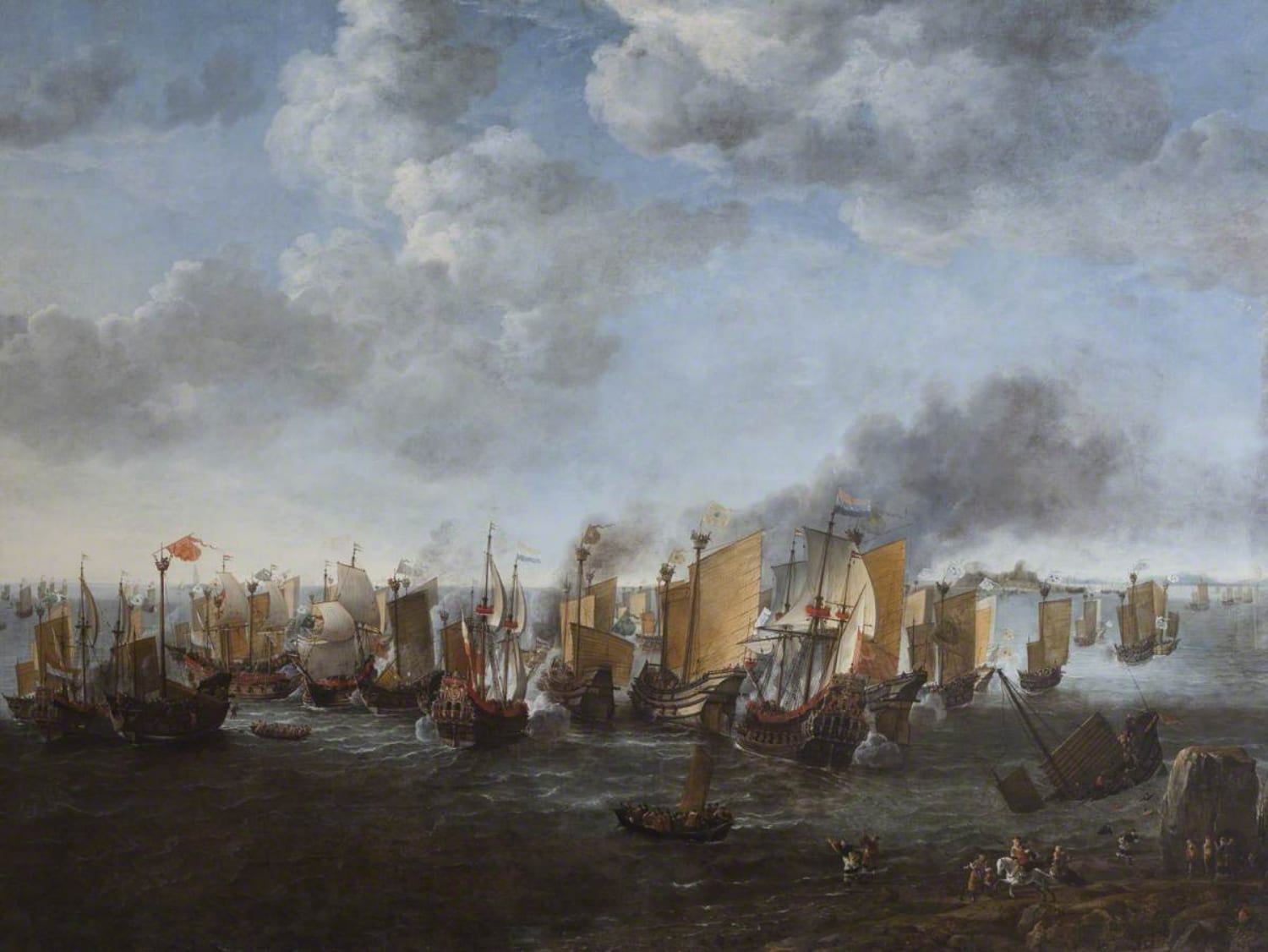
The 17th-century Republic, with fewer than two million people, was the richest society in Europe and the hub of world trade. Amsterdam had the first stock exchange and central bank; Dutch ships carried most of Europe's seaborne freight; and painters — Rembrandt, Vermeer, Hals — worked for a broad urban market rather than for church or court. The wealth also rested on force: the VOC's conquest of the Indonesian spice islands, the West India Company's Atlantic slave trade, and plantation colonies in Suriname and the Caribbean. The Republic's power faded after costly wars with France and England, and by the 18th century it was a prosperous but second-rank state.
Kingdom, occupation, flood
French revolutionary armies overran the Republic in 1795; it became the Batavian Republic and then, from 1810, was annexed outright by Napoleon. After his defeat the 1815 Congress of Vienna created a Kingdom of the Netherlands under the House of Orange, briefly including Belgium, which broke away in 1830. The country stayed neutral in the First World War but was occupied by Germany from 1940. Rotterdam's centre was destroyed by bombing; roughly 102,000 of the Netherlands' 140,000 Jews were deported and murdered, among them Anne Frank; and the blockade of the still occupied west in the winter of 1944–45 — the "Hunger Winter" — killed some 20,000 people.
The modern state
Post-war recovery was rapid, aided by the Marshall Plan and by natural gas found at Groningen in 1959. The Netherlands was a founding member of the institutions that became the European Union and of NATO, and it built an extensive welfare state. Decolonisation was slower and bloodier than the national self-image admits: Indonesia fought a war of independence from 1945 to 1949, during which Dutch forces committed documented atrocities the government formally apologised for in 2022; Suriname became independent in 1975; and the six Caribbean islands remain part of the Kingdom in various forms. Since the 1990s Dutch politics has been reshaped by debates over immigration, integration and the country's colonial and slavery past, for which the king apologised in 2023.
What the Netherlands carries
The Netherlands was built twice over — physically, out of the sea, by collective effort; and economically, in the 17th century, as the first modern commercial society, with the stock markets, the shipping and the art that came with it, and the slavery and colonial conquest that also came with it. The flood of 1953 was a reminder that the first project is never finished. The reckoning with the second — what the Golden Age was made of — is the argument the country is having now.