Culture & Customs · Netherlands
Netherlands: Plain Speaking and Modest Manners
Plain speaking, a firm handshake, a diary booked weeks ahead and a deep dislike of showing off, in a country where tolerance and modesty are treated as civic virtues
By Worldlore Editorial · 30 September 2026
A birthday party in a Dutch living room. The chairs have been pushed back against the walls to form a wide circle, and a newly arrived guest works their way round it, shaking hands and offering a word to everyone in turn: gefeliciteerd, congratulations. The word goes not only to the person whose birthday it is but to their partner, their parents and their brother, each congratulated on the occasion as if it belonged to them too. Coffee comes with a single slice of cake, conversation is frank and good-humoured, and nobody makes a speech. It is a scene that captures much of the Dutch temperament: sociable but orderly, inclusive but unfussy, and wary of anyone who might try to stand out. As a well-known Dutch saying puts it, "just act normal, that's crazy enough".
Faith, identity and values
The Netherlands was long divided along religious lines, and the legacy of that division still shapes the country. For much of the twentieth century Dutch society was organised by verzuiling, or pillarisation: Catholics, Protestants and secular groups each had their own schools, newspapers, broadcasters, trade unions and political parties, living side by side but largely apart. The system began to break down in the 1960s and 1970s, and secularisation has been rapid since. More than half of the population now reports no religion. Roman Catholics are the largest Christian group, followed by Protestants, while Muslims, mostly from Middle Eastern and North African migrant backgrounds, are a growing minority. Religious practice remains stronger in a belt of conservative Protestant communities, and many people who belong to no church describe a loose belief in "something" — a position the Dutch call ietsisme, or "somethingism".
What holds the country together is less a creed than a set of shared values. Tolerance, verdraagzaamheid, means respecting other people's freedom to choose how they live and what they believe, and it underpins Dutch attitudes to matters such as same-sex marriage and euthanasia. Pragmatism is prized over principle for its own sake: the right way to do something is the one that works. A strong egalitarian streak runs through everyday life, and conspicuous displays of wealth or status are quietly frowned upon. Hard work and self-reliance are admired too, summed up in the proud old line that God made the earth, but the Dutch made the Netherlands.
Directness is the trait visitors notice first. The Dutch generally say what they think, plainly and without much cushioning, and regard this as honesty and respect rather than rudeness; elaborate politeness can even come across as insincere. Compliments and criticism alike tend to be understated, and statements are taken at face value, so irony and sarcasm do not always land. A frank opinion is offered on the assumption that the listener would rather know.
Greetings and meeting people
The standard greeting is a firm handshake with a nod of the head, and both hands should be out of the pockets; keeping one hand tucked away while shaking with the other is considered rude. Among friends and family, people greet one another with three kisses on alternating cheeks. Everyone present is greeted on arrival, including children, so at a party it is normal to go round the room and greet each person in turn. Everyday greetings follow the time of day — goedemorgen in the morning, goedenmiddag in the afternoon, goedenavond in the evening — while friends use a casual hoi.
First names are used readily, and titles carry little weight in most settings. A more formal register, using the polite u, is kept for strangers and formal situations, while friends speak casually. In conversation the Dutch like a little distance, generally about an arm's length, and direct eye contact is read as a sign of sincerity. Pointing at people is considered impolite, and tapping the forehead or temple is an insult, since it suggests the other person is mad.
Punctuality is taken seriously. Meetings, dinners and even social visits start at the agreed time, and anyone running late is expected to let the other person know. Diaries are often full weeks in advance, and friends may well consult their agenda before agreeing to a coffee.
Hospitality and being a guest
The Dutch home is a private space, and invitations into it are a sign of real friendship; acquaintances are more often met for coffee in a café. Visits are arranged in advance by message or phone call rather than made unannounced, and it is wise to avoid calling round around six o'clock, when many households sit down to their evening meal. Asking to be shown around the house is best avoided, as it can feel intrusive.
A small gift is customary: chocolates, flowers or a book are all good choices. White lilies and chrysanthemums should not be given, as they are associated with mourning, and a lavish or expensive present can make the recipient uncomfortable in a culture that values modesty. Gifts are usually opened straight away, in front of the person who gave them.
At the table, the meal begins together, and no one starts eating until everyone is served; someone may say eet smakelijk, "enjoy your meal". Hands are kept above the table rather than resting in the lap. It is sensible to take a modest first helping, leaving room to accept seconds, and to finish what is on the plate, since wasting food is disliked. When friends eat out, the bill is commonly split, with each person in a group paying their own share, and couples dividing it equally.
Birthdays are among the most important social occasions of the year, and they come with their own etiquette. At home, guests are seated in the circle and congratulate every member of the family as well as the person celebrating. At work, the custom runs the other way round from many countries: the person whose birthday it is brings in treats to share with colleagues.
Festivals and life's big moments
The main family festival of the winter is not Christmas but Sinterklaas, the feast of Saint Nicholas. He is said to arrive by steamboat from Spain in mid-November, and in the weeks that follow children leave their shoes by the fireplace or the heater, often with a carrot for his horse, and find sweets in them the next morning. The main celebration falls on the evening of 5 December, pakjesavond or "presents evening". Among older children and adults, gifts are often exchanged by drawing names, and each one comes with a rhyming poem that teases its recipient gently, or is disguised as a "surprise" — a present hidden inside something homemade and deliberately misleading. Spiced pepernoten and chocolate letters in the shape of an initial are the season's treats. The figure of Zwarte Piet, Saint Nicholas's helper, traditionally played in blackface, has been the subject of long and heated debate. Critics regard the character as racist, while some defend it as heritage; many schools and cities now use a "soot" Piet whose face is merely smudged from the chimney.
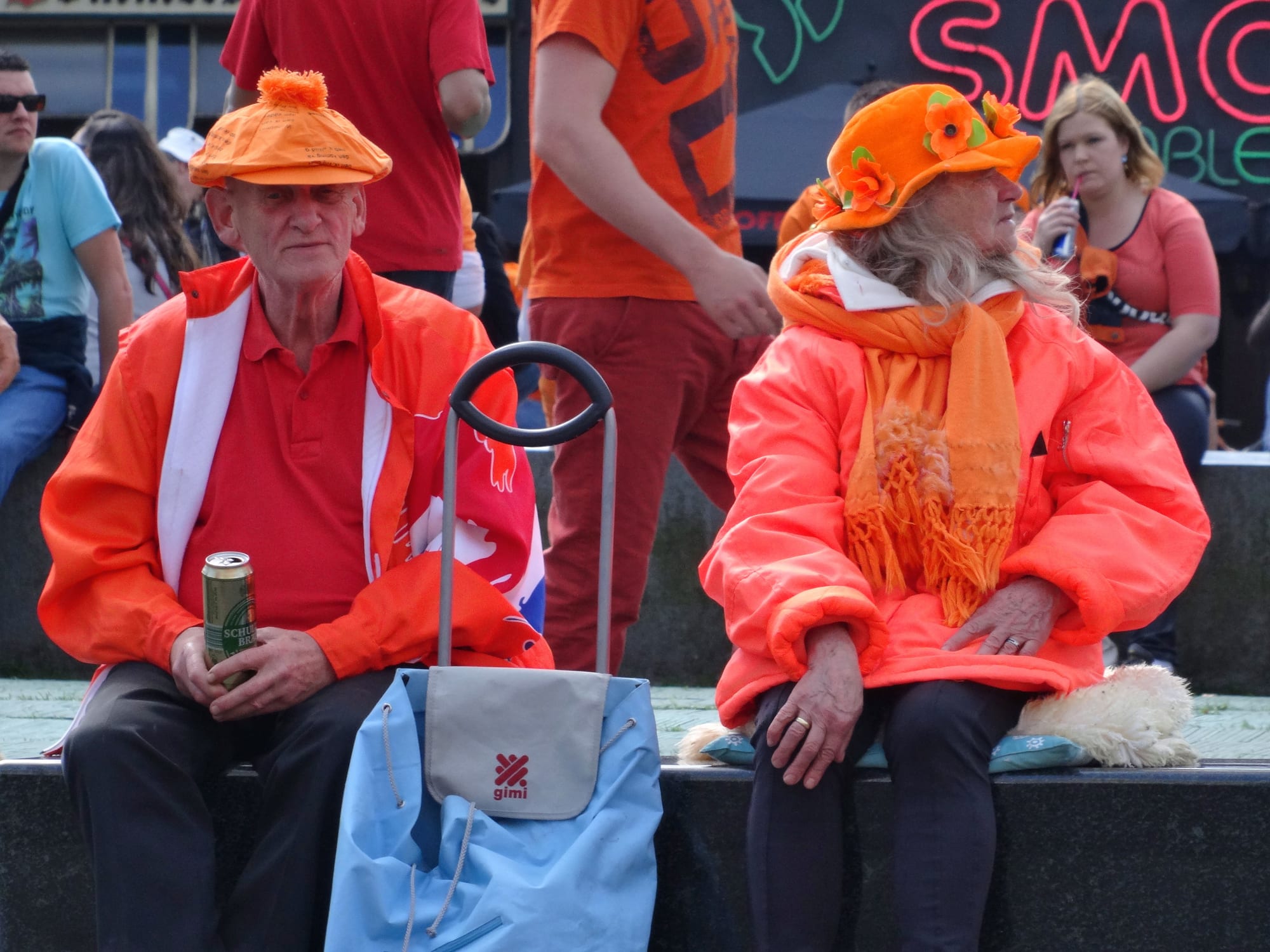
Spring brings the two great national days. King's Day, on 27 April (or the 26th when the 27th falls on a Sunday), marks the king's birthday: the country dresses in orange, towns and neighbourhoods hold street parties and concerts, and the vrijmarkt, a free-for-all street market, allows anyone to sell second-hand goods from a blanket on the pavement. A week later, the mood changes completely. On 4 May the dead of war are remembered in ceremonies across the country, led by the king and queen at the national monument, and the two minutes' silence is kept almost everywhere. The following day, Liberation Day, celebrates the end of the German occupation with festivals and concerts.
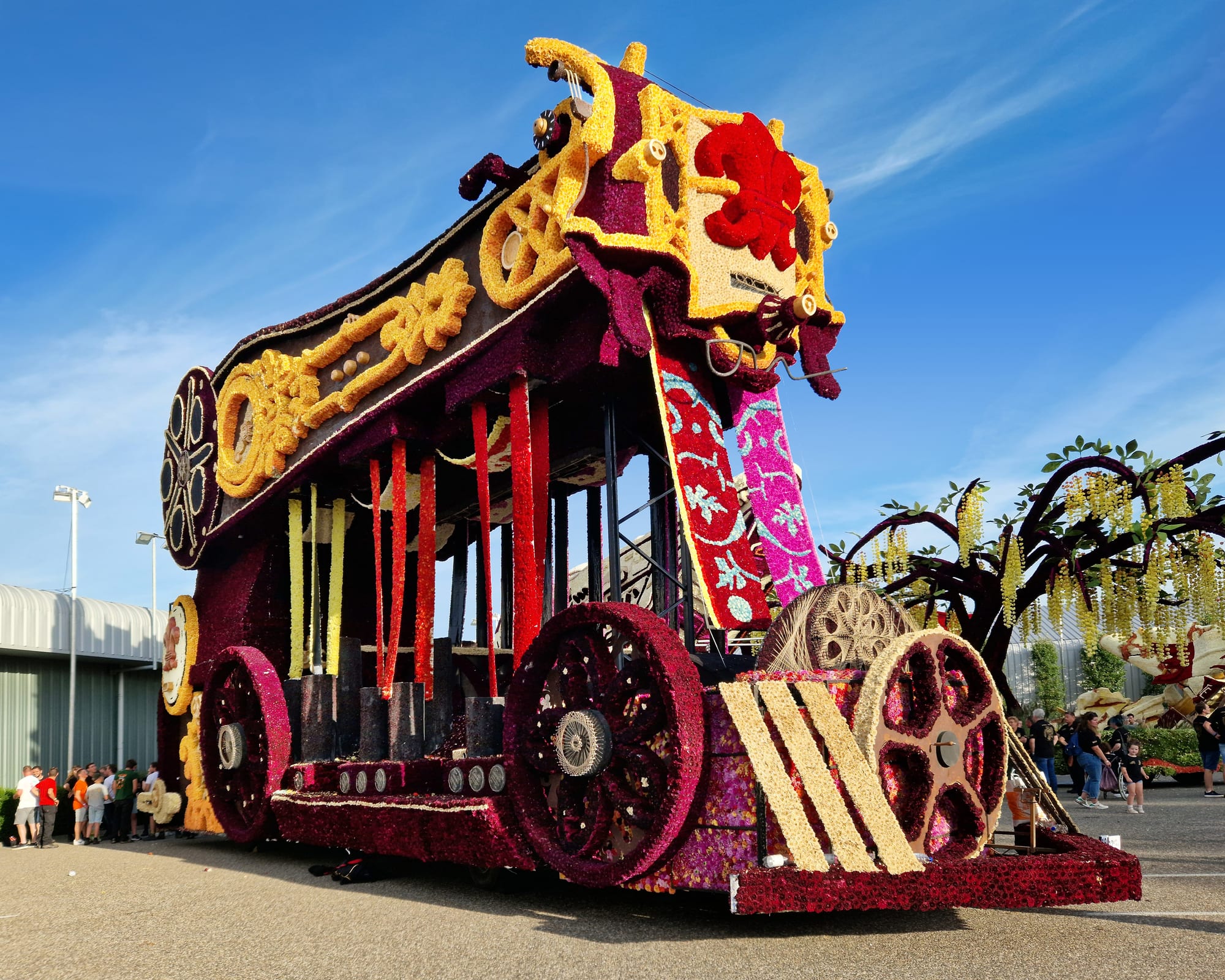
From spring to early autumn, towns and villages hold corsos, parades of floats decorated with flowers, fruit and vegetables, some of them enormous. Neighbourhood groups spend months building their floats, adding the fresh flowers in the last few days, and the drinks, meals and parties shared along the way are, for many participants, as important as the parade itself. Corso culture has been on UNESCO's list of intangible cultural heritage since 2021.
Family milestones tend to be marked simply. When a baby is born, visitors are offered beschuit met muisjes: round, crisp rusks spread with butter and sprinkled with sugar-coated aniseed, pink and white for a girl, blue and white for a boy. Older brothers and sisters often take them into school to share with their class. Many couples live together for years before marrying, and some never do; a wedding is, above all, a civil registration at the town hall, with a religious ceremony added only if the couple wish. Same-sex couples have the same right to marry as anyone else.
Arts, crafts and music
The Netherlands has one of the richest traditions of painting in Europe. The Dutch Golden Age of the seventeenth century produced Rembrandt, Vermeer and a generation of painters who worked for a broad market of merchants and townspeople, filling their canvases with portraits, landscapes, still lifes and scenes of ordinary domestic life. Two centuries later Vincent van Gogh drew on the countryside and its farm workers in his early work. In 1917 Theo van Doesburg founded the journal De Stijl, which gave its name to a movement committed to a new, abstract language of straight lines, right angles and primary colours. Its best known member, Piet Mondrian, painted blocks of red, yellow and blue within grids of black lines, while Gerrit Rietveld applied the same ideas to furniture and architecture. The movement's influence on design is still visible today.
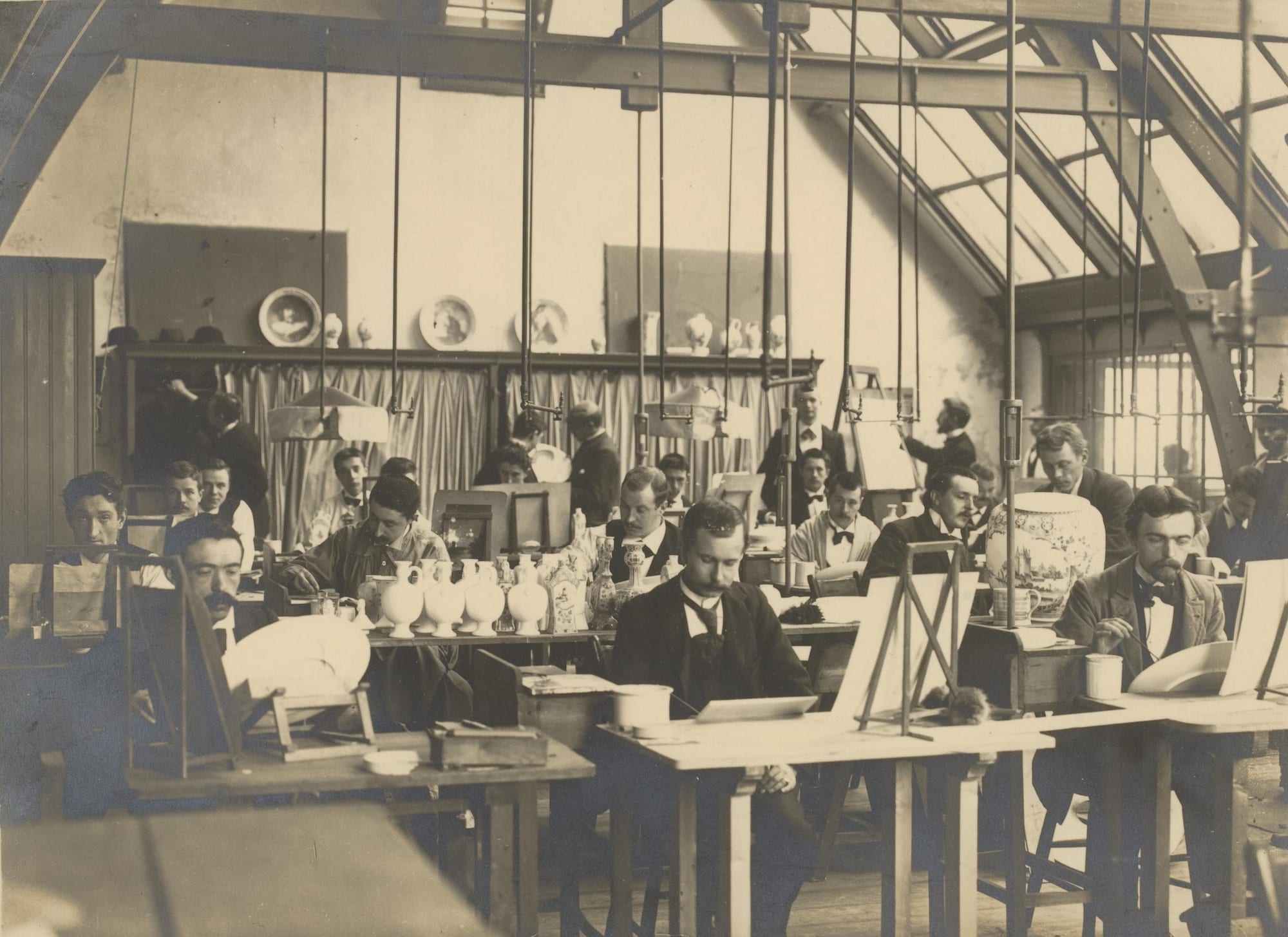
The country's best-known craft grew out of trade. After the Dutch East India Company was founded in 1602, blue-and-white Chinese porcelain became highly fashionable, and Dutch potters set out to imitate it with tin-glazed earthenware painted in blue. The town of Delft became the most famous centre of production, with more than thirty potteries at the industry's height. Only one of them, De Porceleyne Fles, founded in 1653 and now known as Royal Delft, survives, and its painters still decorate pieces by hand.
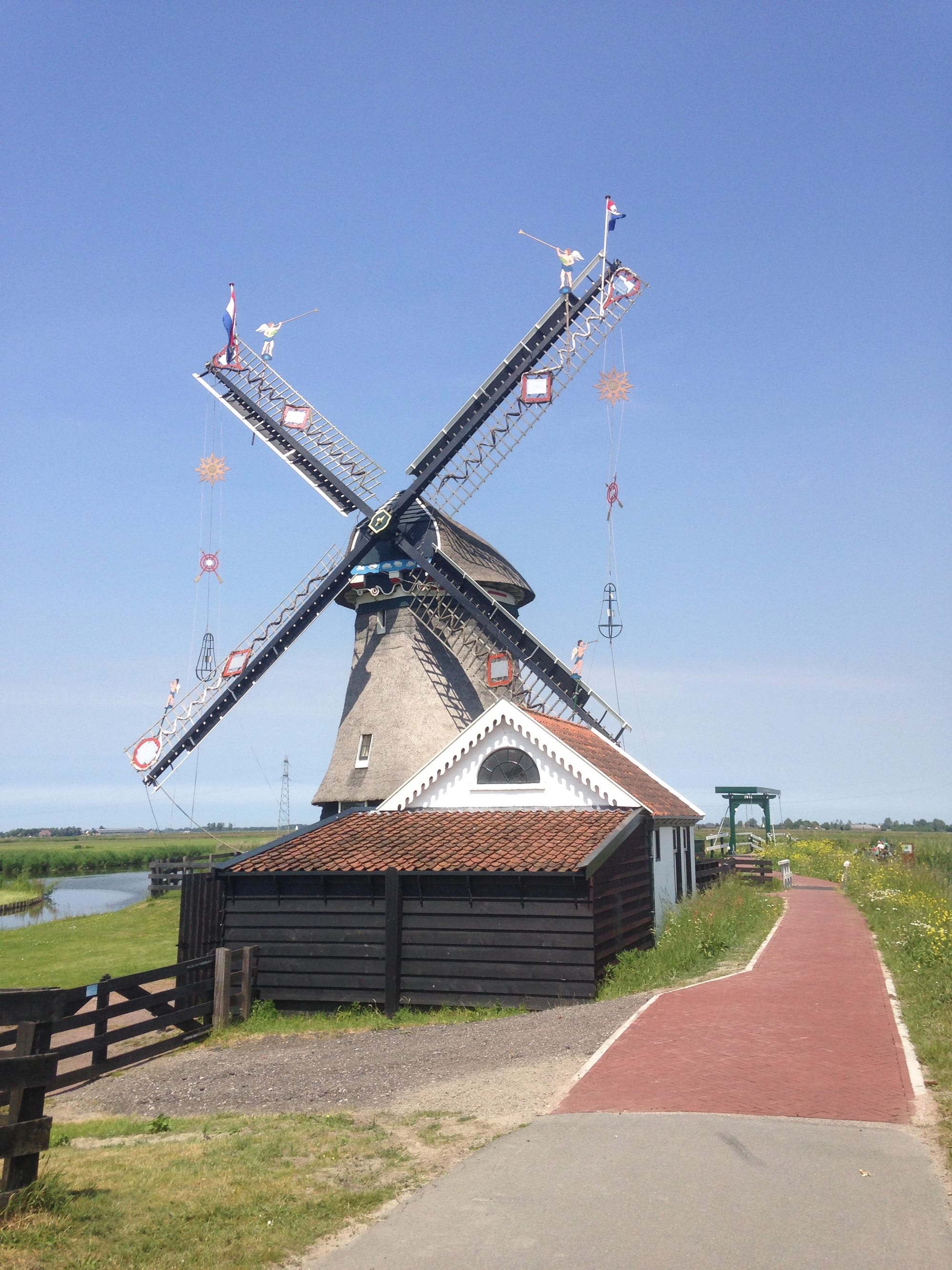
Windmills are more than a postcard image. Many thousands once stood across the country, pumping water off the land or grinding grain, sawing timber and making paper, and some 1,200 historic mills survive, many still in working order. The craft of the miller operating windmills and watermills was added to UNESCO's list in 2017. Only around forty professional millers are still at work, but the Guild of Volunteer Millers has trained close to two thousand volunteers since 1972. The position of the sails has long carried meaning: millers set them to announce a wedding or a death in the family, and at times, including the Second World War, sail positions were used to pass signals.
Dos and don'ts for visitors
- Do shake hands firmly with everyone present, including children, with both hands out of the pockets.
- Do arrive exactly on time, and send a message if running late.
- Do arrange visits to someone's home in advance rather than calling round unannounced, and avoid dropping in around the evening meal.
- Do congratulate the whole family, not just the person celebrating, when invited to a birthday.
- Do keep still and silent for the two minutes at eight o'clock in the evening on 4 May.
- Do keep off the red-surfaced cycle lanes on foot, and watch for bicycles when crossing any street.
- Don't take plain speaking as rudeness; frankness is meant as honesty, and a straight answer is usually welcomed in return.
- Don't bring white lilies or chrysanthemums as a gift, don't ask for a tour of the house, and don't tap the forehead at someone, which is an insult.
What to take away
Dutch customs reward the same qualities the Dutch admire in one another — honesty, punctuality, modesty and a respect for other people's choices — and visitors who speak plainly, turn up on time and act normal will find themselves very much at home.