Daily Life · Nepal
Nepal: Two Plates of Daal Bhaat, a Family Abroad
A meal eaten twice a day in many homes, a six-day working week with Saturday as the only fixed rest day, and most households now receiving money sent home, much of it from the Gulf and Malaysia
By Worldlore Editorial · 30 September 2026
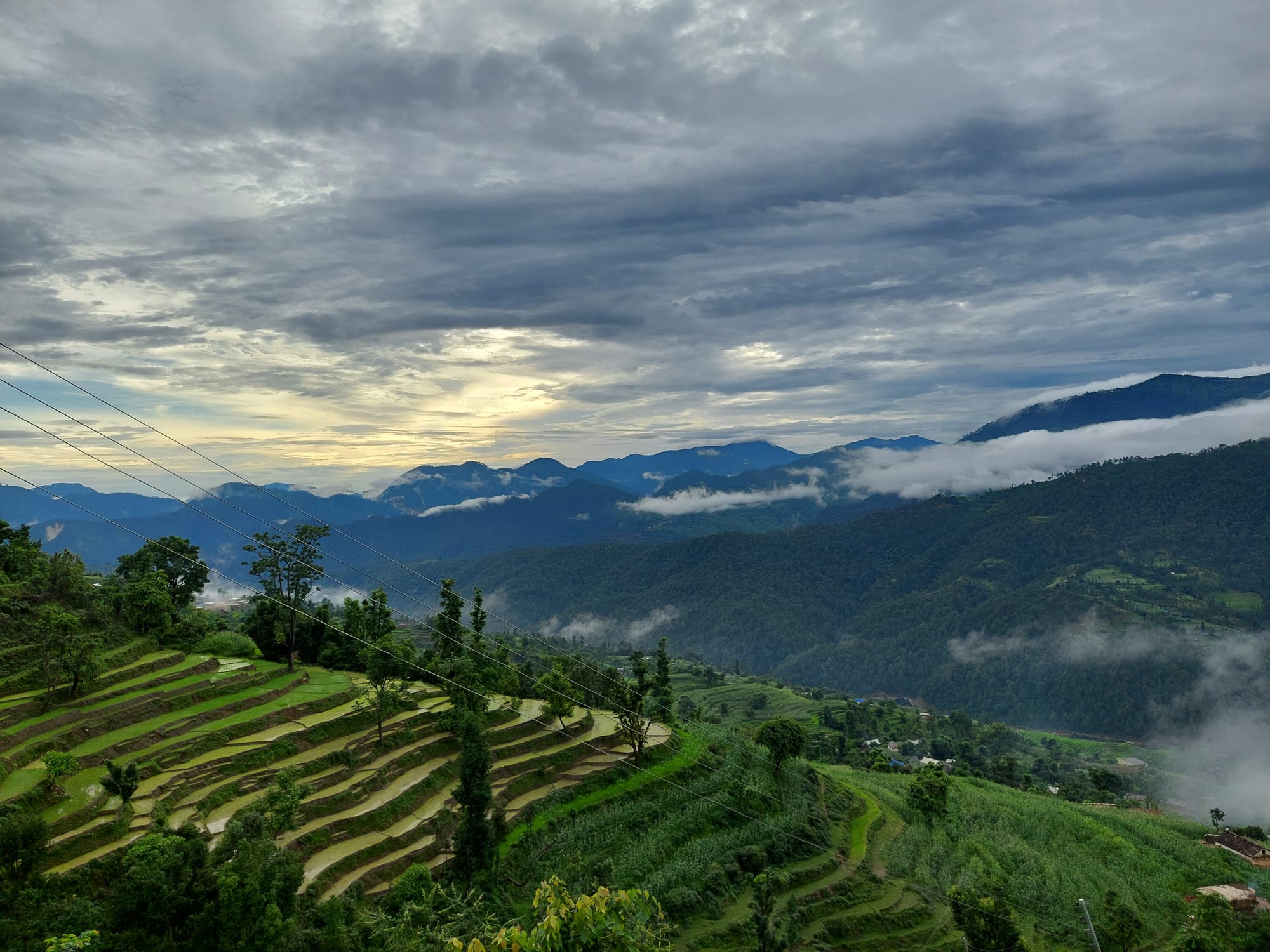
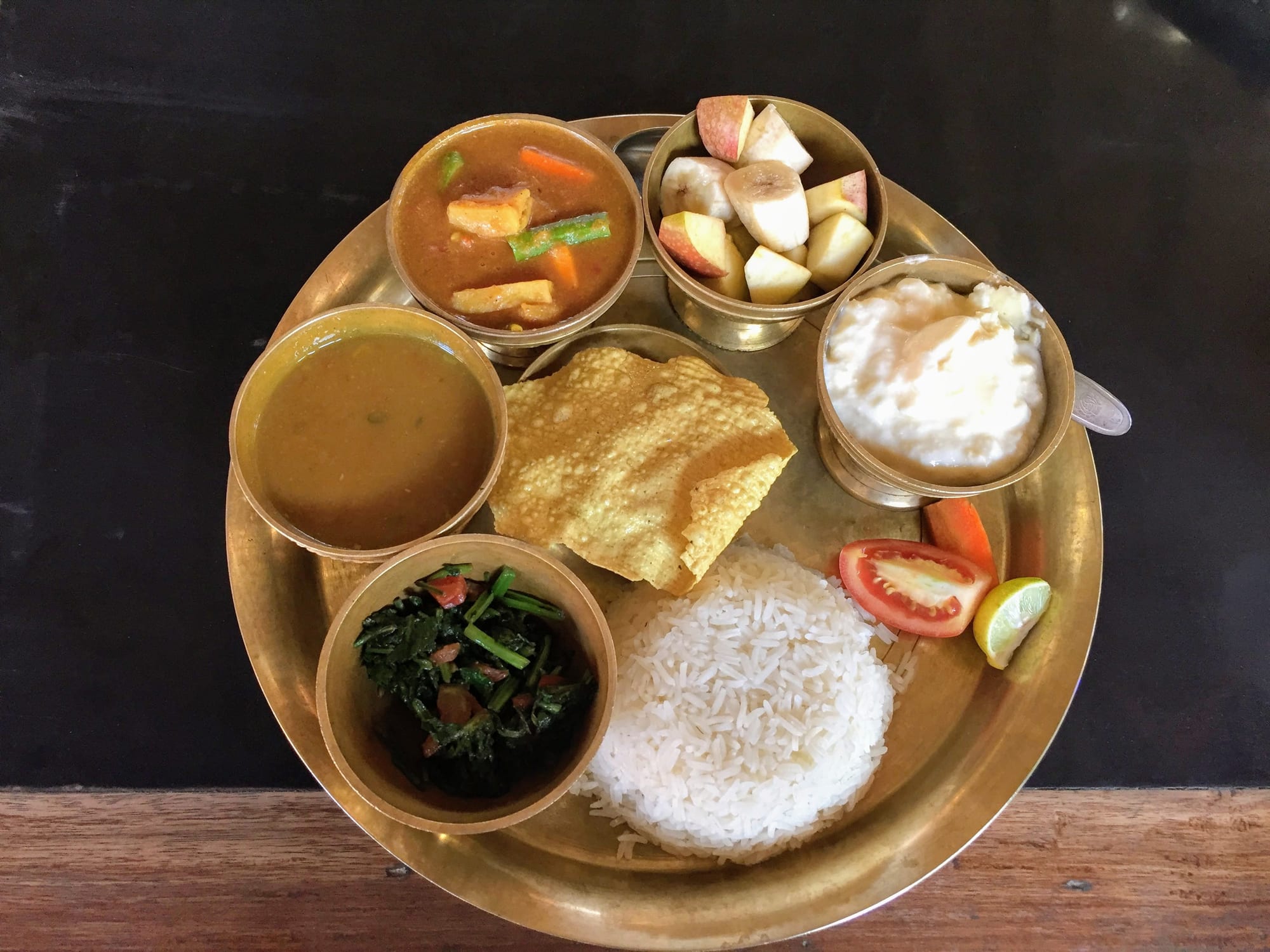
An ordinary day in many Nepali homes is measured out by one dish, eaten at much the same two points in the day: daal bhaat, rice and lentil soup with a vegetable curry and pickle, traditionally taken once in the late morning and again in the evening. Around that fixed point, the rest of the day varies enormously by altitude and geography, from the crowded, traffic-thick Kathmandu Valley to terraced hill farms worked by hand to the flat, hot Terai plains along the Indian border. Increasingly, though, it also varies by who is missing from the table. Most Nepali households now receive remittances, much of it from family members working abroad, mostly in the Gulf states or Malaysia, and remittances make up more than a quarter of the country's entire economic output, one of the highest shares of any country in the world.
Family and home life
Joint or extended-family households remain common in Nepal, particularly outside the cities, with married sons often continuing to live alongside their parents rather than setting up separate homes immediately. Meals anchor the household day: daal bhaat is typically eaten sitting together, usually with the right hand rather than cutlery, and it is offered to guests as a matter of course. Migration for work has reshaped many households from within, since a large and growing share of families now have at least one member, commonly a husband or father, working abroad for long stretches, with contact kept up by phone rather than daily presence. Where that is the case, the responsibility for running the household day to day often falls more heavily on women and grandparents left at home.
Work, school and the rhythm of the day
The traditional working week in Nepal runs Sunday to Friday, with Saturday as the single fixed weekly holiday, a pattern that still applies to most government offices, schools and smaller businesses, though some private companies, particularly IT firms and organisations with international clients, have moved to a two-day weekend. Farming is still the main occupation for most households, especially outside the cities, and the agricultural calendar of planting and harvest, rather than any office calendar, sets the pace of life for many rural households. Where paid work is not available locally, labour migration abroad has become for many families less a choice than the default path once schooling ends, with the Gulf states and Malaysia the main destinations; more than half a million Nepalis took new approvals for foreign employment in 2024–25 alone.
Community life and public spaces
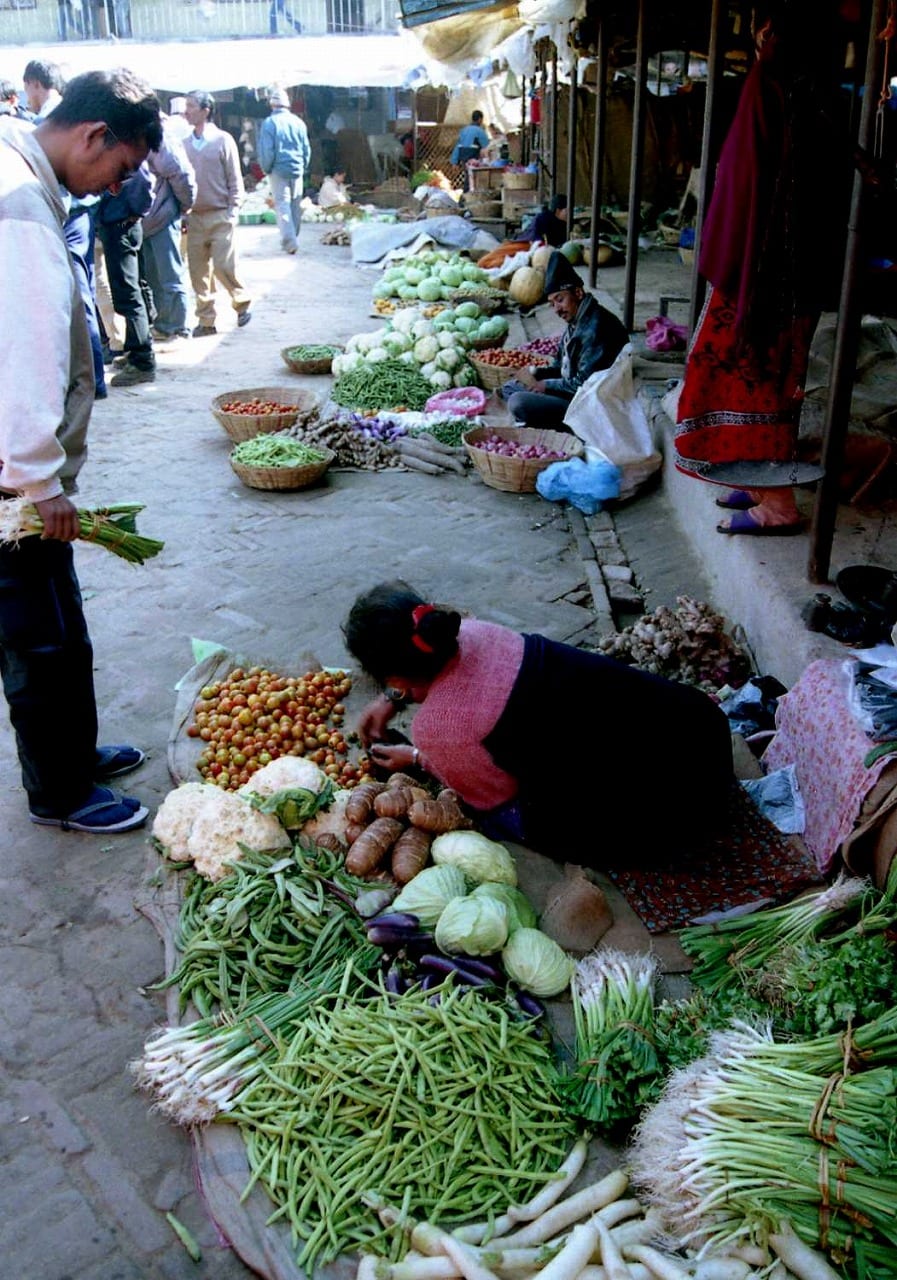
Small tea shops, known as chiya pasal, are found on streets and crossroads across the country and function as the country's most ordinary gathering point: little more than a bench and a kettle in many villages, where people stop between errands to talk over a cheap glass of sweet milk tea. In towns and cities, open produce markets such as those found across Kathmandu remain the main venue for daily food shopping, vendors and shoppers working through narrow lanes of fruit and vegetables laid out on the ground or on low stalls. The Kathmandu Valley in particular carries heavy motorbike and car traffic through narrow streets never built for it, and honking, weaving traffic is simply part of the background of daily movement there in a way it is not in the quieter hill towns and villages.
Free time and weekends
With Saturday as the one fixed day off for most people, weekend time is often compressed rather than leisurely: household chores, visits to relatives, and, for many in the hills, catching up on farm work that the working week did not leave time for. Religious observance runs through ordinary weekly life rather than being set apart from it, with visits to a temple or shrine, a puja at a home altar, or attendance at whichever festival falls in a given month treated as routine rather than exceptional. In Kathmandu and other towns, younger residents increasingly spend weekend time in cafés and shopping areas, a newer pattern alongside the older rhythm of family visits and religious observance.
A visitor's ordinary day
Nepal runs substantially on cash outside hotels and larger restaurants in Kathmandu and Pokhara; ATMs are common in the cities and main trekking towns but carry low withdrawal limits and fees, and village shops and tea houses on trekking routes deal in cash only. Shops and markets generally open early and stay open into the evening seven days a week, since Saturday as a rest day applies more to offices and schools than to trade. Local buses run frequently but slowly and are not always comfortable for visitors; tourist buses and, where budgets allow, domestic flights are the more reliable way to cover long distances. Expect greetings, queues and timekeeping generally to run on a more relaxed footing than in Europe or North America, without this being a sign that anything has gone wrong.
What to take away
What holds an ordinary Nepali day together, whatever the altitude or the income, is less any single custom than a plate of daal bhaat shared twice a day and a household that, for a growing number of families, now spans not just a home but a continent.