Culture & Customs · Nepal
Nepal: Greeting the God Within
Hindu and Buddhist traditions woven together, well over a hundred castes and ethnic groups, a greeting made with pressed palms, and a year that turns on Dashain blessings, Tihar lamps and the courtesies owed to elders and guests
By Worldlore Editorial · 30 September 2026
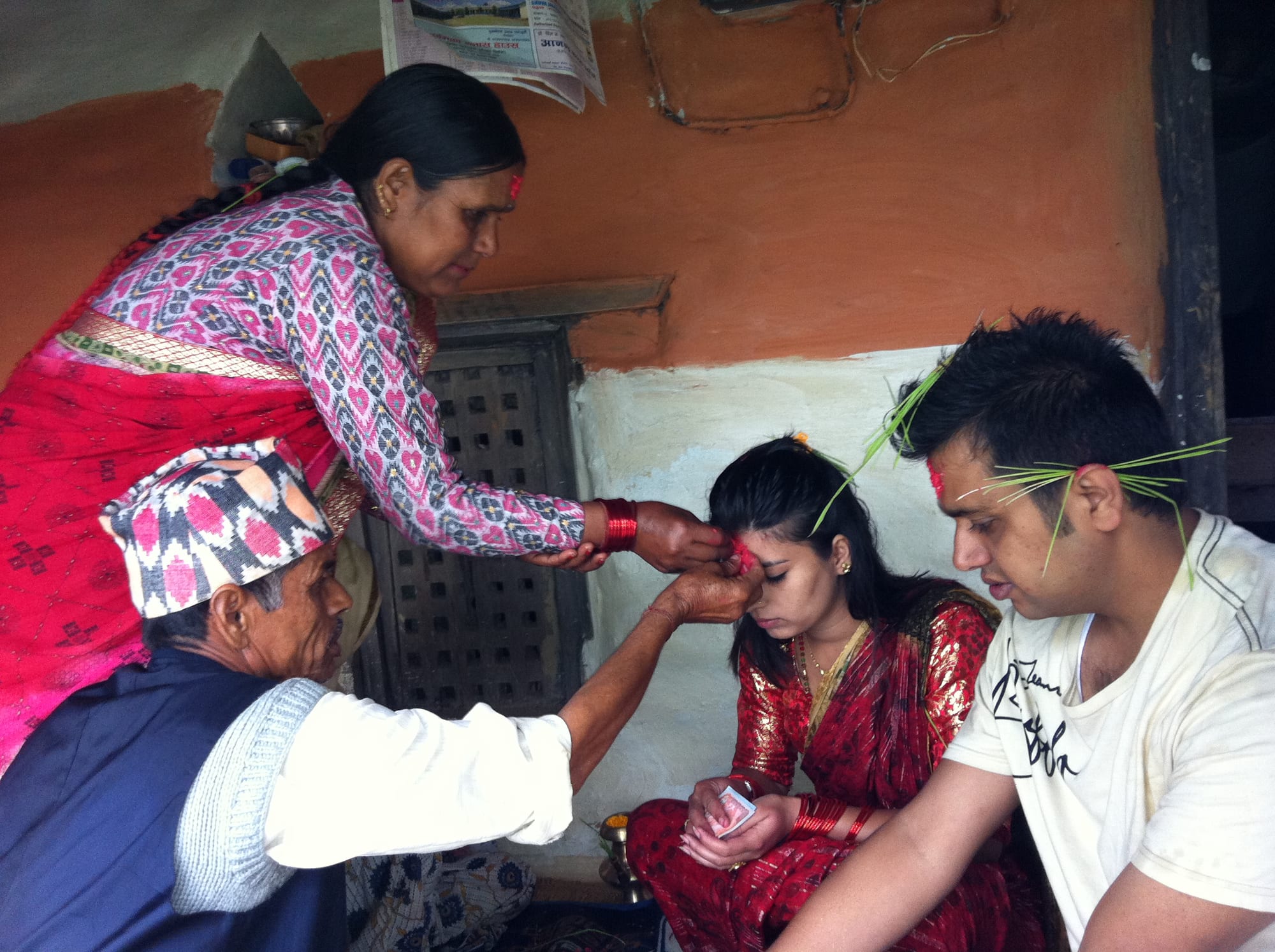
On the most important morning of the Nepali year, families gather at home in their best clothes. One by one, the younger members come before their parents and grandparents, who press a paste of red vermilion, curd and rice grains onto their foreheads and tuck pale shoots of barley, sown at the start of the festival, behind their ears. Each tika comes with a spoken blessing for health, success and long life, and often a little money too. Across the country, offices close and people travel back to their family homes, many of them from work abroad, to receive these blessings in person. The moment captures much about Nepal: faith and family bound tightly together, and a deep, unquestioned respect for age.
Faith, identity and values
Religion shapes daily life in Nepal to a degree that surprises many visitors. At the 2021 census, around 81 per cent of the population was Hindu, 8 per cent Buddhist, 5 per cent Muslim and 3 per cent followers of the Kirant faith, with smaller numbers of Christians. Nepal has been a secular republic since 2008, but the two great faiths are so intertwined that many people identify with both. They share ideas of rebirth and karma, and Hindus and Buddhists have long worshipped at each other's temples and joined in each other's festivals. Puja, the making of offerings and prayers to particular deities, is part of ordinary life and is performed before significant events such as weddings. Vajrayana, or Tibetan, Buddhism is followed by many people of Tibeto-Burman background in the high mountains, and in rural communities belief in spirits and the advice of shamans, known as jhakri, persist alongside the formal religions. The cow is sacred to Hindus, and beef is avoided.
Nepal is also one of the most diverse countries in Asia. The 2021 census recorded 142 castes and ethnic groups, drawn from two broad ancestral streams: Indo-Aryan peoples of South Asian origin and Tibeto-Burman peoples of Himalayan origin. Nepali is the common language, but more than 120 others are spoken. The Hindu caste system still shapes society; discrimination on the basis of caste was outlawed in 1963, yet some people continue to socialise and marry within their caste, although these boundaries are loosening, especially in the towns.
Beneath this diversity sit shared values. Society is hierarchical, and people defer to those who are older or more respected. Family reputation, known as ijat, is generally considered more important than wealth, and families often pool their resources so that everyone is secure. Many Nepalis take quiet pride in the fact that their country was never colonised, and they are sensitive about being confused with India. A certain fatalism — a readiness to attribute misfortune to the will of a god or spirit — coexists with a strong work ethic, and the international reputation of Nepal's Gurkha soldiers for courage and endurance is a particular source of pride.
Greetings and meeting people
The everyday greeting is "namaste", said with the palms pressed together before the chest and a slight nod or bow; the word is often explained as "I greet the god within you". "Namaskar" is a more formal version. The eldest or most senior person in a group is greeted first. Handshakes are also used, with the right hand and a lighter grip than many visitors expect, but a man should wait for a woman to offer her hand, since not everyone is comfortable with physical contact between the sexes. Hugs and kisses are kept for close friends and family.
People often address one another with kinship terms, even when they are not related: didi and dai for an older sister or brother, bahini and bhai for a younger one. Adding "-ji" to a name is a mark of respect. A common greeting question is "Have you eaten?", which works much as "How are you?" does elsewhere.
Communication tends to be gentle and indirect. A flat "no" is considered impolite, so disagreement is often expressed as "maybe" or "I'll do my best", and a side-to-side tilt of the head signals agreement or understanding rather than refusal. People generally speak softly and rarely show anger in public. It is more polite to point with the chin than with a finger, and when talking to elders it is respectful to lower the gaze.
Hospitality and being a guest
A familiar saying holds that the guest is a god, and hospitality is taken seriously. If there are shoes outside the door of a home, visitors remove theirs too, and the kitchen should not be entered unless the host invites it. Guests are rarely expected to help with cooking or clearing up. Conversation usually comes before the meal, and visitors typically leave soon after eating. A small gift of fruit or sweets is appreciated, offered with the right hand.
At the table, the most important idea is jutho: once food or drink has touched someone's lips, it is considered impure for anyone else. Plates, water bottles and half-eaten food are not shared, and personal spoons are not dipped into a common dish. Food is eaten, passed and received with the right hand; the left may steady a plate but is not used alone. Rather than serving themselves, guests usually let the host fill their plate, and eating a modest first helping leaves room to accept more, which pleases the host. It is courteous to offer food to anyone nearby when eating in their company, and beef should never be offered to Hindu guests.
The body carries its own rules. The head is regarded as pure and the feet as impure, so no one's head should be touched, the soles of the feet should not be pointed at anyone, and stepping over someone's outstretched legs is rude. Shoes should not be left upside down, which is thought to bring bad luck.
Festivals and life's big moments
Most religious festivals follow the lunar calendar, so their dates shift each year, and they are valued above all for bringing together families scattered by work at home and abroad. The greatest is Dashain, the long autumn festival honouring the goddess Durga and the victory of good over evil. Barley seeds are sown on its first day to grow the jamara shoots, and on its principal day, Bijaya Dashami, elders give tika, jamara and blessings to their juniors, a round of visits to relatives that continues for several days.
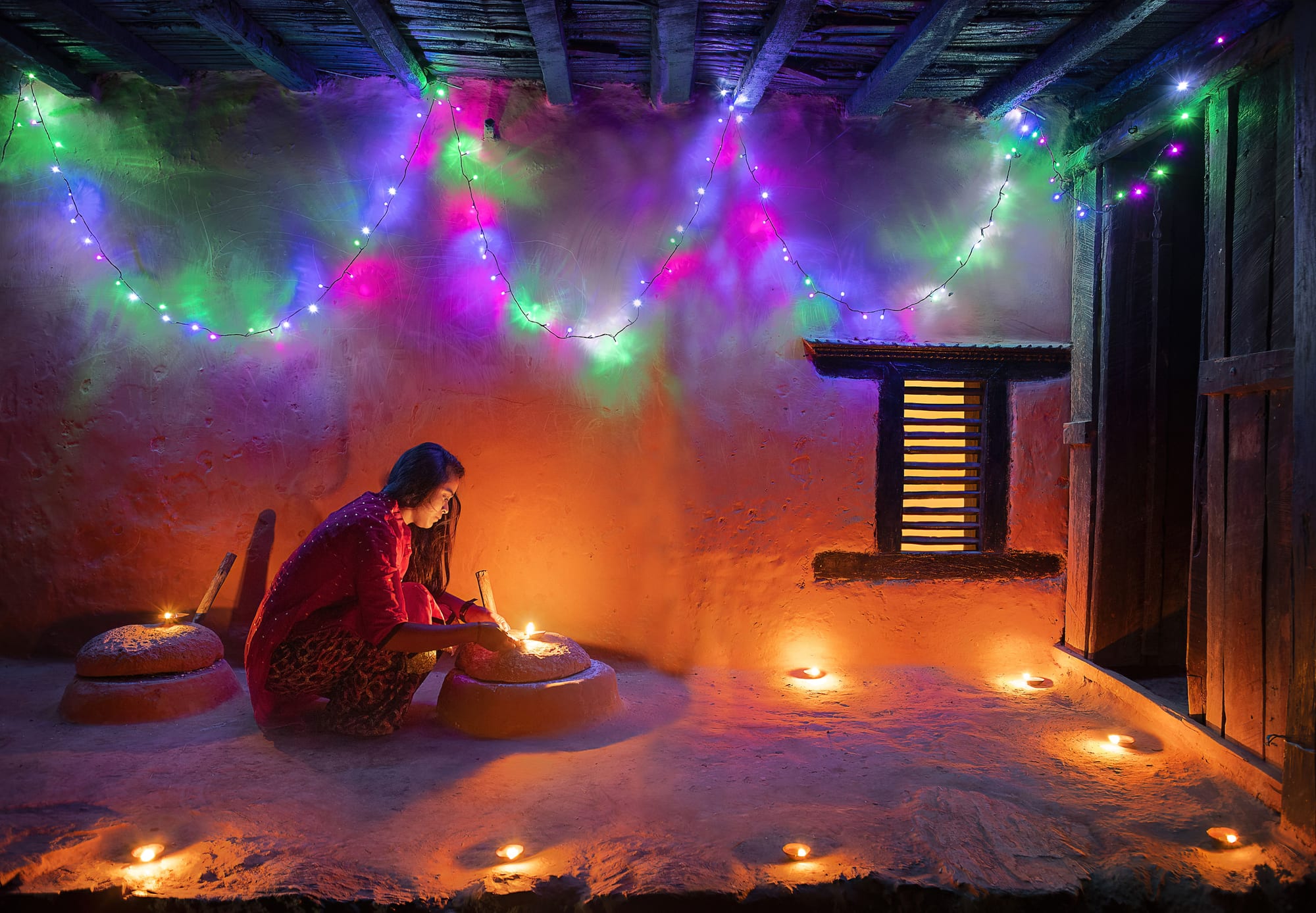
A few weeks later comes Tihar, the festival of lights. Its days honour crows, dogs and cows in turn, and on the night of Laxmi Puja homes are lit with oil lamps, candles and strings of lights to welcome the goddess of wealth. Groups of young people go from house to house singing deusi and bhailo songs and are rewarded with money or treats. On the last day, Bhai Tika, sisters apply a seven-coloured tika to their brothers' foreheads and pray for their long life, and gifts are exchanged. The calendar also includes Holi, Buddha's birthday, Chhath, the New Year festivals of the Tamang, Gurung, Newar and Tibetan communities, and the Nepali New Year in mid-April.
Life's milestones are marked with care. In Hindu families, a priest names a new baby at the Nwaran ceremony on the eleventh day after birth, choosing a name according to the child's horoscope. Both arranged and love marriages are common, and partners are often sought within the same caste, ethnic group or social circle. Weddings are lavish, lasting several days with hundreds of guests, and a married Hindu woman is traditionally marked by sindoor, red powder in the parting of her hair, and the pote, a necklace of glass beads. Rising costs and changing attitudes have led growing numbers of couples to marry quietly in court instead.
Hindu funerals are held quickly. The body is usually cremated on a riverbank, often within hours of death, and the family then observes thirteen days of mourning. Sons shave their heads and wear simple unstitched clothing, daily rites are performed under the guidance of a priest, meat and celebrations are set aside, and a purification ceremony on the thirteenth day brings the formal mourning period to an end.
Arts, crafts and music
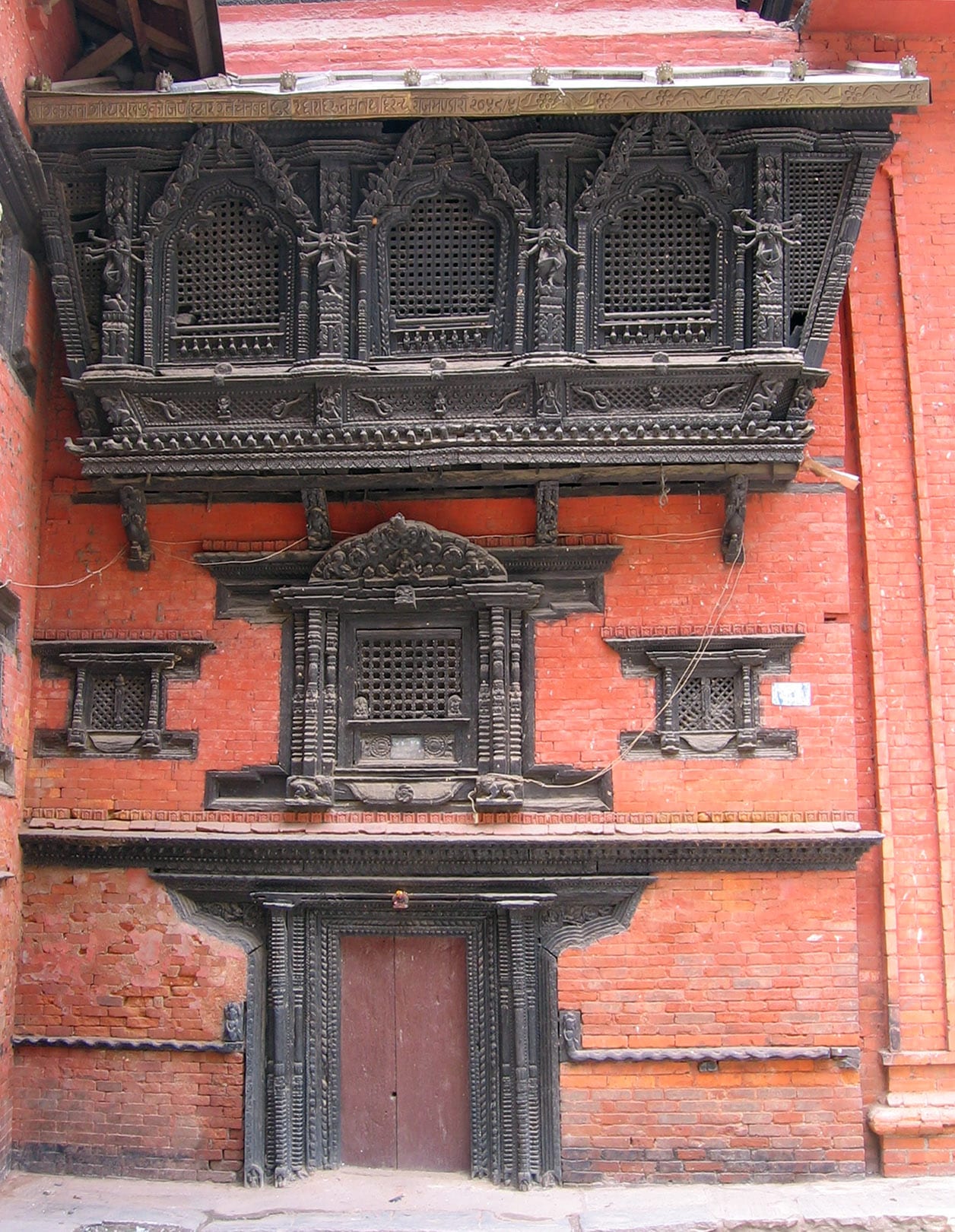
The Newars of the Kathmandu Valley built one of Asia's great artistic traditions, and it remains very much alive. Their woodcarvers produced the latticed windows, doorways and carved roof struts of the valley's temples and houses, and their metalworkers perfected lost-wax casting, in which a figure is modelled in a mixture of beeswax, oil and resin, encased in layers of clay, and replaced by molten metal once the wax has been melted out; the finished statues are often gilded or inlaid before being consecrated. Newar painters also created devotional scroll paintings known as paubha, close relatives of the Tibetan thangka.
Music runs through festivals and village life. The madal, a double-headed hand drum, drives much folk music and dance. The sarangi, a small bowed fiddle carved from local woods, is associated above all with the Gandharva, a community of travelling minstrels who once went from village to village turning news and stories into song, and were paid in money or grain. That tradition is now struggling, as young musicians leave for work abroad. Lok dohori, the sung folk duet, has moved from village dance halls to recording studios and the internet, and remains hugely popular.
Dos and don'ts for visitors
- Do greet people with "namaste" and palms pressed together, greeting the eldest first.
- Do take off shoes where others have, and dress modestly, avoiding shorts and sleeveless tops at temples and holy places.
- Do use the right hand, or both hands, to give, receive and eat, and never share food, plates or bottles that have touched the lips.
- Don't enter the parts of Hindu temples that are closed to non-Hindus, or a family's kitchen unless invited.
- Don't touch anyone's head, point the soles of the feet at people, or step over someone's legs.
- Don't show affection in public, raise the voice or lose one's temper.
- Don't compare Nepal with India or refer to Nepalis as Indian.
- Don't offer beef to Hindu hosts or guests.
What to take away
Nepal's customs rest on respect — for elders, for guests, for the sacred and for the purity of the shared table — and visitors who greet with a namaste and follow their hosts' lead will be welcomed with remarkable warmth.