Culture & Customs · Nauru
Nauru: The Island of Twelve Clans
A small, close-knit Christian nation organised around twelve clans traced through the mother's line, where a day of homecoming celebrates survival itself and the old art of catching frigatebirds still marks a boy's passage to manhood
By Worldlore Editorial · 30 September 2026
Towards sunset, as seabirds return from a day's fishing at sea, a few men take up their places along the shore. Each holds a length of supple line with a weight at one end, and as the birds sweep low overhead, the lines are whirled and thrown to snare them in mid-air. On a high perch nearby wait frigatebirds caught and tamed in earlier seasons, fed on fresh tuna and released to lure their wild cousins back towards the catchers. It is a scene that has played out on Nauru for hundreds of years, handed down from one generation to the next. On an island this small, where almost everyone is related to someone who knows everyone else, such inherited skills are a reminder of who Nauruans were before the phosphate century, and of what they are determined not to lose.
Faith, identity and values
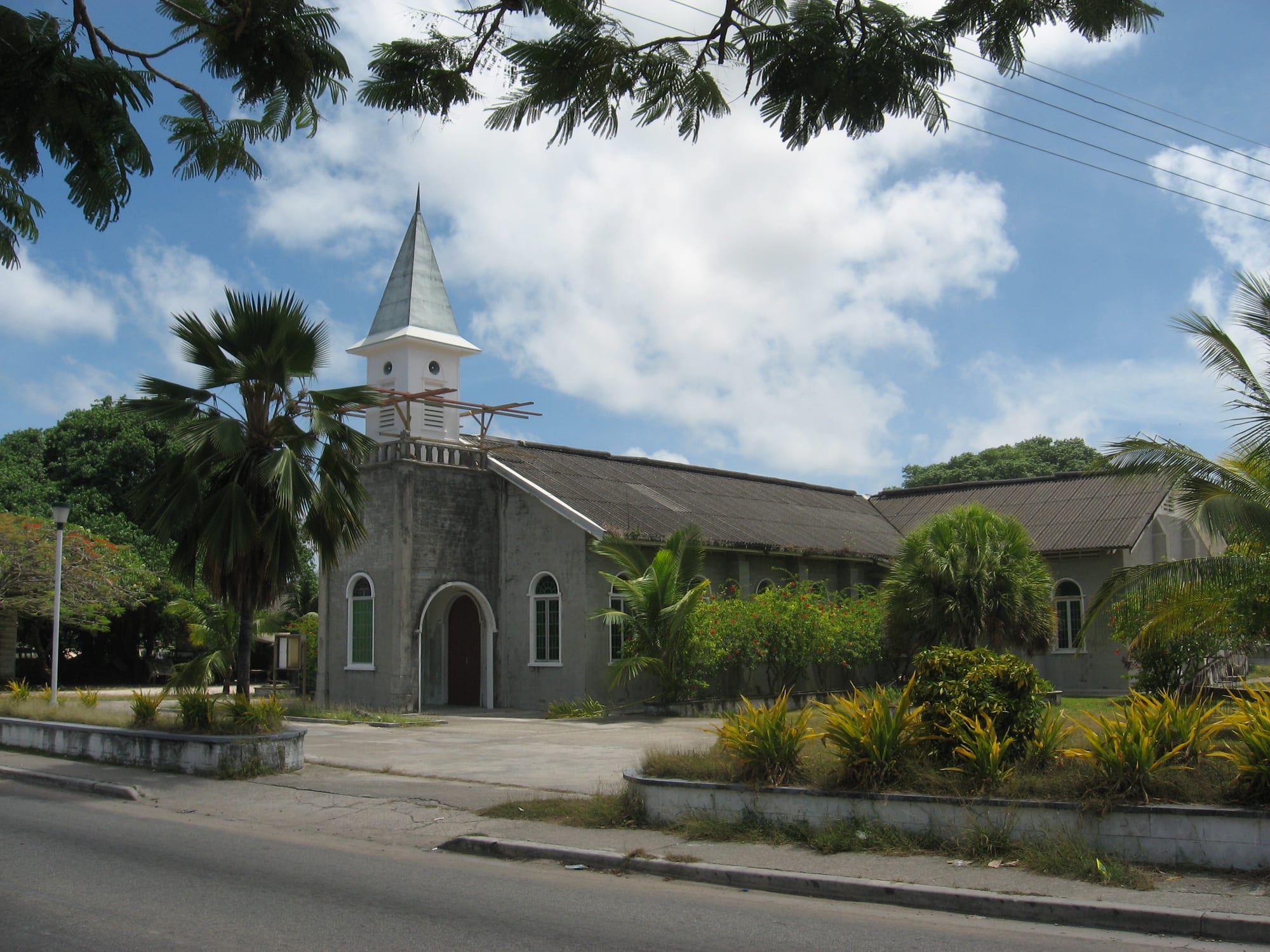
Nauru is a Christian country. Around 93 per cent of the population is Christian, divided between two main churches of roughly equal size: the Nauru Congregational Church and the Roman Catholic Church, each followed by about a third of the people. Both arrived with missionaries in the late nineteenth and early twentieth centuries, and church life remains central to the community, with religious feasts and celebrations bringing families together throughout the year. Ethnic Chinese residents, estimated at around 5 per cent of the population, follow Confucian, Buddhist, Taoist or Christian traditions, or none. Before Christianity, Nauruans followed their own indigenous religion, honouring spirits and ancestors.
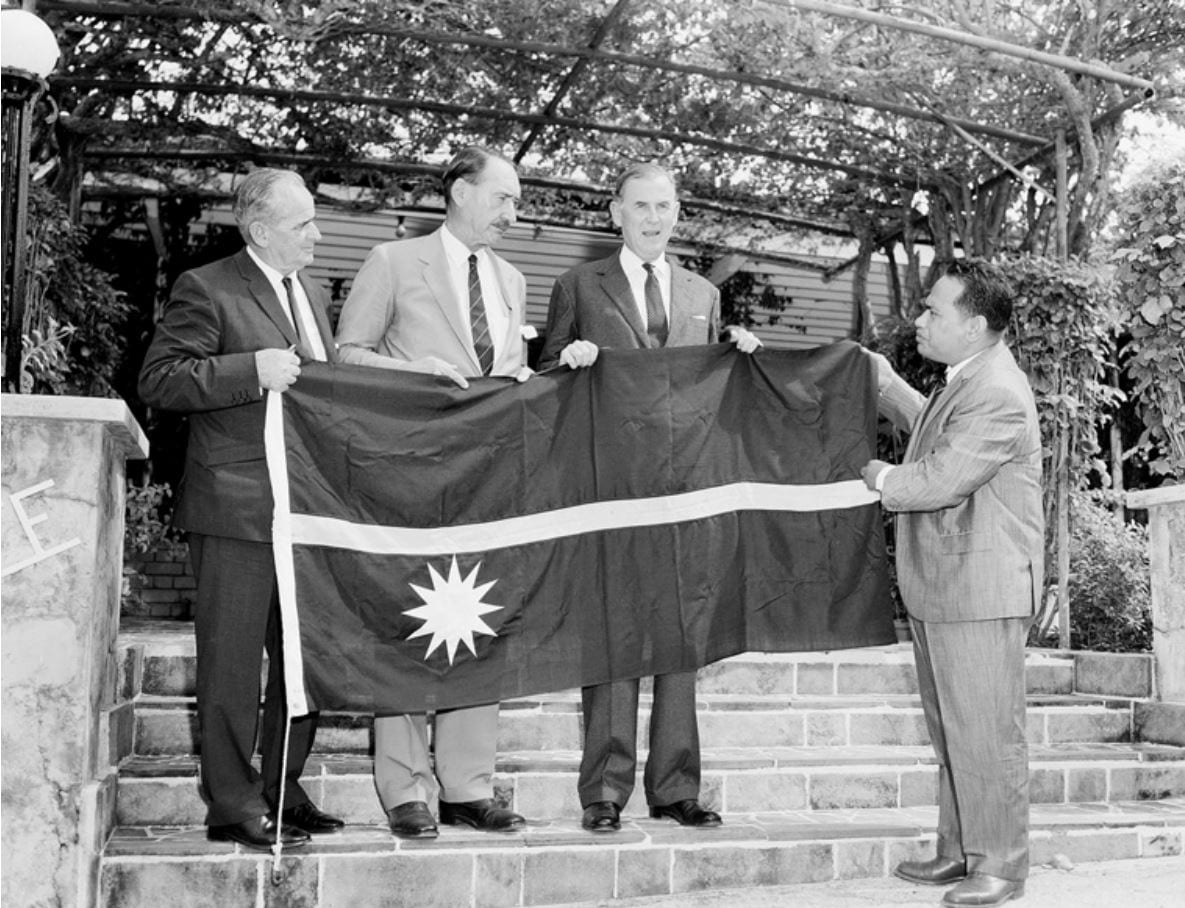
Beneath church life lies the older structure of the clans. Every Nauruan belongs to one of twelve clans, inherited through the mother's line; the twelve points of the star on the national flag represent them. Clan membership is recorded on birth and death certificates and does not change with marriage, and partners traditionally come from different clans. Land and other property are inherited by both sons and daughters, but it is daughters who can pass their rights on to their children without seeking the consent of the wider family. Men dominate formal politics, while women, and mothers above all, hold considerable authority within the family: mothers are particularly honoured, and children are expected to respect their elders.
Identity is also bound up with survival. Nauru's population has twice fallen dangerously low — after an influenza epidemic following the First World War, and again after the Second World War, when many Nauruans were deported as forced labour — and the idea that the community needed at least 1,500 people to endure shaped the island's sense of itself for decades. That history gives family, children and continuity a particular weight in Nauruan life. The Nauruan language, a distinct Micronesian tongue, remains a core part of that identity, used at home alongside English, the language of government and business. The country's own spelling of its name now leads in English too: in May 2026 parliament made the Republic of Naoero its official English name, though Nauru remains in everyday use.
Greetings and meeting people
Nauru is a small and close-knit society, and meeting people is usually straightforward and friendly. English is widely spoken, and much everyday public etiquette follows Australian patterns: a handshake is normal in most settings, and dress is generally Western in style. A greeting in Nauruan is warmly received — "Ekamowir omo" is the standard phrase.
Respect for age and family position shapes how people interact. Elders are treated with deference, and the eldest women of a family, in keeping with the matrilineal clan system, are held in especially high regard. The society is conservative in outlook, and public displays of affection can cause offence.
Hospitality and being a guest
Food sharing lies at the heart of Nauruan hospitality. Weddings, funerals, church feasts and other important occasions are all marked by elaborate sharing of food, with extended families and clans contributing and eating together. Gatherings commonly open with a prayer, reflecting the central place of the church in community life, and it is polite to wait quietly until it is finished.
Sharing is also a matter of obligation. On an island where land was largely lost to mining and almost all food now arrives by ship, helping out relatives and contributing to family events is part of what it means to belong to a family and a clan.
Festivals and life's big moments
Two national days stand out. Independence Day, on 31 January, marks the end of trusteeship rule in 1968, and Constitution Day falls on 17 May. The most distinctively Nauruan holiday, though, is Angam Day on 26 October. "Angam" is usually translated as homecoming, or as triumph over hardship. After the population fell following the First World War, a target of 1,500 people was set as the minimum needed for Nauruans to survive as a people, and it was declared that the day it was reached would be a holiday. The milestone was passed on 26 October 1932 with the birth of a baby girl, and reached again in 1949, after survivors had returned from wartime deportation. Today the day is celebrated with sports, wrestling, traditional games, and performances of traditional dances in island dress.
Weddings are largely Christian ceremonies, followed by the feasting that marks every big family occasion; because partners come from different clans, a marriage links two clans, and any children belong to the mother's. Funerals follow the faith of the person who has died, and a Nauruan is buried in the cemetery of their home district, with the funeral again marked by a feast.
For a young man, one of the most memorable milestones is traditional rather than religious: catching his first frigatebird. In the competitive bird-catching game known as ibbon itsi, a boy's first catch is said to make him a man, and the new catcher is expected to provide food for the celebration that follows.
Arts, crafts and music
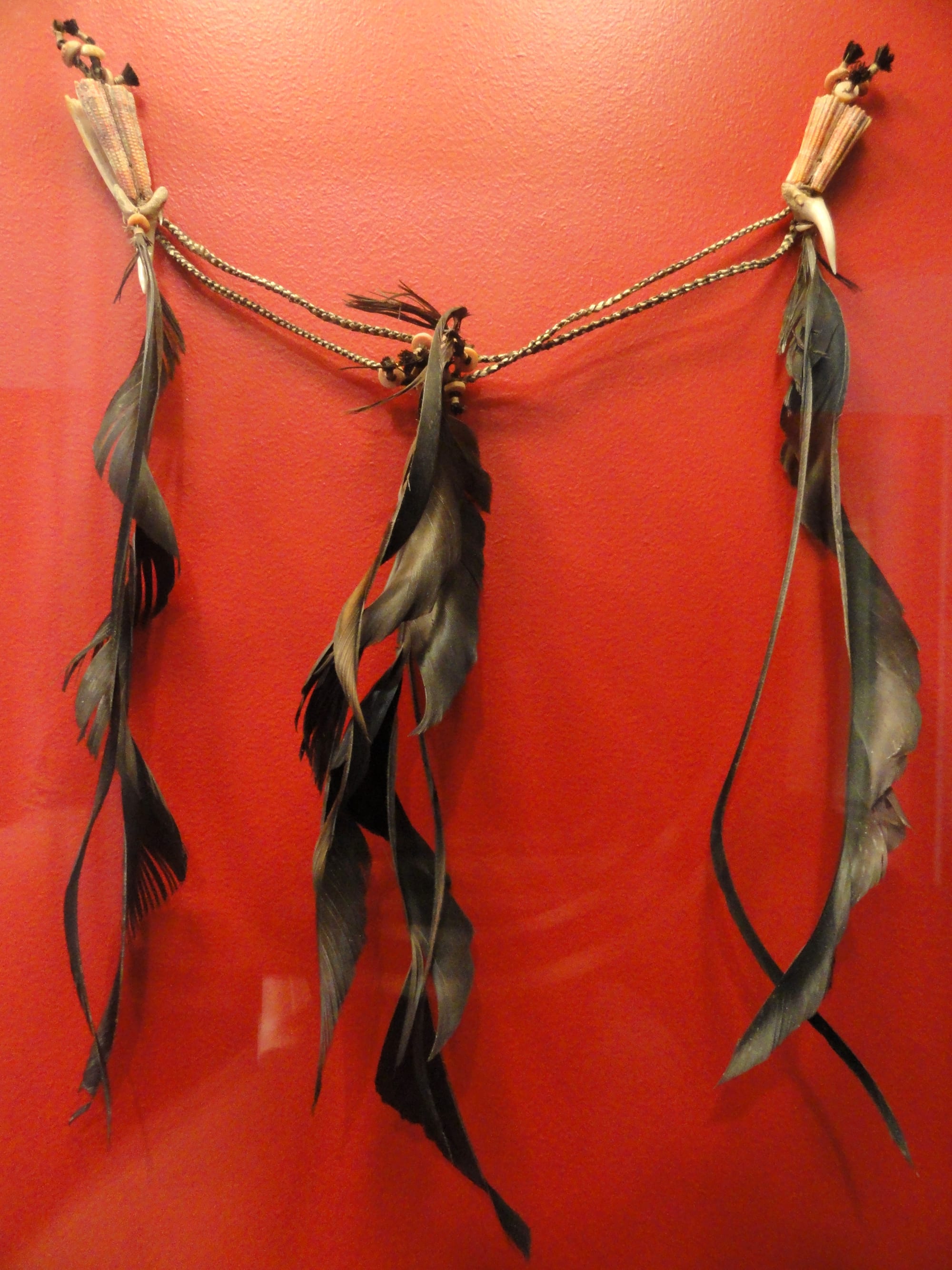
Frigatebird catching is Nauru's most celebrated traditional art — part sport, part skill, part ritual. Catchers use handmade lines weighted at one end, known as abio, together with traditional chanting, and keep tamed birds as lures; in the past women were forbidden to approach the catching grounds, a taboo that has since relaxed. The frigatebird itself is part of national identity, appearing on the country's coat of arms, and it runs through Nauruan chants and dances. Practitioners warn that the tradition is fading, as fewer young people take it up and as rising heat, coastal erosion and changing migration patterns affect the birds.
Music centres on rhythmic group singing, performed at celebrations, church occasions and family gatherings, and traditional dance is still staged on national days. String figures, with their intricate designs and accompanying chants, remain a treasured inheritance. Crafts were historically part of daily life — fans of coconut leaf and mats of pandanus, decorated with geometric patterns — but much traditional weaving has faded, partly because suitable materials became scarce after the land was mined.
Sport has become one of the most visible expressions of national pride. Weightlifting is regarded as a national pastime and has brought all of Nauru's Commonwealth Games medals — one champion lifter, Marcus Stephen, went on to become president — and Australian Rules football is widely played and followed. Nauru is a party to UNESCO's convention on intangible cultural heritage, though none of its traditions has yet been inscribed on UNESCO's lists.
Dos and don'ts for visitors
- Do try a greeting in Nauruan, "Ekamowir omo", alongside the usual handshake.
- Do show particular respect to elders, and to the senior women of a family.
- Do accept food offered at a family or church gathering, and wait quietly while the opening prayer is said.
- Do dress modestly away from the beach and when attending church or community events.
- Do swim only where local people do, as the reef and currents make much of the coast hazardous.
- Don't make public displays of affection, which can cause offence in a conservative society.
- Don't have anything to do with illegal drugs; penalties include prison sentences.
What to take away
Nauru's culture has survived mining, war and near-disappearance by holding fast to clan, church and family — and visitors who show respect for those bonds will find a small island with a remarkably strong sense of itself.