Daily Life · Myanmar
Myanmar: The Alms Bowl and the Blackout
A household of about four or five built around deference to elders, monks walking barefoot past every doorway at dawn, and a country where, since the 2021 coup, an ordinary day is also a day of power cuts, cash shortages and conscription risk
By Worldlore Editorial · 30 September 2026
An ordinary day in Myanmar still opens the way it has for generations: barefoot monks walking a set route before sunrise, alms bowls held out in silence while households set aside rice and curry at the doorway. From there the day splits in two. Much of its outward shape is unchanged and deeply traditional — the extended family under one roof, the teashop as the place where news and opinion get traded over a glass of sweet tea, the pagoda visited on any day that calls for merit. But since the military seized power again in February 2021, an ordinary day has also come to mean queuing for cash, rationing what little grid electricity arrives, and, for many young people, planning around the risk of conscription. Both of these are simply what daily life in Myanmar now is.
Family and home life
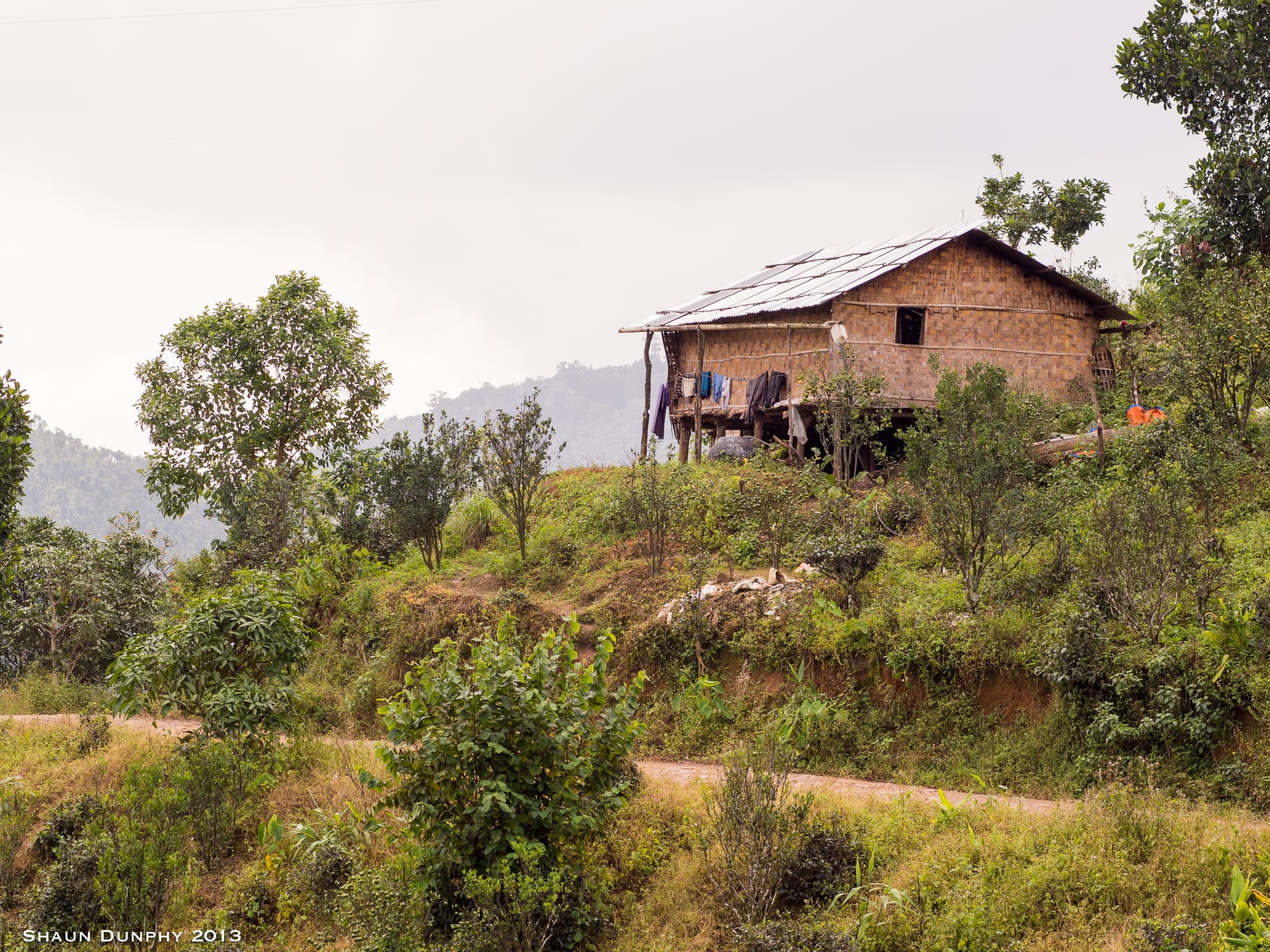
The average Myanmar household held 4.4 people at the last census, and in rural areas it remains common for three generations to share a roof, though urban households, particularly in Yangon, have grown smaller and more nuclear as young people take jobs away from home. Authority in the family traditionally rests with parents and elders, and a newly married couple may live with one set of parents for a time before setting up on their own. Elders are treated with marked deference, served first at meals and spoken to with special respect, and an individual's conduct is widely felt to reflect on the whole family's reputation, not just their own. Families today are fairly small, with two or three children common, and it is ordinary for adult children to remain in the family home until they marry.
Work, school and the rhythm of the day
The working week generally runs Monday to Friday, for offices, though the bazaar and small shops keep far longer, less regular hours than any office. School runs on the same Monday-to-Friday pattern for most children, but the rhythm of both work and school has been badly disrupted since 2021: many teachers joined a civil-disobedience movement against the coup and were dismissed or fled, and rolling power cuts now shape the working day directly — Yangon has seen outages of up to sixteen hours in a day and Mandalay up to eighteen, forcing businesses to run on diesel generators or simply close for the hours the grid is down. According to the United Nations Development Programme, the national poverty rate doubled between 2017 and 2023, to just under half the population, so for a great many households the working day is now also a search for enough income to get by, often supplemented by money sent home by relatives working abroad.
Community life and public spaces
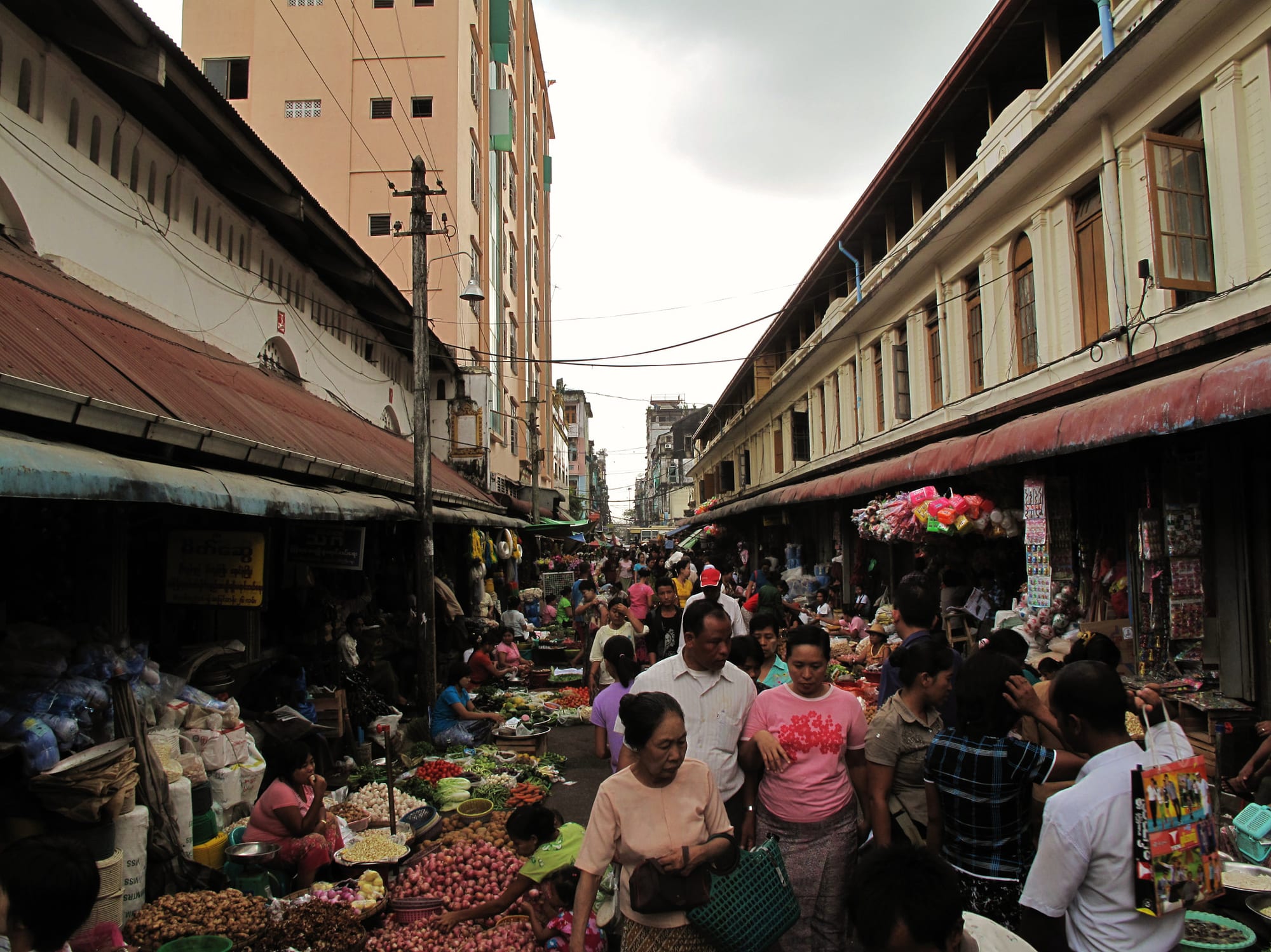
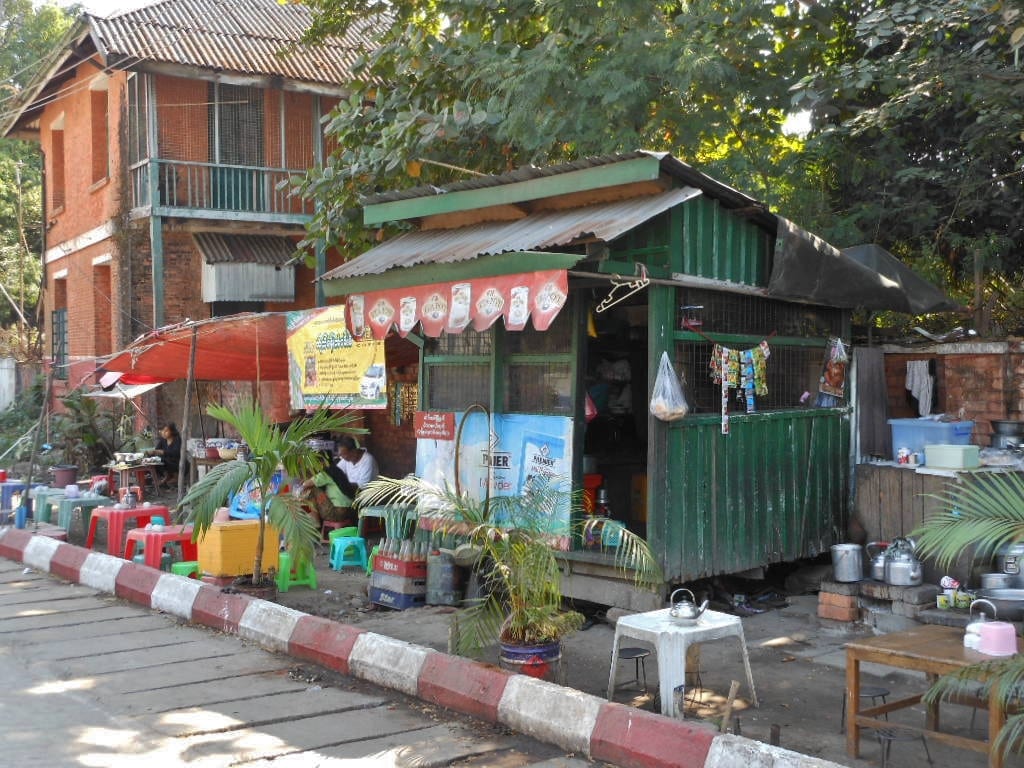
The teashop, not any single indoor venue, is the country's real social institution: cheap, open to anyone regardless of background, and the place where news, football and politics get discussed over a small glass of strong, sweetened tea, traditionally a male-dominated space though this is slowly changing in the cities. Markets are the other constant, pavement stalls and covered bazaars selling produce, cloth and prepared food, open from early morning and central to how most households actually shop, since large supermarkets remain mostly a city phenomenon. Pagodas anchor neighbourhood life beyond commerce, visited individually rather than on a fixed schedule, and mosques and churches serve the same role for Myanmar's Muslim and Christian minorities. Since 2021, movement between and within some regions has become unpredictable because of checkpoints and fighting, which has narrowed what "public space" means in parts of the country, and a major earthquake near Mandalay and Sagaing in March 2025 killed thousands and deepened the hardship there.
Free time and weekends
With Saturday and Sunday as the shared days off for most office and school workers, weekends centre on family visits, pagoda trips and, where finances allow, a trip out of town. Football is followed closely, watched at teashops as much as at home, and the water festival of Thingyan in mid-April is the biggest date on the calendar nationwide, marking the Buddhist new year with days of public water-throwing, though the timing coincides with the hottest part of the year and, since 2021, celebrations have been smaller and more subdued in many places. Betel-nut chewing, sold from small stalls wrapped in a leaf, remains a common everyday habit rather than strictly a leisure one.
A visitor's ordinary day
Myanmar runs almost entirely on cash: the banking system has been severely disrupted since 2021, foreign cards and ATMs are effectively unusable, and travellers bring clean, unfolded US dollar notes to exchange locally. Shops typically open in the morning and trade into the evening. Electricity is unreliable even in the cities because of the nationwide power shortage, so hotels and guesthouses that can afford it run generators for at least part of the day, and mobile data rather than fixed broadband carries most everyday communication. Getting around depends on shared taxis, informal buses and negotiation rather than fixed fares or timetables, and both domestic flights and overland travel can be disrupted by the security situation with little warning. Most governments advise against all or all-but-essential travel to Myanmar.
What to take away
An ordinary day in Myanmar still runs on family, tea and the pagoda much as it always has, but since 2021 it also runs on how many hours the power stays on and how far a family's cash will stretch — and that second rhythm now shapes daily life for most people in the country.