Culture & Customs · Mozambique
Mozambique: The Cloth That Carries Everything
Churches, mosques and the ancestors side by side, greetings that come before any business, and a printed cotton cloth that is worn, given and carried through every stage of life
By Worldlore Editorial · 30 September 2026
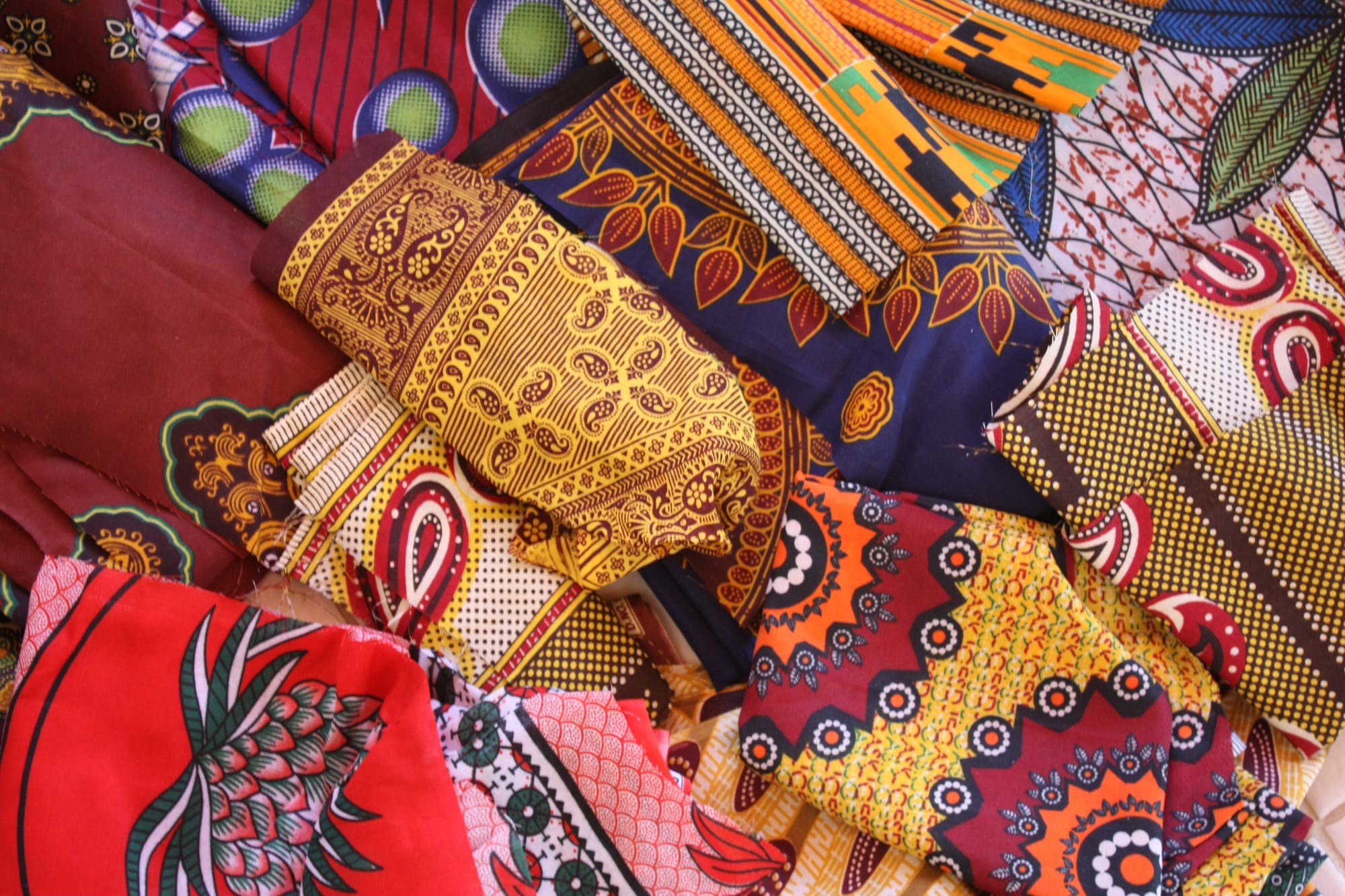
Before anything is bought, asked or explained in Mozambique, there is a greeting. A customer arriving at a market stall says "bom dia", shakes the stallholder's hand and asks how the family is keeping; the stallholder asks the same in return, and only then does the talk turn to prices. Around them hang lengths of capulana, the printed cotton cloth that serves as a wrap-around skirt, a shawl, a sling for carrying a baby on the back and a favourite present, all at once. The exchange takes a minute or two, and nobody treats it as a delay. In a country of many peoples, languages and faiths, courtesy is measured less by speed than by the willingness to stop, acknowledge another person properly and keep relationships in good repair — with the living, and with the ancestors too.
Faith, identity and values
Mozambique is home to many peoples and dozens of languages, held together by Portuguese as the official language and by a shared recent history of colonial rule, a liberation war and a long civil war. Most Mozambicans are Christian. Figures from the National Statistics Institute, cited by the US State Department, put Christians at around 62 per cent of the population. The largest groups are the evangelical and Pentecostal churches, with about a third of all Mozambicans, followed by the Roman Catholic Church with just over a quarter. Muslims make up around 19 per cent, and Islam is strongest in the north, long tied to the trading world of the Swahili coast. Smaller Hindu, Jewish and Bahá'í communities also exist.
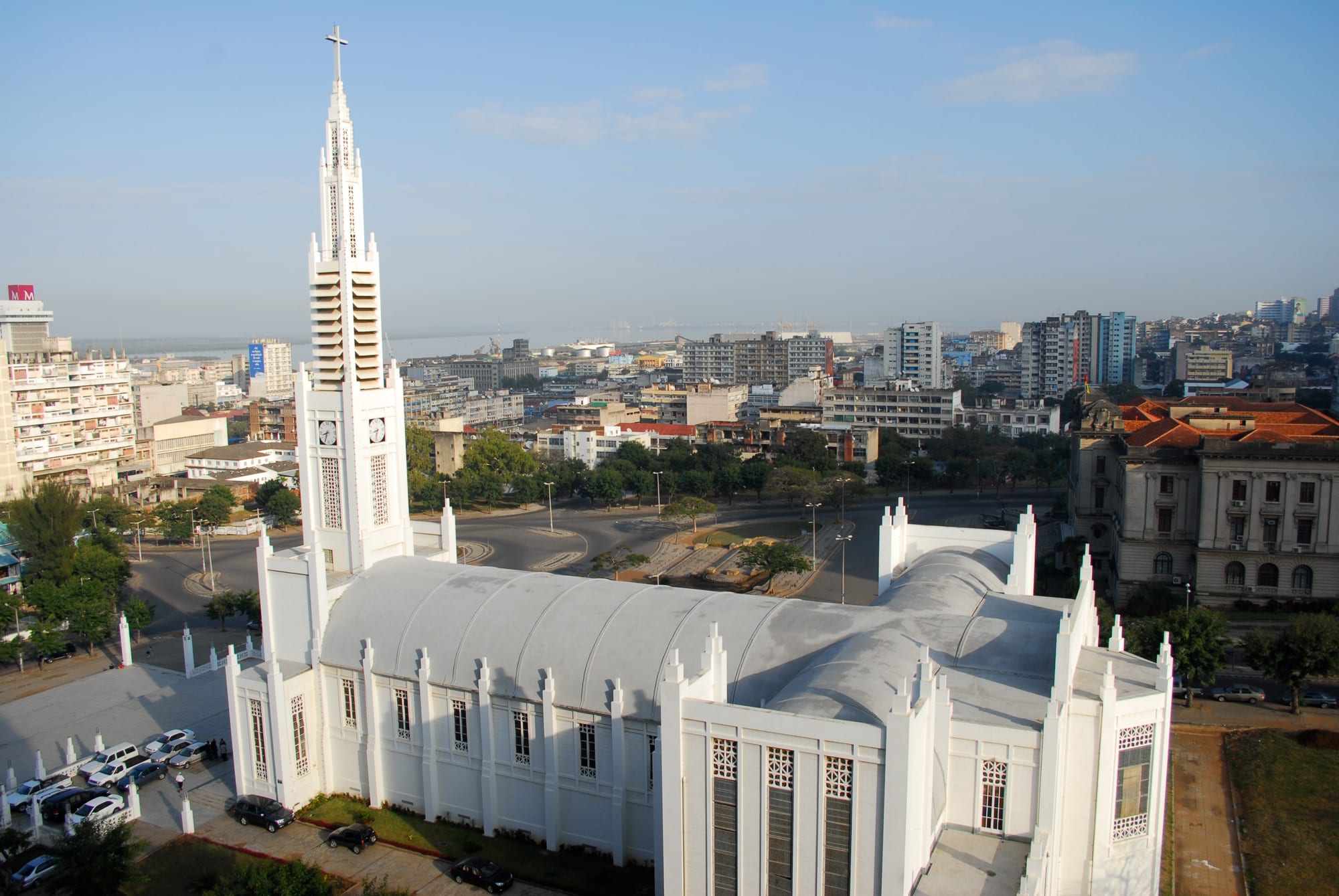
Official affiliation tells only part of the story. Many people combine a church or mosque with older beliefs centred on the ancestors, whose spirits are thought to watch over their descendants and to shape their fortunes. Traditional healers, who work with medicinal plants as well as with the spirit world, are still widely consulted, and many people see no contradiction in drawing on more than one tradition. Misfortune may be read as a sign that the ancestors have been neglected or offended, and major family events are formally announced to them. Before a marriage negotiation, for example, a senior relative traditionally speaks to the lineage's ancestors, tells them of the groom's intentions, presents the goods to be offered and asks for their protection; everyone present then drinks from the wine opened for the spirits, from the most junior family member to the most senior.
Beneath faith sit values of family and seniority. Obligations to the extended family run deep, and respect for authority — whether a parent, an elder or a community leader — is expected at every age. Older people are treated with visible deference: they are greeted first, offered the better seat and listened to before younger people have their say. Relationships come before efficiency, and time spent on courtesies is not regarded as time wasted.
Greetings and meeting people
Greetings matter enormously, and skipping one is among the easiest ways to seem rude. On entering a shop, office or home, everyone present is acknowledged, even if only with a nod, and a request of any kind — for directions, a price or help — comes after a "bom dia" (good morning), "boa tarde" (good afternoon) or "boa noite" (good evening), not before it. Portuguese is the usual language of greeting between strangers, and older people and strangers are addressed respectfully as senhor or senhora. Exchanges are often long by outside standards, with each side asking after the health of the other's family before getting down to business, and it is normal to greet people in passing even without knowing them.
Between men, the handshake is the standard greeting, often warm and prolonged, and it may be made with the right hand while the left touches the other person's arm, or with both hands together. A familiar mark of respect, especially towards an older person, is to support the right forearm or elbow with the left hand while shaking. Women greeting one another may shake hands, nod or simply exchange words, while friends and relatives often kiss on the cheek. Between men and women, a handshake is usual in towns and a nod more common in the countryside, and it is best to let the other person set the tone. Close male friends may be seen walking hand in hand, which is simply a sign of friendship.
People tend to stand fairly close in conversation, and warmth is shown openly. The same care extends to small everyday gestures: money, gifts and anything else handed over are offered and received with the right hand, or with both hands, rather than with the left alone.
Hospitality and being a guest
Visitors are received warmly, and a visit is rarely rushed. Calling on someone and leaving straight away can seem abrupt; a guest is usually offered something to drink or a little to eat, and accepting at least a small amount is the gracious response. On arrival, each person in the room is greeted in turn, with elders first, and a guest waits to be shown where to sit rather than choosing a seat. Food plays a central part in gatherings and celebrations across the country, among families of every means, and shared meals are how relationships between households are made and renewed.
The capulana is one of the most welcome presents, and it carries meaning beyond its price. Cloths are traditionally given to women by the men in their lives — during courtship, at marriage, or by a son or son-in-law as a sign of gratitude — and many are kept for years as treasured possessions. Printed designs change constantly, and some commemorate national events or anniversaries. Beyond its role as clothing, the same length of cloth may serve as a baby carrier, a head wrap, a blanket or a bundle for carrying goods home from market.
Festivals and life's big moments
The national calendar follows the story of independence. Heroes' Day on 3 February honours those who fought for independence and national development, with ceremonies at monuments and memorial sites. Mozambican Women's Day on 7 April is linked to the memory of the liberation figure Josina Machel. Independence Day on 25 June, marking the end of Portuguese rule in 1975, is the most important national holiday, with official ceremonies, speeches and cultural performances across the country. Armed Forces Day on 25 September recalls the start of the armed struggle, and Peace and National Reconciliation Day on 4 October marks the 1992 agreement that ended the civil war. Christmas, observed as a family day, is a major occasion for church services and family gatherings, and the Marrabenta Festival in Maputo has become an annual celebration of the country's own music.
Marriage, especially in the south, is often sealed through lobolo, a ceremony that formally unites two families according to custom, whether or not a civil or church wedding follows. It was once paid in cattle, but today money and agreed goods are usual, often listed in writing and kept by both families. The groom's delegation arrives at the bride's home and is kept waiting at the gate before being invited in; its senior woman then displays the money note by note. Bargaining is part of the ritual. The bride is called and asked whether the gifts may be accepted, and her yes is her consent to the marriage. Later she appears covered with a capulana between two friends, who tease the groom's family into paying a little more before she is revealed. The day ends with a shared meal, after which the two families formally present themselves to each other as relatives. Lobolo is not regarded as buying a bride: the ancestors are seen as its true recipients, and it is believed to secure their blessing on the union.
Masked dance marks other passages of life. Among the Makonde, mapiko performances accompany the rites that take young people from puberty into adulthood, and at other celebrations; dancers in carved masks representing people or animals perform alone or in groups to drums and song. Among the Chewa, the masked dancers of the Nyau society perform gule wamkulu at initiations, weddings, funerals and the installation or death of a chief. Funerals across the country draw in the wider community, since a death is understood as a loss for everyone around the family and not the household alone.
Arts, crafts and music
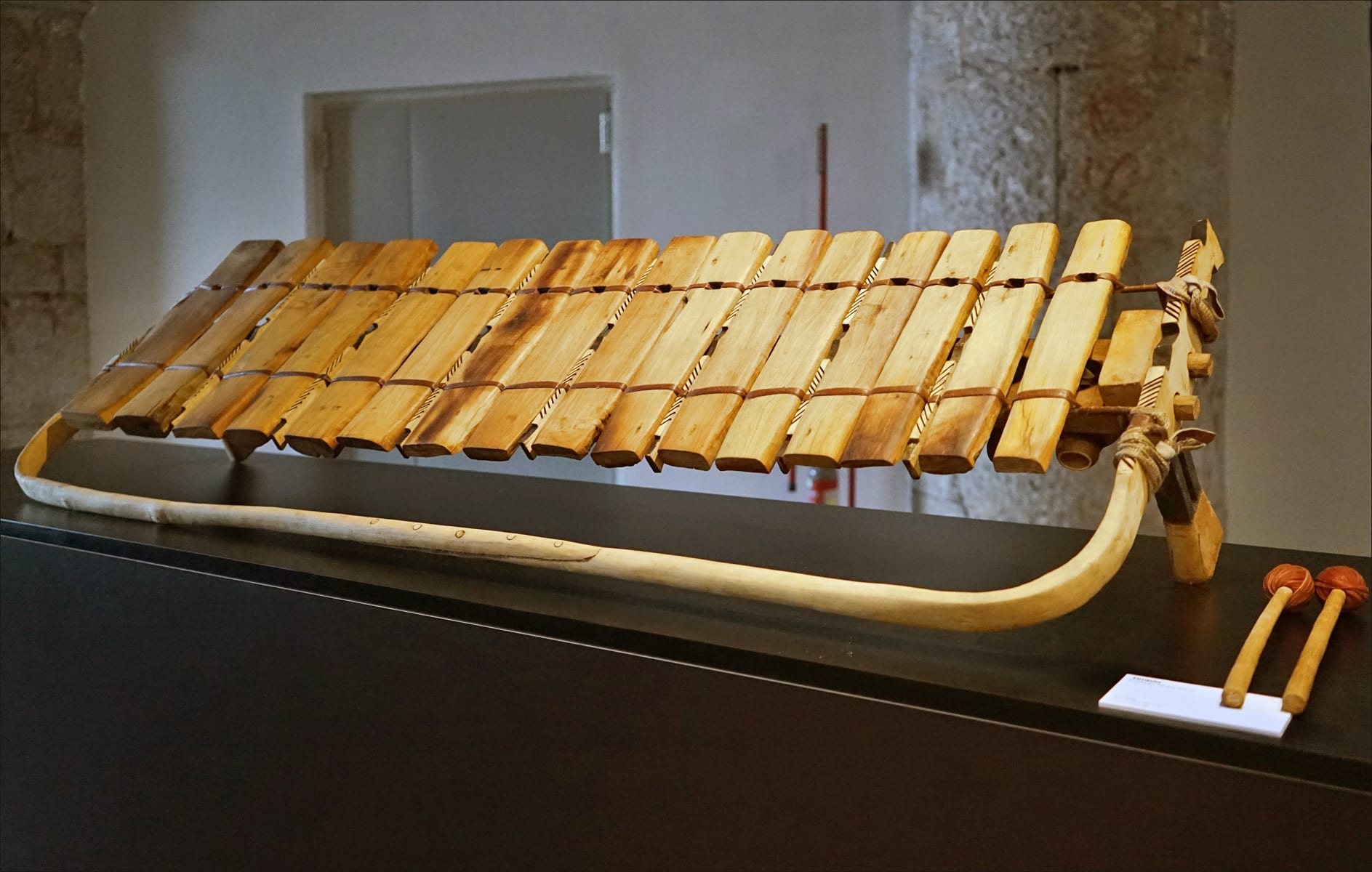
Music is one of Mozambique's great strengths. Timbila, the wooden xylophone orchestras of the Chopi people, are on UNESCO's list of intangible cultural heritage. An orchestra may have from five to thirty xylophones, with masters and apprentices of every age — children playing next to their grandfathers — and each instrument is built from a resonant local wood, with calabash resonators sealed with beeswax that give it a distinctive buzzing tone. Performances last around an hour, and players often keep different rhythms with each hand. Dancers perform in front of the orchestra, and the songs are full of humour and sarcasm, commenting on current issues and chronicling events in the community.
Marrabenta is the country's best-known popular music: a guitar-driven dance sound that grew up in and around the capital in the 1930s and 1940s, blending local rhythms with outside influences. Its name is usually traced to the Portuguese rebentar, "to break". Veteran performers such as Dilon Djindji, often called the king of marrabenta, carried it through the decades, and younger musicians have reworked it into newer styles such as pandza.
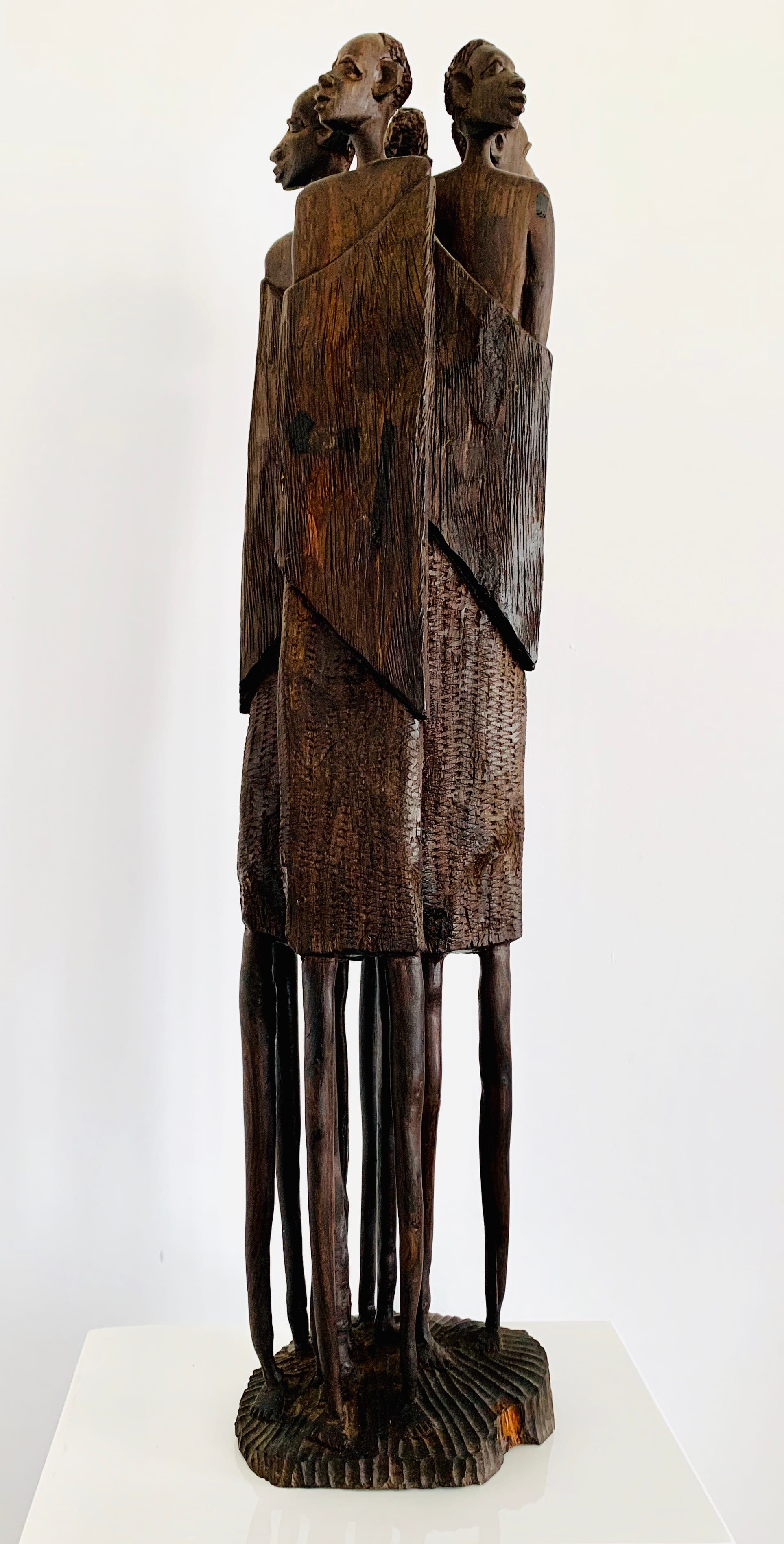
Makonde carving is the most celebrated of the visual crafts. Carvers traditionally work African blackwood, known as mpingo, a dense, dark timber, using hand tools. The best-known form is the ujamaa or "tree of life", a tall column of interlocking human figures symbolising solidarity and mutual support; the shetani style, by contrast, depicts the spirits of Makonde belief. Carved mapiko masks belong to the same world of skill.
Painting has a strong modern tradition too. Malangatana Ngwenya, the country's most famous painter, filled large canvases with crowded figures exploring conflict and upheaval, and his work helped define a distinctly Mozambican modern art.
Dos and don'ts for visitors
- Do check the latest government travel advice before any trip; most governments advise against all travel to much of Cabo Delgado province in the far north and to several neighbouring districts.
- Do greet everyone present before asking anything — a "bom dia" and a handshake come before any question about prices or directions.
- Do show respect to elders: greet them first, offer them a seat and support the right forearm with the left hand when shaking hands.
- Do give and receive money, gifts and food with the right hand or with both hands.
- Do carry the original passport at all times; police checks are common and copies are not accepted.
- Don't photograph government offices, airports, military sites, police or officials without permission, as it is illegal.
- Don't drink alcohol on public beaches, which is against the law.
What to take away
In Mozambique, a greeting, a gift of cloth or an hour spent in someone's company all say the same thing — that people and relationships matter more than haste — and visitors who take the time to show that will find themselves warmly welcomed.