Culture & Customs · Montserrat
Montserrat: Shamrocks, Madras and Masquerade
A small British Overseas Territory where St Patrick's Day honours both Irish settlers and an uprising of the enslaved, masqueraders dance to fife and drum, and a close-knit community lives in the shadow of its volcano
By Worldlore Editorial · 30 September 2026
On a March night in Montserrat, a line of masqueraders moves through the crowd. Their tall headdresses rise like bishops' mitres, mirrors and ribbons flash on their costumes, and one dancer cracks a whip to direct the others. The music is fife and drum, and the steps mix West African movement with something that looks surprisingly like an Irish jig. It is St Patrick's week, and the island is celebrating an Irish saint, the Irish settlers who once made up much of its population, and the enslaved Africans who chose his feast day for a bid for freedom. Few customs sum up a place so neatly: in Montserrat, heritage is layered, remembered in public and celebrated with a great deal of energy.
Faith, identity and values
Montserrat is a British Overseas Territory with a population of a few thousand, and its culture is English-speaking, Christian and deeply community-minded. Anglicans form the largest denomination, Pentecostal churches have been growing, and there are Methodist and Roman Catholic congregations too. Church life, like almost everything on an island this size, is closely bound up with family and neighbourhood.
Identity here is shaped by two heritages above all. Irish settlers arrived in the seventeenth century, many of them having left other Caribbean islands, and in the census of 1678 some seven in ten of its European settlers gave Ireland as their origin. The legacy lingers in the nickname "the Emerald Isle of the Caribbean", in the shamrock stamped into visitors' passports on arrival and in the island's flag, which shows Erin, the female personification of Ireland, with a golden harp. The majority of Montserratians, though, are descended from enslaved Africans brought to work the plantations, and the island's culture is at heart Afro-Caribbean. Many Montserratians describe the result as a blend, and one in which no single strand can be loved without the others.
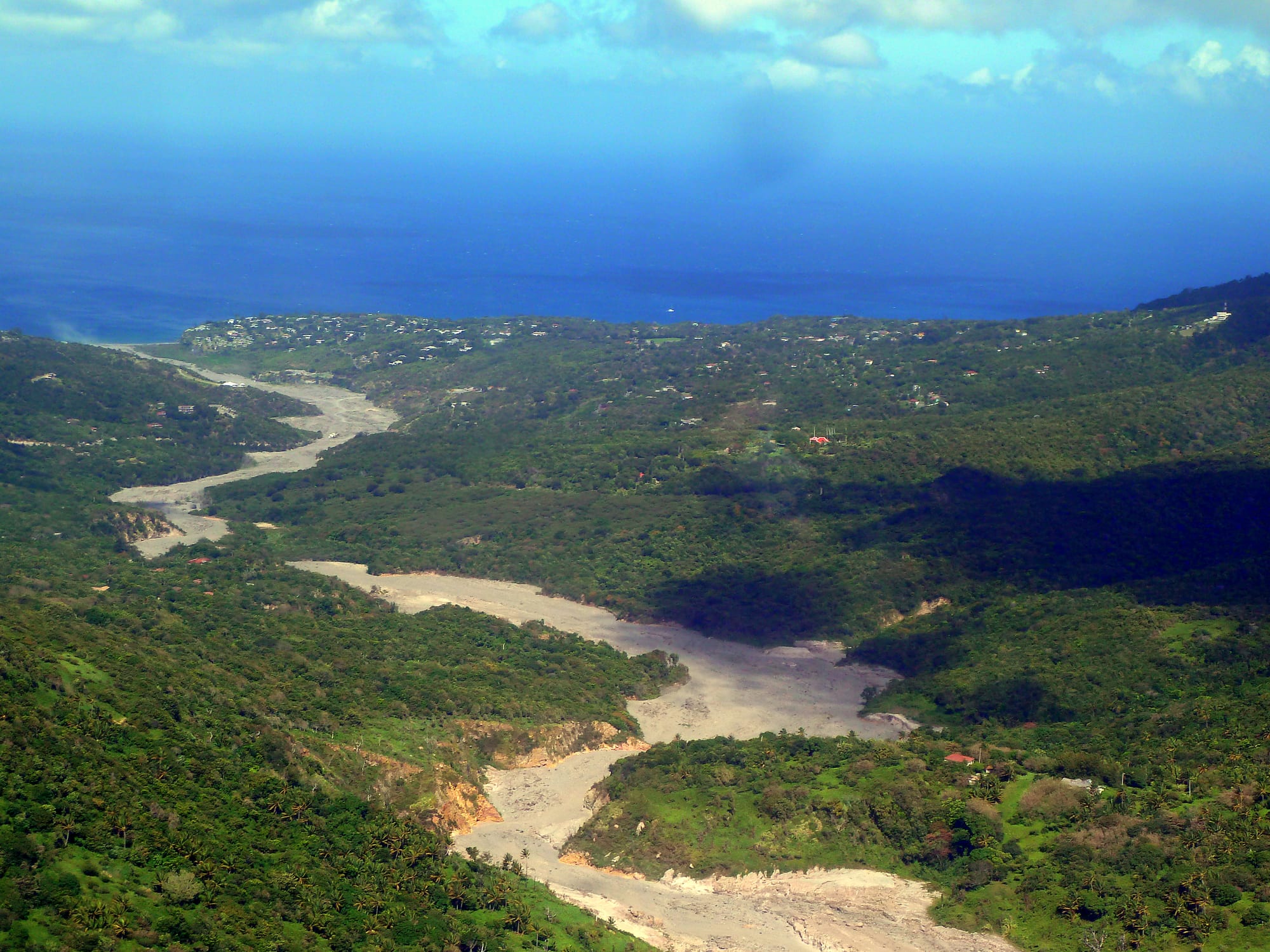
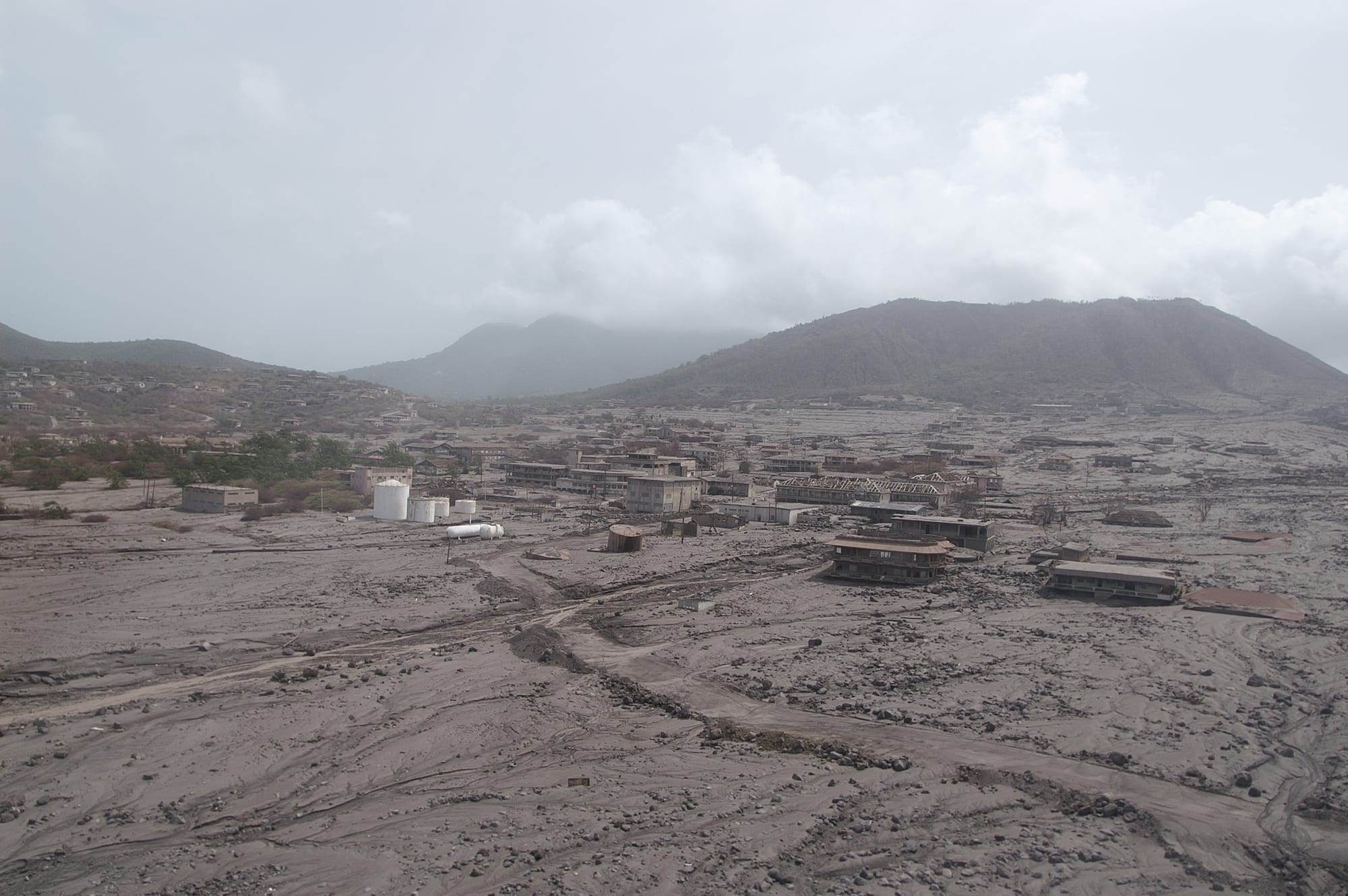
The volcano is the other great fact of life. The Soufrière Hills volcano has been active since 1995, destroying the capital, Plymouth, and much of the south, and the island's people now live in the north. Activity has been low for years, but there is still no public access to the most hazardous area, Zone V, which includes Plymouth, and parts of the sea off the south coast are open only to daytime transit. The shared experience of evacuation, loss and rebuilding runs deep in the island's sense of itself, and many families now have close relatives in the large Montserratian community overseas, particularly in the United Kingdom.
Greetings and meeting people
English is the language of daily life, alongside the island's own Creole speech, and folk expressions, proverbs and riddles are cherished as part of local heritage. On an island this small, most people know one another, and a visitor is soon noticed and generally made welcome. Courtesy and good conduct in public matter, and older Montserratians in particular set store by appropriate behaviour.
The island is conservative in its social attitudes. The UK government's travel advice notes that public displays of affection are not generally welcomed, and that beachwear and swimwear are not socially acceptable away from beaches and pools, so covering up for town is the norm.
Family life is warm and informal. Couples are often "friendly" or "sweethearts" for years before marrying, and children take their father's name whether or not their parents are married; many children are born outside marriage, and no stigma is attached to it.
Hospitality and being a guest
Montserratian hospitality is at its most visible around food and festival. Community feasts are a central part of celebrations, from the heritage feast of St Patrick's week, with dishes such as ducana, saltfish, coconut dumplings and sugar cakes, to the picnics and bazaars of August. On special occasions a Caribbean vegetable soup may be served in a calabash, the hollowed-out shell of a gourd. Visitors invited to join in are welcomed rather than merely tolerated.
Many of the island's most striking landscapes lie inside or at the edge of restricted areas, so local guidance matters. The Montserrat Volcano Observatory publishes the current hazard level and access rules, which can change, and visits to the volcano's surroundings are best made with a licensed local guide.
Festivals and life's big moments
The St Patrick's Festival is the island's signature celebration, running for about ten days and culminating on 17 March. Its programme reflects both halves of the island's story. There are parades, concerts, Irish dance and plenty of green, but also the Freedom Run, a torch-lighting at the village of Cudjoe Head, and the Slave Feast, a community event that recalls the history of slavery and indentured servitude. Many locals wear the national dress in its green, orange and white madras, and shamrocks are worn less as a statement of Irish pride than as a symbol of freedom.
The Christmas festival is the other great season. For about two weeks, the island fills with carol singing, masquerades and calypso, ending with a grand parade on New Year's Day, and it is a favourite time for Montserratians living overseas to come home. In July the week-long Calabash Festival brings a national lecture, a fashion show, arts and crafts and a food fair, and in November the Alliouagana Literary Festival gathers authors from the island and beyond. Emancipation, marked at the start of August, is celebrated with picnics, bazaars and dances.
Life's milestones are family and church occasions. Legal marriage has long been associated with social standing, and many couples marry only after years together as "sweethearts".
Arts, crafts and music
The masquerade is Montserrat's most distinctive living art. Dancers wear brightly coloured costumes hung with mirrors, ribbons and whips, and a tall masked headdress topped with a shape like a bishop's mitre. The dancer holding the whip directs the others, while the ribbons are said to symbolise freedom. The band brings together European instruments such as the fiddle and fife with drums, maracas and other percussion, and the steps combine African dance with the jig, the heel-and-toe polka and the quadrille. Masks once allowed enslaved dancers to disguise their identity, and the older jumbie dances were performed to cure illness, lift curses or uncover wrongdoing. Masquerade appears above all at Christmas and during St Patrick's week.
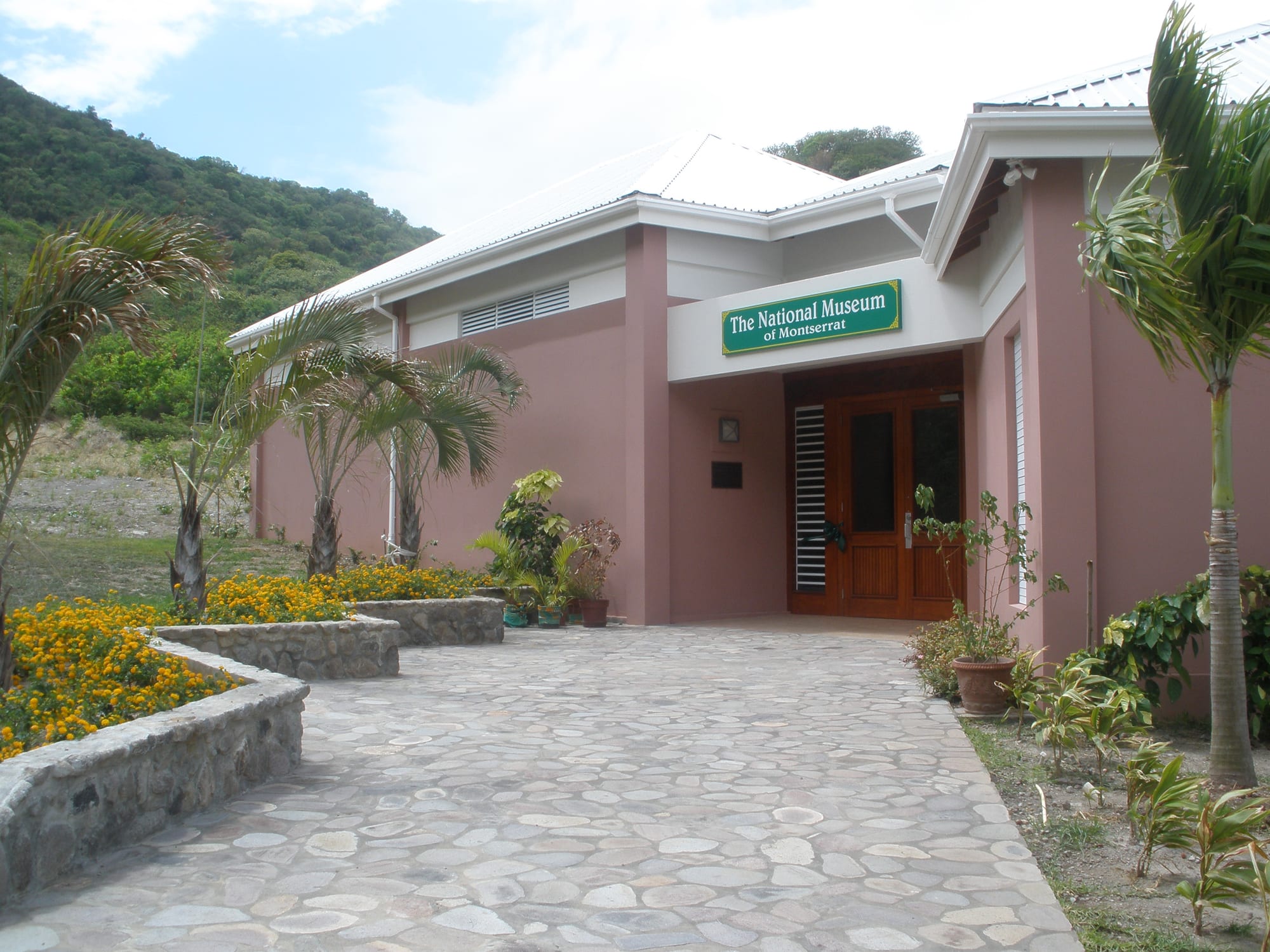
Montserrat's national dress is built on madras, a checked cotton with a long history in the Caribbean. Early photographs show Montserratian women wearing madras as a head tie as far back as the late nineteenth century, and green and white were used to represent the island from at least the 1960s. An emerald-green madras was formally adopted as national dress in 2003, and the island's National Museum has explored its story in an exhibition on the search for a national wear.
Music runs through island life, from string bands and steel pan to calypso and soca. The island's best-known musician, Alphonsus Cassell, known as Arrow, won worldwide fame with the 1982 soca hit "Hot Hot Hot". For a decade from 1979, Montserrat was also home to AIR Studios, the recording studio built by the producer George Martin, where hit albums were made by artists including Dire Straits, The Police, Elton John and the Rolling Stones, until it closed after Hurricane Hugo struck in 1989.
Dos and don'ts for visitors
- Do check the Montserrat Volcano Observatory's hazard level before and during a visit, and respect every access restriction.
- Do visit the volcano's surroundings only with a licensed guide, and never enter Zone V, which includes Plymouth.
- Do wear beachwear only at the beach or pool, and cover up in town.
- Do join in festival events if invited; community feasts and parades welcome visitors.
- Do wear green, or the island's madras, during St Patrick's week.
- Don't make public displays of affection; attitudes on the island are conservative.
- Don't treat St Patrick's week as a purely Irish party; it also commemorates the 1768 uprising of the enslaved.
What to take away
Montserrat's customs carry the memory of Ireland, Africa and the volcano all at once, and visitors who honour each of those stories will find a small island with a remarkably generous welcome.