Culture & Customs · Montenegro
Montenegro: The Family Saint and the Open Door
A small country of mountain clans and seafaring towns, where a family's patron saint has its own feast day, guests are never left without a drink, and old heroes still live on in the song of a single string
By Worldlore Editorial · 30 September 2026
It is the feast day of a family's patron saint, and the door of the house stands open. On the table sit an icon, a tall lit candle, a round loaf stamped with a cross and a bowl of boiled wheat. Guests arrive through the day with a bottle of rakija and the greeting "Srećna slava", Happy Slava, and each is fed and poured a drink before the next one comes. Some will go on to a second or third house before evening, because many families share the same saint. The slava is a religious rite, a family reunion and an act of hospitality all at once, and it captures much of what matters in Montenegro: faith carried through the family line, a fierce sense of honour and belonging, and a table that is never closed to a guest.
Faith, identity and values
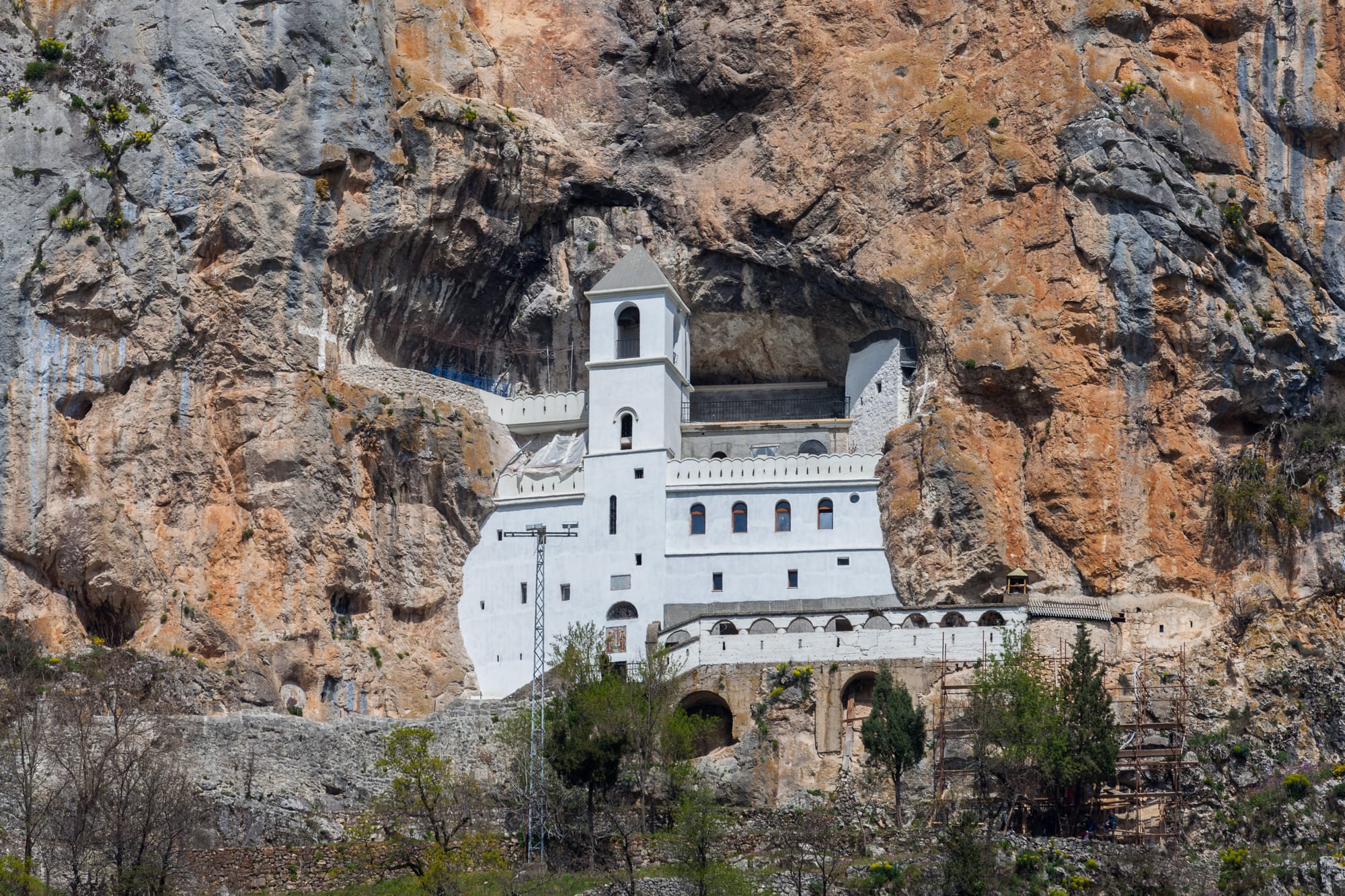
Montenegro is small, but its identities are layered. In the 2023 census, about 41 per cent of the population described themselves as Montenegrins and about a third as Serbs, with Bosniak, Albanian, Muslim, Croat and other communities making up the rest. Around 71 per cent identified as Orthodox Christians and about a fifth as Muslims, with a Catholic minority of around 3 per cent, many of them on the coast. Mosques stand in the towns where Albanian and Bosniak communities live, and Catholic churches along the Bay of Kotor. The national tourism organisation points to a long habit of coexistence: people of all faiths come to pray at Ostrog Monastery, and in some churches Orthodox and Catholic believers pray together, with priests of the two traditions standing in for one another when needed.
Religion and national identity are closely intertwined, and the subject can be sensitive. The Serbian Orthodox Church has been the principal Orthodox church in the country for a century and has by far the largest following, while a separate Montenegrin Orthodox Church, founded in 1993, is not recognised by the wider Orthodox world. The relationship between the two, and the Serbian church's position in the country, became a matter of intense political debate after a law on religious property was passed in 2019, and it remains bound up with wider questions about Montenegro's ties to Serbia since independence in 2006. Visitors are wise to let people raise these subjects themselves.
Beneath these differences lie values that most Montenegrins share. The national tourism organisation describes hospitality as a core value, and chivalry, meaning honour, courage and humanity towards others, as the ideal against which a person was traditionally measured. Family comes first, and extended family and clan connections still matter. A saying quoted by the tourism organisation sums up the weight given to the bonds of family and godparenthood: "God in heaven and the kum on earth", the kum being the godfather or wedding sponsor who becomes almost a member of the family.
Greetings and meeting people
"Dobar dan", good day, is the standard greeting, with "dobro jutro" in the morning and "dobro veče" in the evening, while the informal "ćao" is common among friends. The language itself marks the line between formal and familiar. "Kako ste?" is the polite way to ask "How are you?", and "Kako si?" is kept for friends and family, so the formal version is the safer choice with older people and new acquaintances. A simple "hvala", thank you, and "izvinite", excuse me, go a long way, although many Montenegrins speak foreign languages well.
Coffee is the currency of social life. The tourism organisation describes a culture that values people and relationships over frenetic activity, visible in long conversations over coffee, and an invitation to sit down for one is really an invitation to talk. When glasses are raised, the toast is "Živjeli!", "Cheers!"
Smoking has been banned in enclosed public places, including cafés and restaurants, since 2019, although venues may set aside separate, sealed smoking rooms.
Hospitality and being a guest
Hospitality in Montenegro is a matter of honour. The national tourism organisation calls it a core value, and ties it to a deep sense of care for guests and to protecting the family name, an attitude summed up in the everyday phrase "sve može", "everything is possible". A visitor who is welcomed into a home can expect to be fed and given a drink, and village hosts in the mountains still offer what the tourism organisation calls a "cup of conversation" alongside local food and drink.
Invitations to a slava are a mark of real closeness, since being asked means entering the family's inner circle. Guests traditionally bring a bottle of loza, grape brandy, and greet the hosts with "Srećna slava". The table is laden, with homemade wine and rakija alongside the food, and a guest may call at more than one house in a day.
Churches, monasteries and mosques are active places of worship as well as sights, and Ostrog in particular draws a steady stream of pilgrims. Modest dress and quiet voices are the respectful choice, and any signs about photography should be followed.
Festivals and life's big moments
Orthodox Christmas is celebrated on 7 January. On Christmas Eve, families traditionally choose a young oak branch, the badnjak, which is decorated and burned on a fire, accompanied by blessings and carols, and in some towns large public bonfires are lit. Easter is the other great feast of the Orthodox year, while Catholic and Muslim communities keep the festivals of their own calendars.
The slava is the most personal of the country's celebrations. Each Orthodox family honours the saint on whose day, according to tradition, its ancestors were baptised, and the saint passes down the male line, a woman usually taking on her husband's saint when she marries. The feast is prepared around an icon of the saint, a lit candle, a decorated slava bread, boiled wheat and red wine, and the house is blessed by a priest. Some Catholic families on the coast keep a similar custom, and many of those who observe the slava take the day off to receive guests.
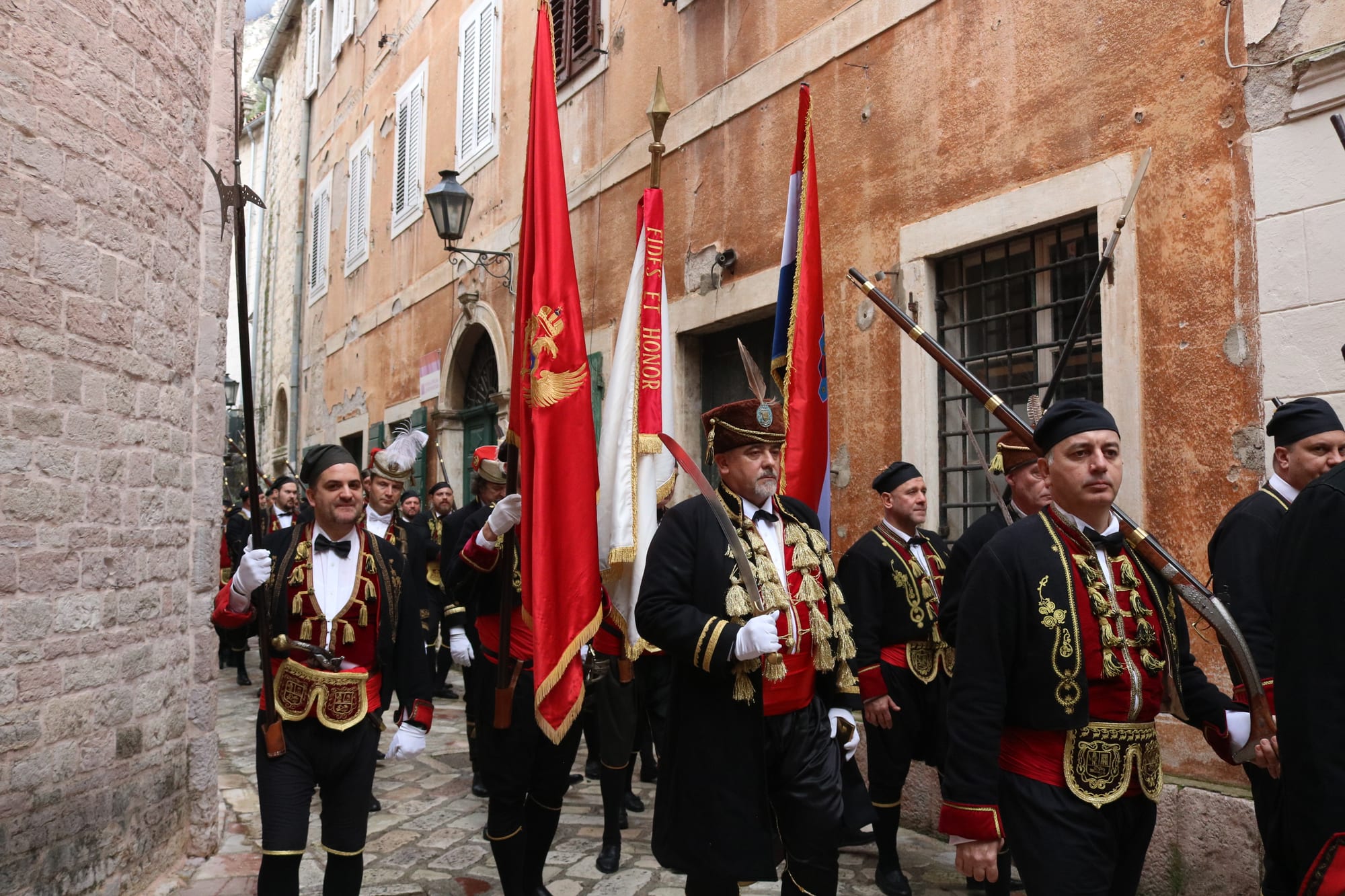
On the coast, the most spectacular festival belongs to Kotor. From 13 January to 3 February, the city celebrates its patron, St Tryphon, with processions and rituals in the cathedral. The Boka Navy, a confraternity whose membership is voluntary and open to men, women and children, opens the outdoor festivities with its traditional kolo, a circle dance, before the saint's relics are carried through the old town's squares and streets before thousands of onlookers.
Weddings and funerals are among the most important social occasions, drawing extended family and community together. The kum, who may be chosen for a wedding or for a child's baptism, holds a place of special honour, and the bond is a lifelong commitment of affection and counsel that brings the kum to holidays and family events for years afterwards. Weddings are also a natural home for the oro, the national circle dance.
Funerals are, in the tourism organisation's words, a social custom, and ethnographers describe Montenegro as unusually rich in burial traditions, many varying from one area to another and some now fading. Relatives, friends and neighbours keep a wake beside the deceased, and mourners coming to pay their respects have traditionally brought a bottle of brandy, while coffee, brandy and food are served to those who have travelled far. Burial usually follows after at least a day, in the afternoon. Neighbours often dig the grave, the coffin is carried to the cemetery feet first, and flowers, brandy or an apple may be left on the grave. The tužbalica, a lament traditionally led by women at the bier and on the way to the cemetery, recalls the virtues of the dead, but it is heard less and less. Close relatives wear black, once for a year or even a lifetime and now usually for a shorter period, and among Orthodox families the memorial on the fortieth day after death is regarded as the most important. Muslim and Catholic families follow the rites of their own faiths.
Arts, crafts and music
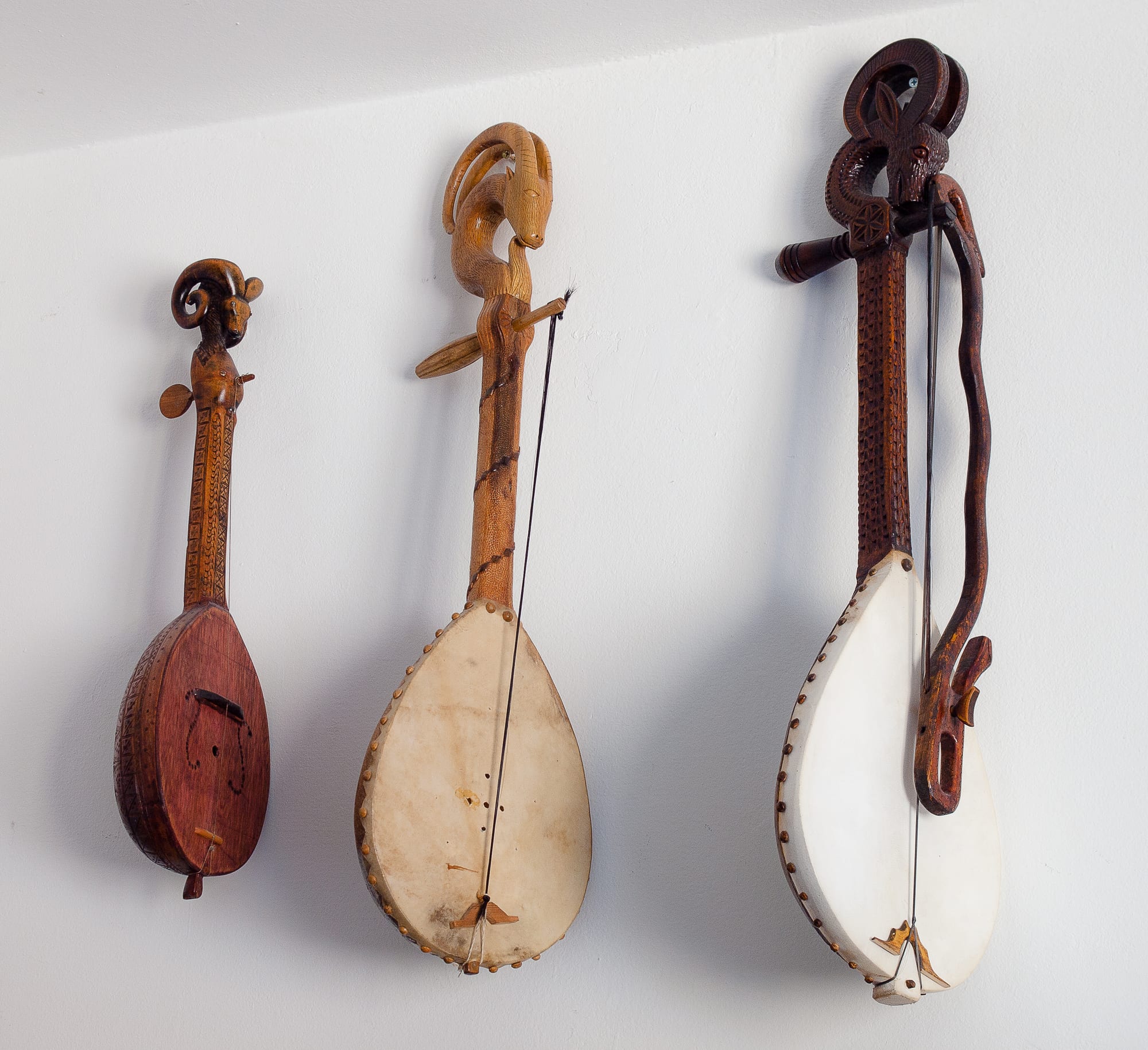
The most distinctive of Montenegro's traditional arts is epic song accompanied by the gusle, a one-stringed bowed instrument held upright between the knees. The guslar sings or recites long poems of heroes, battles and the struggle for freedom, stories handed down from generation to generation, and the haunting, rasping sound of the single string remains closely tied to the country's sense of its own history. The instrument's neck is often crowned with an intricately carved head.
The national dance is the oro, known in Montenegro as the eagle dance. Men and women dance in a circle, with pairs taking turns in the centre in movements that imitate an eagle's flight, and the dance often ends with the dvospratno kolo, a "two-storey circle", in which dancers climb on to the shoulders of those below. The traditional Montenegrin folk costume, embroidered with gold and silver thread and modelled on the dress of royalty, was once among a household's most valuable possessions and is still worn for performances and celebrations.
The coast has its own traditions, shaped by centuries of maritime life and Venetian influence, of which the ceremonial uniforms and kolo of the Boka Navy are the most visible. In the mountains, summer settlements called katuns, where herding families once took their flocks, preserve the storytelling and hospitality of the old highland way of life.
Dos and don'ts for visitors
- Do greet people with "dobar dan", and use the formal "Kako ste?" with older people and new acquaintances.
- Do accept an invitation to coffee; the conversation matters more than the drink.
- Do bring a bottle of brandy if invited to a slava, and greet the hosts with "Srećna slava".
- Do dress modestly and keep voices low in churches, monasteries and mosques, and follow any signs about photography.
- Do join in when a toast is raised with "Živjeli!"
- Don't press people on questions of national or religious identity; let them raise the subject.
- Don't photograph police or military installations, personnel or vehicles, which is illegal.
- Don't smoke in enclosed public places, including cafés and restaurants, outside designated smoking rooms.
What to take away
Montenegro's customs grow from a mountain code of honour and an open table, and the visitor who accepts a coffee, a toast and the time to talk will quickly find themselves treated less as a tourist than as a guest.