Daily Life · Montenegro
Montenegro: A Nation of Small Towns and One Long Summer
A country of around 620,000 people that takes in roughly four times its own population in visitors every year, almost all of them on a narrow strip of Adriatic coast for a few months, while the mountain interior keeps a much quieter, slower year of its own
By Worldlore Editorial · 30 September 2026
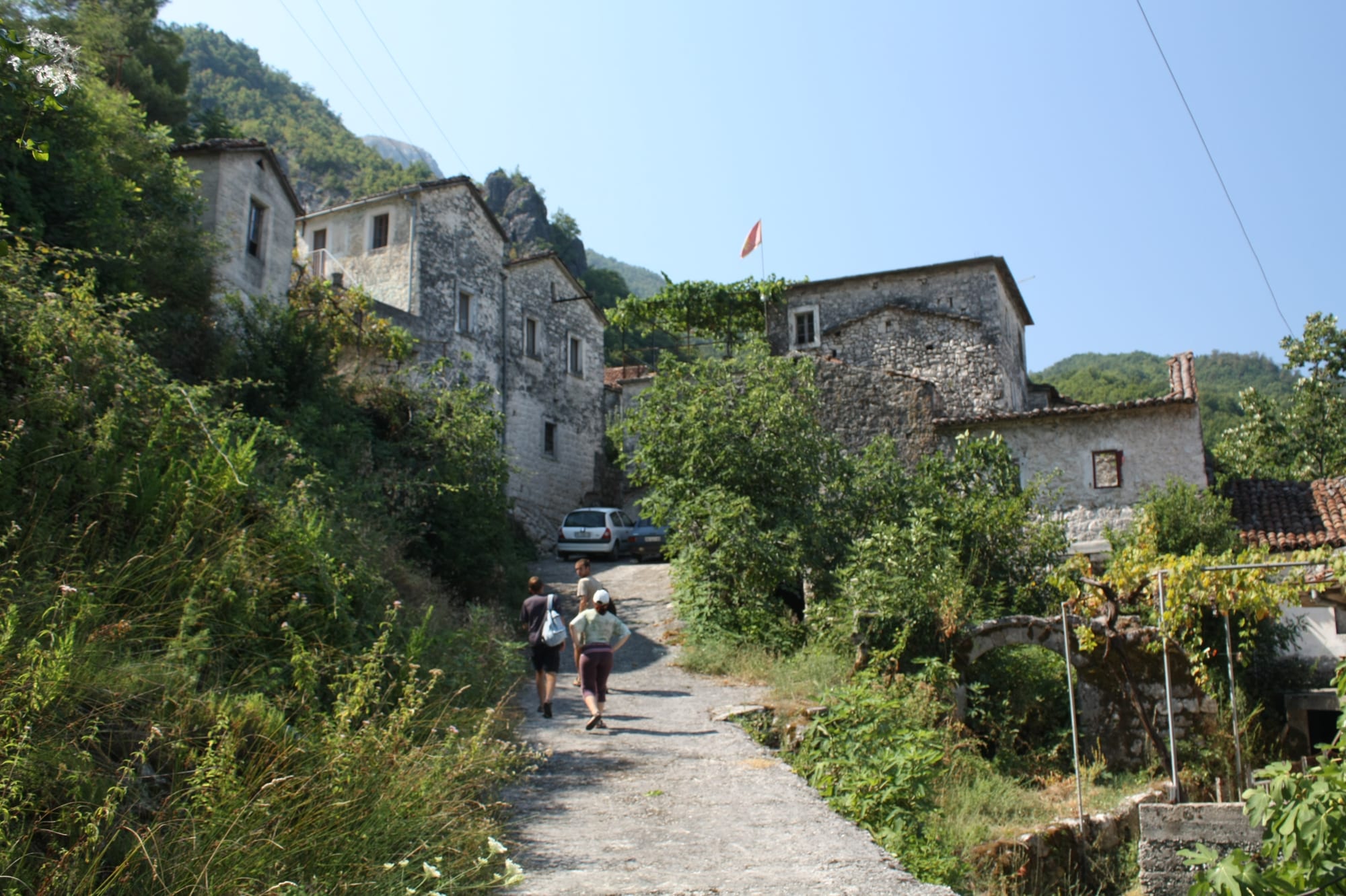
Montenegro is a small country that lives two fairly different years depending on where in it you are standing. On the coast, the calendar bends hard around a few summer months, when the towns along the Adriatic fill with several times their resident population and the working day stretches to match. Inland and up in the mountains, life runs at a steadier, quieter pace all year, shaped more by weather and distance than by a tourist season. What holds the whole country together, coast and highlands alike, is its small scale: with a population under 650,000, Montenegro is, practically speaking, a nation of small towns rather than cities.
Family and home life
The average Montenegrin household has just under three members, and family networks, including extended relatives and hometown connections, continue to matter in everyday practical terms, from finding work to getting things done through personal contacts. A majority of the population now lives in urban areas, concentrated in Podgorica, the capital, and the coastal towns, while the mountainous north has been steadily losing people to the cities and abroad. Housing on the coast has become significantly more expensive than inland, driven by tourism demand and, since 2022, by a wave of Russian and Ukrainian arrivals settling in Montenegro, which has added to demand for housing.
Work, school and the rhythm of the day
Away from the coast, Montenegro keeps a fairly conventional working week and school calendar. On the coast, the picture changes sharply with the season: cafés, restaurants, hotels and tour operators expand their hours and staff through the summer months, then contract again once the visitor numbers drop off in autumn, so that a real share of the coastal workforce is effectively seasonal. Podgorica, hot and largely functional rather than picturesque, is where most administrative and business life happens year-round, while the Old Royal Capital, Cetinje, in the hills to the west, keeps a quieter, more ceremonial role. Coffee itself paces the working day in a way that outsiders sometimes mistake for slowness: a single cup, taken slowly over conversation or alone, is a normal part of how the day is punctuated, not a delay in getting on with it.
Community life and public spaces
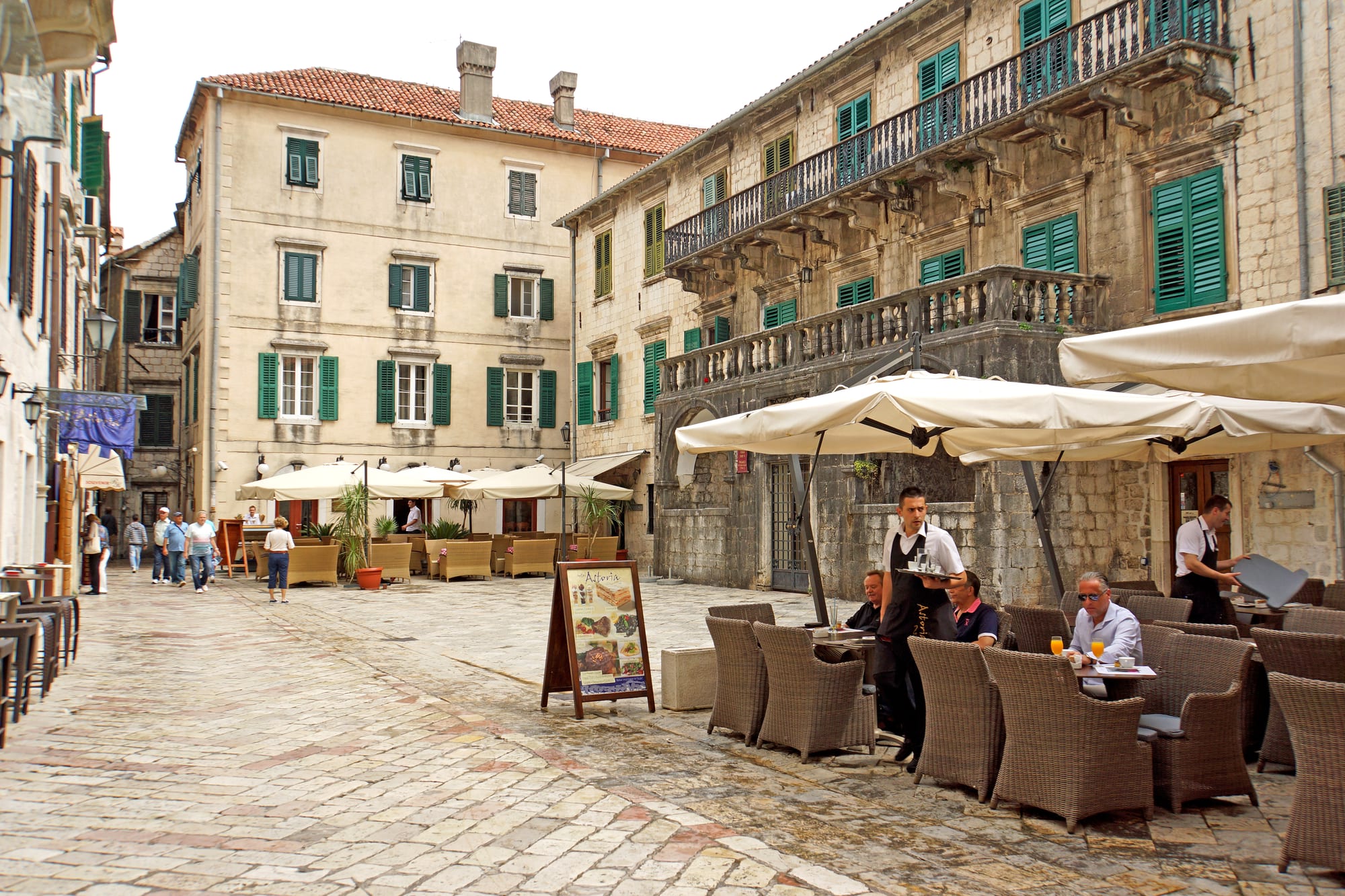
The old walled towns along the coast, Kotor above all, function as the country's most concentrated public spaces: narrow stone lanes lined with cafés, small shops and market stalls that double as the everyday meeting ground for residents even as they fill with visitors in summer. Podgorica and the larger towns have their own markets and pedestrian centres that carry the everyday shopping and social traffic the coastal old towns lose to tourism for part of the year. Buses link the towns along a single winding coastal road and inland routes to Podgorica, while a passenger ferry across the Bay of Kotor between Kamenari and Lepetane cuts a long detour out of the coastal journey and is heavily used by both residents and visitors.
Free time and weekends
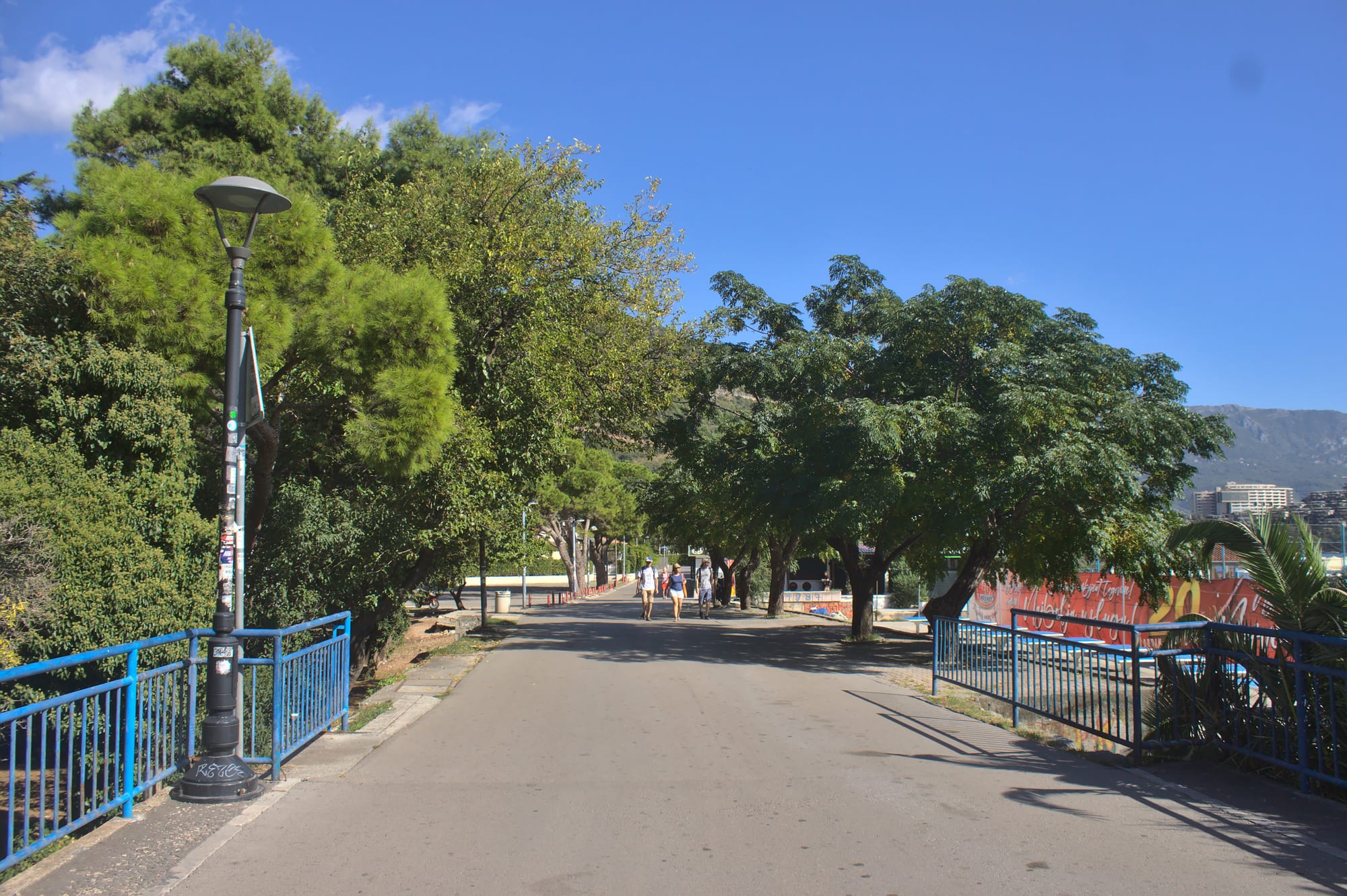
On the coast, weekend and evening life in summer is dominated by the waterfront: promenades in towns such as Budva fill with residents and visitors walking, sitting at outdoor cafés, or simply spending time by the sea once the day's heat breaks. Inland and in the mountains, weekends lean more toward family gatherings, and the ranges around Žabljak and Kolašin turn into a genuine skiing destination in winter, drawing Montenegrins from across the country rather than just tourists. Basketball, water polo and handball are followed with real intensity nationwide, a source of considerable national pride for a country of this size, and produce national teams that regularly punch above their population.
A visitor's ordinary day
Montenegro uses the euro, adopted unilaterally rather than through eurozone membership, and cards are widely accepted on the coast and in cities, though cash is still useful in the northern mountains and smaller villages. Distances look short on a map but roads are winding and mountainous, so journeys between towns generally take longer than the straight-line distance suggests, especially on the congested summer coastal road. Prices on the coast rise sharply in July and August, both for accommodation and everyday meals, while the same towns are markedly cheaper and quieter in late spring or early autumn. Outside the coast and Podgorica, expect a genuinely rural pace, with fewer restaurants, sparser public transport, and services that wind down earlier in the evening.
What to take away
An ordinary day in Montenegro depends heavily on which Montenegro you are in: a coast that lives an intense, compressed summer among visitors many times its own population, and an inland and mountain country that keeps its own steadier rhythm through all twelve months.