Culture & Customs · Mongolia
Mongolia: Palms Up to the Elders
A Buddhist and shamanic land where blue scarves flutter from hilltop cairns, guests are never sent away unfed, and the new year begins with the young holding up the old by the elbows
By Worldlore Editorial · 30 September 2026
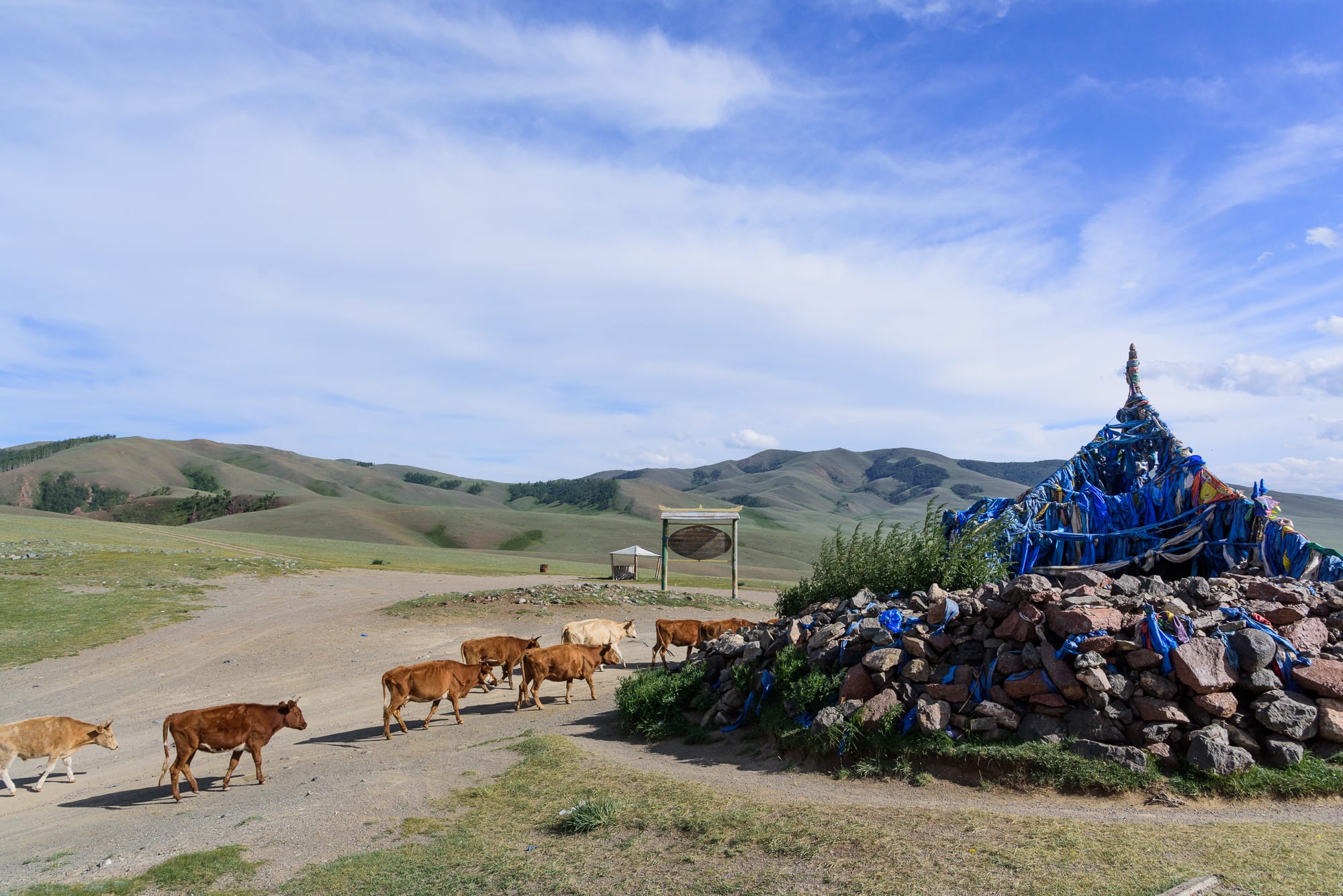
At the highest point of a steppe road stands a heap of stones wrapped in blue silk. A car pulls over, and the travellers get out and walk around the cairn three times, clockwise, adding a stone or two, perhaps a splash of milk or a sweet, before driving on. Nobody is watching and nothing compels them. The ovoo is an offering to the spirits of that place, and stopping at it is a small act of courtesy towards the land itself. In Mongolia, respect is owed in every direction — to elders, to guests, to animals, to fire and water, to mountains and sky — and much of what passes for etiquette is simply the everyday form that respect takes.
Faith, identity and values
Mongolia's oldest spiritual tradition is shamanism, which has no founder and no scriptures but rests on a belief in spirits of the sky, the earth, the mountains and the dead. Tibetan Buddhism became the dominant faith from the late sixteenth century and shaped Mongolian life for centuries, until the communist state all but destroyed it: monasteries were closed and, for decades, only a single showcase monastery was allowed to operate. Since 1990, Buddhism has revived strongly. In the 2020 census, just over half of Mongolians identified as Buddhist, around two in five said they followed no religion, and smaller numbers identified as Muslim, mainly among the Kazakh minority in the far west, as followers of the shamanic tradition, or as Christians.
In practice, Buddhism and older beliefs sit comfortably side by side. The ovoo cairns found on passes, hilltops and at sacred springs once marked the boundaries between tribes, and later became places where shamans connected with the deities of nature. Communities still hold ceremonies there, in summer to ask for rain and good pasture and in autumn for the protection of people and livestock through the winter, with elders teaching the young how to take part. These practices were banned under communism and are on UNESCO's list of heritage in urgent need of safeguarding, but they are being revived across the country.
Beneath both faiths runs a nomadic ethic of respect for nature. Montsame, the national news agency, lists taboos that are still widely taught: never throw rubbish into rivers or lakes, never beat a horse or a dog, fill in the holes left by tethering pegs so that the ground is not left scarred. Fire is sacred, and nothing unclean should be thrown into it. Respect for age is just as deep. Elders are never to be looked at with suspicion or treated rudely, and reputation matters: an old saying holds that it is better to die with a good name than to live with a bad one.
Greetings and meeting people
The everyday greeting is "sain baina uu", roughly "how are you?", and a handshake is common today, especially between men. Traditionally, though, touching the hand of a respected person was considered impolite. A formal greeting meant buttoning one's clothes, tightening the belt, putting on one's hat and bowing, and a respected guest might still be greeted with the right palm placed over the heart and a bow.
The most distinctive greeting is kept for the lunar new year. The younger person stretches out both arms with palms facing up, and the elder places their arms on top, palms down, so that the younger supports the elder by the elbows. Often a khadag, a silk ceremonial scarf, is offered at the same time. White and blue khadag are given to parents and respected people, and yellow ones to monks; the scarf is folded and held with its open side towards the recipient as a sign of respect.
Much of Mongolian etiquette concerns the hands. Things are given and received with the right hand, palm up, or with both hands, and a snuff bottle offered in greeting is accepted in the same way. Pointing at people with an index finger is rude; an open palm is used instead. Sleeves are kept rolled down in company, it is impolite to walk in front of an elderly person, and touching another person's hat is avoided, since a hat is a very personal possession.
Hospitality and being a guest
Hospitality is a matter of honour: it is considered both ignorant and inhospitable not to feed a guest. On the steppe, a visitor arriving at a ger traditionally calls out "nokhoi khor", "hold the dog", before approaching, since herders' dogs guard the camp. The ger itself is a single round room, with a stove in the centre and furniture arranged around the edge, and its layout carries meaning. The threshold must never be stepped or stood on, the fire in the stove is treated with reverence, and guests should not lean on the central columns or the walls.
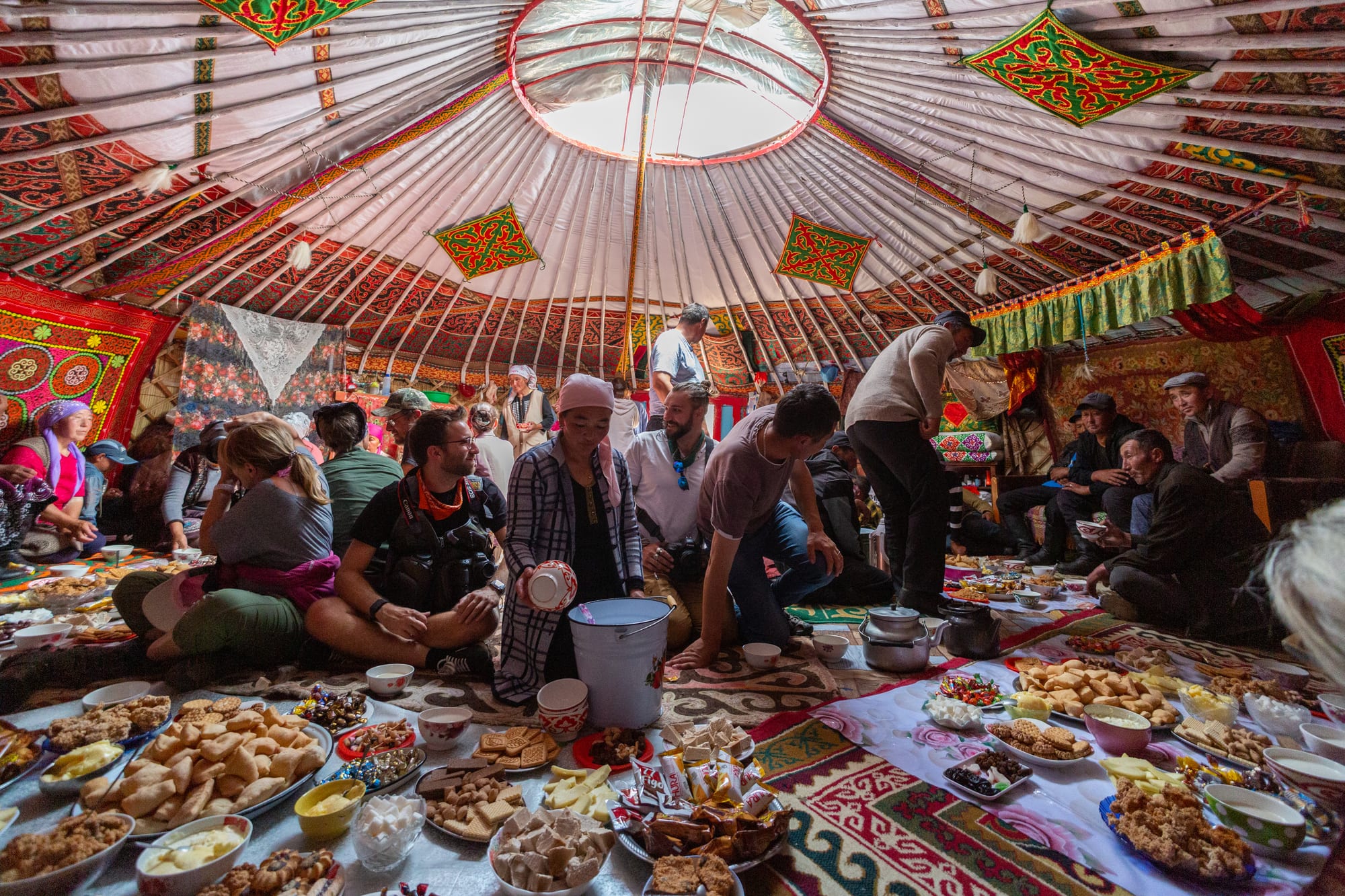
A guest will usually be offered milk tea and something to eat almost at once. Whatever is offered should be accepted, with the right hand, even if only a sip or a small taste is taken; refusing outright can give offence. Food is not taken from shared plates with the left hand. It is also polite to take off a heavy coat when eating indoors, since keeping it on can suggest the home is not warm enough. Bringing a small gift when invited to someone's home is appreciated.
At monasteries and shrines, the same attentiveness applies. Visitors walk clockwise around stupas and prayer wheels, remove their hats and sunglasses before entering religious buildings, avoid touching altars, prayer flags or carved prayer stones, and never turn their back on an altar except when leaving.
Festivals and life's big moments
Tsagaan Sar, the "white month", is the lunar new year and the most important family holiday, celebrating the end of winter and the coming of spring. White is said to stand for happiness and purity, or perhaps for the abundance of milk. In the days before, homes are cleaned, clothes mended and the best deel, the traditional robe, made ready, and families avoid quarrelling or lending things during the holiday. On the eve, households hold a great feast, and at dawn on the first day the younger generation begins visiting its elders, greeting each with outstretched arms, sometimes pressing a little money discreetly into their hands, and exchanging snuff bottles. The first day belongs to close family, and the days that follow to wider relatives, friends and colleagues.
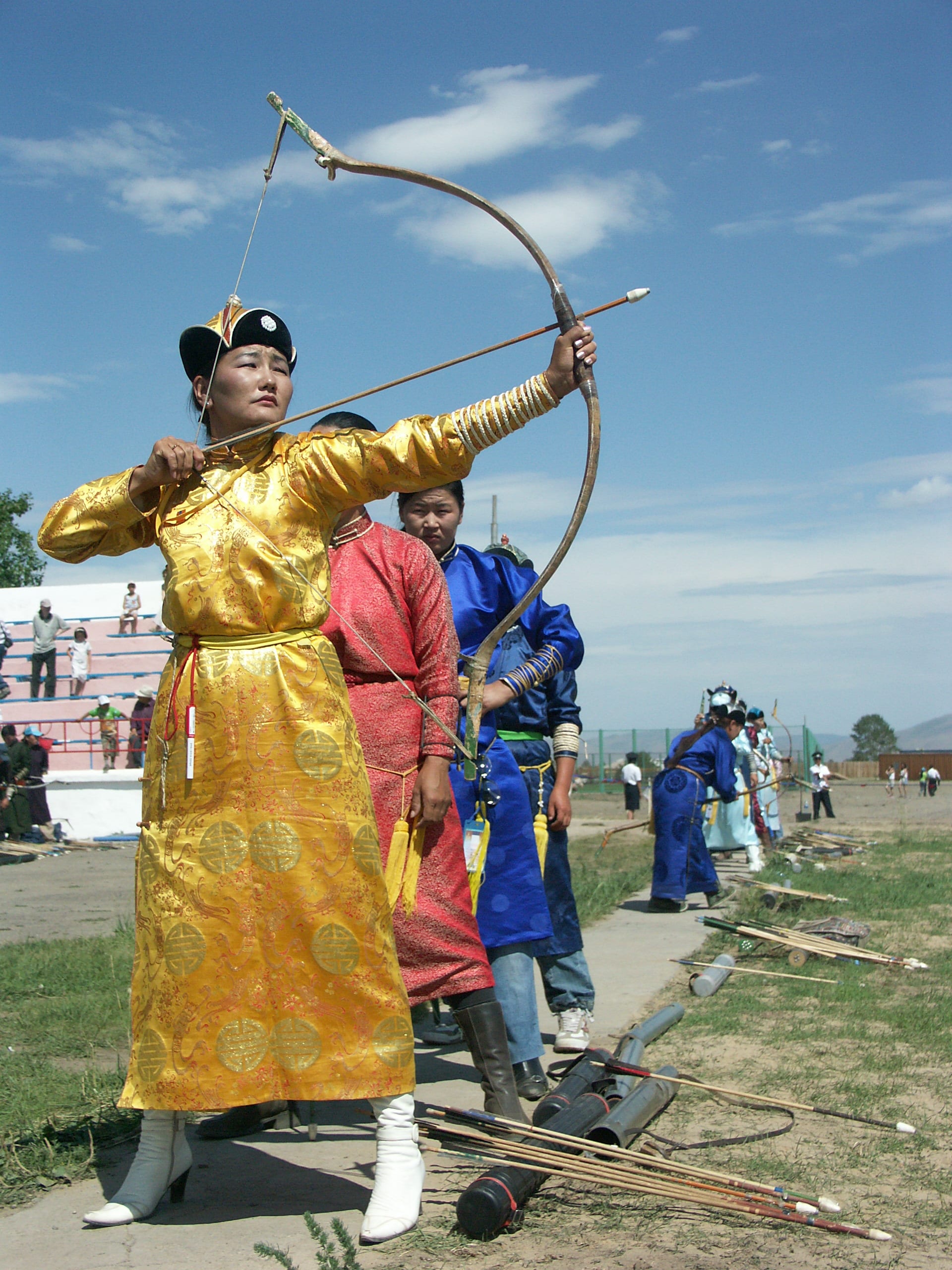
Naadam, held from 11 to 13 July, is the great summer festival and a national holiday. Its heart is the "three manly games" of wrestling, horse racing and archery, contested since the days of the Mongol Empire, though women compete alongside men in the archery and children ride as jockeys in the races across the steppe. Winners receive ritual praise songs and titles, and the festival brings together long song, khöömei, traditional dress and food. It was once linked to the worship of the spirits of mountains and rivers, and is now held on the anniversary of the 1921 revolution. Naadam is on UNESCO's list of intangible cultural heritage.
The migrations of nomadic families between seasonal pastures, and the customs that accompany them, have also been added to UNESCO's list. So has the ger, whose making is a family enterprise: men carve the wooden frame, while women and men together paint, sew and make the felt, and taking it down and putting it up again is always a family task that children learn by watching their elders. Ger makers are highly respected.
Death is marked with care and a sequence of rites meant to help the soul towards rebirth. Relatives purify themselves and the belongings of the dead with consecrated water and milk, and memorial meals are held on the third, seventh, twenty-first and forty-ninth days. Grain and raisins are left at the grave and cooked food set before a photograph of the deceased on the household altar. On the forty-ninth day, the family shares white foods to mark the end of the "black" period of mourning.
Arts, crafts and music
Mongolia's music grew out of the herder's life and still carries the sound of the steppe. The morin khuur, or horse-head fiddle, has a trapezoid body, a long fretless neck crowned with a carved horse's head, and strings and bow of horsehair. It accompanies the long songs and epic tales, and certain tunes were composed to calm and tame animals. Its music has long been passed orally from master to apprentice.
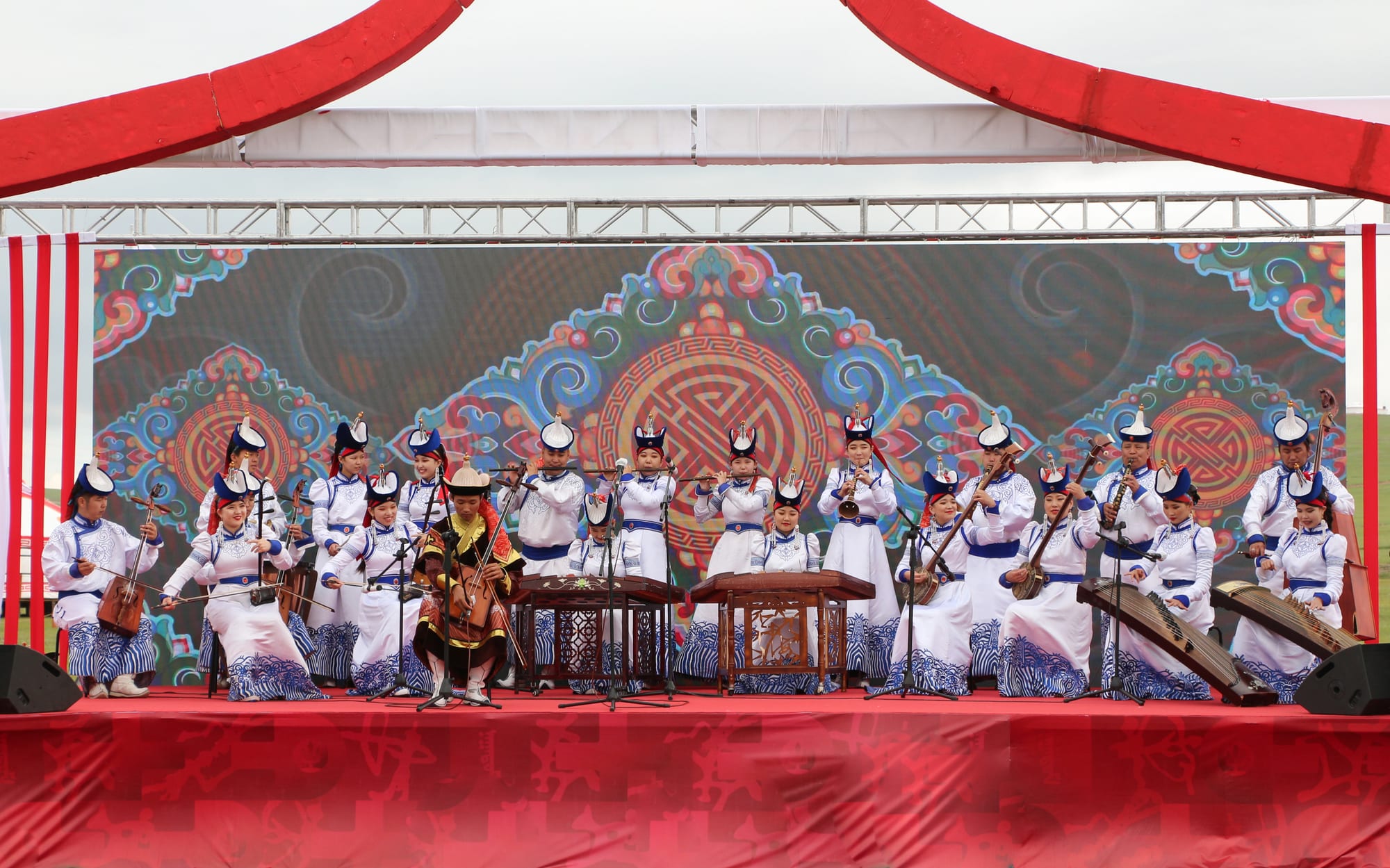
Khöömei, the art of overtone singing, lets a single singer produce two sounds at once: a continuous drone and, above it, a melody of harmonics. It has deep and whistled styles, originates in the Altai mountains of the west, and is performed at occasions from state ceremonies to family celebrations, as well as while herding and to soothe babies. Urtiin duu, the long song, stretches each syllable over sweeping, slow melodies. All three traditions — the morin khuur, khöömei and long song — are on UNESCO's list, while the biyelgee folk dance, the epic tuuli and the art of Mongolian calligraphy in the vertical classical script are among those judged to be in urgent need of safeguarding.
Dos and don'ts for visitors
- Do call out "nokhoi khor" ("hold the dog") when approaching a ger, and wait to be invited in.
- Do give and receive things with the right hand, palm up, or with both hands.
- Do accept tea and food when offered, even if you take only a sip or a small taste.
- Do walk clockwise around ovoo, stupas and prayer wheels, and remove hats and sunglasses in temples.
- Don't step on the threshold of a ger or lean on its central columns.
- Don't throw rubbish into fires, rivers or lakes; fire and water are treated as sacred.
- Don't point with your index finger, touch another person's hat or walk in front of an elder.
What to take away
Mongolian customs can seem intricate, but nearly all of them express one steady principle — that elders, guests and the land deserve to be treated with care — and visitors who show that care will find the steppe's hospitality as generous as its reputation.