Attractions & Natural Wonders · Mongolia
Mongolia: Nine Attractions and Natural Wonders
The empty grassland that produced the largest land empire in history, singing sand dunes in the Gobi, dinosaur cliffs that turn flame-red at sunset, and a nomadic way of life still lived in felt tents
By Worldlore Editorial · 9 September 2026
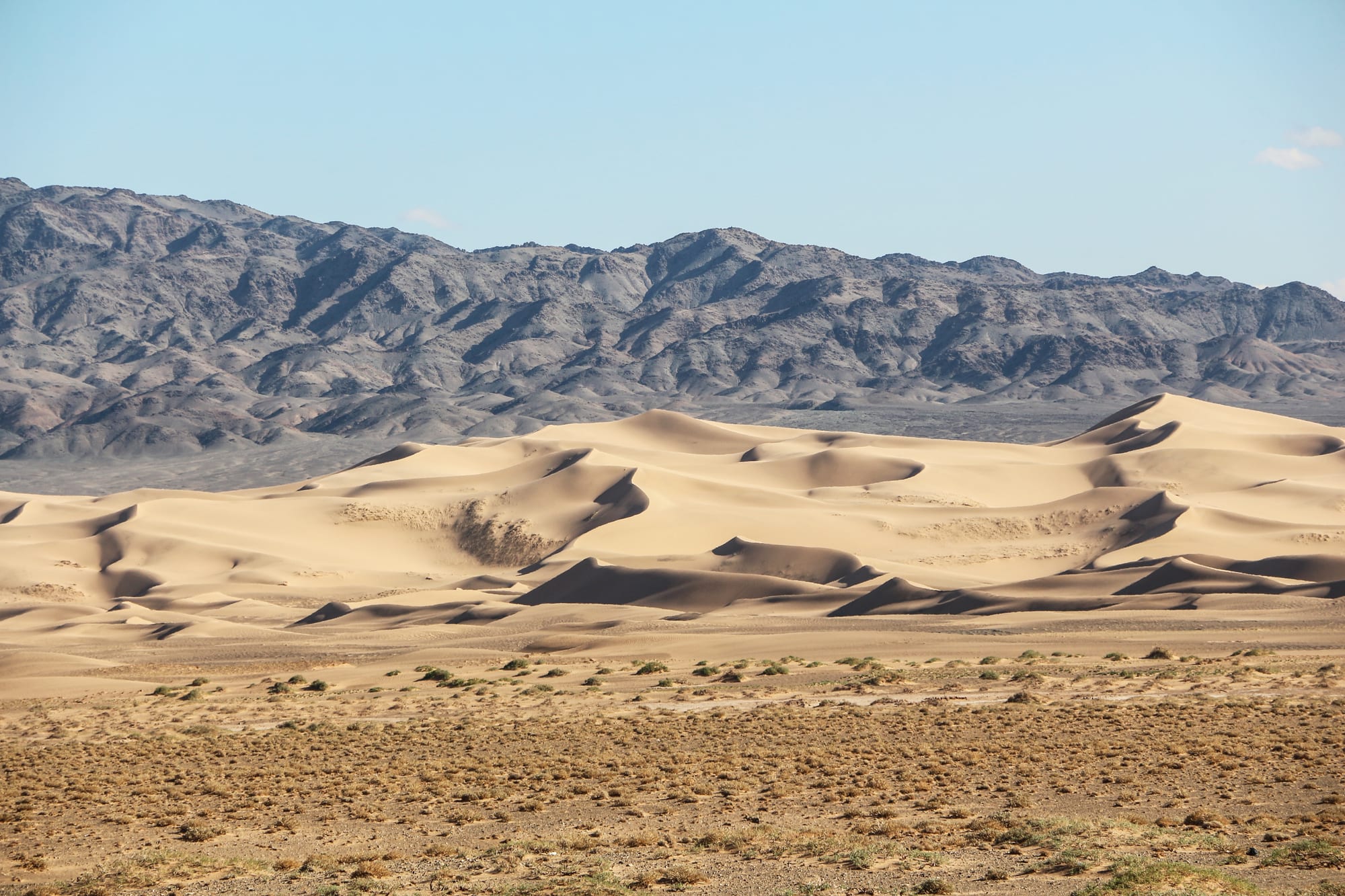
The land of the eternal blue sky
Mongolia, landlocked between Russia and China, is one of the most sparsely populated countries on earth — about 3.5 million people scattered across a territory the size of Western Europe, roughly a third of them still living a partly or fully nomadic herding life in felt gers (yurts). It was the heart of the largest contiguous land empire in history under Genghis Khan in the 13th century, and its landscape today swings from the Gobi Desert in the south to forested mountains and grassy steppe in the north.
The nine below run from the capital out into the steppe, desert, and lake country. Summer (June to August) is the main travel season, when nomadic families are on their summer pastures and roads (few of them paved) are passable; winters are brutally cold.
1. The Genghis Khan Equestrian Statue
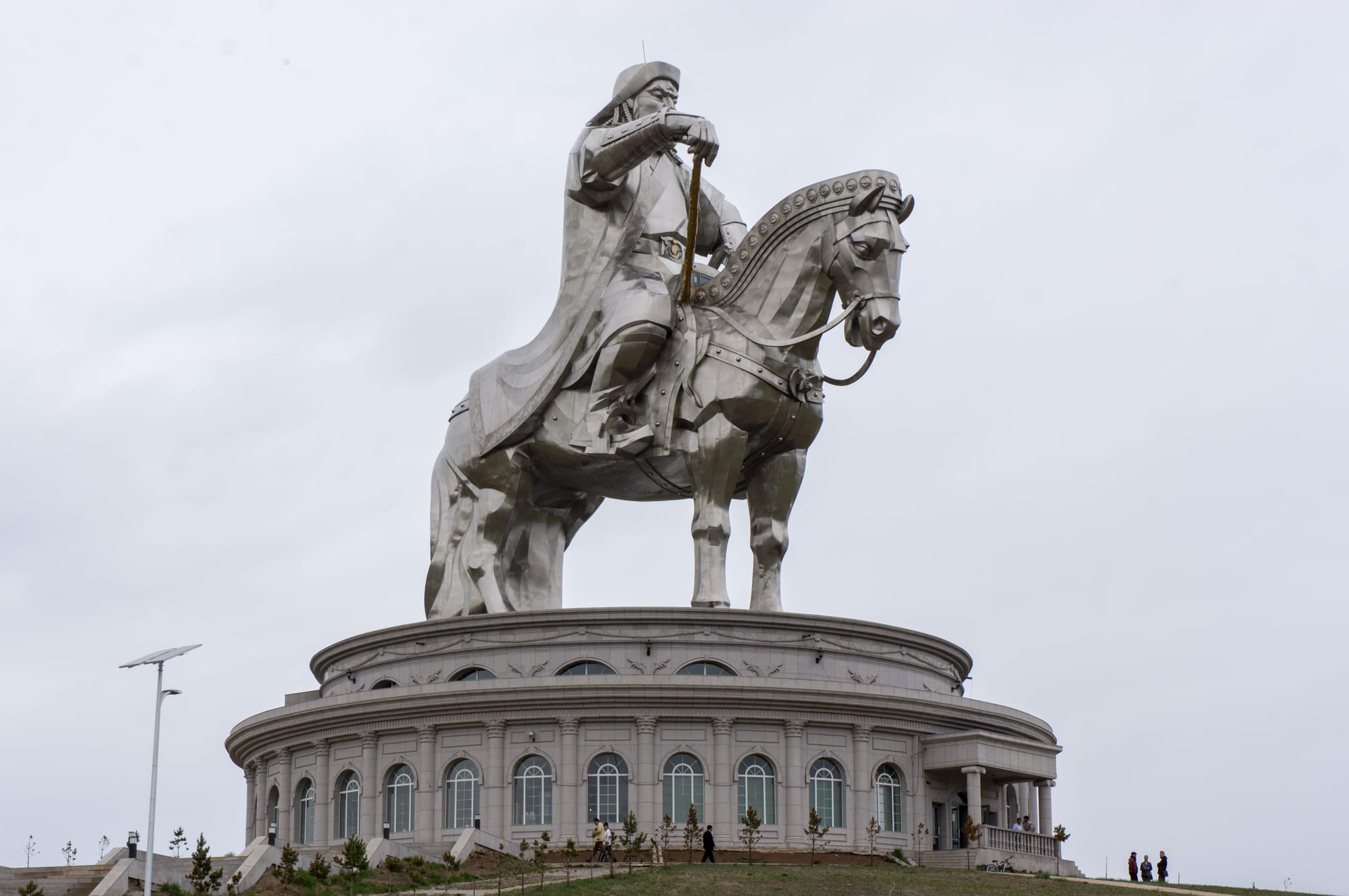
On the steppe about an hour from Ulaanbaatar, a 40-metre stainless-steel statue of Genghis Khan on horseback — the largest equestrian statue in the world — marks, by local tradition, the spot where he found a golden whip. An elevator inside the horse's neck climbs to a viewing platform on the horse's head, and the surrounding museum and cultural complex covers the Mongol Empire's history. It is a striking, slightly surreal monument to a figure central to Mongolian identity.
It anchors a day trip that often continues to Terelj National Park nearby.
2. Gorkhi-Terelj National Park
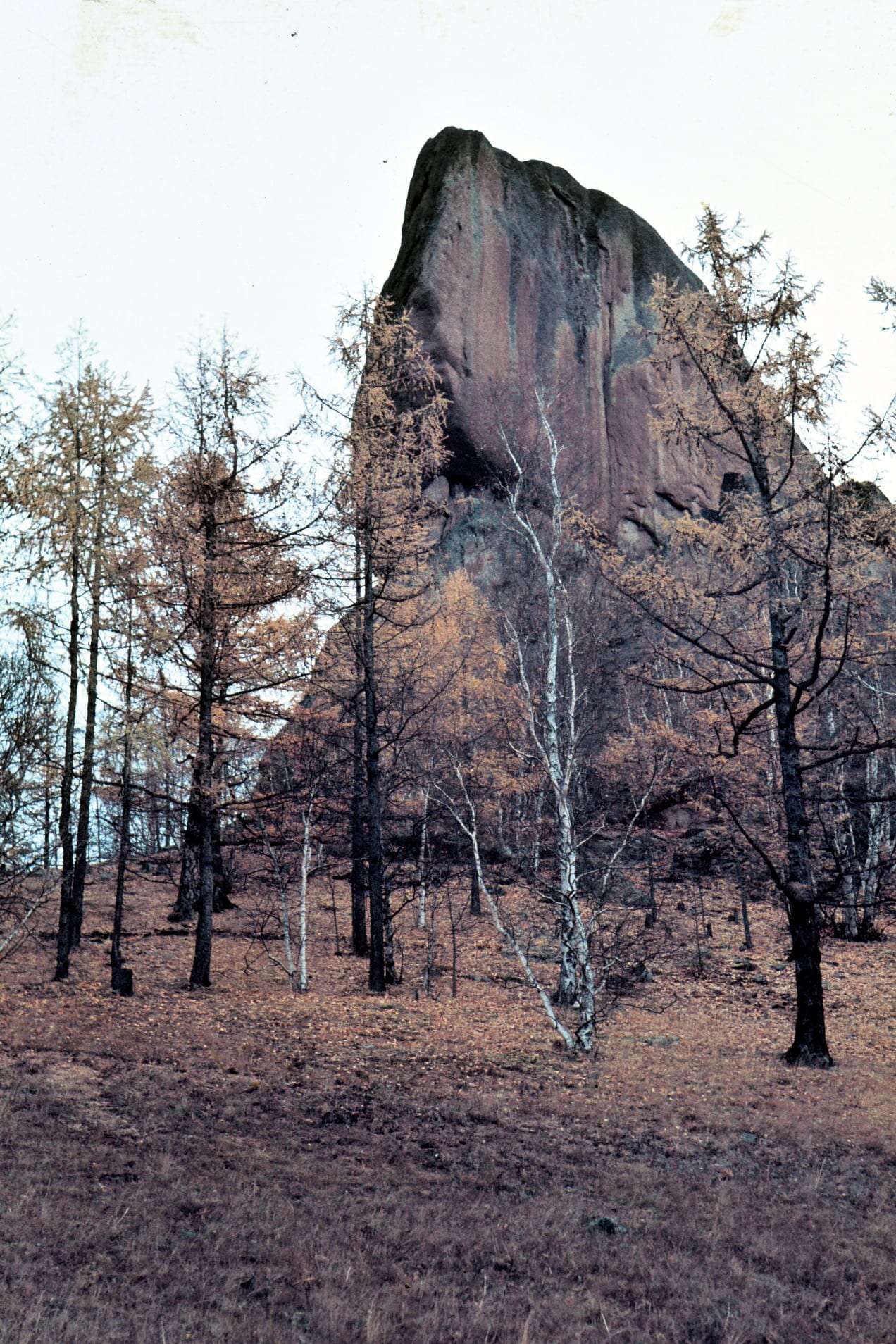
Gorkhi-Terelj, close enough to Ulaanbaatar for a day trip or easy overnight, is a landscape of granite outcrops, pine forest, and open valleys — including Turtle Rock, a boulder naturally weathered into the shape of its namesake, and the cliffside Aryabal meditation temple reached by a long stairway. It is many visitors' first taste of the steppe, with ger camps offering horse riding and short hikes.
It gives an easy introduction before heading further into the true wilderness.
3. Erdene Zuu Monastery
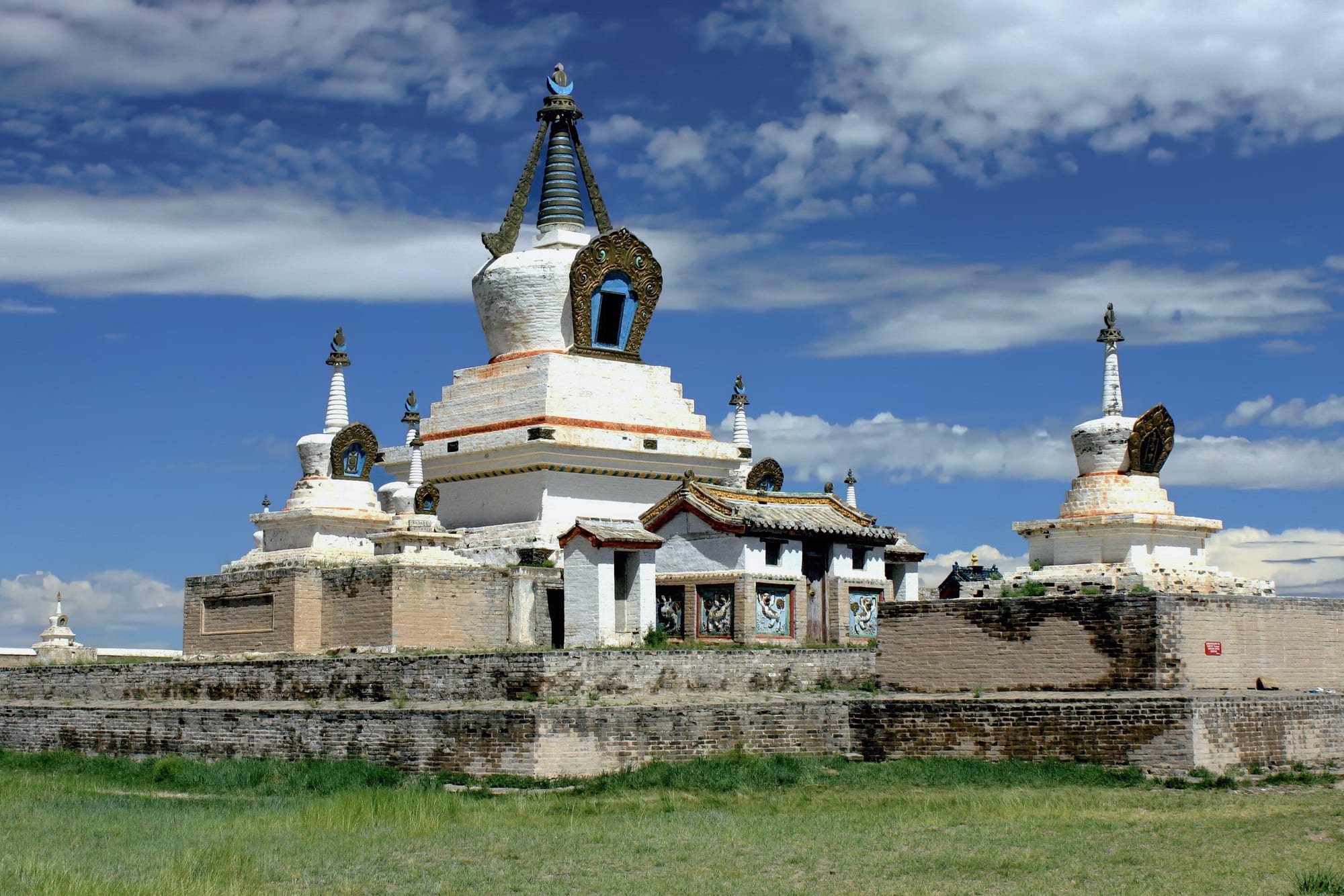
Erdene Zuu, built in 1586, is Mongolia's oldest surviving Buddhist monastery, constructed partly from stones of Karakorum, Genghis Khan's 13th-century capital, whose ruins lie nearby. Once ringed by 108 stupas and housing thousands of monks, it was heavily damaged under Soviet-era religious suppression in the 1930s but has been partially restored and is again a functioning monastery. It sits within the Orkhon Valley, a UNESCO World Heritage cultural landscape.
It is the centrepiece of a visit to the historic Orkhon Valley region.
4. Lake Khövsgöl
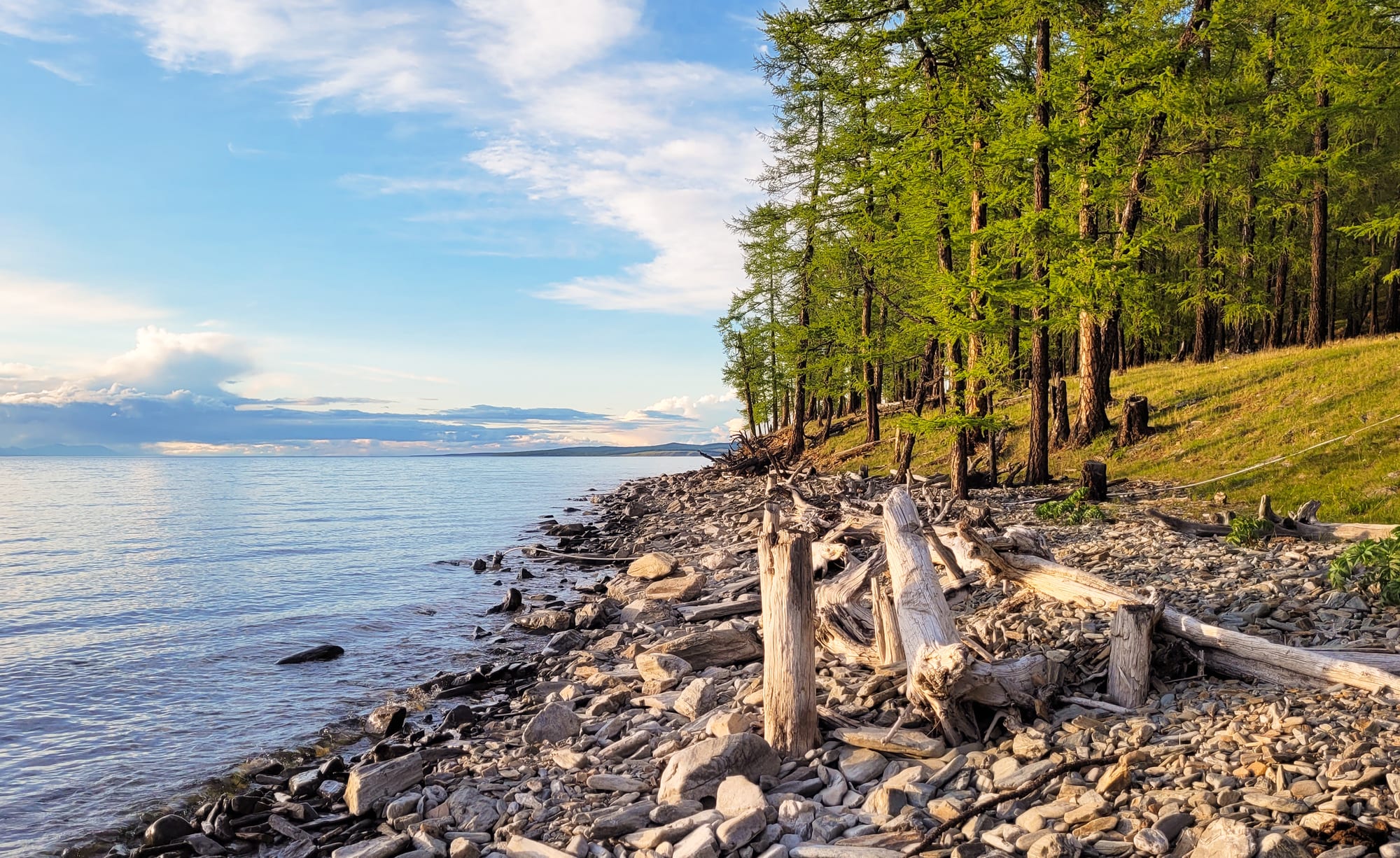
Lake Khövsgöl, in the far north near the Russian border, is one of the world's oldest and clearest freshwater lakes, holding roughly 70 percent of Mongolia's fresh water and considered sacred by local Darkhad and Tsaatan communities. It is ringed by taiga forest and mountains, and nearby live the Tsaatan, a small community of reindeer herders whose way of life is one of the last of its kind on earth.
It is a long journey from Ulaanbaatar, usually reached by internal flight to Mörön followed by a drive.
5. Ulaanbaatar
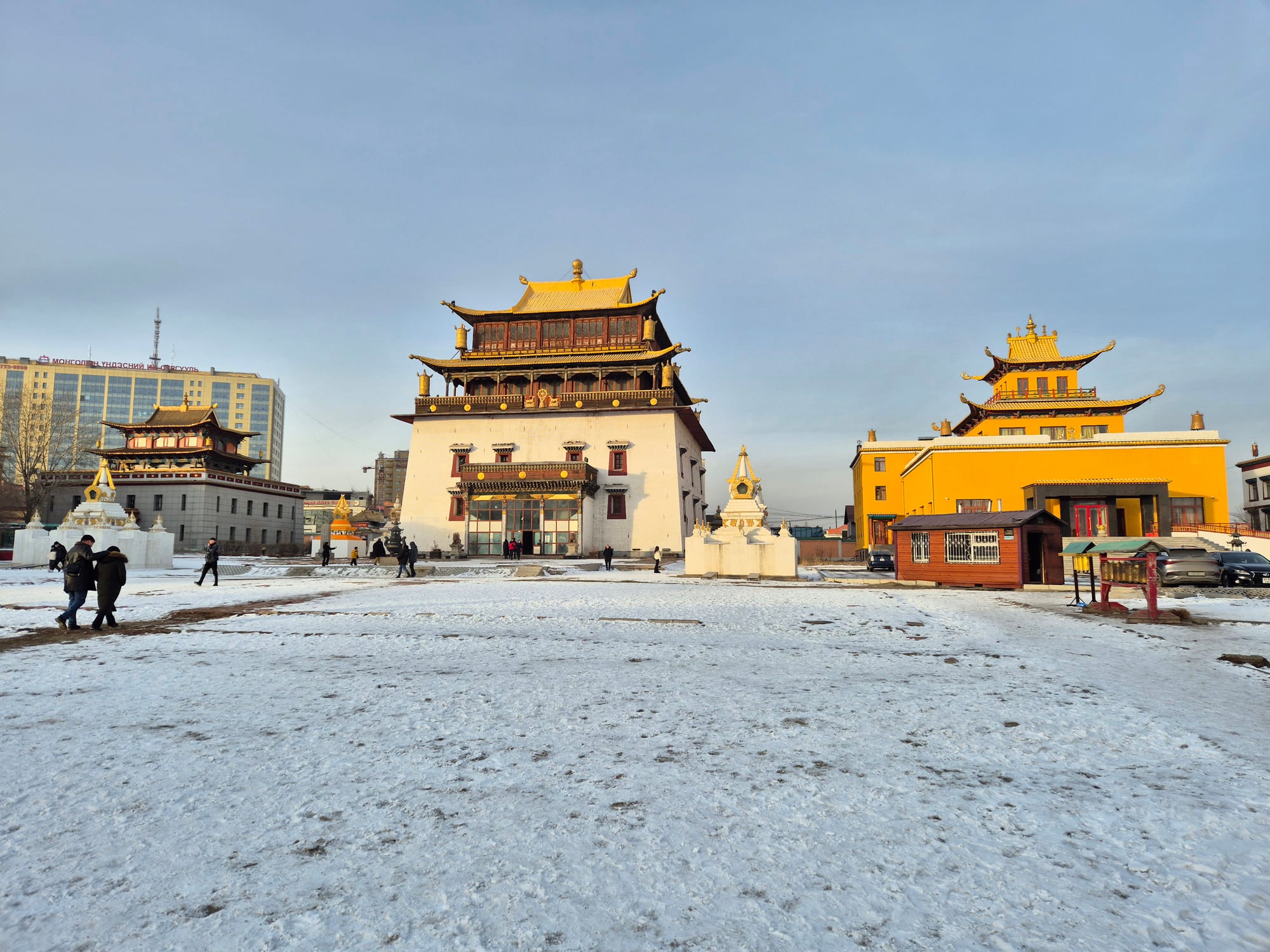
Ulaanbaatar, the capital, is a city of contrasts — Soviet-era apartment blocks and glass towers ringed by sprawling ger districts where many nomadic families have settled. Gandantegchinlen Monastery, with a 26-metre gilded statue of Avalokiteshvara, survived Soviet-era destruction and remains the country's most important working Buddhist site; Sükhbaatar Square, the National Museum of Mongolia, and the Zaisan Memorial hilltop viewpoint round out a city visit.
It is the arrival point for almost every trip and the base for onward travel.
6. The Naadam Festival
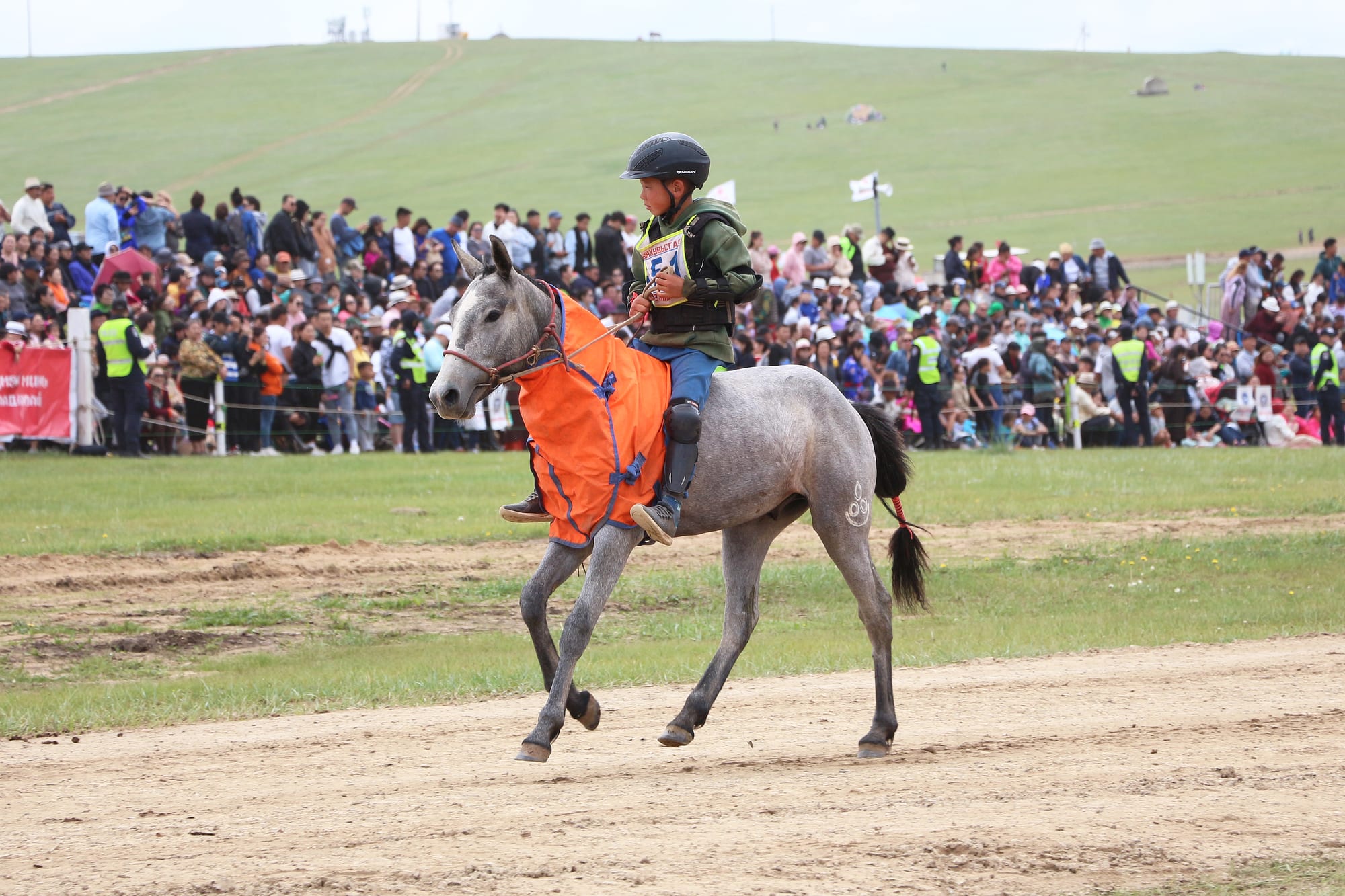
Naadam, held every July, is Mongolia's national festival, centred on the "three manly games": wrestling, archery, and horse racing, the last contested by child jockeys as young as five over courses many kilometres long, reflecting skills still central to nomadic life. The main event fills Ulaanbaatar's stadium, but smaller local Naadams take place in towns and provinces across the country around the same dates, often with a more intimate, community feel.
It is Mongolia's single biggest annual event and worth planning a trip around.
7. Bayanzag, the Flaming Cliffs
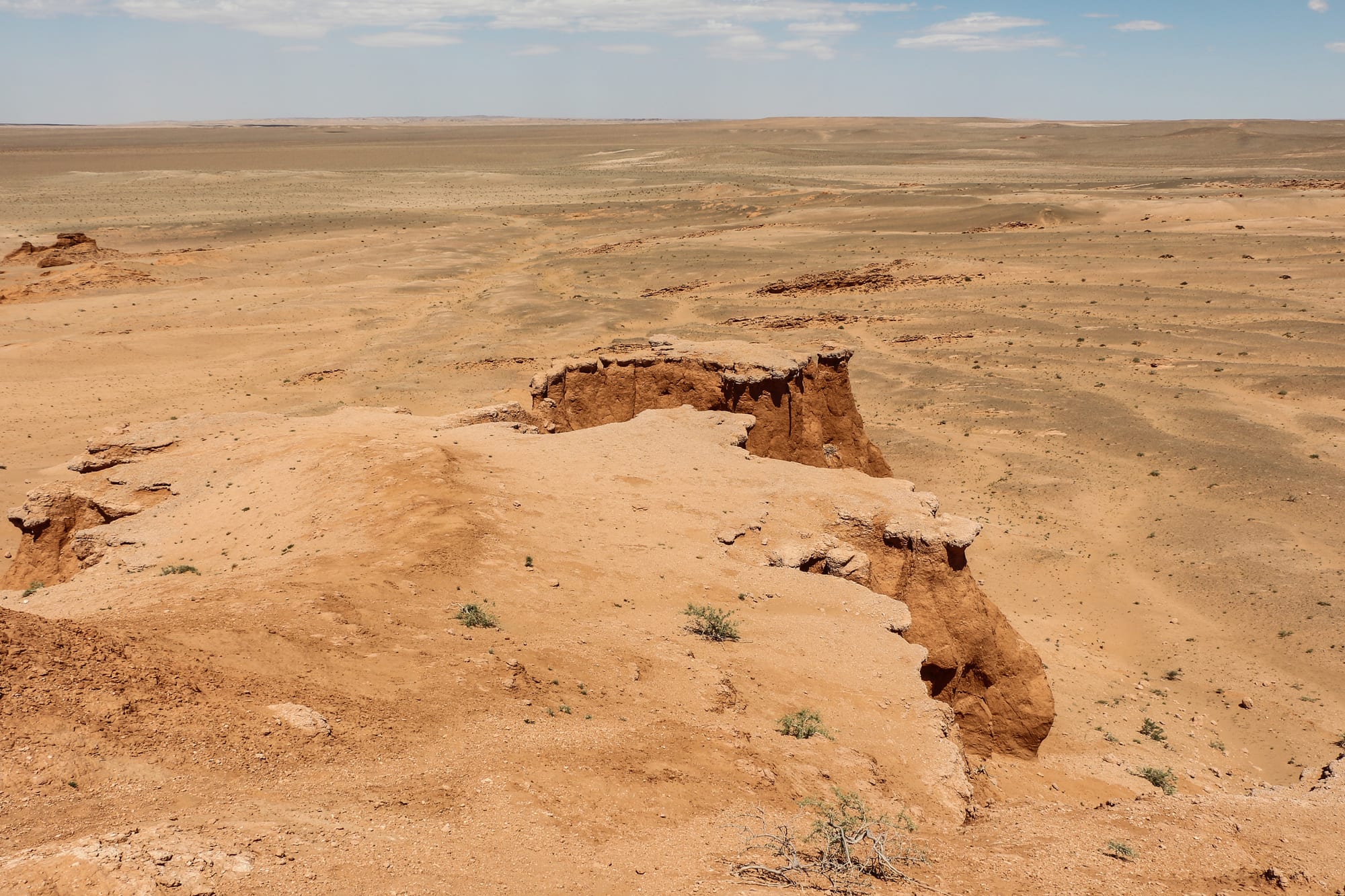
Bayanzag, named the "Flaming Cliffs" by the American explorer Roy Chapman Andrews for how the red sandstone glows at sunset, is where a 1920s expedition made the first scientifically documented discovery of dinosaur eggs — this part of the Gobi remains one of the richest dinosaur fossil sites on earth. Walking the eroded gullies at golden hour, with the cliffs turning deep orange-red, is one of the most atmospheric experiences in the desert.
It is a common stop on a multi-day Gobi Desert itinerary.
8. The Gobi Desert
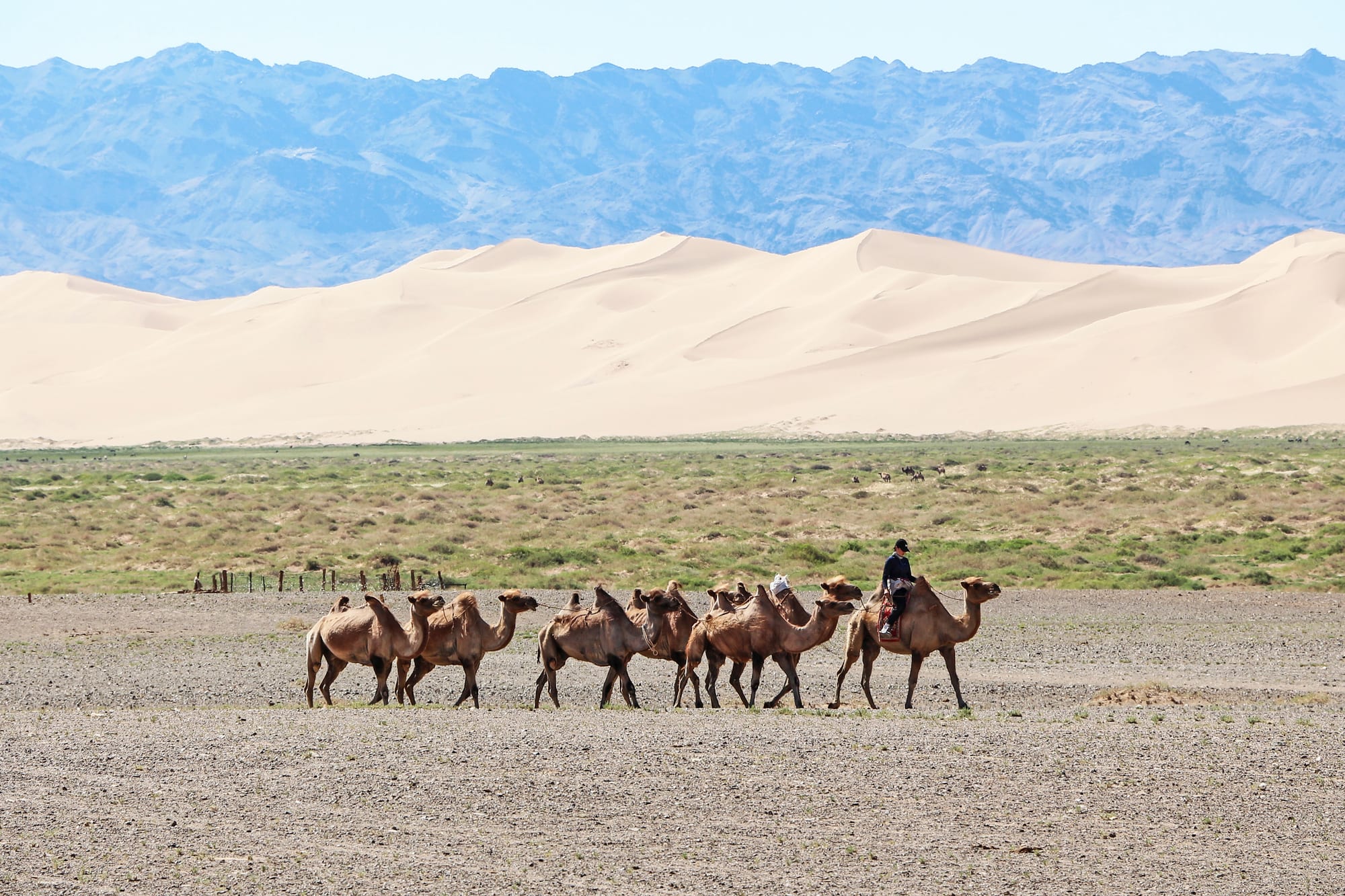
The Gobi, covering much of southern Mongolia, is a cold desert of gravel plains, rugged mountains, and the towering Khongoryn Els "singing dunes" — up to 300 metres high and famous for the low humming sound the sand makes as it shifts. Two-humped Bactrian camels, herded by local families, are both transport and sight; the Gobi Gurvansaikhan National Park also holds the Yolyn Am ("Vulture's Mouth") gorge, where ice can persist deep into summer.
Multi-day 4x4 trips, staying in ger camps, are the standard way to see it.
9. Nomadic ger life
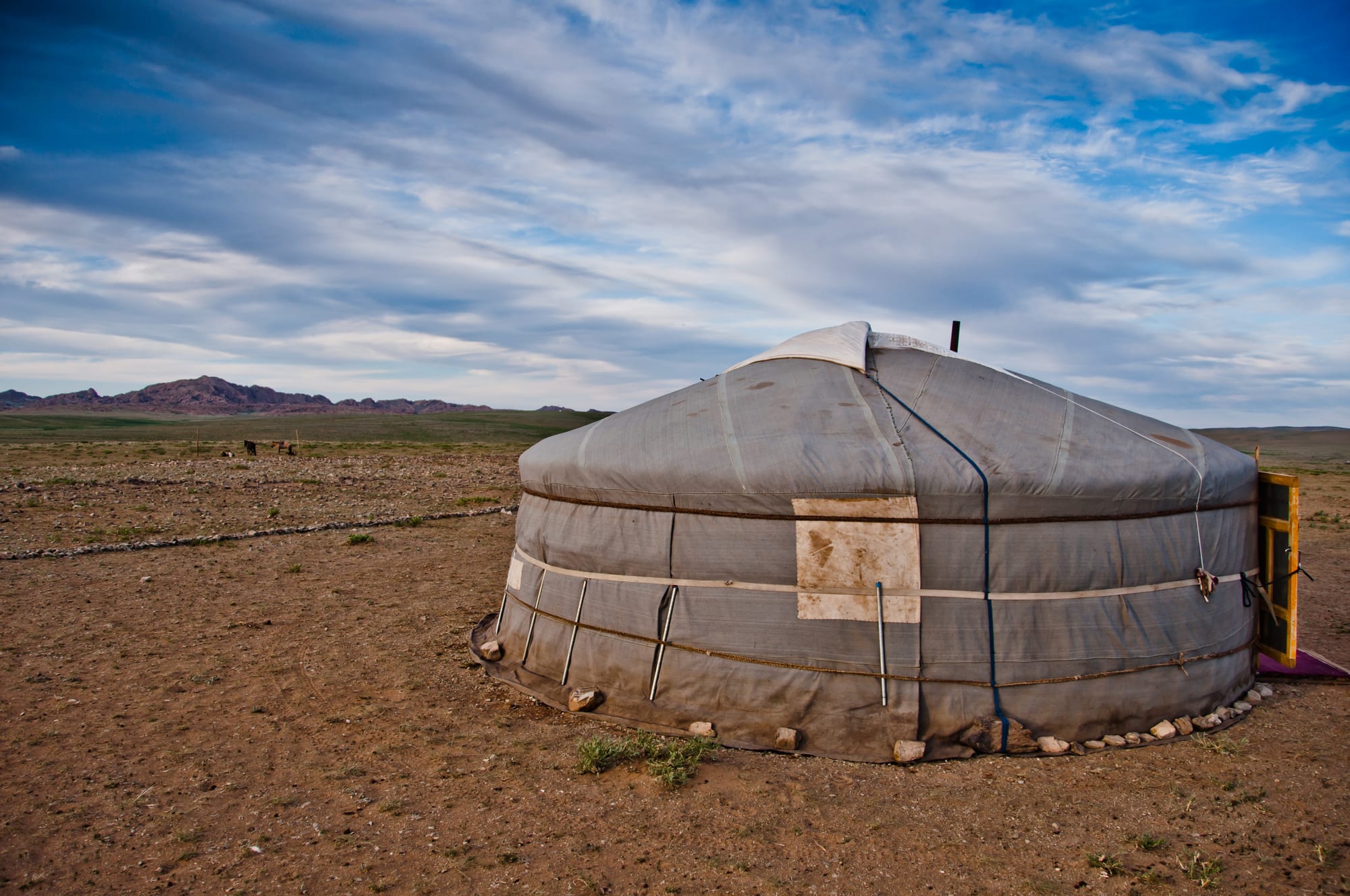
Staying with, or near, a nomadic herding family in their ger is, for many visitors, the real heart of a Mongolia trip — sharing salty milk tea and dairy products, watching the daily herding of horses, sheep, goats, and yaks between pastures, and seeing a way of life that has continued in recognisable form for centuries even as much of the world around it changes fast.
Most ger-camp stays are arranged through tour operators who can also translate and explain local customs.
Mongolia rewards time: distances are vast and roads mostly unpaved, so a worthwhile trip is usually 10 days to two weeks, combining Ulaanbaatar and Terelj with either the Gobi Desert or the Khövsgöl/Orkhon Valley regions to the north, rather than trying to cover the whole country at once.