Daily Life · Mongolia
Mongolia: A Life Still Counted in Livestock
A country of 3.5 million people and more than 57 million animals, split between a felt-walled countryside that still moves with the seasons and a capital whose ger districts hold the families who left it
By Worldlore Editorial · 30 September 2026
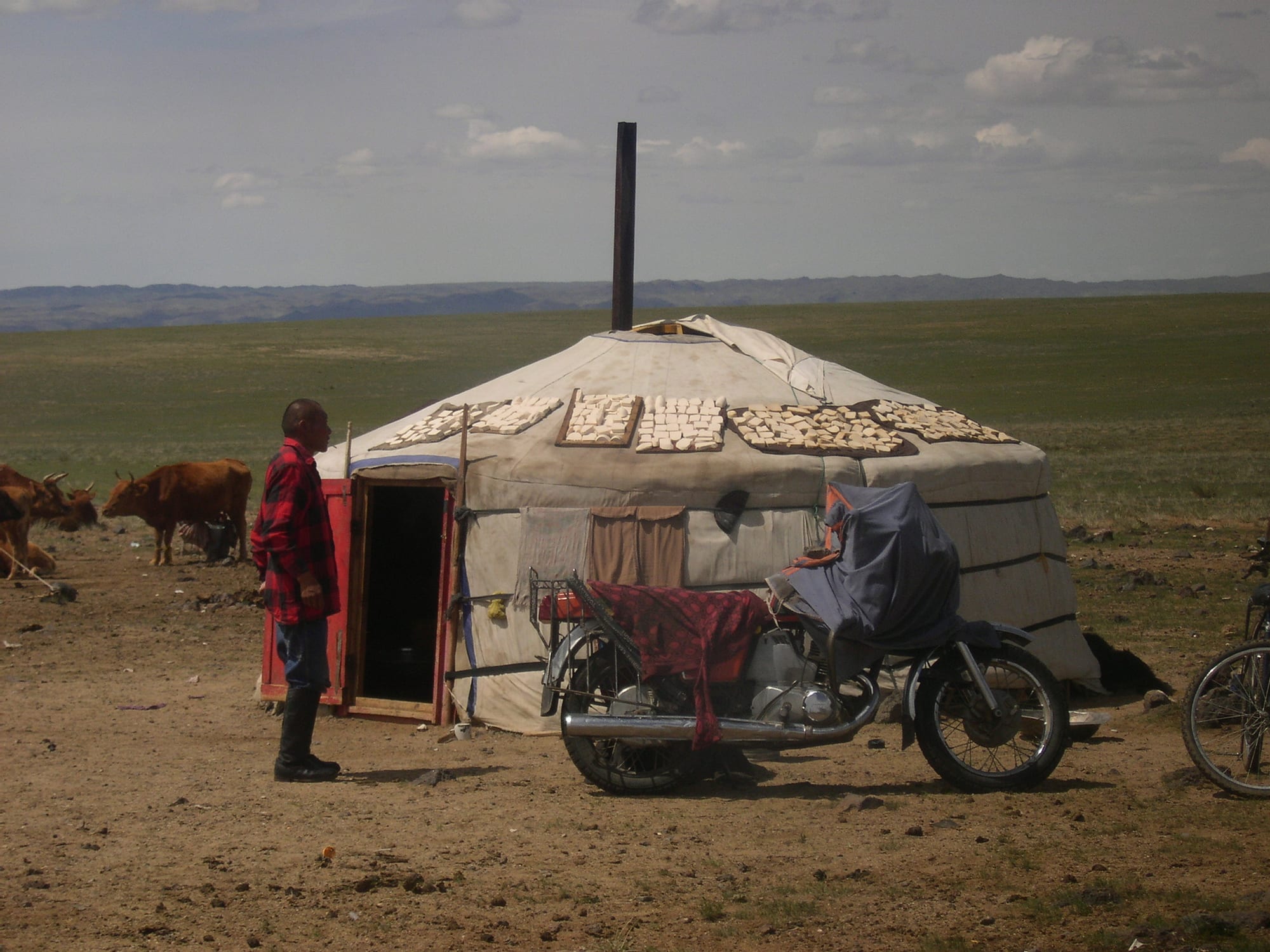
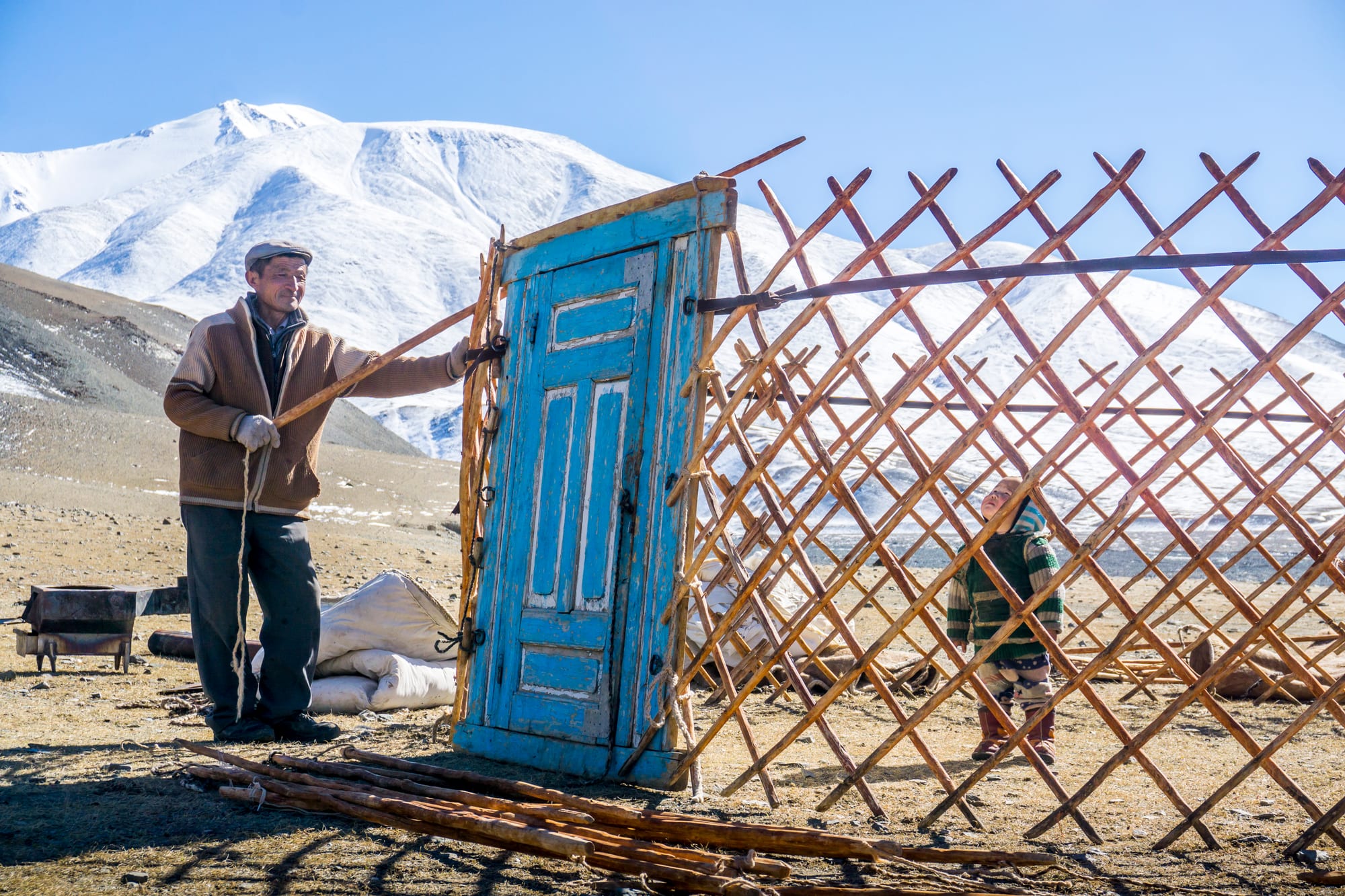
Mongolia is a country with more livestock than people by a wide margin, and that fact still shapes an ordinary day for a real share of the population. Roughly a quarter to a third of Mongolians live as herders, moving a household of sheep, goats, cattle, camels and horses between pastures as the seasons change, in a round felt-and-lattice tent, the ger, that can be taken down and rebuilt in a matter of hours. Most of the rest live a settled, urban life, above all in the capital, Ulaanbaatar, where nearly half the national population is now concentrated. The two ways of life sit side by side rather than one replacing the other, and a great many city households are only a generation removed from the steppe.
Family and home life
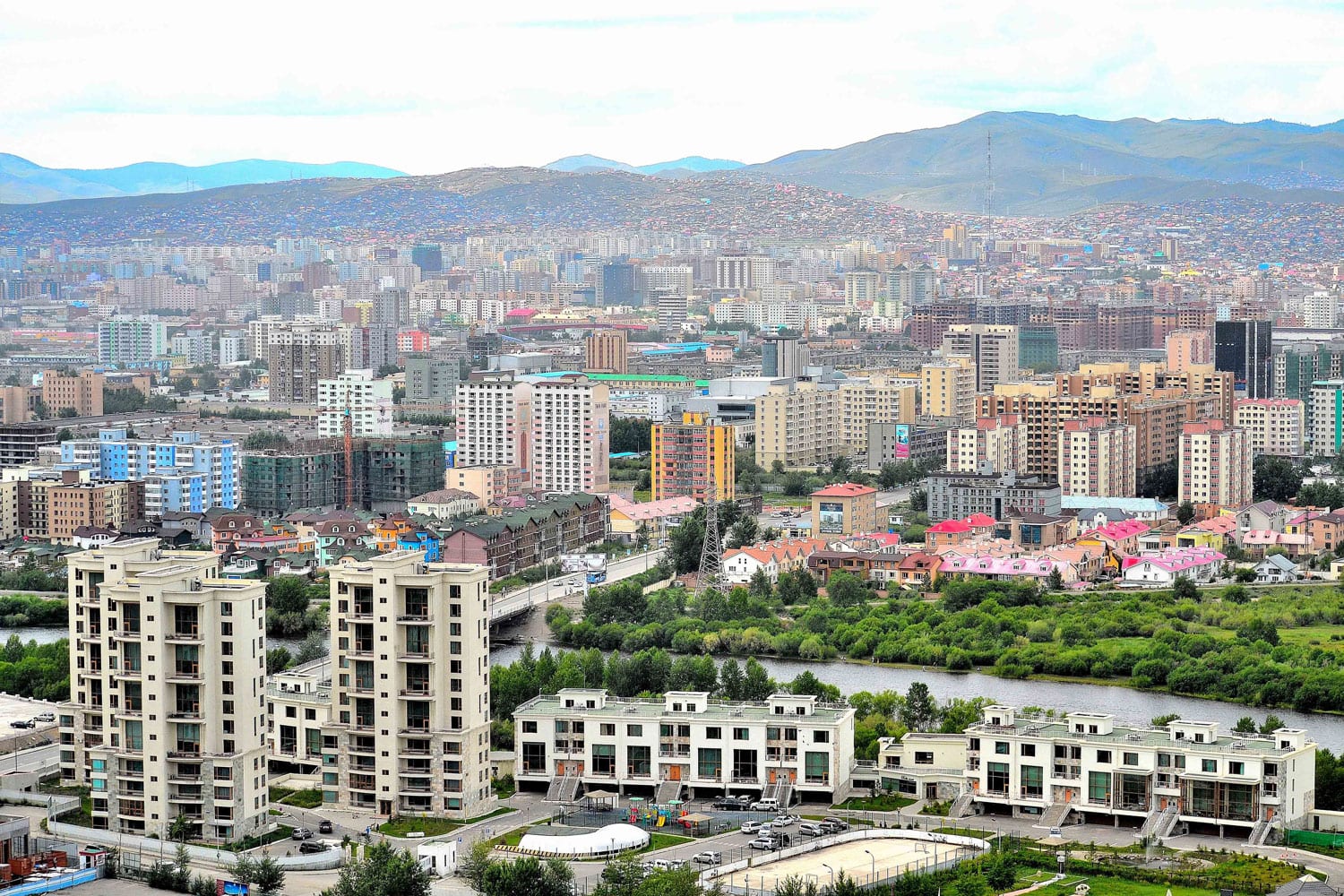
In the countryside, a herding household is typically small and mobile, built around a nuclear family that moves its ger and its animals several times a year to follow grass and water, often alongside related households camped nearby for company and shared labour. Children grow up around livestock from infancy and often learn to ride very young; the jockeys in Naadam horse races are children as young as five. In Ulaanbaatar, many of these same families, or their recent descendants, now live in the sprawling ger districts that ring the city: unplanned neighbourhoods where almost half of the capital's residents live, some in an actual traditional ger set up on a fenced plot, others in a small self-built house on the same kind of unserviced land, without piped water or a connection to the city's central heating network.
Work, school and the rhythm of the day
Herding is a full-time, year-round occupation with no fixed hours: animals need moving to grass and water daily, and the workload swings sharply with the season, heaviest around lambing in spring and the autumn preparation for winter. Mongolia's National Statistics Office counted about 250,000 households keeping livestock in 2024, even as many younger Mongolians move to the city for work, education and healthcare. In Ulaanbaatar and the other towns, life runs on a more conventional office and school day, with instruction in Mongolian using the Cyrillic alphabet, though the traditional vertical Mongol script became co-official alongside Cyrillic in 2025. The national economy is now dominated by mining, while Ulaanbaatar's working life runs on government offices, trade, retail and services, largely on a weekday schedule.
Community life and public spaces
In the countryside, the nearest sum, or district centre, serves as the practical gathering point for a scattered herding population: a small settlement with a school, basic services and shops, reached by unpaved track rather than a fixed public transport route. In Ulaanbaatar, Sükhbaatar Square is the civic centre of the whole country, and the city's sprawling markets, among them the vast Naran Tuul market, the largest outdoor market in the country, function as an everyday marketplace for clothing, tools and household goods for a large share of the urban population. Winter brings a serious practical problem to community life in the capital: simple stoves burning coal for heat and cooking in the ger districts make Ulaanbaatar one of the world's most polluted cities during the cold months.
Free time and weekends
The clearest shared date on the national calendar is Naadam, whose national festival is held from 11 to 13 July, when the "three manly games" of wrestling, horse racing and archery draw both herding families and city dwellers, competed at every level from local sum contests up to the national festival in Ulaanbaatar. In the countryside, free time tends to fold into the working day rather than sit apart from it, built around visiting neighbouring households and, in winter, the lunar new year festival of Tsagaan Sar, celebrated with family visits and specially prepared food. In the capital, younger Mongolians have a more conventional urban weekend of cafés, shopping centres and, given the success of Mongolian-born wrestlers such as Hakuhō in Japanese sumo, keen interest in following them compete abroad.
A visitor's ordinary day
Ulaanbaatar has ATMs and widespread card acceptance; once outside the capital, Mongolia is a cash economy, and travellers are advised to carry enough tögrög before heading into the countryside. Roads outside the main towns are mostly unpaved tracks without signposts, so independent countryside travel is unusual; most visitors hire a driver-guide and vehicle for a multi-day loop rather than attempting to navigate alone. Distances are large and journey times slow, so a day that looks short on a map, from one ger camp to the next, can still take the better part of a day's driving. Mobile signal is patchy once away from towns, and a stay with a herding family or at a ger camp normally comes with meals included as part of the arrangement, since there are no shops nearby to buy from.
What to take away
An ordinary day in Mongolia still runs, for a real share of the country, by where the animals need to be next, and even in the high-rises of Ulaanbaatar, many families are not many years removed from a ger on the open steppe.