Culture & Customs · Federated States of Micronesia
Micronesia: Respect Carried in Four Languages
Four island states with their own tongues, chiefs and ceremonies, bound together by clan, church and a shared conviction that respect is owed before it is ever asked for
By Worldlore Editorial · 30 September 2026
A visitor sets off along an old stone path between two villages on Yap. Before leaving, they break off a small leafy branch and carry it in one hand all the way. Nobody asks for it, and nobody remarks on it, but the people they pass on the path read it at once: this is someone walking through, not someone with business here, and they come in peace. It is a tiny gesture, and it captures a great deal about the Federated States of Micronesia. Across four island states strung out over the western Pacific, each with its own main language and chiefs, good conduct comes down to showing, quietly and in advance, that one knows one's place and means no harm.
Faith, identity and values
The country is a federation of four states — Yap, Chuuk, Pohnpei and Kosrae — and each has its own main language, customs and sense of itself, while the outer islands speak several more languages of their own, including two Polynesian ones on the atolls south of Pohnpei. What they share is a deep attachment to clan and family. In most of the islands, descent is traced through the mother, and the matrilineal clan governs who may use land and reef, who inherits and where a person belongs. Yap combines ties through both father and mother. Land matters enormously, and almost all of it is owned by families or clans: on Yap, the visitors bureau notes that the great majority of the land, beaches included, is private property.
Christianity is the other great pillar. Roughly half the population is Catholic and half belongs to Protestant churches, most notably the United Church of Christ, and church life anchors the week in every state. The faith sits over older ideas rather than having erased them, and many people still believe that ancestors can influence the lives of the living.
Beneath both lies an ethic of respect that shapes behaviour at every level. Deference is owed according to kinship, gender, age, rank and religious title, and elders and titled people hold an exalted position. In Chuuk, respect for elders shows in speech, behaviour and even in who sits where, and people there often describe responsibilities as more important than rights, because rights clash while responsibility makes agreement possible. Brothers and sisters traditionally keep a respectful distance from one another in public and avoid coarse jokes in each other's company.
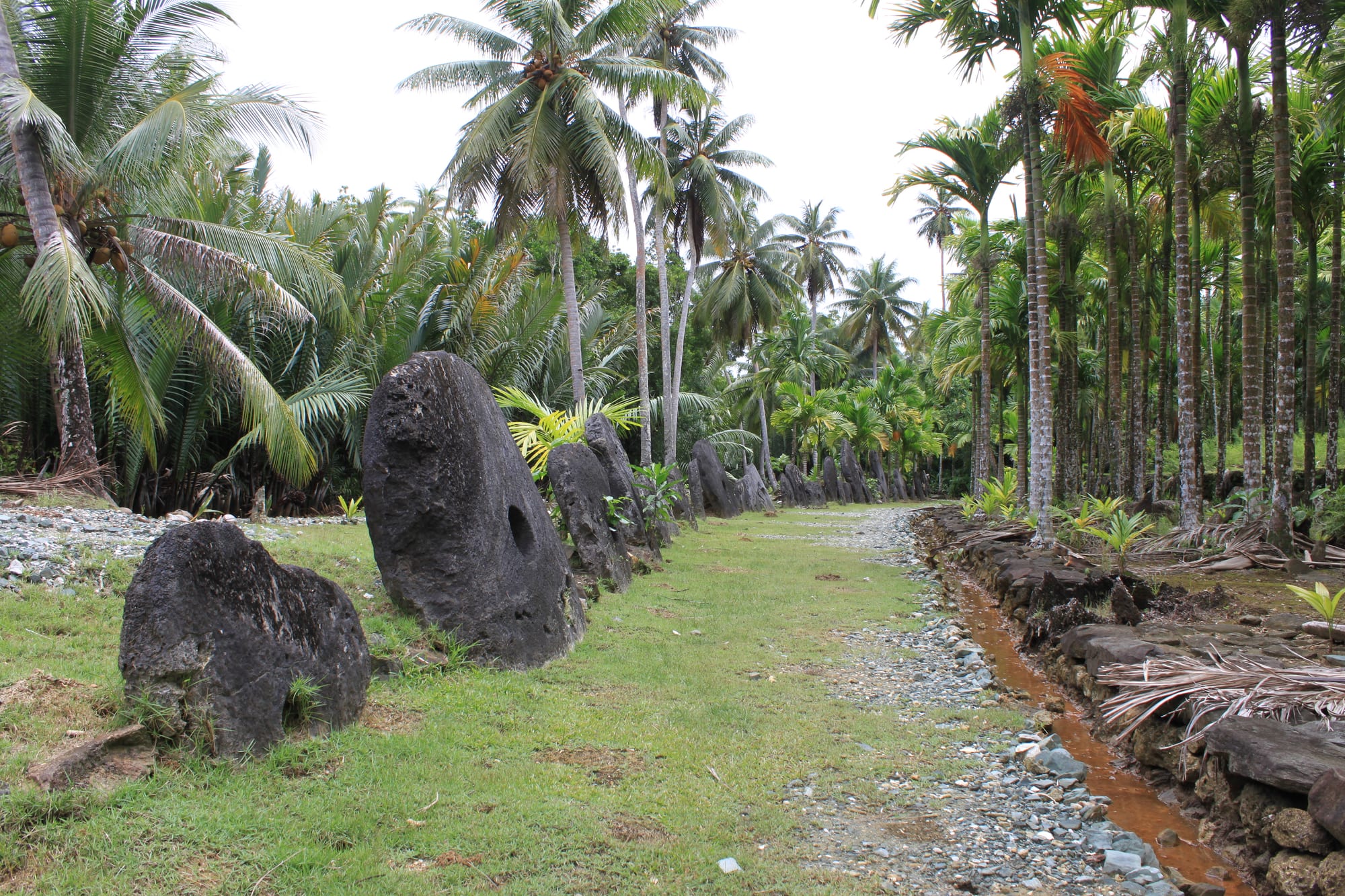
On Pohnpei, the whole body of custom is known as tiahk, and it rests on a handful of named virtues: wahu, respect; mahk, a reserve born of the wish to avoid embarrassment; and kanengamah, patience under strain. Pohnpei's chiefdoms each have two lines of titles, headed by the Nahnmwarki, the paramount chief, and the Nahnken, a "talking" or administrative chief, and the Nahnmwarki still carry real weight in matters of land, culture and tradition. On Yap, harmony in public is prized and open confrontation is frowned on. Yap's famous stone money, the great limestone discs known as rai, still plays a part in serious matters such as dowries, land and traditional apologies.
Greetings and meeting people
Each state greets in its own language: Kaselehlie on Pohnpei, Mogethin on Yap, Ran annim in Chuuk and Len wo on Kosrae. English is the language of government and the common tongue between the states, and it is widely understood, but a greeting in the local language is always well received. On Kosrae, the state's historic preservation office encourages visitors to learn a few key phrases before they arrive, and Yap's visitors bureau suggests two of the most useful words on the island: sirow, "excuse me", and kammagar, "thank you".
Greeting people is expected rather than optional. On Yap, visitors are asked to greet those they meet on the roads and in the villages, and in Chuuk a polite greeting and an unhurried manner are part of good form. Voices are kept soft, speaking loudly or too informally in front of elders or chiefs comes across as disrespectful, and direct confrontation is avoided in favour of patience and indirect speech.
Physical bearing carries as much meaning as words. Stepping or walking over people who are sitting down, or over their baskets, is a serious breach of manners on Yap and is best avoided everywhere. Deference is shown by keeping a lower, quieter profile around people of rank, and in some settings women show respect to brothers and senior men by walking behind them in public or serving them first at meals. Public displays of affection between men and women are rare.
Asking before acting runs through all of this: permission is sought before entering private land, visiting a beach or photographing people, and on Yap residents generally dislike having cameras pointed directly at them.
Hospitality and being a guest
Sharing food with visitors is a matter of pride. Hosts take care to feed their guests, who are usually served first and are expected, in turn, to eat in moderation rather than heartily clearing the dishes. In Chuuk, visitors to a home are encouraged to bring a small gift, and a guest does well to wait to be shown where to sit, since seating order reflects the respect owed to elders.
Modest dress is the clearest sign of respect a visitor can offer. Across the islands, the thighs are the part of the body most carefully covered, and short shorts or skirts above the knee are unwelcome in villages. Yap's visitors bureau asks women in particular to keep their thighs covered and avoid transparent or skimpy clothing, and to sit properly rather than squat in public. Swimwear belongs at the water's edge, not in town, and long shorts, skirts or a wraparound cloth are the safest choice in villages. Local dress is admired rather than resented, and on Yap visitors are invited to try local practices and attire, as long as they ask first.
On Pohnpei, an invitation to the nahs, the community meeting house, is an honour. The sakau poured there follows a strict order of precedence, with the first cups going to the highest-ranking chiefs, and the room falls silent while they are served, and a guest does best simply to follow the lead of their hosts. Sakau also serves as a formal apology: in a Pohnpeian reconciliation ceremony, known as tohmw, offerings of sakau are made to those who have been wronged and to their chiefs and clan leaders.
Sunday is a day apart. Kosraeans ask for no work of any kind on Sunday, including hiking and diving, and visitors are encouraged to attend church instead; in Chuuk too, Sunday is kept for rest, worship and family.
Festivals and life's big moments
The national calendar includes Constitution Day on 10 May and National Day on 3 November, alongside Christmas and the other Christian holidays, which are observed throughout the islands. Each state also keeps its own days, including its own constitution day.
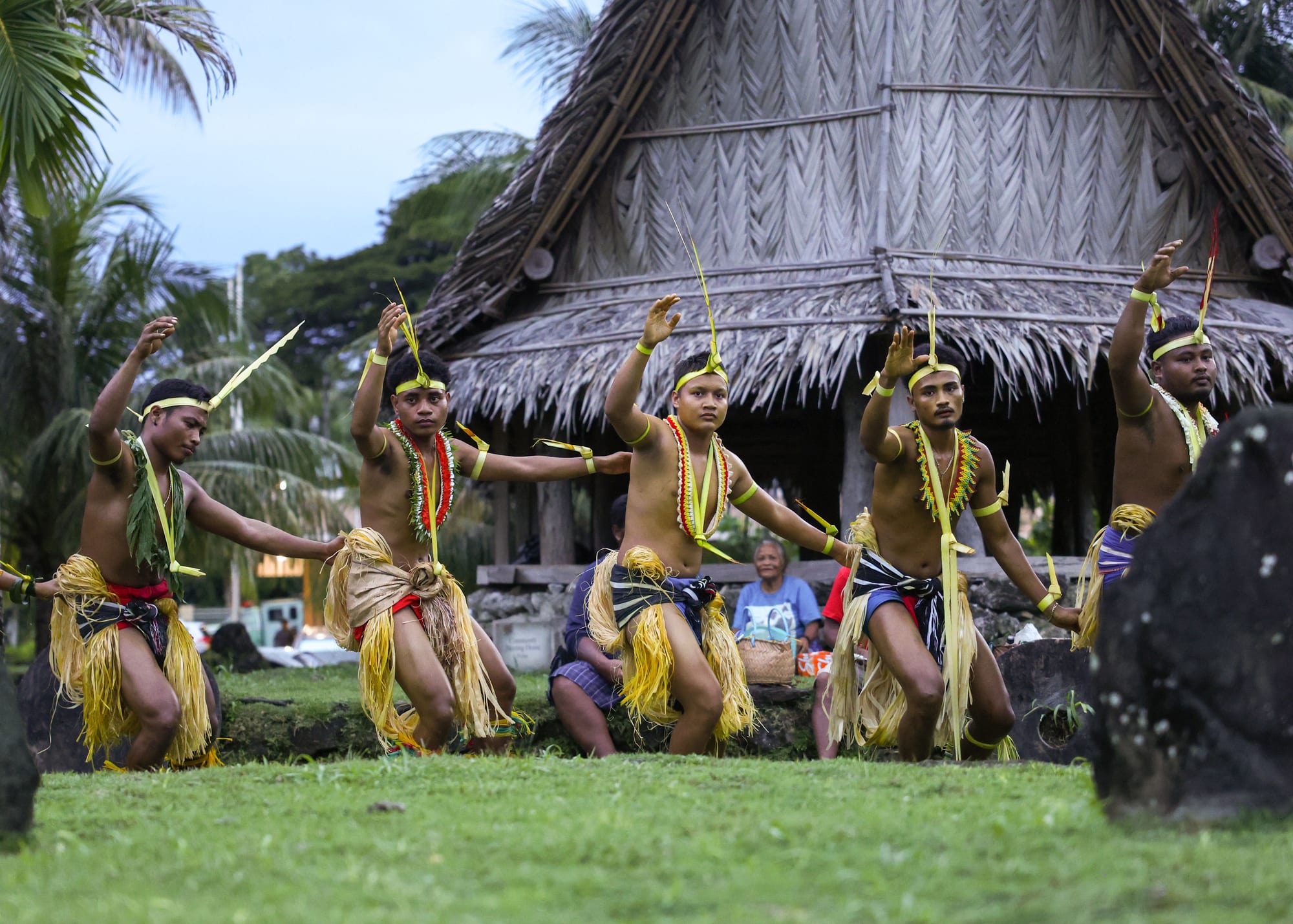
The best known of the state festivals is Yap Day, held around 1 March. It opens with the blowing of a conch shell and the presentation of stone money, and the seating of chiefs is part of the formal programme. Village groups then perform the island's standing and sitting dances, and there are craft demonstrations, weaving, traditional food, competitions of traditional skills and displays of ceremonial dress. Visitors are warmly welcomed, and the Yap Visitors Bureau holds a reception to honour guests.
On Pohnpei, first-harvest feasts are held between roughly September and December, when people present the best of their first harvest to the Nahnmwarki as tribute. Yams carry particular prestige. Men compete to show their industry, skill and generosity by growing and presenting enormous yams, which are displayed beside and inside the nahs during the feast, and success at feasts has long been one route to a higher title. Sakau drinking at such gatherings can continue until midnight.
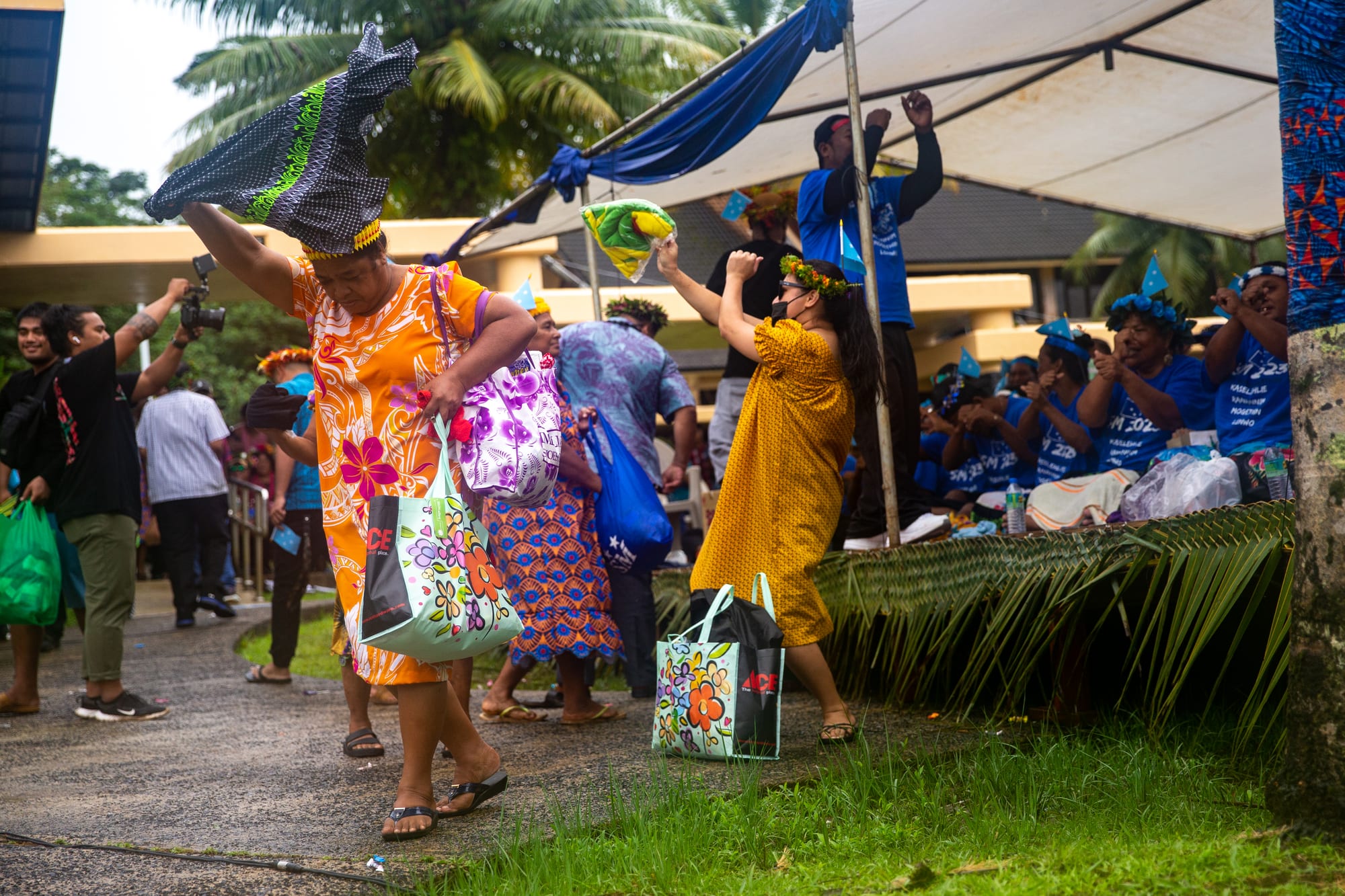
Weddings bring two families together as much as two people. Marriage is monogamous, the norm since Christianity arrived in the mid-nineteenth century, and unions are often marked by an exchange of gifts between the spouses' families and by feasting. On Yap, traditional valuables such as stone money and shell money still have a role in marriage and dowry.
Death is the occasion for the largest gatherings of all. In every island society a funeral means feasting, and the first feast, bound up with the burial and the most intense mourning, lasts three or four days, with formal mourning continuing for months and commemorative feasts afterwards. In Chuuk, funerals are multi-night events attended by the whole community and by relatives from abroad where possible. The dead are usually brought home to be buried on the land of their matrilineage, even if that means flying the body back across the Pacific. Catholic families hold a nine-night novena and Protestant families three nights of mourning. In the first days the household speaks quietly, and friends arrive bringing pounded breadfruit, fish and coconut. On the final day, family members take turns to speak, often apologising for past grievances and talking about how to keep the family together, so that mourning becomes a time of reconciliation.
Arts, crafts and music
Dance is the most vivid of the living arts, and Yap is its stronghold. The island's storytelling dances are performed in hibiscus-fibre skirts in many colours and ornamental headdresses, with dancers' bodies decorated with flowers, coconut oil and yellow turmeric. The Yap Visitors Bureau lists four main forms: sitting dances, standing dances, marching dances and the bamboo stick dance. In Chuuk, dance and chant accompany celebrations and welcoming ceremonies, and traditional chants carry history and genealogy from one generation to the next. On Kosrae, the great art is sung: the state's historic preservation office singles out the hymns that Kosraeans themselves composed, heard at their fullest in church on a Sunday morning.
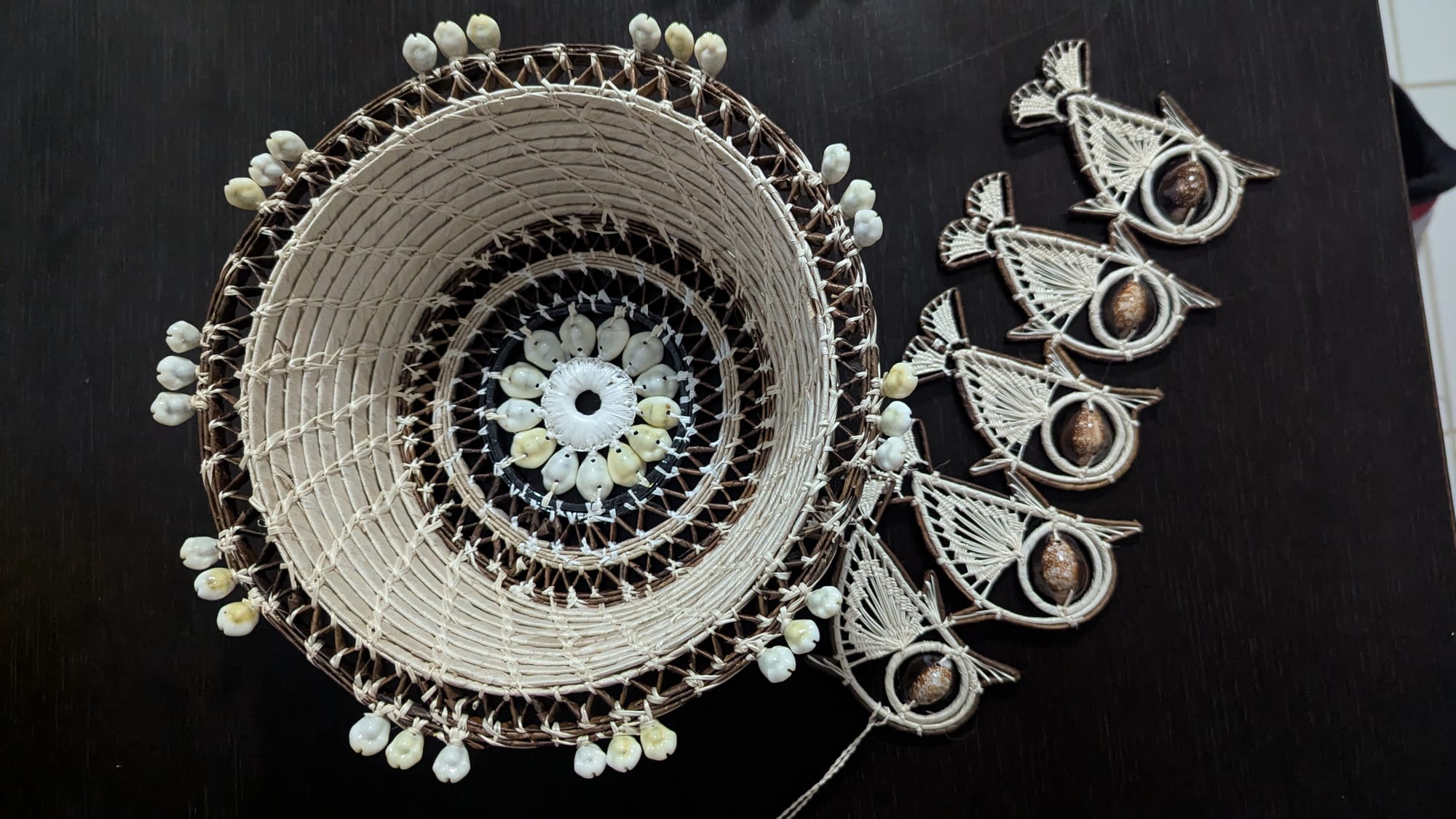
Crafts remain part of everyday and ceremonial life. Women weave and plait baskets, mats and other goods from local fibres, and carvers produce wooden figures and model canoes. On Yap, traditional valuables include gaw, shell and whale-tooth necklaces once reserved for village chiefs, and several kinds of yar, or shell money, used in marriages and traditional apologies. Baskets, jewellery made from shell and turtle shell, grass skirts and carvings are all still made, many of them now for sale to visitors.
The country's most celebrated inherited skill is the art of navigating the open ocean without instruments. It survived longest on a few small outer islands, and its most famous practitioner was Mau Piailug of Satawal, who trained from early childhood in the Weriyeng school of wayfinding under his grandfather. In 1976 he guided the Hawaiian voyaging canoe Hōkūleʻa from Hawaiʻi to Tahiti using stars, swells and memory alone, and he went on to teach Hawaiian navigators, breaking with tradition by sharing his knowledge beyond Micronesia. At home, he held the first pwo initiation ceremony for master navigators on Satawal in about half a century, ensuring that the knowledge would outlive him.
Dos and don'ts for visitors
- Do ask permission before entering private land, visiting a beach or site, or photographing people; almost all land and reef is privately owned.
- Do carry a small leafy branch or something in hand when walking through villages on Yap, and never walk through villages there at night without a light.
- Do greet people you pass, and learn the local greeting: Kaselehlie, Mogethin, Ran annim or Len wo.
- Do dress modestly away from the water, keeping thighs covered; skirts or long shorts are the safest choice in villages.
- Do keep Sunday as a day of rest, especially on Kosrae, where hiking, diving and work of any kind are avoided.
- Do eat what is offered, in moderation, and follow the hosts' lead at a sakau gathering.
- Don't step or walk over people who are sitting down, or over their belongings.
- Don't raise your voice, argue openly or make excessive noise in villages.
What to take away
In the Federated States of Micronesia, respect is expressed less in words than in small, visible acts of restraint — a lowered voice, covered knees, a question asked before a step is taken — and visitors who offer them will find the islands' hospitality opening up in return.