Daily Life · Mexico
Mexico: A Country That Eats Standing Up
A late, substantial midday meal that still anchors the day for millions, a workforce propped up by street stalls and remittances in equal measure, and a country so large that the shape of an ordinary day changes completely from the industrial north to the Indigenous south
By Worldlore Editorial · 30 September 2026
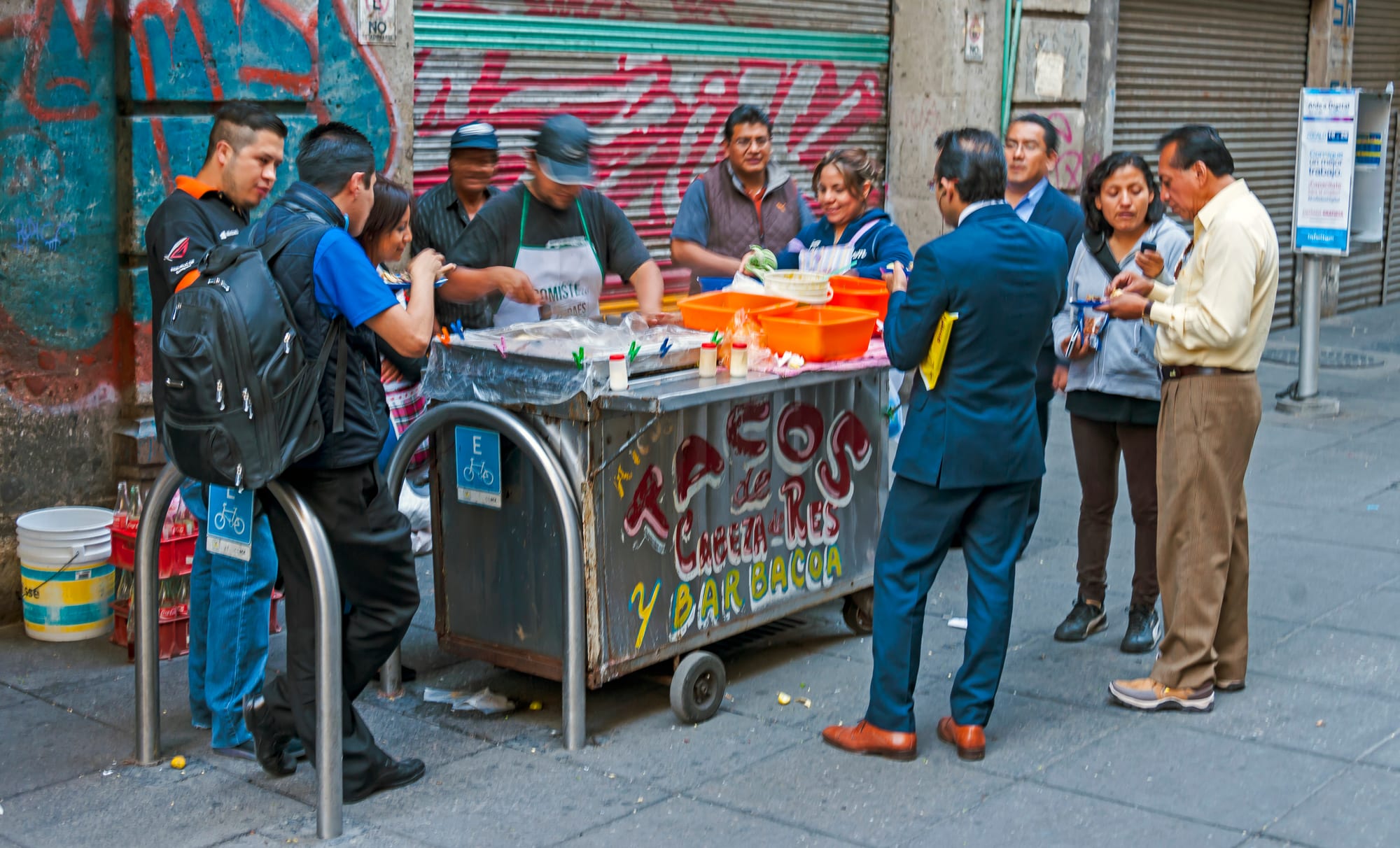
Mexico is large enough that an ordinary day looks genuinely different depending on where it is lived — a maquiladora shift in the industrialised north, a service job in Mexico City, a farming day in Oaxaca or Chiapas — but a few threads run through most of it. Extended family remains the basic unit that daily life organises around, a late and substantial midday meal called the comida still structures the working day for millions, and street food, sold from carts and stalls in almost every neighbourhood, is treated as a normal way to eat rather than a novelty. Family is also, for a striking number of households, kept together across a border: some 38 million people of Mexican origin live in the United States, and the money they send home reaches towns across the country every week.
Family and home life
Family is the clear centre of Mexican life, and it extends well past parents and children through compadrazgo, the system of godparenthood that binds families together at baptisms and other milestones. Multiple generations often live close together or under one roof, and events such as a quinceañera, the celebration marking a girl's fifteenth birthday, are treated as major family occasions rather than private affairs. Regional identity runs strong alongside national identity — a Oaxacan, a norteño from the north and a chilango from the capital each hold to distinct food, music and manners, and family life reflects that regional character as much as any national pattern.
Work, school and the rhythm of the day
A large share of Mexican work is informal, from street vending to day labour, and this shapes daily rhythm as much as any office clock does: a formal eight-hour day exists for many, but market and street-stall hours run far longer and more irregularly. The industrial north, tied closely to the United States economy through manufacturing and maquiladora export plants, is among the wealthiest regions; the centre mixes services, industry and farming; and the south, including Chiapas, Oaxaca and Guerrero, is the poorest and most Indigenous, where subsistence farming still shapes the working day for many families. The comida, a substantial meal eaten in the early afternoon, remains a genuine pause in the day for households and workplaces that can manage it, distinct from a quick lunch break.
Community life and public spaces
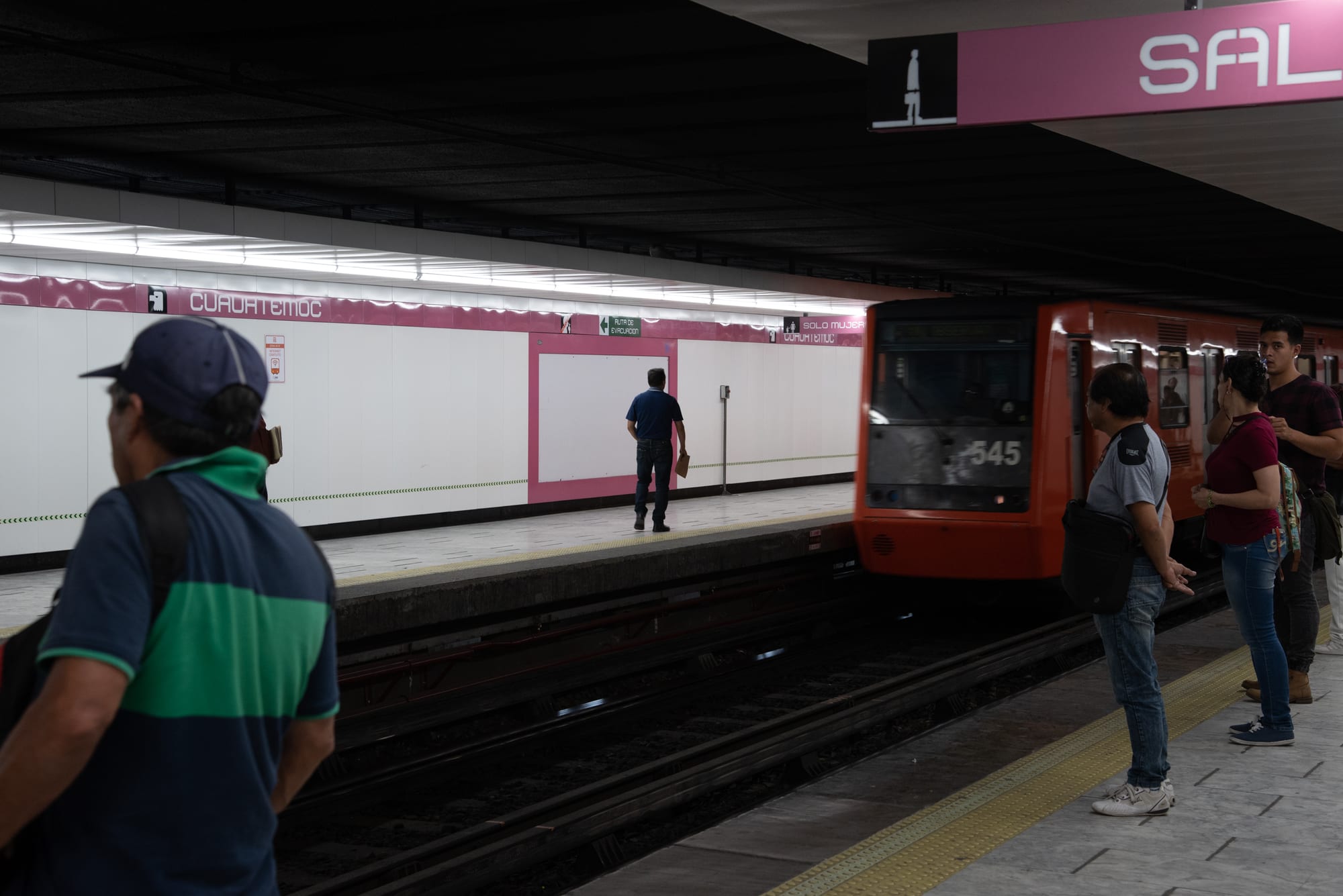
Markets are where much of daily life in Mexico actually plays out — municipal markets for fresh produce, and street stalls and carts for prepared food, both busy from morning into the evening in cities and towns alike. Mexico City's metro is one of the largest and cheapest systems in the Americas and carries a huge share of the capital's daily commute, while smaller cities and towns rely on combis and colectivos, shared minibuses that run fixed routes without a fixed timetable. Towns and villages across the country keep a yearly fiesta for their patron saint, and these draw the whole community out into the plaza and streets in a way few other events do.
Free time and weekends
Football is the mass passion nationwide, watched at home, in bars and in packed stadiums, and weekend family gatherings, often built around a long lunch, are a fixture in many households. Local fiestas for patron saints punctuate the calendar in towns across the country, complete with fireworks, processions and music, and where a family has the means, a weekend outing to a nearby town, market or archaeological site is common. Lucha libre wrestling, part sport and part theatre, remains a popular weekend spectacle in its own right, particularly in Mexico City.
A visitor's ordinary day
Cards are widely accepted in cities and tourist towns, but cash is still needed for markets, street food, small towns and tips. Mexico City's metro and the excellent first-class long-distance bus network (ADO, Primera Plus, ETN) are the easiest ways to cover distance without a car; intercity passenger trains are still limited, though new lines such as the Tren Maya on the Yucatán Peninsula have opened since 2023. Expect the comida to slow business down in the early afternoon in smaller towns, and note that a local fiesta can close streets with little warning, a welcome disruption rather than an inconvenience once its rhythm is familiar.
What to take away
An ordinary day in Mexico is really several different ordinary days depending on the region, but nearly all of them run through the same things: an extended family, a market or a street stall, and a midday meal substantial enough to be the real centre of the day.