Daily Life · Mauritania
Mauritania: Tea Poured Three Times
A nomadic people drawn into the towns within a generation, a household hierarchy that often still runs through the eldest man, and an afternoon ritual of tea, poured three times, that structures the day more reliably than any clock
By Worldlore Editorial · 30 September 2026
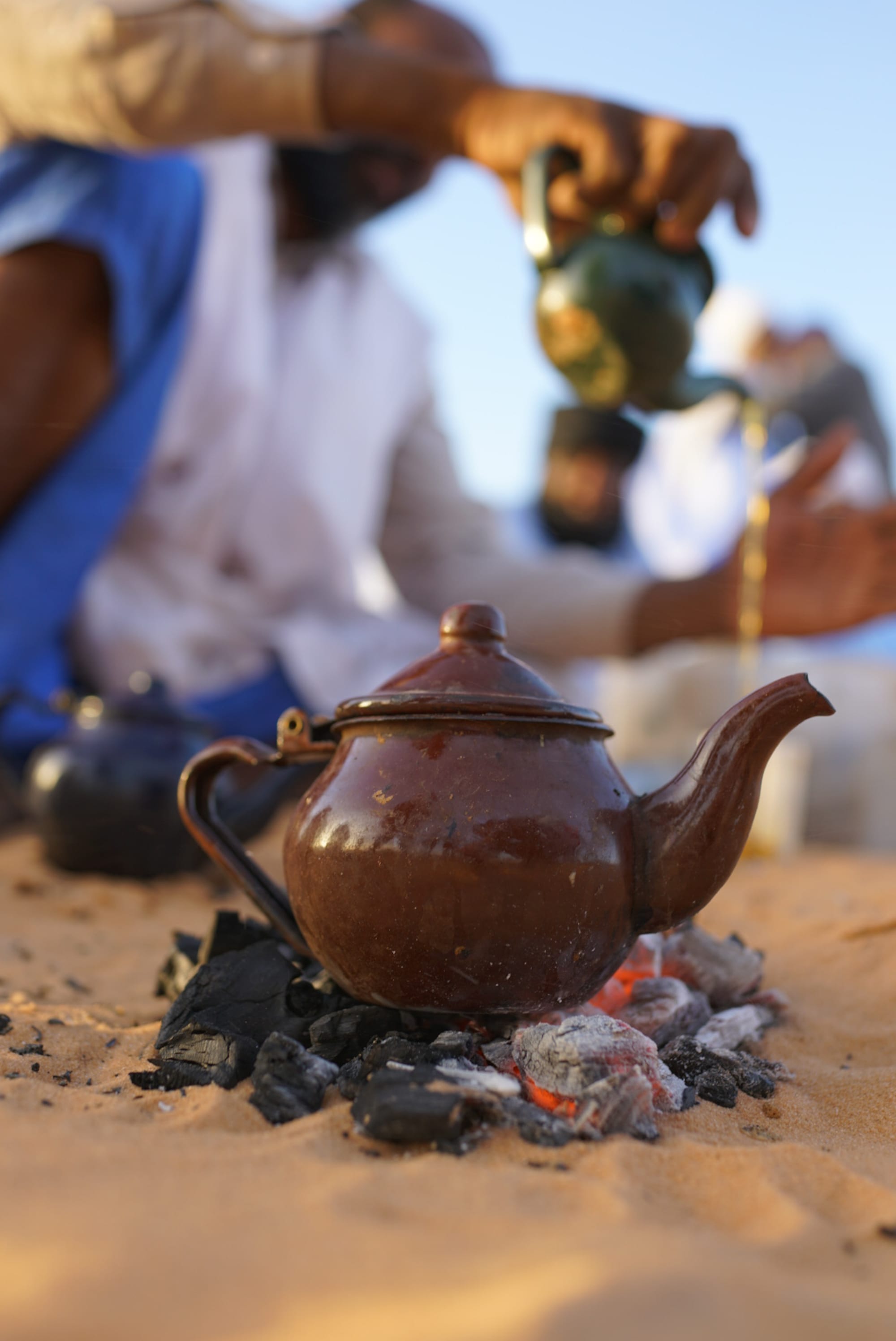
Mauritania was, within living memory, a country of herders following camels, goats and sheep between wells across the Sahara. The droughts of the 1970s and 80s drove most of the nomads into the towns, and in little more than a generation roughly a third of the population came to live in the capital alone. What survives from the older rhythm is the household itself, still large and still run along fairly fixed lines, and an afternoon tea ritual, three small glasses poured in sequence, that punctuates the day across the country regardless of whether the household in question lives in a Nouakchott apartment block or a desert tent.
Family and home life
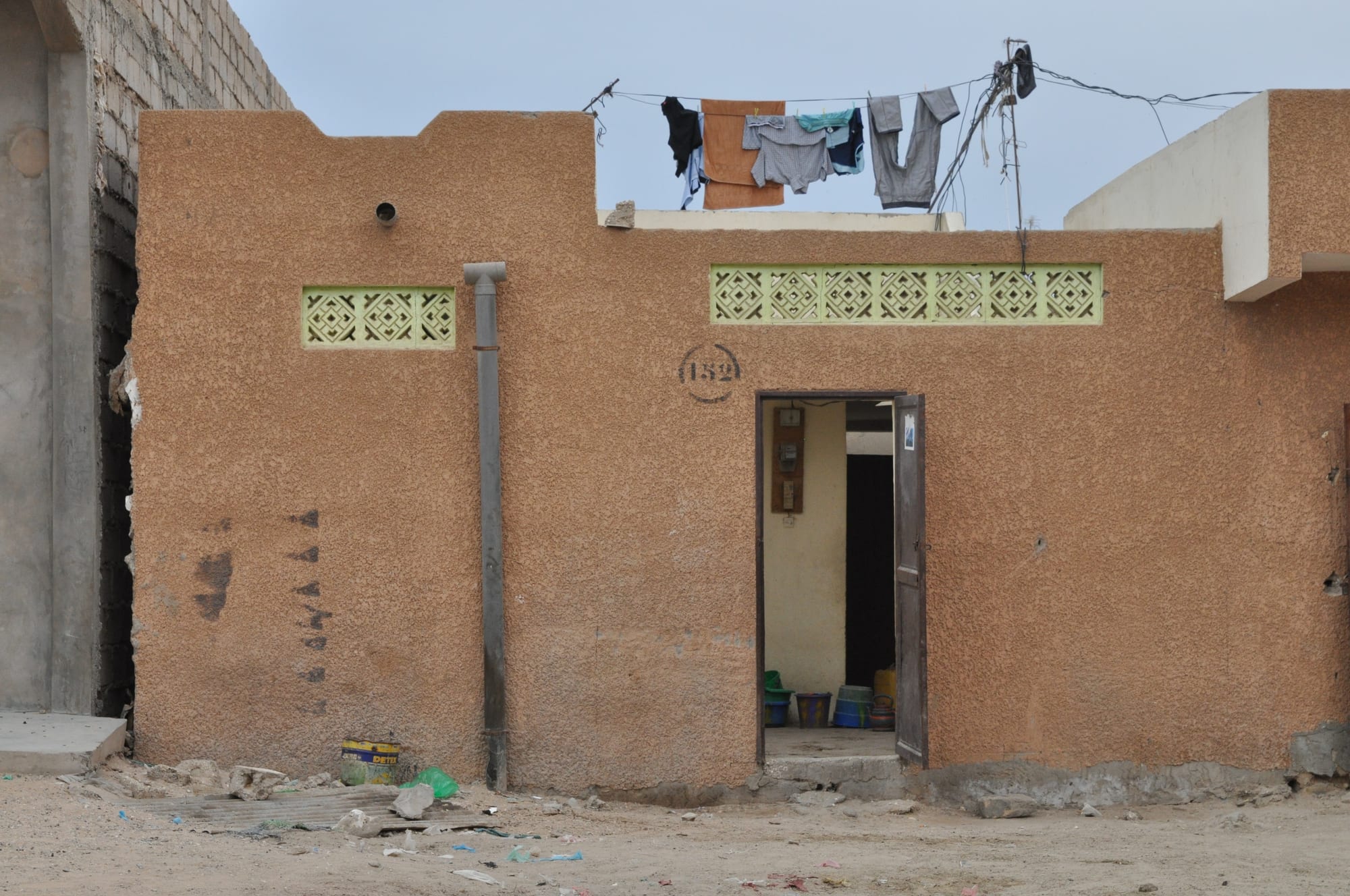
Households are large and commonly multigenerational, with the eldest man often holding the final say over major decisions and spending. Society is layered along lines that trace back centuries: the Bidhan, or "White Moors", are Arab-Berber and historically dominant; the Haratin, or "Black Moors", share the Hassaniya language and form the largest single group, descended from a formerly enslaved population; and Afro-Mauritanian communities — Halpulaar, Soninke, Wolof — live mainly along the Senegal River in the south and keep their own languages. Slavery was made a crime only in 2007, and campaigners and researchers report that descent-based servitude still persists in parts of the country despite the law, a fact that continues to shape which families do the hardest and least-paid work. Men typically wear the flowing daraa robe, women the bright wrapped malahfa, everyday dress rather than an occasion outfit.
Work, school and the rhythm of the day
Mauritania moved its official weekend to Saturday and Sunday in 2014, bringing its working week into step with most of the world's; Friday remains a working day but with an extended midday break for prayer. Offices keep regular weekday hours, though market stalls keep far longer and more irregular ones. Free primary schooling is widely available, but attendance and literacy remain uneven, particularly for girls and in rural areas, and many boys also attend a Qur'anic school, alongside or before formal education. Away from the capital, herding families still move livestock between wells and seasonal pasture, and farming households along the Senegal River grow rice, sorghum and vegetables on a calendar set by the river's flood rather than the office week.
Community life and public spaces
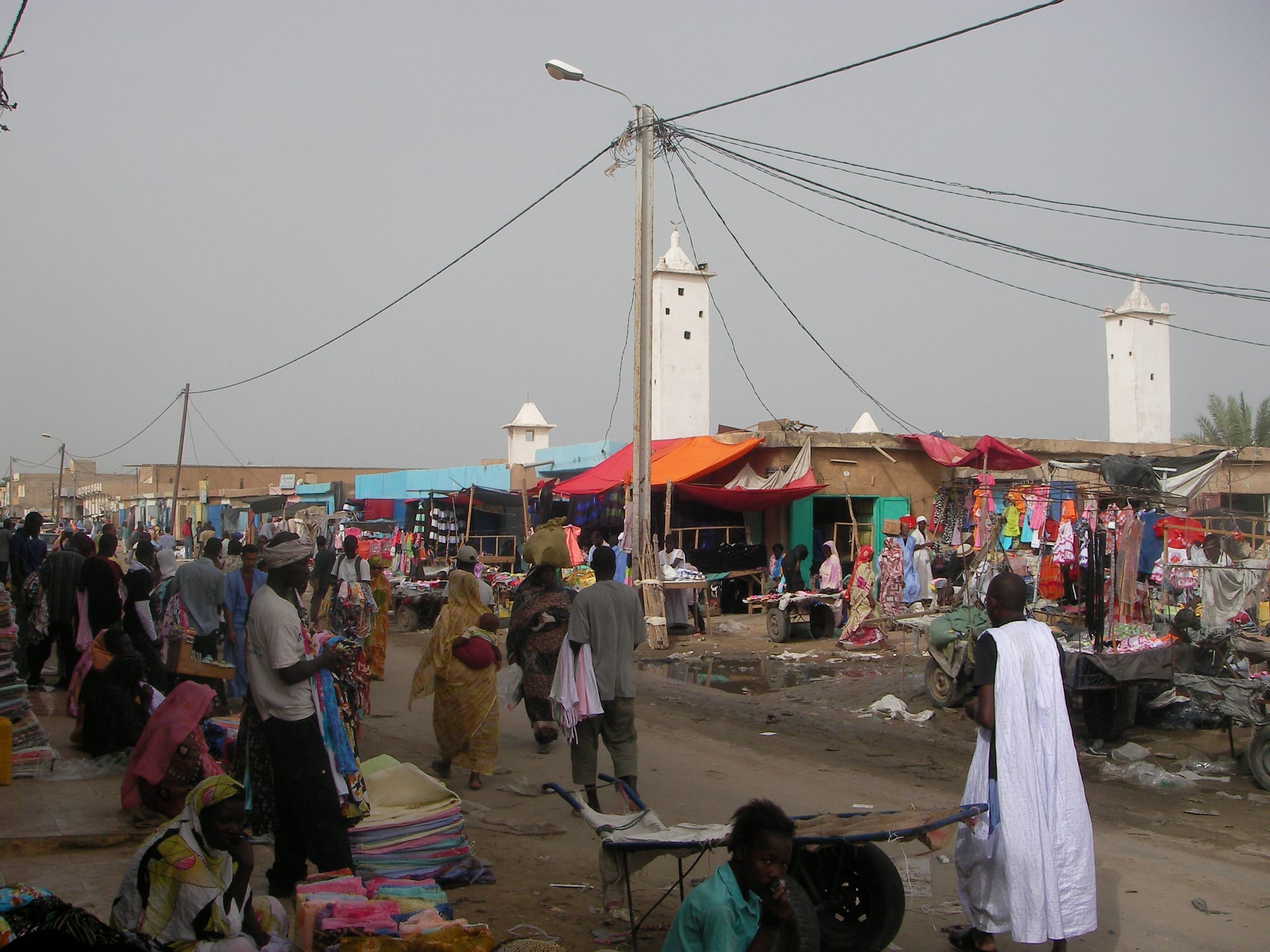
The bazaar remains the country's real public square, the place where produce, cloth, tools and prepared food change hands, and where most of an ordinary day's contact with anyone outside the household happens. Streets in Nouakchott and other towns are dense with stalls, handcarts and small shops, generally clustered around a mosque, whose minaret marks the centre of a neighbourhood as reliably as the market itself. Shared taxis and minibuses, rather than any fixed-route bus network, carry most people around the sprawling, sandy capital, and routes are negotiated rather than posted.
Free time and weekends
With Saturday and Sunday now the shared days off, weekends centre on family visits and the tea ritual itself: three small glasses of strong, sweet green tea, brewed and poured in sequence at an unhurried pace, each round meant to taste slightly different from the last. It happens in homes, in market stalls and around campfires alike, and is as much a social occasion as a drink. Poetry recited or sung in Hassaniya is highly regarded, kept alive in particular by griot families known as iggawin, who remain the country's best-known musicians.
A visitor's ordinary day
Mauritania runs overwhelmingly on cash; cards are accepted at only a handful of hotels in Nouakchott, and euros are the easiest foreign currency to change. Markets and small shops generally open by mid-morning and stay open into the evening most days, though Friday's midday hours are quieter as households observe the extended prayer break. Outside the capital and the Adrar tourist circuit, electricity and mobile coverage can be patchy, and getting between towns without a hired vehicle usually means a shared bush taxi that leaves once it is full rather than on any timetable.
What to take away
An ordinary day in Mauritania still carries the shape of a nomadic past inside a mostly settled present — a household built around the eldest generation, a bazaar that functions as the real town square, and an afternoon that, more often than not, is paced by three unhurried rounds of tea.