Daily Life · Marshall Islands
Marshall Islands: Life Along a Single Road
Land passed down through the mother's line, extended families who share what they have as a matter of course, and a population squeezed into two crowded urban centres while a daily ferry carries workers to a US military base most of them cannot live on
By Worldlore Editorial · 30 September 2026
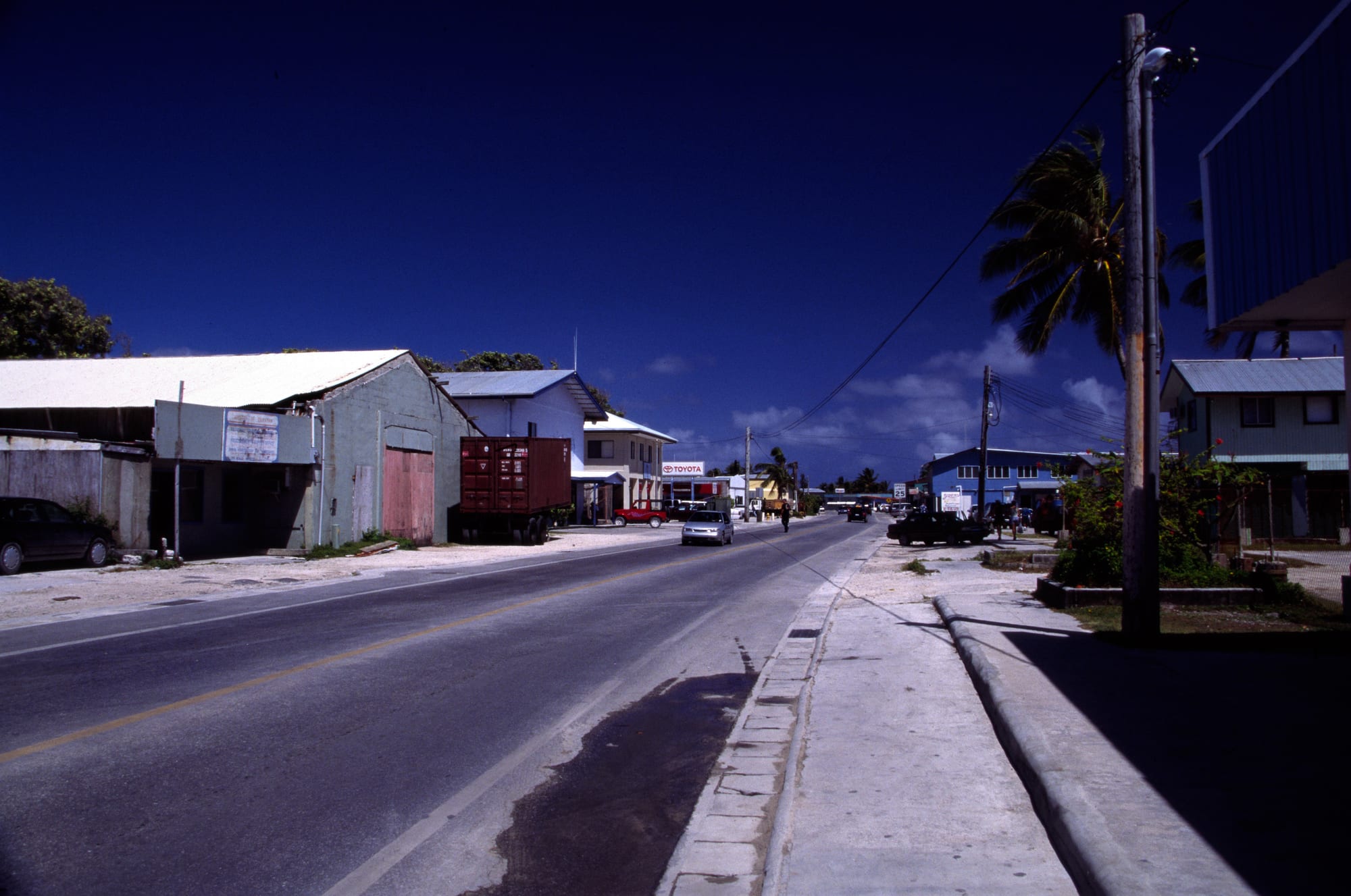
Daily life in the Marshall Islands plays out along impossibly narrow strips of land, many of them barely wider than a road. In the capital, Majuro, that means a single main road carries almost all of the atoll's traffic, shops and daily business from one end to the other. Land itself is scarce and precious, passed down not from father to son but through the mother's line, and family obligation runs deep enough that sharing food and resources with relatives is simply expected rather than remarkable. Roughly three-quarters of the population now lives packed into two small urban centres, Majuro and Ebeye, while life on the scattered outer atolls still moves to the older rhythm of the tide, the breadfruit season and the supply ship.
Family and home life
The basic social unit is the bwij, the matrilineal clan through which land and identity pass down from mother to child, administered day to day by traditional chiefs known as iroij. Because land is held by the clan rather than the individual and is in genuinely short supply, even finding room to bury the dead has become a problem, and some families have taken to placing a second burial in the same grave. Households are extended rather than nuclear by default: grandparents, aunts, uncles and cousins are considered close family, and food, housing and other resources are routinely shared among them, reflecting a general belief that a family's wellbeing is collective rather than individual. Traditional homes are simple, often with little furniture beyond woven pandanus sleeping mats rolled out at night, though concrete-block housing is now common in the crowded urban centres.
Work, school and the rhythm of the day
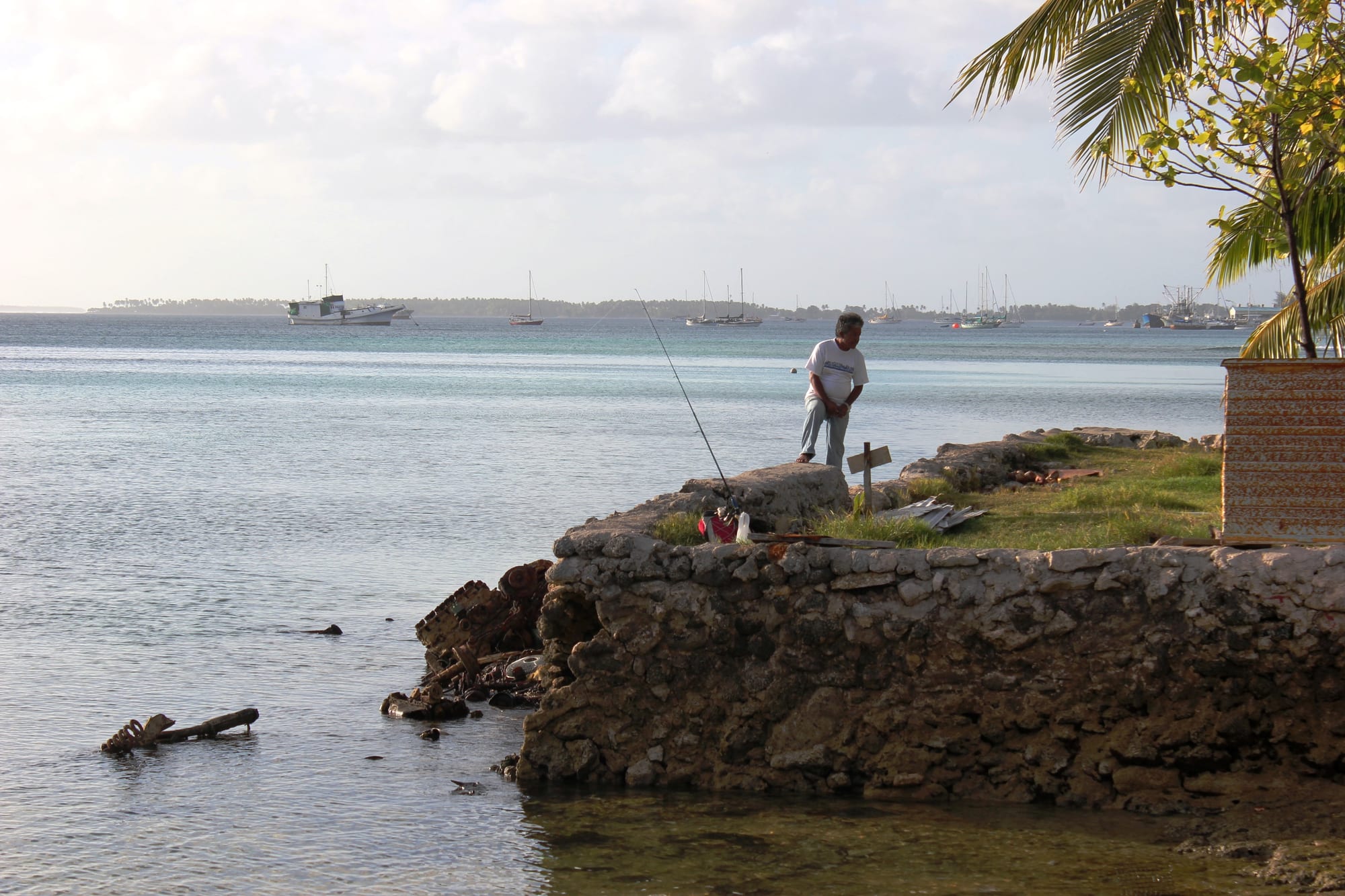
For a large share of Majuro and Ebeye's working-age population, paid employment means government work, a shop or trade job, or, for close to a thousand people a day from Ebeye, an early-morning ferry across the lagoon to work on the United States military's missile-testing base at nearby Kwajalein, where jobs are among the best-paid open to Marshallese workers. On the outer atolls, many households still live largely by subsistence fishing and growing breadfruit, taro, pandanus and coconut, with little wage work available. The school year begins in August, and Sunday is set apart nationwide: church services, mostly Protestant, anchor the day for most families, and Sunday itself is treated as a day of rest rather than errands or work.
Community life and public spaces
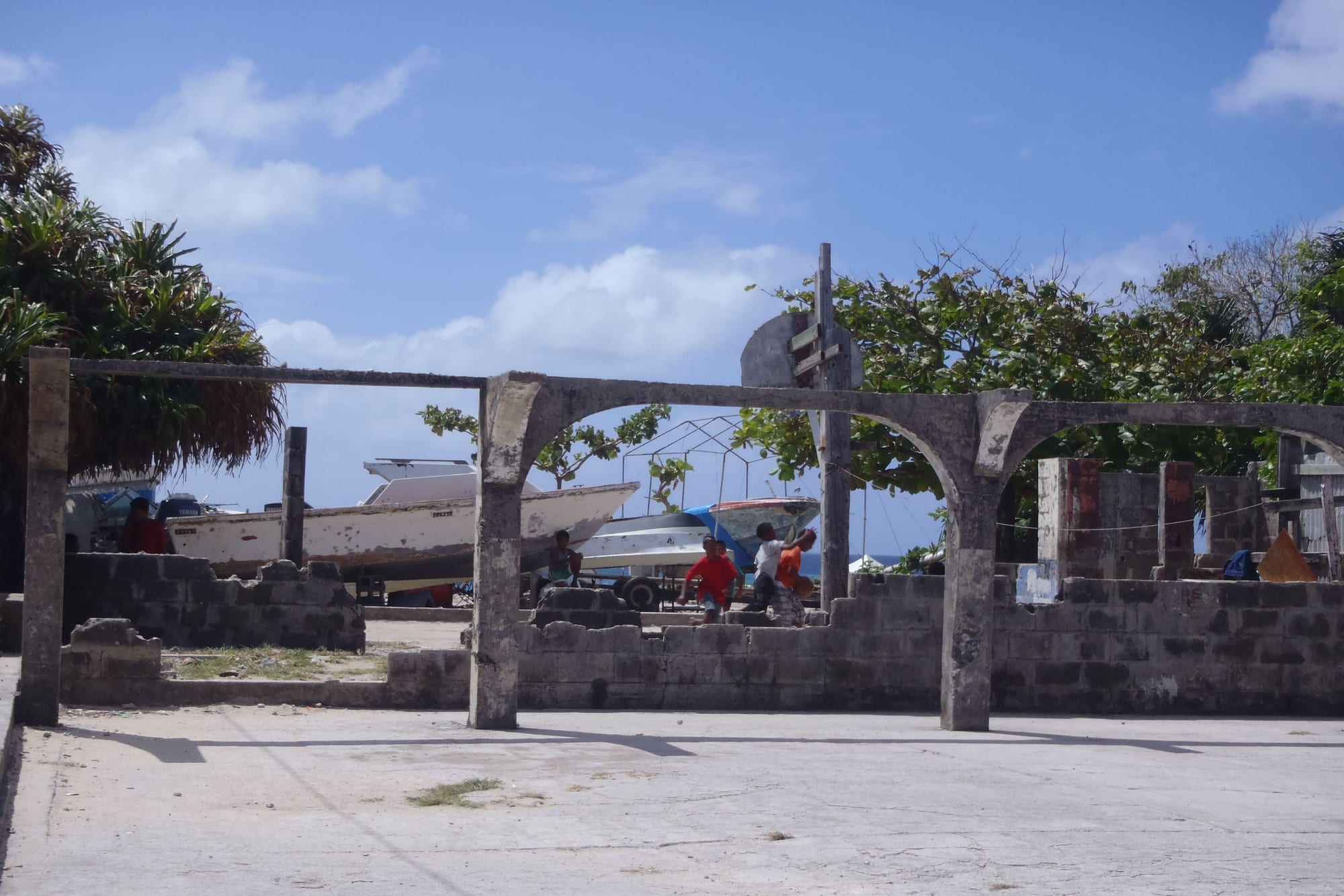
Majuro's entire town centre strings out along its single main road, so shops, offices, the market and the harbour all sit within reach of the same stretch of pavement rather than being spread across a city. Ebeye, the other major population centre, is one of the most densely built-up places on Earth, packing more than 8,000 residents onto roughly eighty acres of land, so that streets there double as the main shared space for children playing, neighbours talking and simply getting from one part of the island to another. Church halls, basketball courts and the harbour where the outer-atoll field-trip ship docks are the other places where community life visibly happens, since open public land is in short supply almost everywhere in the country.
Free time and weekends
Outrigger canoe sailing and wave-reading navigation, once purely practical skills, are now also treated as living heritage, celebrated each year on Manit Day, the national culture day on the last Friday of September, with canoe races and weaving contests. Basketball is one of the most popular sports, played on courts squeezed into whatever open ground a neighbourhood has, and church choir practice and fundraising events fill much of the weekly social calendar for many families. Weekends on the outer atolls bring fishing, boat trips between islets and time spent on the traditional weaving of pandanus and coconut fibre into mats and baskets, a skill still passed down through the women of a family.
A visitor's ordinary day
The US dollar is the currency everywhere, but cash is essential outside a handful of hotels in Majuro, and ATMs exist only on Majuro and Ebeye, not on the outer atolls. Domestic flights to the outer atolls run on a thin schedule, and cancellations and long delays are normal, so any itinerary involving them needs generous buffer time, and the government's field-trip ship, which serves the remoter atolls on long circuits, runs to an even less predictable timetable. On Majuro, shared taxis run up and down the main road all day and can be flagged down almost anywhere along it, which is, in practice, the easiest way to get around.
What to take away
An ordinary day in the Marshall Islands is shaped, above almost anything else, by how little land there is to hold it: a country of narrow atolls where family, work and daily life are all packed onto strips of ground that, in Ebeye's case, are barely wider than the road running through them.