Culture & Customs · Malta
Malta: A Saint for Every Village
A parish church at the heart of every community, a summer of festas fought out in fireworks and brass bands, a handshake that opens and closes every formal meeting, and family ties that reach into almost every corner of island life
By Worldlore Editorial · 30 September 2026
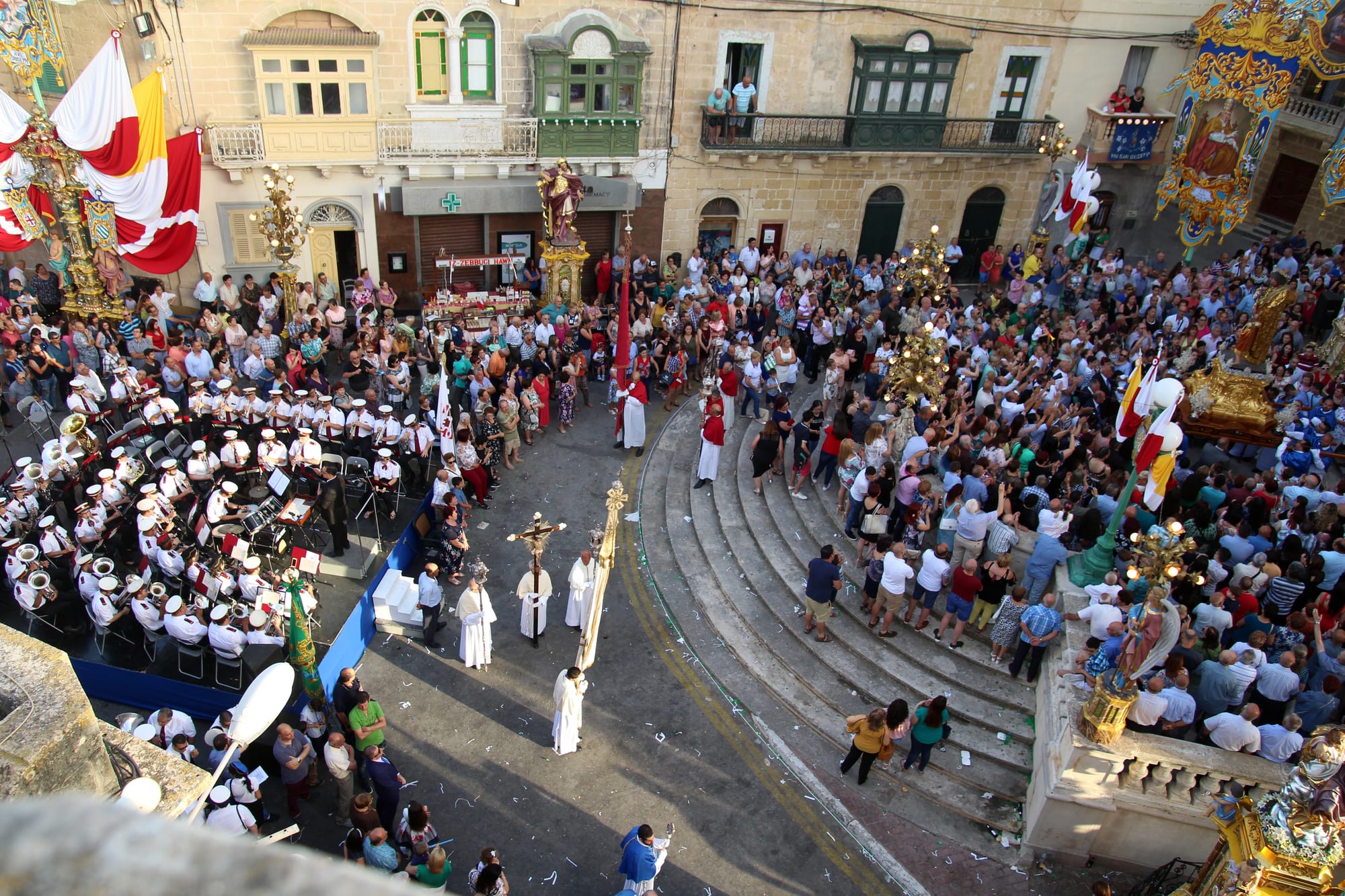
It is the last evening of the village festa. For a week the streets have been hung with banners and lights, the band club has marched, stalls have sold nougat by the slab, and every night has ended in fireworks. Now the great doors of the parish church swing open and the statue of the patron saint, carried on the shoulders of parishioners, emerges into the square. Clergy lead the way, a brass band strikes up, the church bells ring out, and the crowd presses closer to watch the figure it has known since childhood pass along its streets once more. Few scenes say more about Malta: a place where faith, family and fierce local pride are so closely woven together that a religious feast is also the high point of the social year.
Faith, identity and values
The Roman Catholic Church runs through Maltese life. At the 2021 census about 83 per cent of the population identified as Catholic, though only around a third attend Sunday Mass, and the islands are dotted with hundreds of churches for a country smaller than many cities. Villages are built around their parish church, and the milestones of life, from baptism and confirmation to marriage, remain rooted in it even for those who rarely attend Mass. Younger Maltese are more likely to see the Church as out of step with their concerns, and secularisation and migration are slowly diversifying the religious landscape, but the calendar, the map and much of public life still turn around the parish.
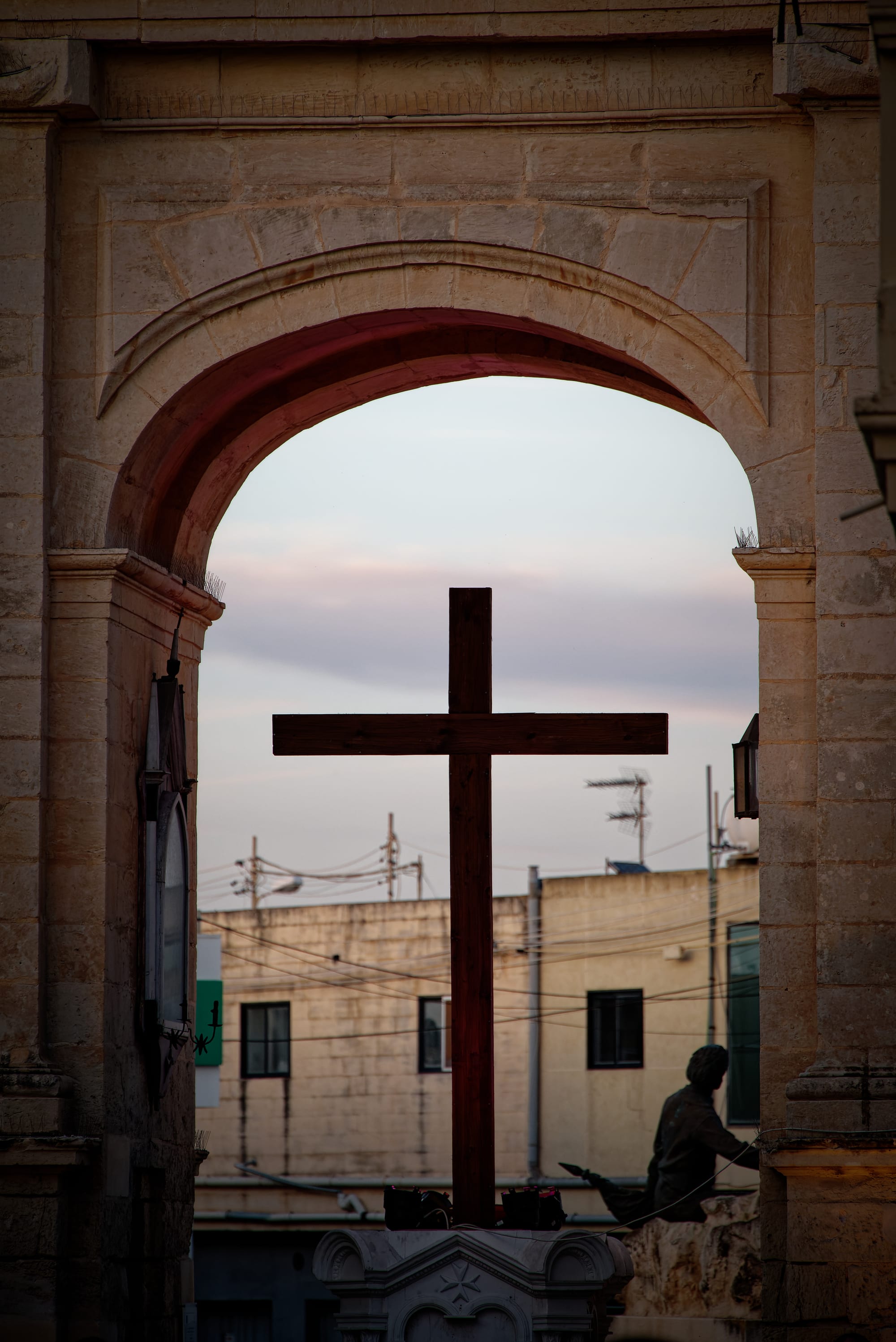
Faith is at its most public in Holy Week. On Good Friday, towns and villages across Malta and Gozo stage solemn processions in which statues, each depicting an episode of the Passion, are carried through the streets by bearers. Between the statues walk participants dressed as biblical figures, and some processions include penitents carrying crosses, at times with chains tied to their bare feet. Two days later the mood turns: on Easter Sunday many parishes parade a statue of the risen Christ, usually accompanied by a local band.
Family is the other foundation. The Cultural Atlas describes every level of social interaction as shaped by the family, and in a small, densely populated country family reputations are widely known and carried across generations. Personal dignity and the good name of the family matter a great deal, and modesty is valued; boasting about wealth or status is frowned upon. Alongside that runs pika, a competitive streak — the wish to outdo a neighbour or rival — that shows itself most famously in the rivalry between villages, and sometimes between two parishes in the same town, over whose festa is the finest. Maltese people tend to see themselves as a distinct nation rather than simply European, a bridge between Europe and North Africa, and the Maltese language, a Semitic language and the only Afro-Asiatic official language of the European Union, is central to that identity. Most people also speak English, and many some Italian.
Greetings and meeting people
Formal greetings begin and end with a handshake. Among friends and family, greetings are warmer and more physical: people pat one another on the back, shoulder or arm, and hugging and kissing in public are common. With new acquaintances it is usual to use a title and surname, and first names wait until an invitation is given. Older people often greet others with a nickname or a shortened form of their name, so that a Ġużeppi may simply be hailed as Ġuż.
Conversation tends to be direct, lively and loud, with people standing or sitting close together and holding eye contact. Humour is a constant, and it often comes in the form of stories. Football and politics are subjects of passionate debate, and occasionally the passion wins out over the debate.
Hospitality and being a guest
Maltese people are warm and generous, especially with friends and family, and much of social life takes place in each other's homes. It is polite to arrange a visit in advance rather than dropping in unannounced. Hosts generally offer a drink and something light to eat, such as cakes, biscuits or sandwiches. Guests invited for a meal often bring wine, chocolate or flowers, and gifts are usually opened in front of the giver.
At the table, hands are kept above the table rather than in the lap, and a knife and fork laid parallel on the plate signal that the meal is finished. Breakfast and lunch are often light, while dinner is the main meal and can run to several courses. Appearance matters: people tend to dress formally and modestly, and hats are removed on entering a home or a church. Timekeeping in social settings is relaxed, and the Maltese themselves refer to it, with some affection, as "island time".
Festivals and life's big moments
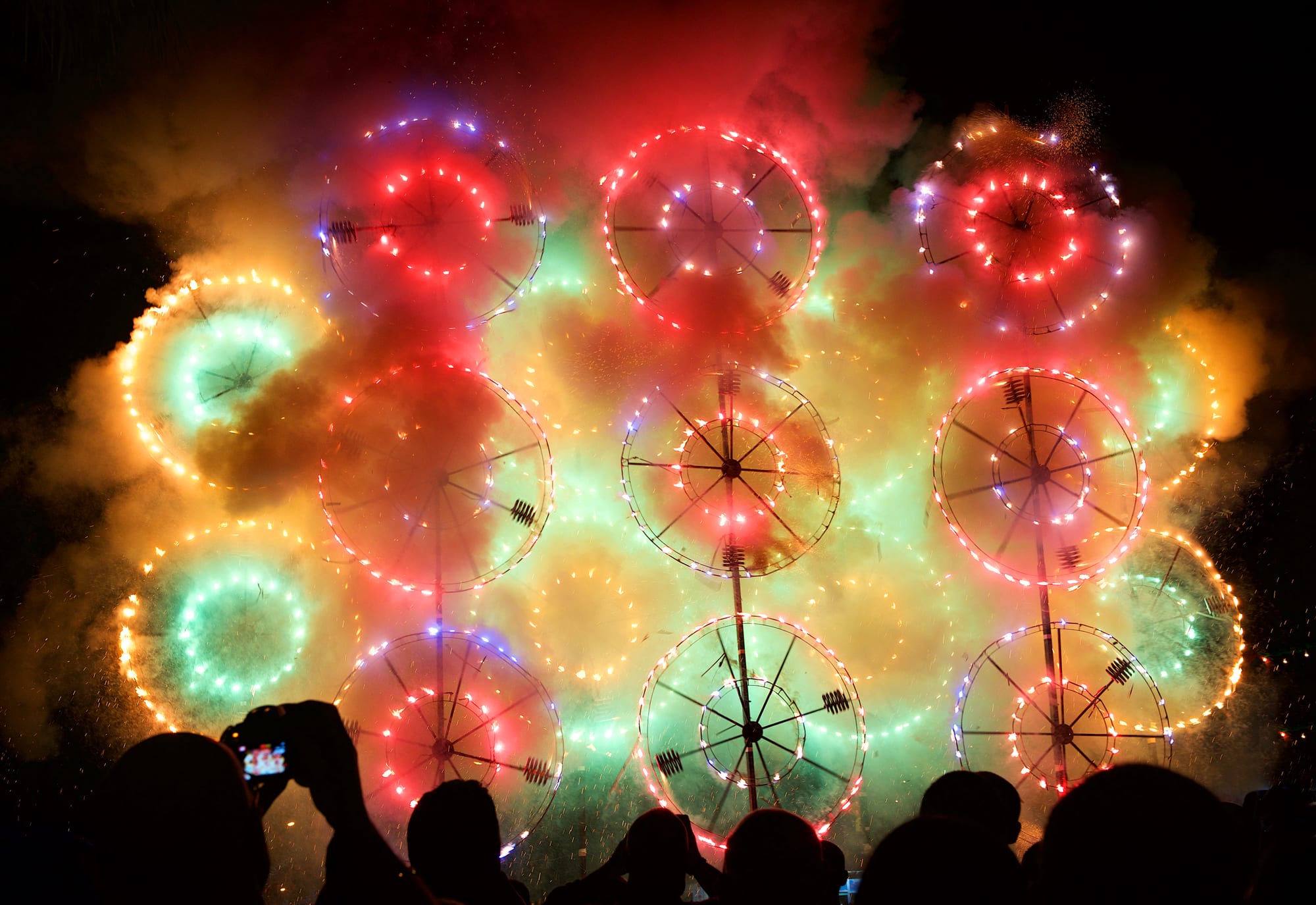
The village festa is the heart of the Maltese year, and it is on UNESCO's list of intangible cultural heritage. Each parish honours its patron saint with a festa that typically lasts a week, and the main season runs from the end of April to the beginning of October, so that on almost any summer weekend a festa is under way somewhere. Volunteers prepare throughout the year. Festa week brings concerts, band marches, bell ringing and fireworks, street stalls selling festa food such as nougat, and, on the final day, the procession of the statue led by the clergy and accompanied by parishioners and bands. Children learn the stories and songs of their village by taking part, and some parishes hold children's processions with smaller statues. Fireworks are a craft in their own right, and neighbouring villages compete to put on the most spectacular display, from aerial shells to ground fireworks of spinning, sparking wheels.
Other dates mark the national calendar. Carnival, held before Lent, is one of Malta's oldest festivities, celebrated since at least the 15th century and prominent since the rule of the Knights of St John, and its most exuberant events centre on Valletta. On 29 June, Mnarja, the feast of St Peter and St Paul, keeps the atmosphere of a traditional harvest and folk festival, with music, food, an agricultural show and horse races. It has been celebrated since at least the 16th century, and the reading of the bandu, an official proclamation, remains part of it.
Family milestones follow Catholic forms but carry customs of their own. On a child's first birthday comes the quċċija: a selection of objects is laid out on the floor, and whichever the child reaches for first is taken, half in fun, as a sign of the path the child will follow in life. Weddings are elaborate Catholic occasions, typically a Mass followed by a lavish reception that often includes several hundred guests. In the past, the bridal party walked in procession from the bride's family home to the parish church, with singers following behind to serenade the couple. Funerals centre on the parish too. The cortege is met at the church door, where the coffin is blessed before a funeral Mass, and the priest then accompanies the mourners from the church to the cemetery for the burial.
Arts, crafts and music
Malta's best-known folk music is l-għana, a tradition of rhymed folksong on UNESCO's list of intangible cultural heritage. It takes three related forms. The most popular is the quick-wit għana, an improvised duel between one or two pairs of singers, won on rhyme, persuasive argument and sharp repartee. The factual għana is a long narrative poem, usually sung solo from memory, that records events in a community's life, while the Bormla style, historically associated with women, is sung with a wide vocal range and a distinctive vocal technique. Għana is performed year-round in public and private venues and at open-air festivals, and it is regarded as important to the life of the Maltese language itself.
Music is also a village institution. The band clubs that march through the streets at festa time are central to parish life, and their marches, solemn on Good Friday and jubilant at Easter and on feast days, provide the soundtrack to the religious year.
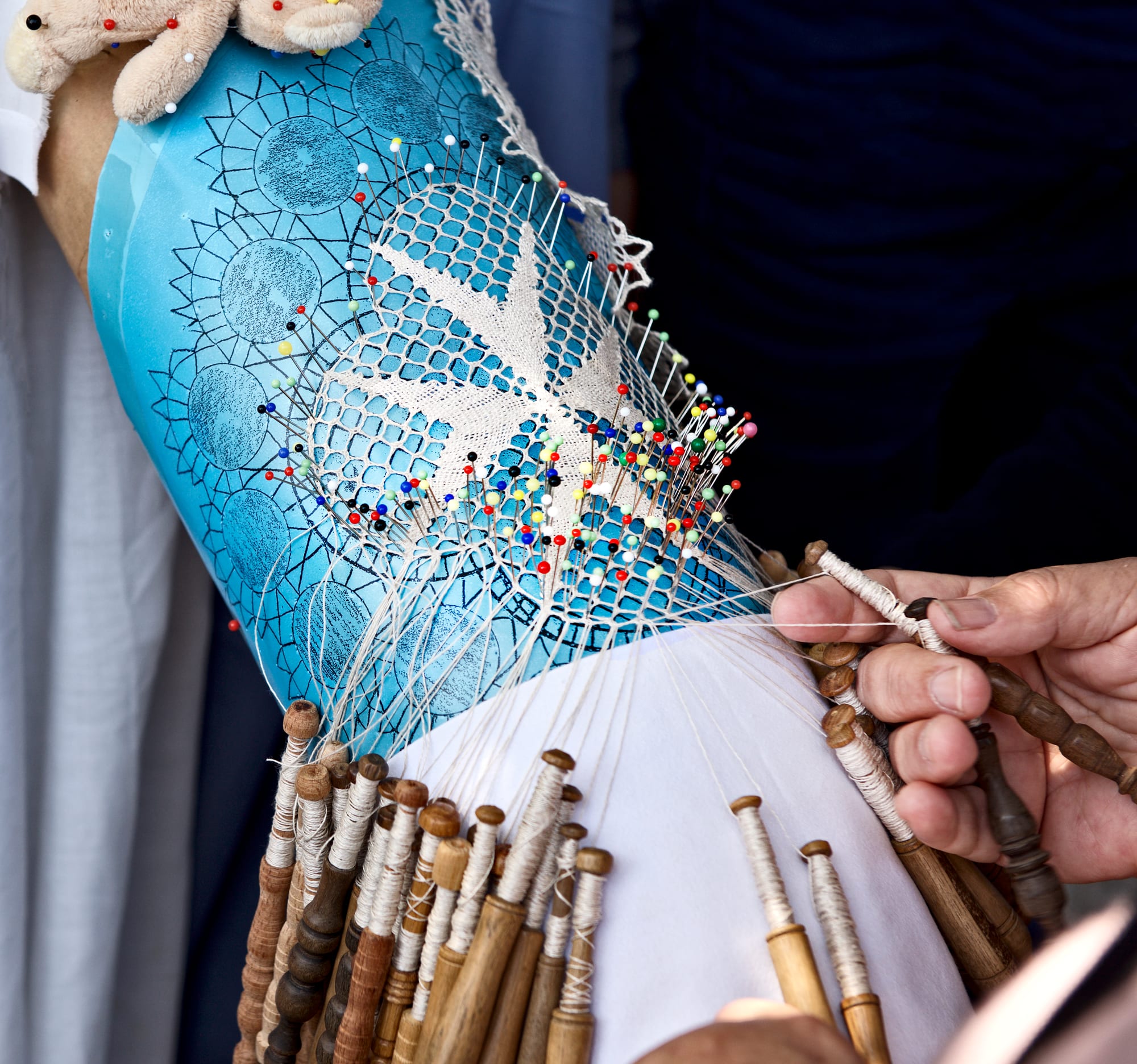
Lace-making, known as bizzilla, is the craft most closely tied to the islands, and above all to Gozo, where it became especially established from the mid-19th century, when lacemakers from Genoa were brought to the islands. Maltese lace is bobbin lace, worked in silk or linen thread on a tall pillow called a trajbu, following a pattern pricked out on parchment to show where the pins go. It was shown at the Great Exhibition in London in 1851 and became popular in Britain, and many women and girls made lace at home as a family cottage industry. Its signature motif is the eight-pointed cross, often worked into the pattern, and the finest pieces are usually made in cream silk. Fewer people make it now, but lace days and classes are helping to keep the craft alive.
Dos and don'ts for visitors
- Do shake hands when meeting and leaving in formal settings, and use a title and surname until invited to use a first name.
- Do dress modestly, especially when visiting a church, and remove hats on entering a church or a home.
- Do arrange home visits in advance, and bring wine, chocolate or flowers if invited for a meal.
- Do keep hands above the table, and place knife and fork parallel on the plate when finished.
- Do open gifts in front of the giver, as the Maltese generally do.
- Do allow for "island time" in social arrangements rather than expecting strict punctuality.
- Don't mistake loud, direct conversation for anger; debate over football and politics is part of social life.
What to take away
In Malta a village's saint, a family's name and a parish's pride are all bound up together, and visitors who watch a festa with respect, greet properly and accept a little island time will find themselves welcomed into that close-knit world with real warmth.