History
Malta's story begins with some of the oldest free-standing structures on Earth. The megalithic temples of Ġgantija on Gozo, and Ħaġar Qim and Mnajdra on the main island, were raised between roughly 3600 and 2500 BC — older than the Egyptian pyramids and Stonehenge — by a society that then vanished. Phoenicians, Carthage, and Rome followed; tradition holds that the apostle Paul was shipwrecked here around AD 60 and converted the islands.
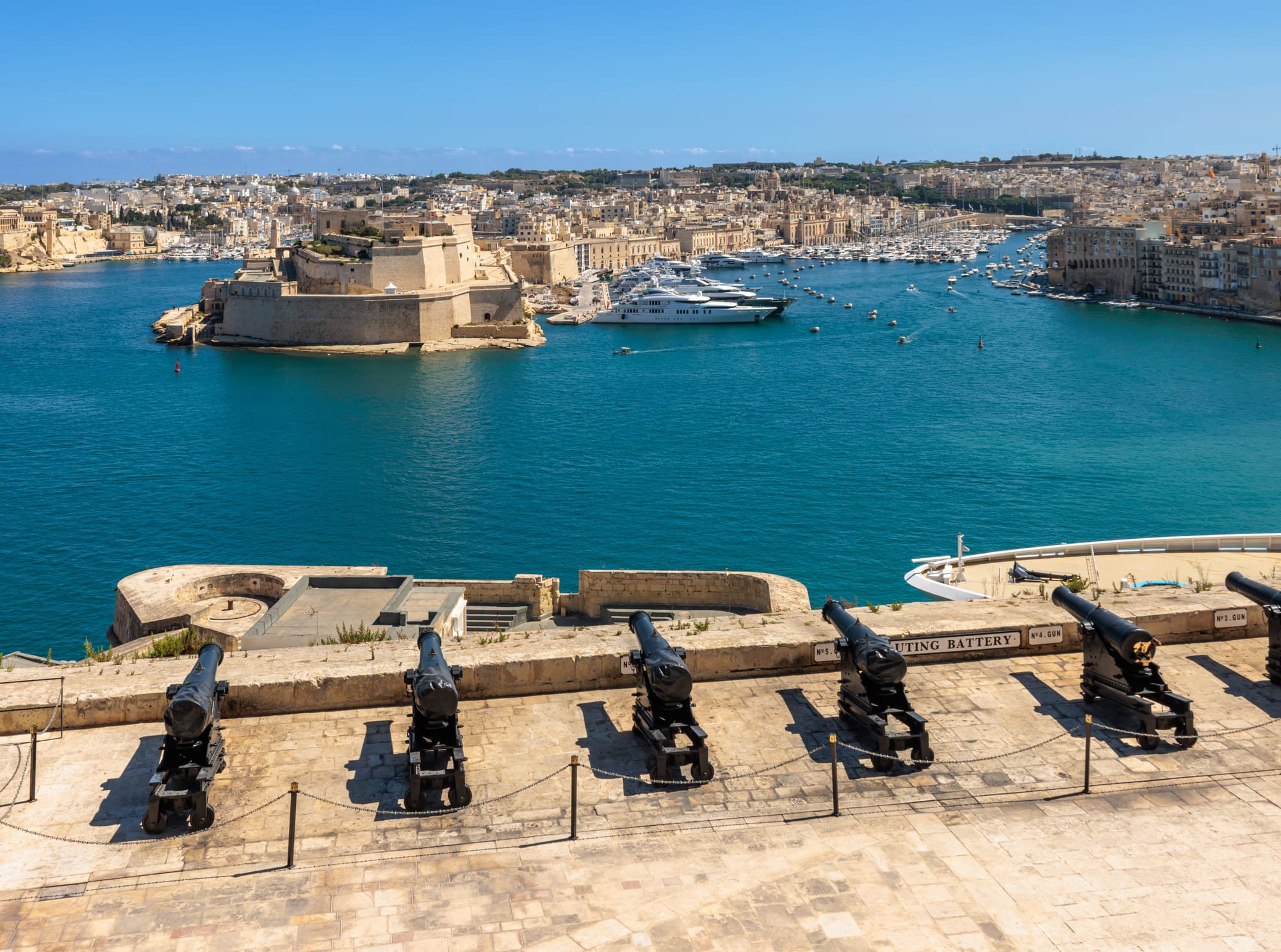
Arab rule from 870 reshaped the language and much of the place-naming before the Normans took Malta in 1091 and tied it to Sicily. The decisive chapter came in 1530, when Emperor Charles V granted the islands to the Knights of St John. In 1565 the Knights and the Maltese withstood a months-long Ottoman siege — the Great Siege — and afterwards built the fortress city of Valletta. Napoleon expelled the Knights in 1798; a Maltese revolt and a British blockade brought the islands under Britain, formalised in 1814.
As a British colony and naval base, Malta was besieged and heavily bombed in the Second World War, and the whole island was awarded the George Cross for its endurance. Independence came in 1964, a republic was declared in 1974, and the last British forces left in 1979. Malta joined the European Union in 2004 and the euro in 2008. The 2017 car-bomb murder of the journalist Daphne Caruana Galizia and the political crisis that followed brought lasting scrutiny of governance and the rule of law.
- Malta: The Fortress in the Middle of the Sea — Temple builders older than the Pyramids, a Semitic language on a Catholic island, the Knights of St John and the Great Siege of 1565, the George Cross of the Second World War, and a small EU state