Attractions & Natural Wonders · Mali
Mali: Six Attractions and Natural Wonders
The largest mud-brick building on earth, a legendary desert trading city, and cliff villages carved into a 150-kilometre sandstone escarpment — a portrait of a country closed to nearly all travel by war
By Worldlore Editorial · 19 September 2026
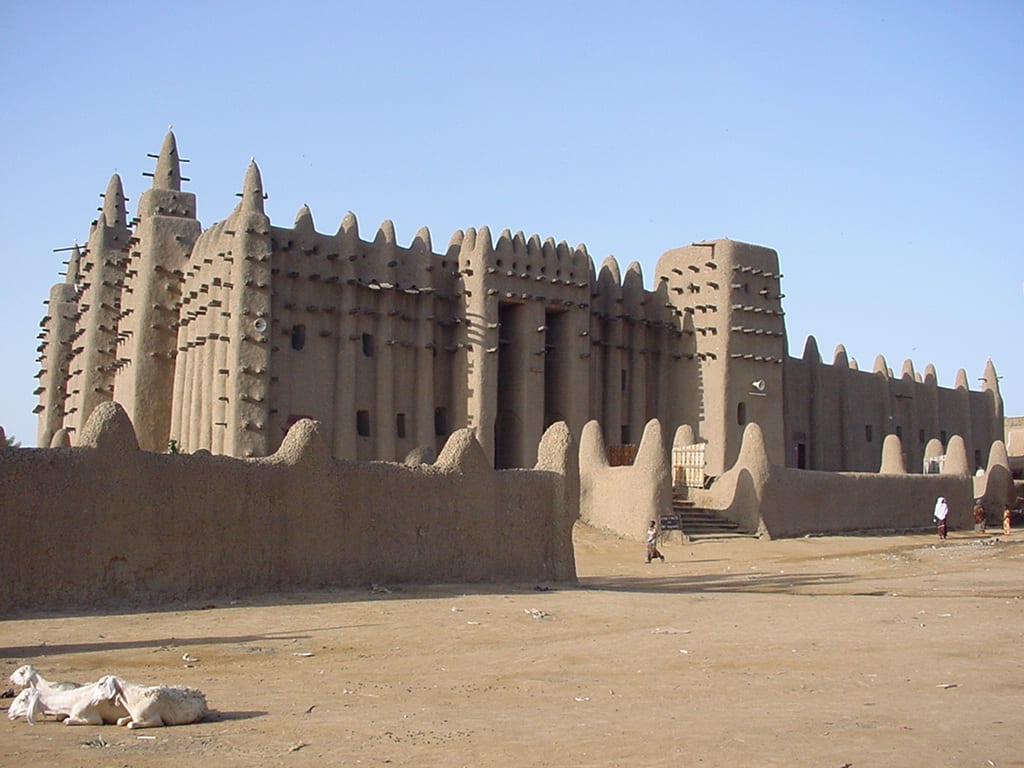
Empires of the Sahel
Mali, a large landlocked country in West Africa, was the heart of some of the richest and most learned empires in African history — Ghana, Mali, and Songhai — built on trans-Saharan gold and salt trade, with Timbuktu once a legendary centre of Islamic scholarship. It has about 23 million people, a mostly desert and Sahel landscape crossed by the Niger River, and extraordinary earthen architecture. Since a 2012 rebellion and jihadist insurgency, followed by repeated military coups, large parts of the country have been outside government control, and it has effectively closed to tourism for over a decade.
The six below are Mali's landmark sights, described for reference. Read the note at the end first: at the time of writing, virtually all foreign governments advise against all travel to Mali.
1. The Great Mosque of Djenné
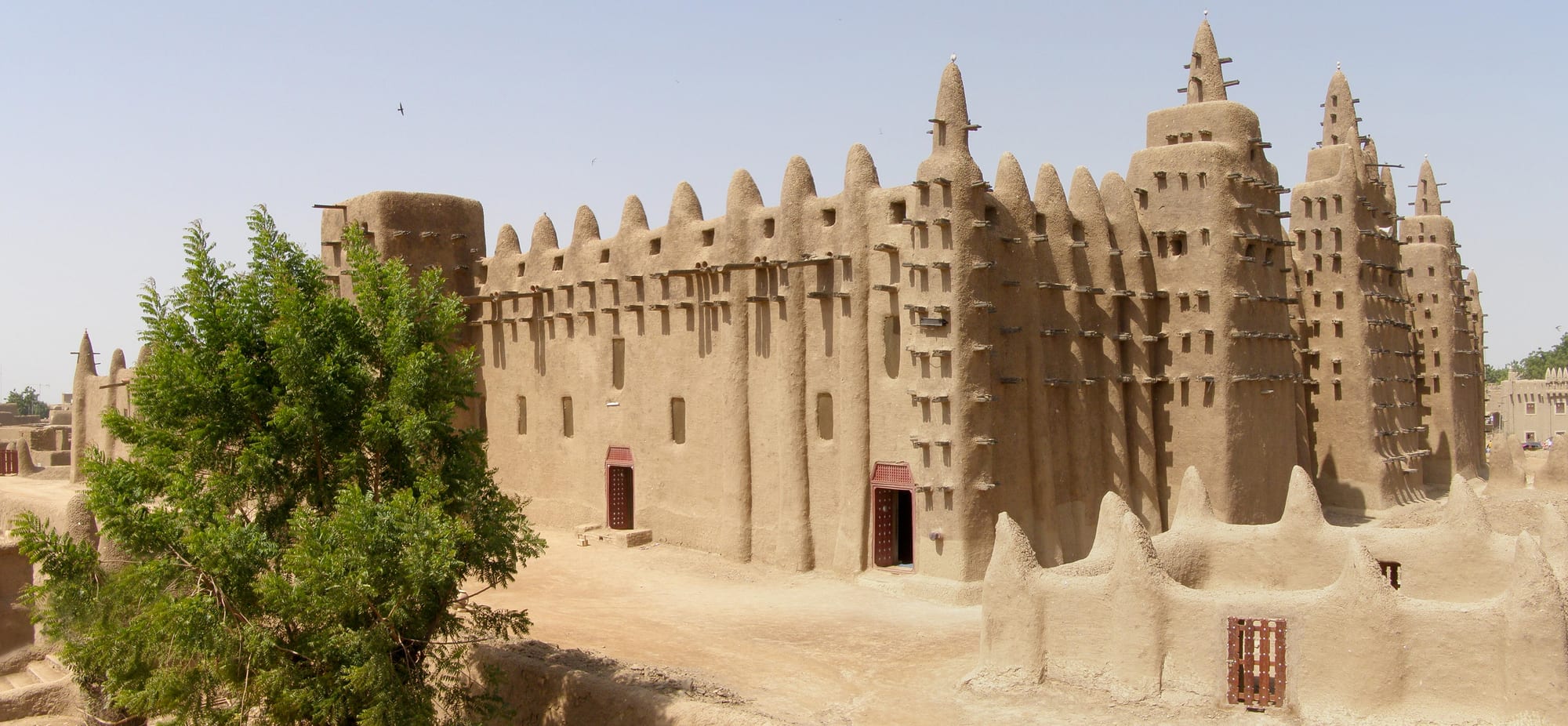
Djenné, on the Niger's inland delta, has been continuously inhabited since around 250 BC and grew rich as a trade and Islamic learning centre. Its Great Mosque, the largest mud-brick building in the world, is rebuilt each year in a community festival — the whole town replasters the walls by hand after the rainy season, using the protruding wooden beams as scaffolding. The old town around it, a maze of similarly built mud houses, is a UNESCO World Heritage Site.
Non-Muslims may not enter the mosque itself but can view it from the surrounding square and market.
2. Timbuktu
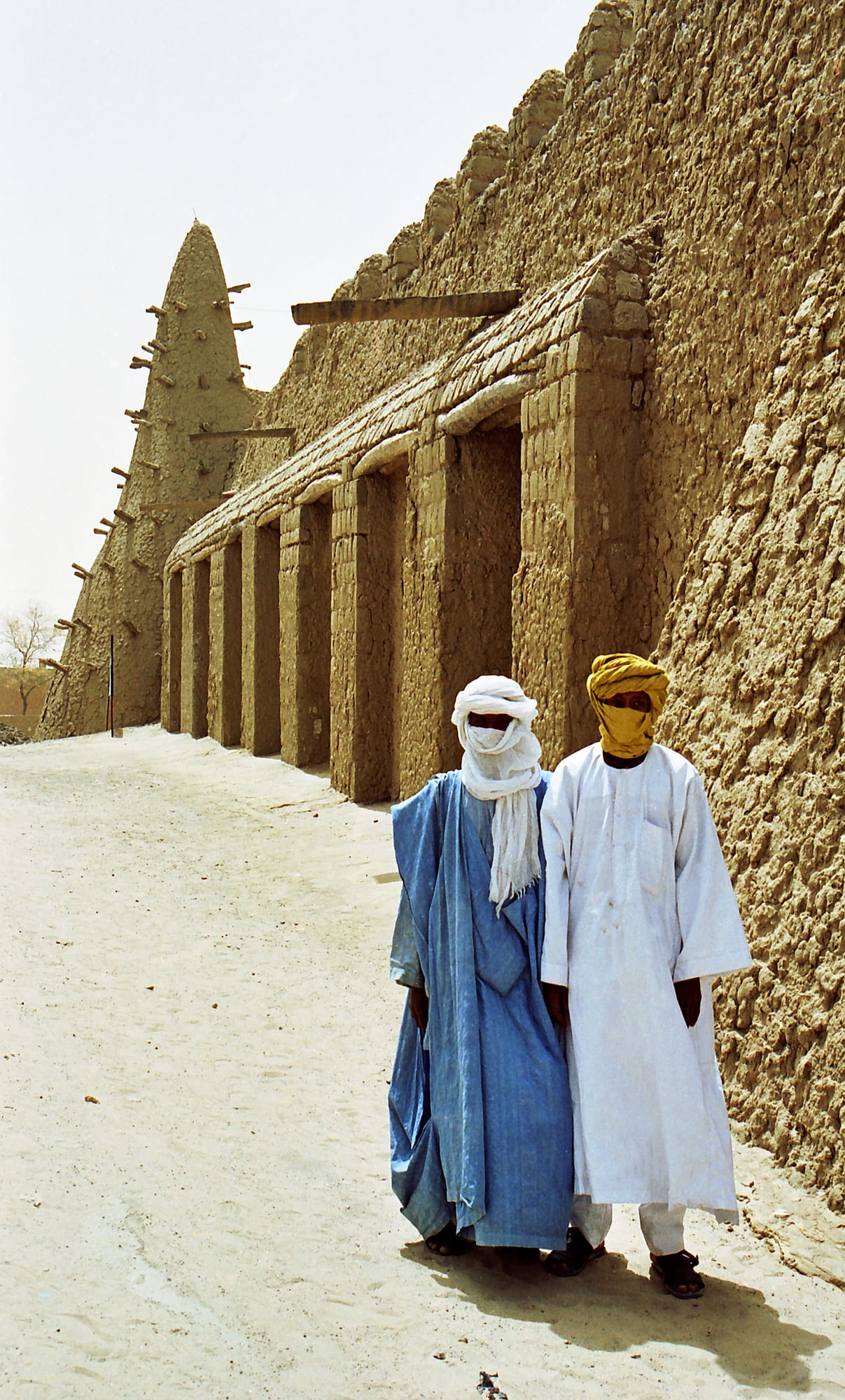
Timbuktu, on the edge of the Sahara, was a legendary centre of Islamic scholarship from the 13th to 17th centuries, its libraries holding hundreds of thousands of manuscripts on subjects from astronomy to law — many still preserved by private families and institutions. Its three great mud mosques, Djinguereber, Sankoré, and Sidi Yahya, are a UNESCO World Heritage Site, though the city's shrines were partly destroyed by jihadist occupiers in 2012, since restored with UNESCO support.
The city remains a byword in English for extreme remoteness — and, today, for serious insecurity.
3. The Bandiagara Escarpment
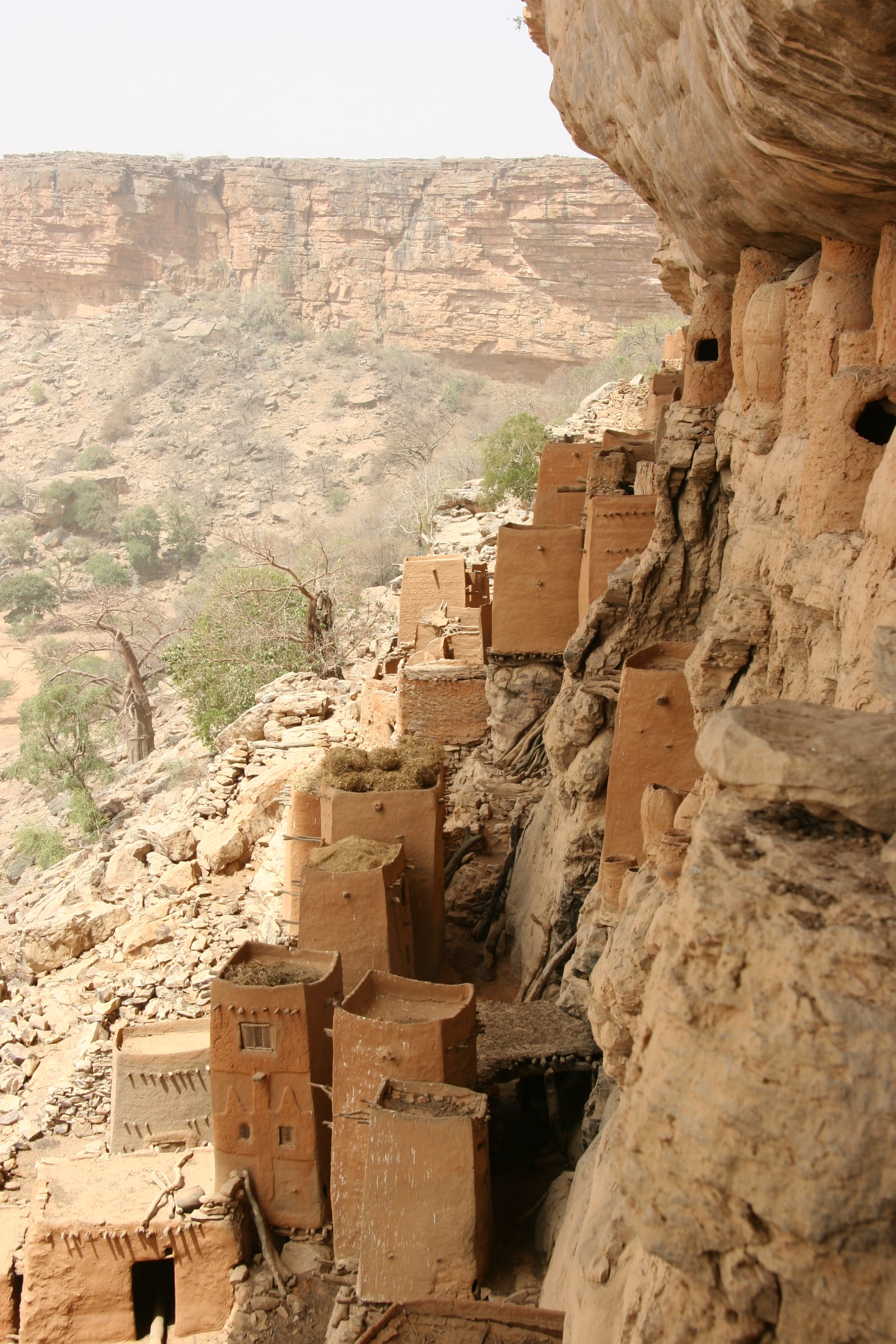
The Bandiagara Escarpment, a dramatic sandstone cliff running some 150 kilometres through central Mali, has sheltered the Dogon people for centuries, who built villages of granaries and houses into and beneath the rock, partly on sites earlier occupied by the Tellem people, whose own cliffside dwellings are still visible higher up. The whole landscape and its architecture form a UNESCO World Heritage Site combining cultural and natural significance.
It was, before the crisis, one of West Africa's premier trekking destinations.
4. The Dogon villages
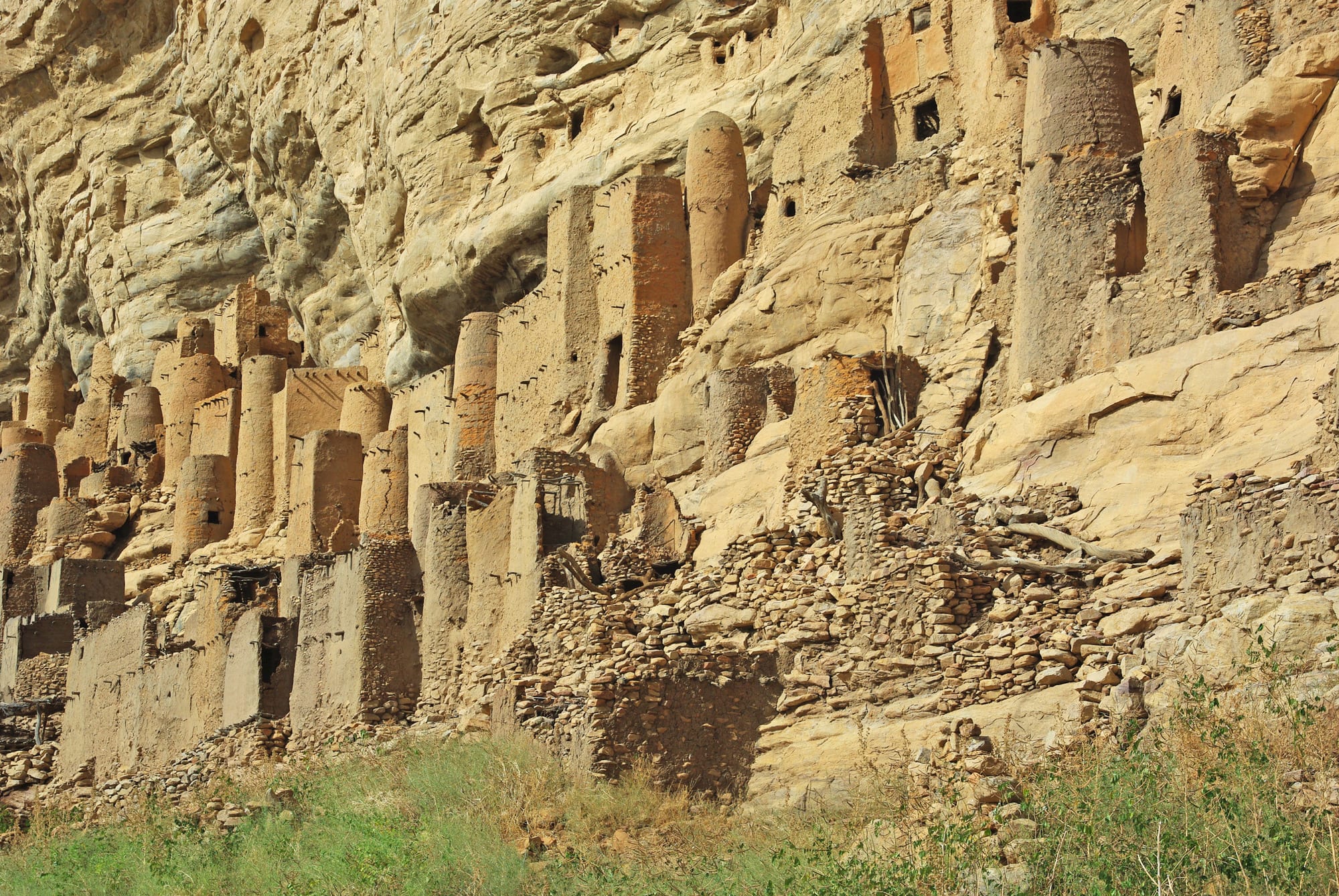
Dogon villages are built from the same reddish mud as the cliffs behind them, their granaries topped with distinctive thatched conical roofs, and their communal meeting houses (togu na) deliberately low-ceilinged to keep arguments seated and calm. Dogon cosmology, mask dances, and funeral rites (notably the dama) have long fascinated anthropologists, and villages such as Sanga and Tireli were, before the conflict, the focus of guided multi-day treks along the escarpment.
5. The Niger River
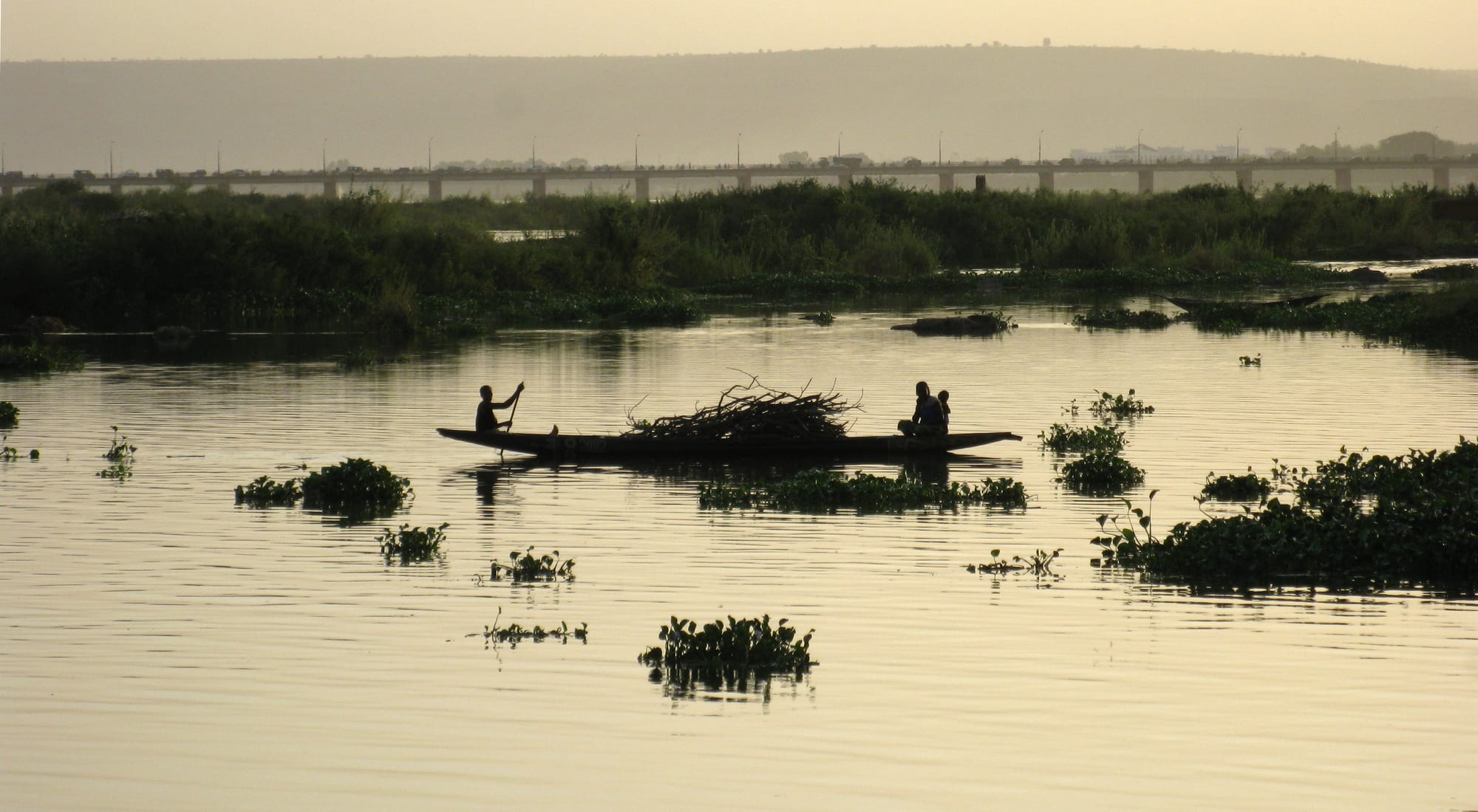
The Niger, Africa's third-longest river, forms a great inland delta across central Mali before curving toward Timbuktu — historically the country's central highway, still used for pirogue transport, fishing (notably by the Bozo people), and, in the annual Diafarabé crossing festival, the return of Fulani cattle herds across the river after the rainy season.
6. Bamako
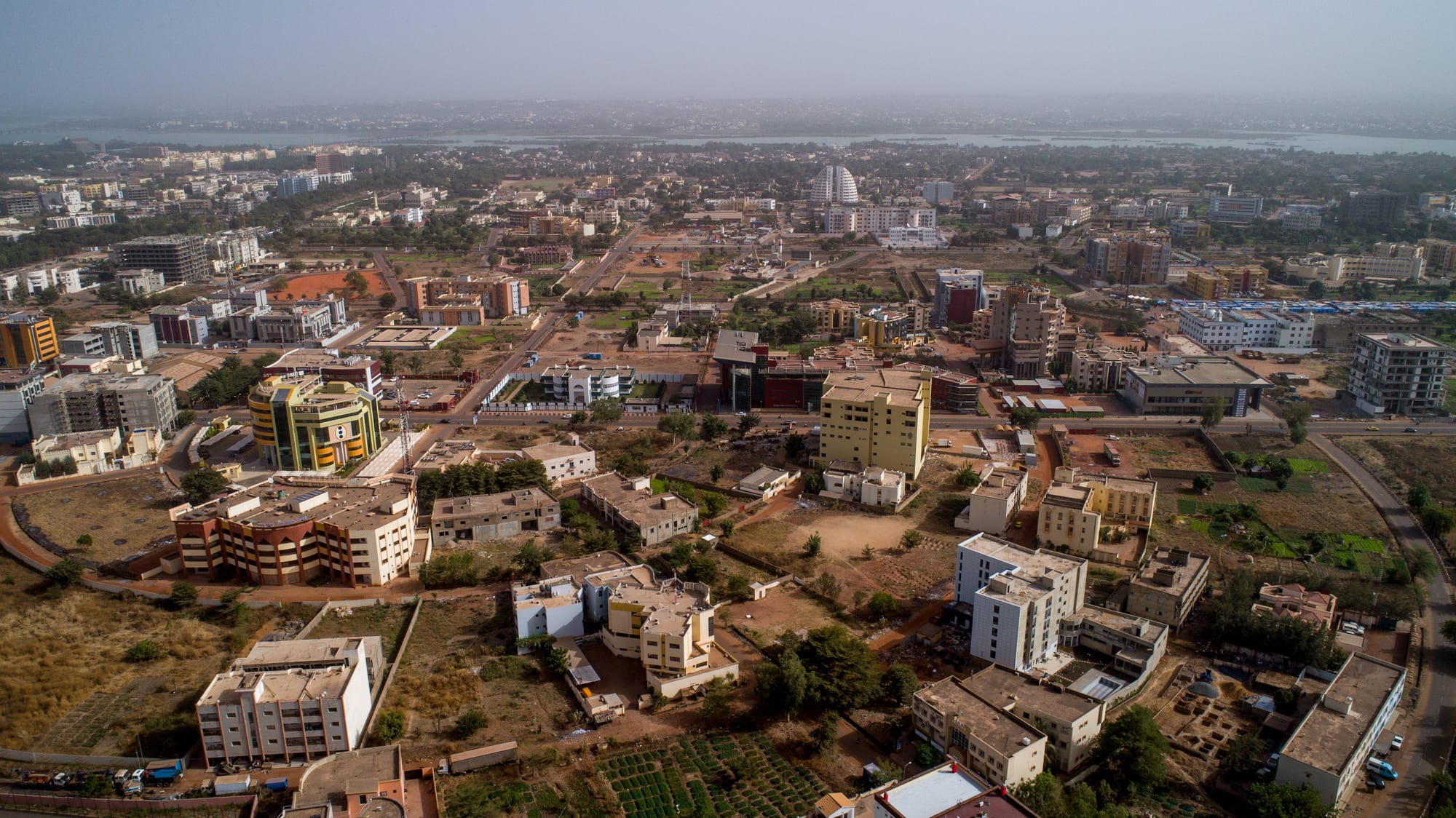
Bamako, the capital, is a large, energetic river city known historically for its live-music scene — Mali produced some of Africa's most celebrated musicians, including Ali Farka Touré, Salif Keita, and Toumani Diabaté — and its National Museum, one of the best in West Africa for its collection of Malian art, textiles, and archaeology.
Before you go: a serious note
Since 2012, Mali has faced a jihadist insurgency across the north and centre, repeated military coups (most recently in 2020 and 2021), the withdrawal of UN peacekeepers and French forces, and increasing reliance on Russian-linked security contractors — a combination that has made most of the country, including Timbuktu and the Dogon region, unsafe for travel. At the time of writing, essentially every Western government advises against all travel to Mali, citing terrorism, kidnapping, and armed conflict, with very limited ability to provide consular assistance.
This article describes what makes Mali's sights historically and culturally significant, for readers following the country or planning far ahead, not as a travel recommendation. The security situation has shown no clear sign of resolution, and anyone actually considering travel should treat current government advisories as decisive.