History · Maldives
Maldives: The Low Country
A thousand coral islands on the Indian Ocean trade routes — Buddhist for a millennium, Muslim since 1153, a British protectorate, a tourism economy, and the flattest nation on Earth facing a rising sea
By Worldlore Editorial · 10 September 2026
A nation at sea level
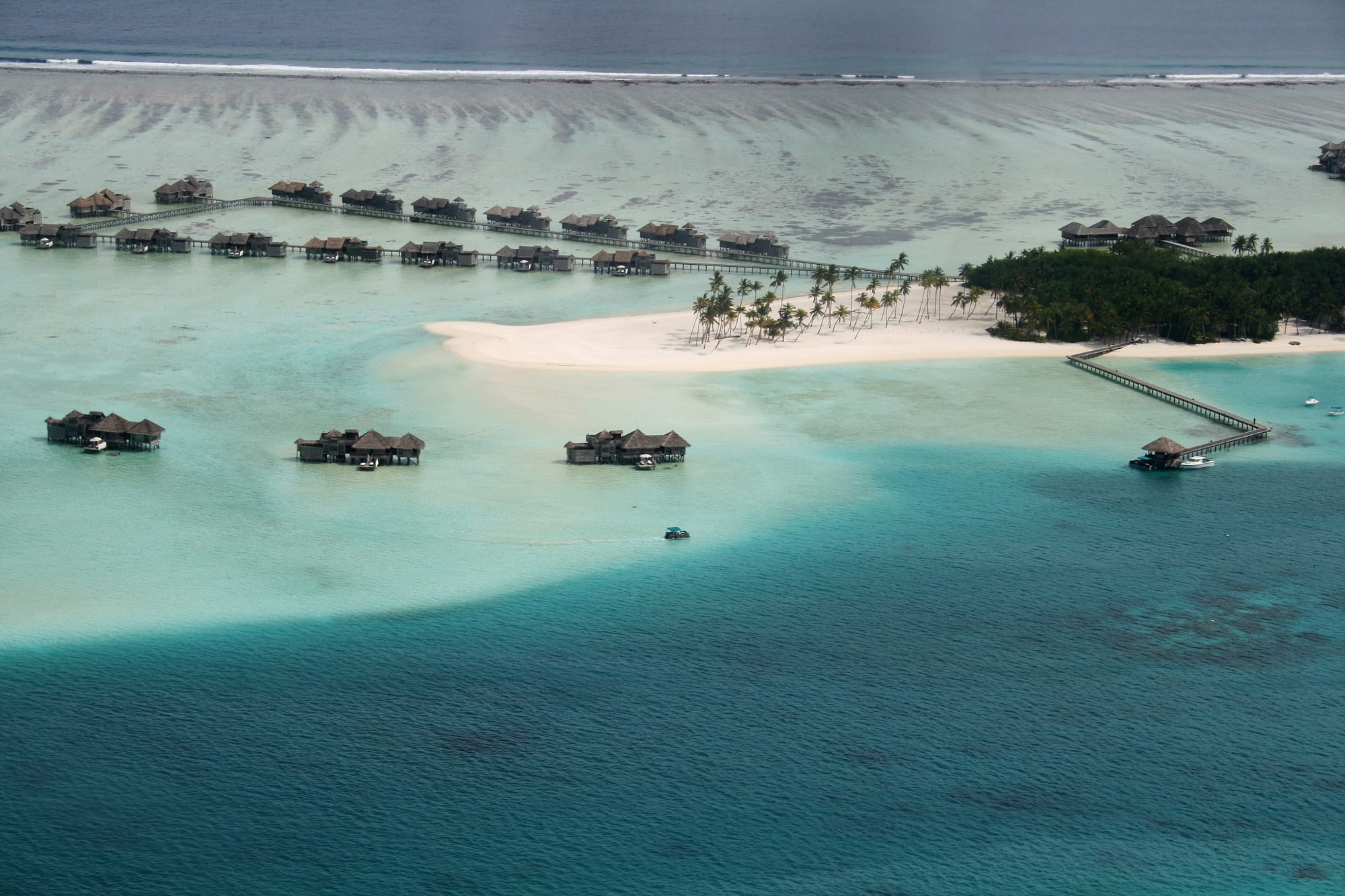
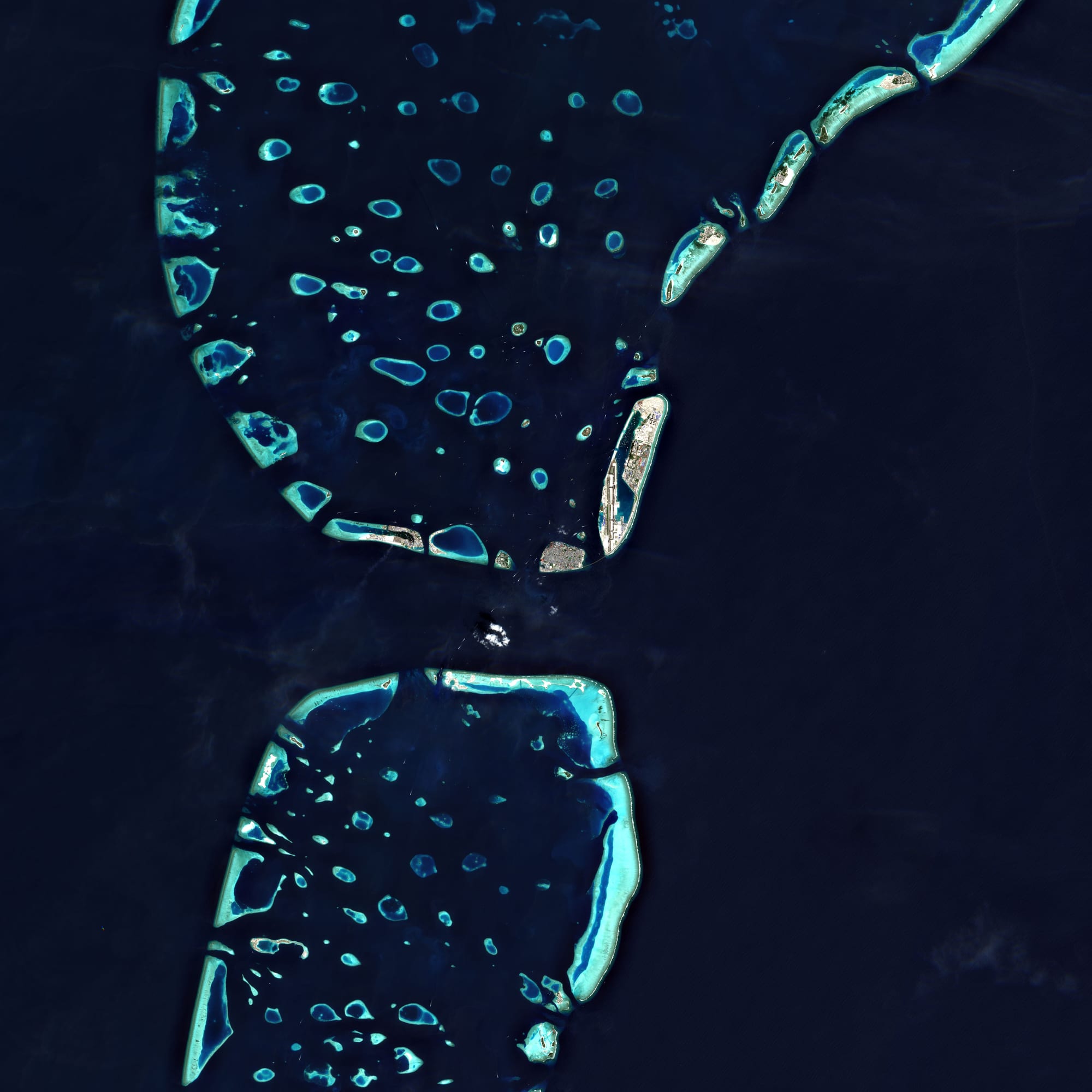
The Maldives is a chain of about 1,200 coral islands grouped into 26 atolls, southwest of India, with roughly 520,000 people. Only about 190 islands are inhabited, and around 150 more are single-island resorts. The capital, Malé, is one of the most crowded places on Earth. The country has its own Indo-Aryan language and script, Sunni Islam as a constitutional condition of citizenship, and one inescapable physical fact: it is the lowest and flattest nation in the world, and its future is bound up with the level of the sea.
A short history
- c. 500 BCE–300 CE
Settlement
Peoples from Sri Lanka and southern India settle the islands.
- to 1153
The Buddhist era
Over a millennium of Buddhist kingdoms on the trade routes.
- 1153
Conversion
The last Buddhist king adopts Islam; a sultanate begins.
- 1343–1344
Ibn Battuta
The traveller serves as a judge in Malé.
- 1558–1573
Portuguese Malé
A brief, harsh occupation, ended by rebellion.
- 1887
British protectorate
Britain takes over defence and foreign affairs.
- 1965
Independence
The Maldives becomes fully sovereign.
- 1968
The republic
The sultanate is abolished.
- 1972
Tourism begins
The first resort opens.
- 2008
Democracy
The first multiparty election ends 30 years of one-man rule.
Buddhist islands on the trade routes
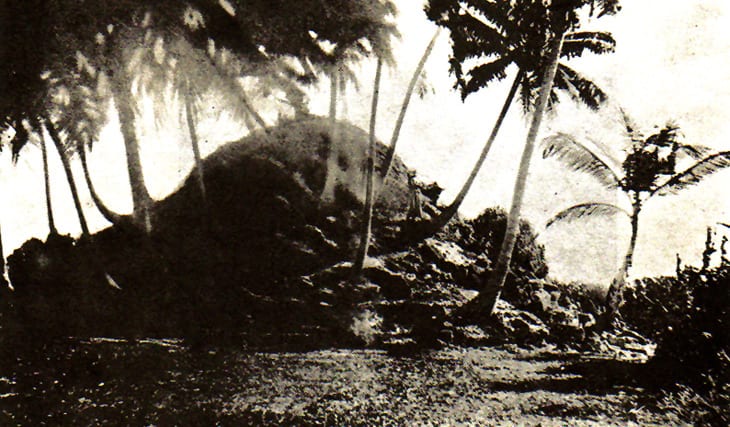
The Maldives were settled more than two thousand years ago, and were Buddhist for over a thousand years — the mounded ruins of stupas survive on many islands. The archipelago sat astride Indian Ocean shipping and supplied the wider world with cowrie shells, used as currency across Asia and Africa, along with coir rope and dried tuna.
Sultanate
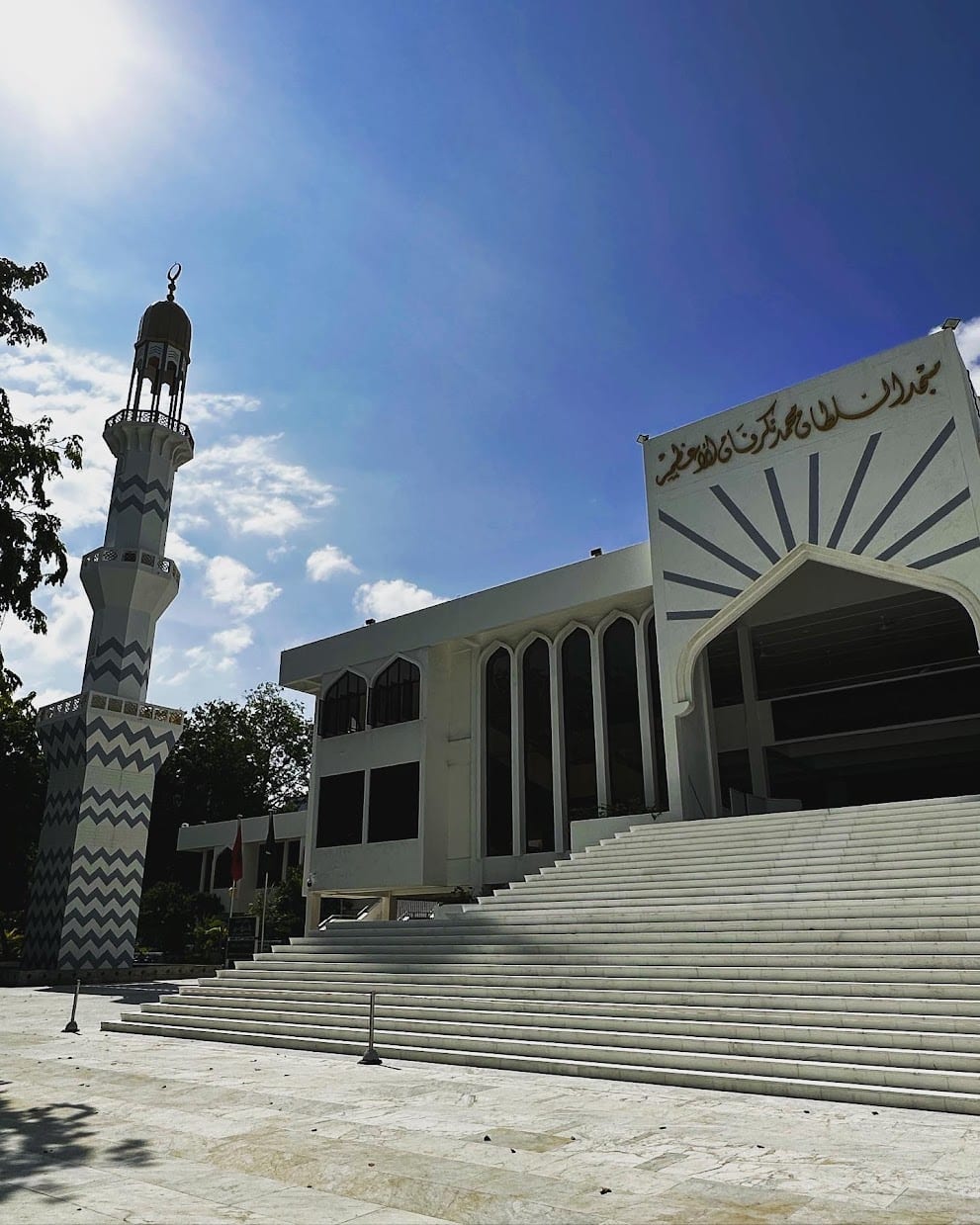
In 1153 the last Buddhist king converted to Islam, and the Maldives became a sultanate. Ibn Battuta visited in the 1340s and served as a judge for over a year, leaving a detailed account. The Portuguese, from Goa, occupied Malé from 1558 until a rebellion led by Muhammad Thakurufaanu drove them out in 1573 — an event still marked as National Day.
The islands fell under loose Dutch and then British oversight, formalised in 1887 as a British protectorate; Britain built airbases on the southern atoll of Gan during and after the Second World War.
Independence, and one-man rule
The Maldives became independent on 26 July 1965, abolished the sultanate in 1968, and opened its first tourist resort in 1972 — the start of an industry that now provides a third of the economy. From 1978, Maumoon Abdul Gayoom ruled for 30 years, winning six referendums by improbable margins. His government delivered real gains in health, education and income, and made the Maldives an early global voice on sea-level rise — but it was authoritarian, with no political parties until 2005, a rubber-stamp parliament, and the repeated jailing of dissidents.
Democracy, and the sea
A new constitution in 2008 brought the first multiparty election, won by Mohamed Nasheed, ending Gayoom's rule. Nasheed pushed climate diplomacy and reform, but was forced from office in 2012 in what he called a coup, and later jailed. His successor, Gayoom's half-brother Abdulla Yameen, ruled repressively and pivoted the country toward China; he was defeated in 2018. Politics since has swung between pro-India and pro-China leaders.
What the Maldives carries
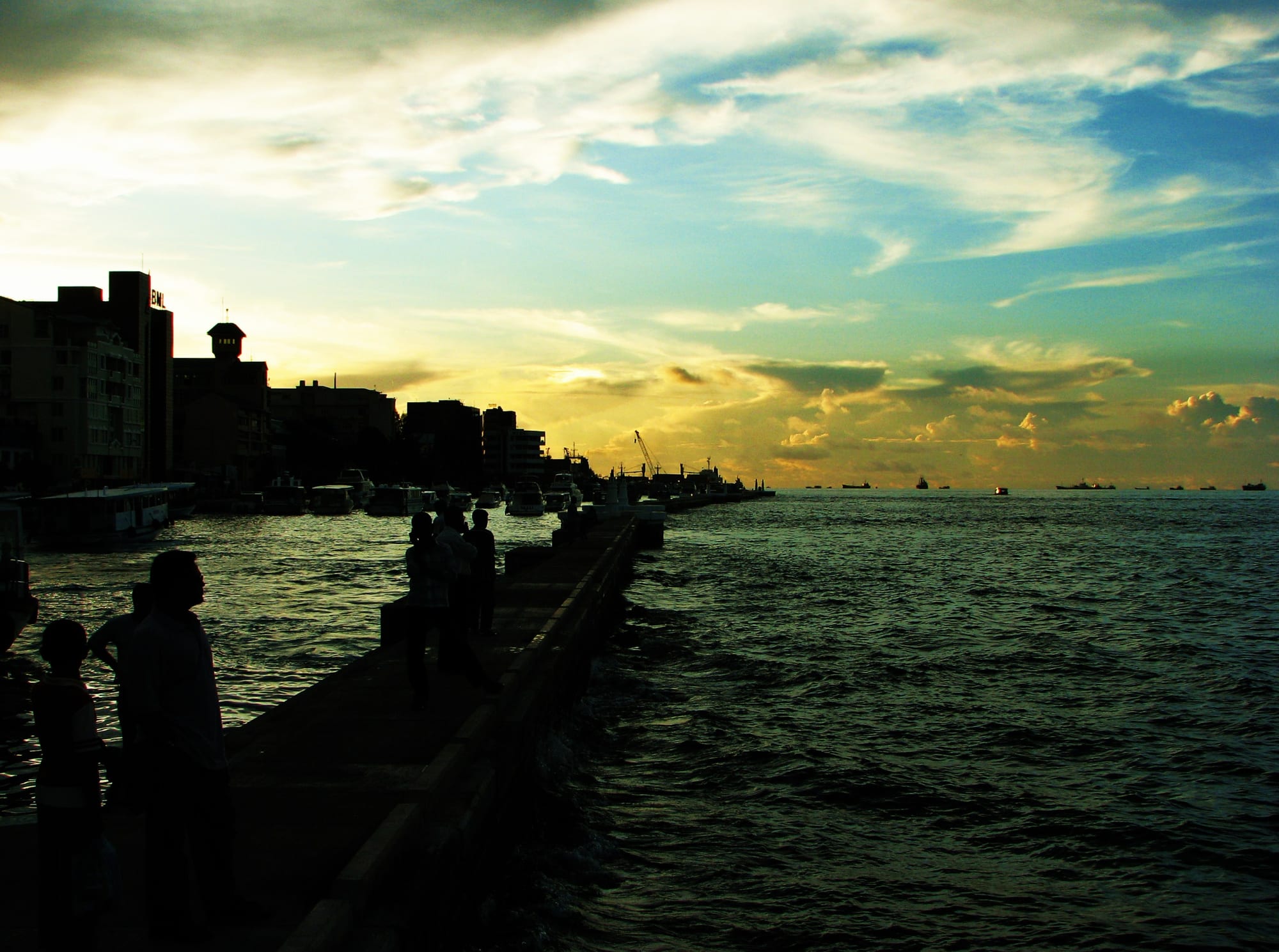
The Maldives has always lived off the sea — the trade routes that made it a supplier of cowries and rope, the tuna that fed it, and now the reefs and lagoons that draw its tourists. That dependence is also its exposure. A country that spent a thousand years Buddhist and nine centuries Muslim, and that only became a democracy in 2008, now measures its long-term prospects in centimetres of sea level.