Culture & Customs · Maldives
Maldives: The Big Drum and the Island Mosque
A nation where Islam is part of citizenship itself, where island communities still ask their elders' leave before a festival begins, and where the beat of the bodu beru and the craft of lacquer and mat carry an ocean culture forward
By Worldlore Editorial · 30 September 2026
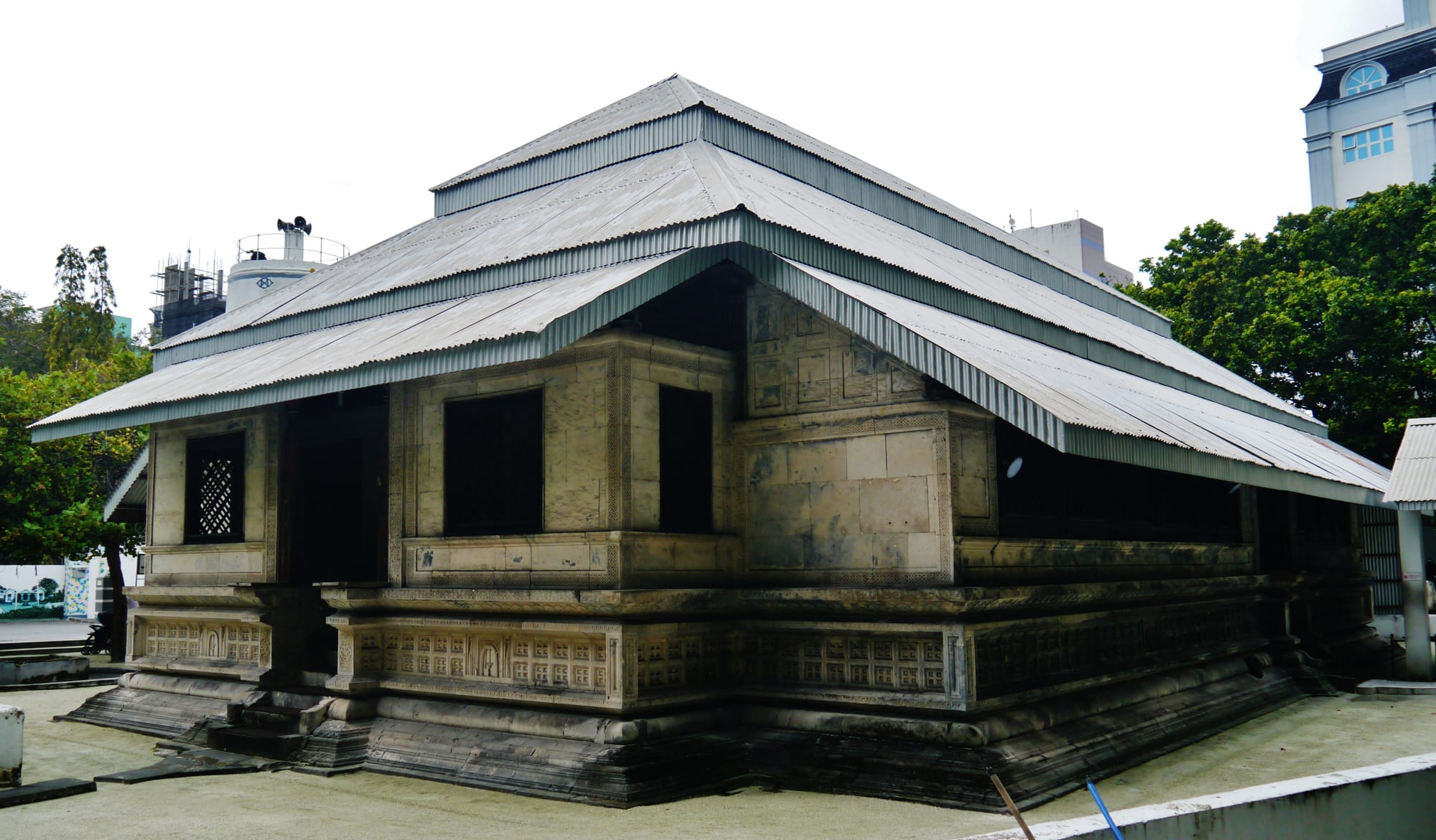
It is the morning of Eid al-Adha, known in the Maldives as Bodu Eid, and the island mosque is overflowing with worshippers for the congregational prayer. Afterwards families head home to tables laden with food for relatives, friends and neighbours. As the festival opens, in a custom known as vedhumaa dhiyun, a group of islanders goes to the community's leaders and elders to ask formal permission for the festivities to begin. Once it is given, the island comes alive. People pelt each other with little packets of coloured water, men in sarongs and white shirts gather around the big drums, and the beat of the bodu beru starts slowly before building to a frenzy. It is a scene that joins the three threads running through Maldivian life: a devout Muslim faith, a close-knit island community that still defers to its elders, and a culture shaped by the sea.
Faith, identity and values
Islam is not only the religion of the Maldives but part of what it means to be a citizen. The constitution describes the country as a republic based on the principles of Islam, designates Sunni Islam as the state religion and states that non-Muslims may not become citizens. According to the US State Department, most citizens follow Sunni Islam, though there are no reliable figures on religious affiliation. The large foreign workforce, mostly from South Asia, includes Muslims, Hindus, Buddhists and Christians, but propagating any religion other than Islam is a criminal offence, and the UK government notes that it is illegal to observe another religion in public.
The Maldivian archived tourism guide dates the islands' conversion to Islam to 1153, and the anniversary of the day the Maldives embraced Islam is commemorated each year on the second day of the Islamic month of Rabi al-Akhir. Faith is visible in stone as well as in custom. The old Friday Mosque in the capital, the Hukuru Miskiy, is built of coral stone, and the coral stone mosques of the Maldives are on UNESCO's tentative list for World Heritage status.
Community ties run deep on islands where everyone knows everyone. Elders are listened to with respect, and Dhivehi proverbs, known as harubas, are often woven into their conversation at moments when advice is needed. "Don't fly away before scoping a place to land on" warns against rash decisions, and "Don't bite the hand that feeds you" reflects the value placed on gratitude, kindness and hospitality. Traditionally, men worked as fishermen, carpenters and toddy tappers, collecting sap from coconut palms, while women ran the household and raised the family, a pattern that shaped island life for generations.
Greetings and meeting people
Maldivians speak Dhivehi, a language of their own, written in Thaana, a script unique to the islands. The usual opening, though, is Arabic: "As-salaam alaikum", "peace be upon you", is the preferred formal greeting on meeting someone. It is often followed by the Dhivehi "Haalu kihineh?", "How are you?", to which the reply is "Rangalhu", "good". English is widely understood, and most Maldivians respond warmly to a simple hello, but a few words of Dhivehi are appreciated. Conduct, however, counts for more than vocabulary. Public displays of affection are treated as a serious matter on local islands and are best kept to a minimum.
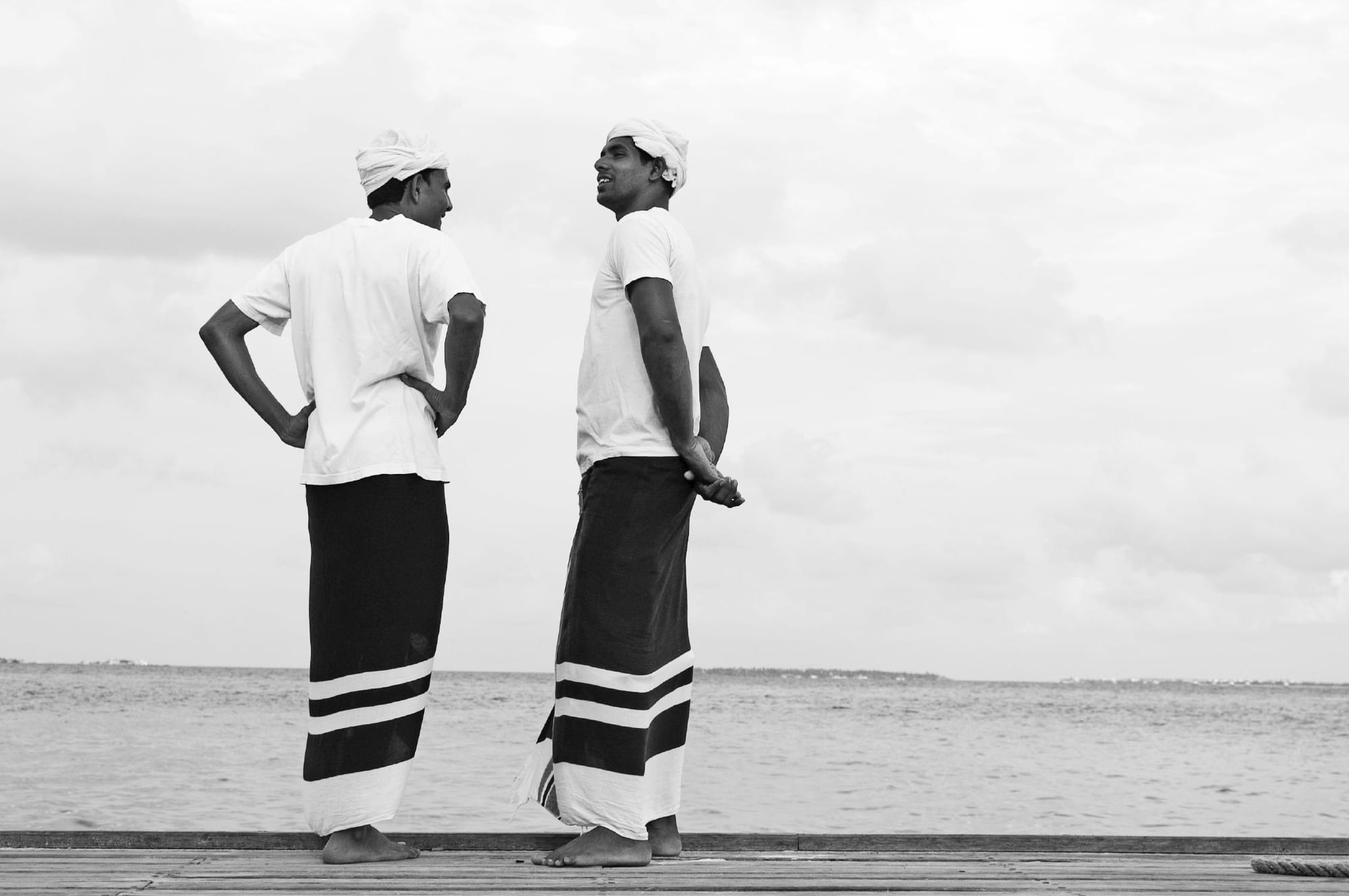
Clothing is one of the clearest signs of respect. On inhabited islands and in the capital, visitors are expected to dress modestly, with shoulders covered and no short or tight shorts. Maldivians' own traditional dress remains an important part of formal life. For men, the mundu, a chequered sarong, was everyday wear, while the feyli, a black or dark red sarong with white stripes at the hem, was worn on formal occasions; records of the feyli go back to the fourteenth century, and under the monarchy it was worn by women as well as men. Today these garments appear mainly at ceremonies and cultural events.
For women, the national dress is the dhiguhedhun, whose name means "long dress": a floor-length gown with long sleeves and a high, modest collar, worn with a small lace veil, the bolifothikolhu, pinned to the back of the hair. The most formal dress of all, the Dhivehi libaas, is decorated around the neckline, and sometimes the hem and sleeves, with a fine embroidery technique called kasabu viyun.
Hospitality and being a guest
With guesthouses now open on inhabited islands, many visitors stay among Maldivian communities rather than on private resort islands, and they are expected to respect local customs and traditions in return for the welcome. The most important distinction is between the resorts and everywhere else. Alcohol and pork are served on resorts and liveaboards but are prohibited on local islands, and individuals are not permitted to bring alcohol into the country. The UK government adds that alcohol should never be taken out of a resort. Swimwear is acceptable at resorts but not on local islands, except on beaches specifically set aside for tourists, usually known as bikini beaches. Nudity and topless sunbathing are not allowed anywhere, resorts included.
Food and sharing sit at the heart of island hospitality, and the official tourism body notes that islanders are often more than happy to invite visitors to join them at mealtimes and other activities. At Eid, households cook far more than they need so that family, friends and neighbours can all be fed. Before Ramadan begins, many communities hold maahefun, which began as a last proper meal before the fast and has grown into a celebration of food and togetherness; on some islands the whole community gathers on the beach for a day or more, bringing dishes from home and ending with a game in which anyone caught is thrown into the sea. During Ramadan itself, visitors outside resorts should not eat, drink or smoke in public during daylight hours.
Festivals and life's big moments
The Islamic calendar sets the rhythm of the year. Ramadan is a month of fasting, self-reflection and compassion, and it ends with Eid al-Fitr. The larger celebration is Bodu Eid, "big Eid", when island traditions come to the fore. Beyond the prayers and the family meals, there are Eid tea gatherings, a religious procession known as the thakbeer parade, bonfires, traditional sports and games, and performances of bodu beru and other dances. On some islands, residents weave a huge fish out of coconut palm leaves and then "catch" it in a festivity called bodu mas, and a performance known as maali neshun sees dancers dressed as spirits from old folklore.
Independence Day, on 26 July, marks the end of British protection in 1965. It is celebrated with flag-raising ceremonies, parades, cultural performances and shows.
Weddings are the great family occasions, and they are where traditional dress is most often seen. The dhiguhedhun is worn for special occasions and weddings, and brides may wear the Dhivehi libaas, traditionally in striking red, although white versions have become increasingly popular for the ceremony itself. Bodu beru, performed at every important function and celebration, often provides the music. Behind the festivities sits a framework set by the Family Act, which follows Islamic law. Both bride and groom must consent, and so must the bride's wali, her guardian in marriage, or a court where no guardian can give it. The minimum age is 18, with narrow exceptions, every marriage is entered in an official register, and a Maldivian woman may not marry a non-Muslim man.
Funerals follow Islamic rites and move quickly. There is no legal deadline, but burial within 24 hours is the normal course, partly because of Islamic custom and partly because of the tropical heat. Cremation is prohibited, and a very simple wooden casket is used. A widow observes a waiting period of four months and ten days by the Islamic calendar before she may remarry. Older cemeteries across the islands hold coral tombstones carved with inscriptions in Dhivehi and Arabic, and rounded tops mark the graves of women. Koagannu, on Meedhoo in Addu City, holds more than 1,500 coral tombstones along with mausoleums and mosques, and was placed on the World Monuments Watch in 2022.
Arts, crafts and music
Bodu beru, literally "big drums", is the most beloved of Maldivian musical traditions. A group of around twenty people takes part, including three drummers and a lead vocalist, dressed in sarongs and white shirts. The drums are made from coconut wood with goatskin heads, and a performance begins with a slow, meditative beat that gathers speed until it reaches a joyful frenzy. Maldivian music and dance show strong influences from East Africa, Arabia and the Indian subcontinent. Other traditions include thaara, performed by about twenty-two men in two rows who sing and beat drums; dhandi jehun, a stick dance performed by groups of men at festivals such as Eid; and bandiyaa jehun, a dance performed by women. Several dances, including bandiyaa jehun and maafathi neshun, are performed only by women.
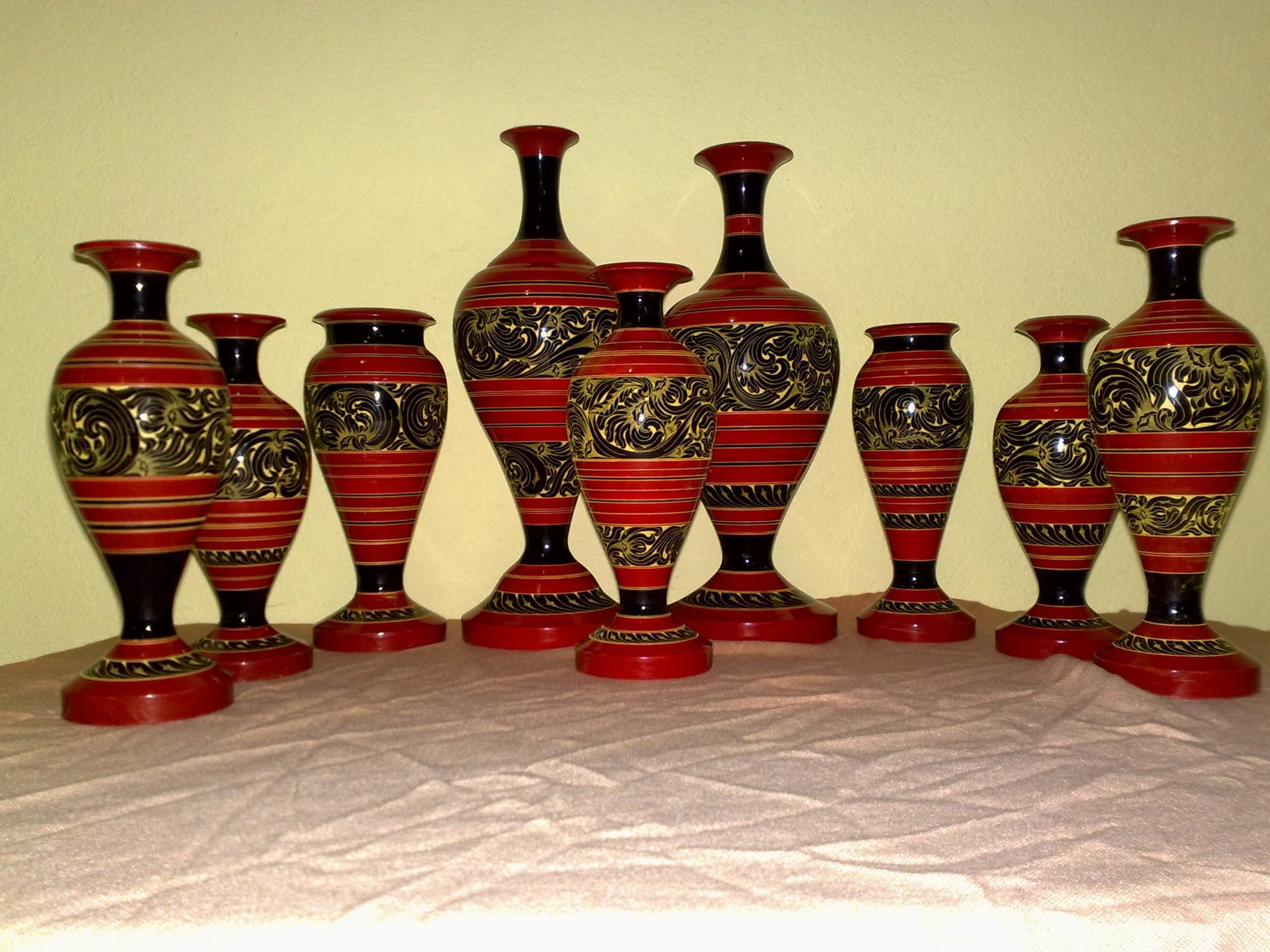
Lacquer work, known as laajehun or liyelaa jehun, is the most distinctive craft. A lacquer made from the sap of trees is applied to wood, both to decorate it and to protect it from the weather, and it was once used to adorn the interiors of important buildings. Baa Atoll is renowned for the craft, and the government is building a national training centre for lacquer and other traditional crafts on one of its islands, Thulhaadhoo.
Mat weaving is regarded as one of the most important Maldivian crafts. The thundu kunaa, a finely woven reed mat, was traditionally used for sleeping, sitting and praying, and is made with nothing more than a knife to split the leaves and a wooden loom with a reed of split bamboo. The finest mats were once presented by the Sultan of the Maldives as royal gifts to the Dutch and British governors of Ceylon, sometimes trimmed with gold lace. Basketry from the stiff spines of coconut palm fronds produced food covers, sieves and winnowers, and coral carving, calligraphy, coir rope making and the building of the dhoni, the traditional wooden boat, complete a craft heritage that has been handed down through many generations.
Dos and don'ts for visitors
- Do greet people with "As-salaam alaikum"; a few words of Dhivehi are always appreciated.
- Do dress modestly on inhabited islands and in the capital, with shoulders and knees covered; keep swimwear for resorts and designated bikini beaches.
- Don't sunbathe topless or nude anywhere in the country, resorts included.
- Don't bring alcohol, pork products or idols for worship into the country, or take alcohol out of a resort; alcohol and pork are available only on resorts and liveaboards.
- Do avoid eating, drinking or smoking in public during daylight hours in Ramadan when outside a resort.
- Do keep displays of affection to a minimum on local islands.
- Don't practise or promote any religion other than Islam in public, which is against the law.
- Do take any chance to watch bodu beru or join in an Eid celebration on a local island, where the most genuine performances are found.
What to take away
Away from the resorts, the Maldives is a devout and close-knit island nation, and visitors who dress with care, respect its faith and accept its hospitality will find the welcome as warm as the water.