Food · Maldives
Maldives: Food and the National Dish
A clear, simple tuna broth from an island nation whose economy and diet both run on one fish more than any other
By Worldlore Editorial · 16 September 2026
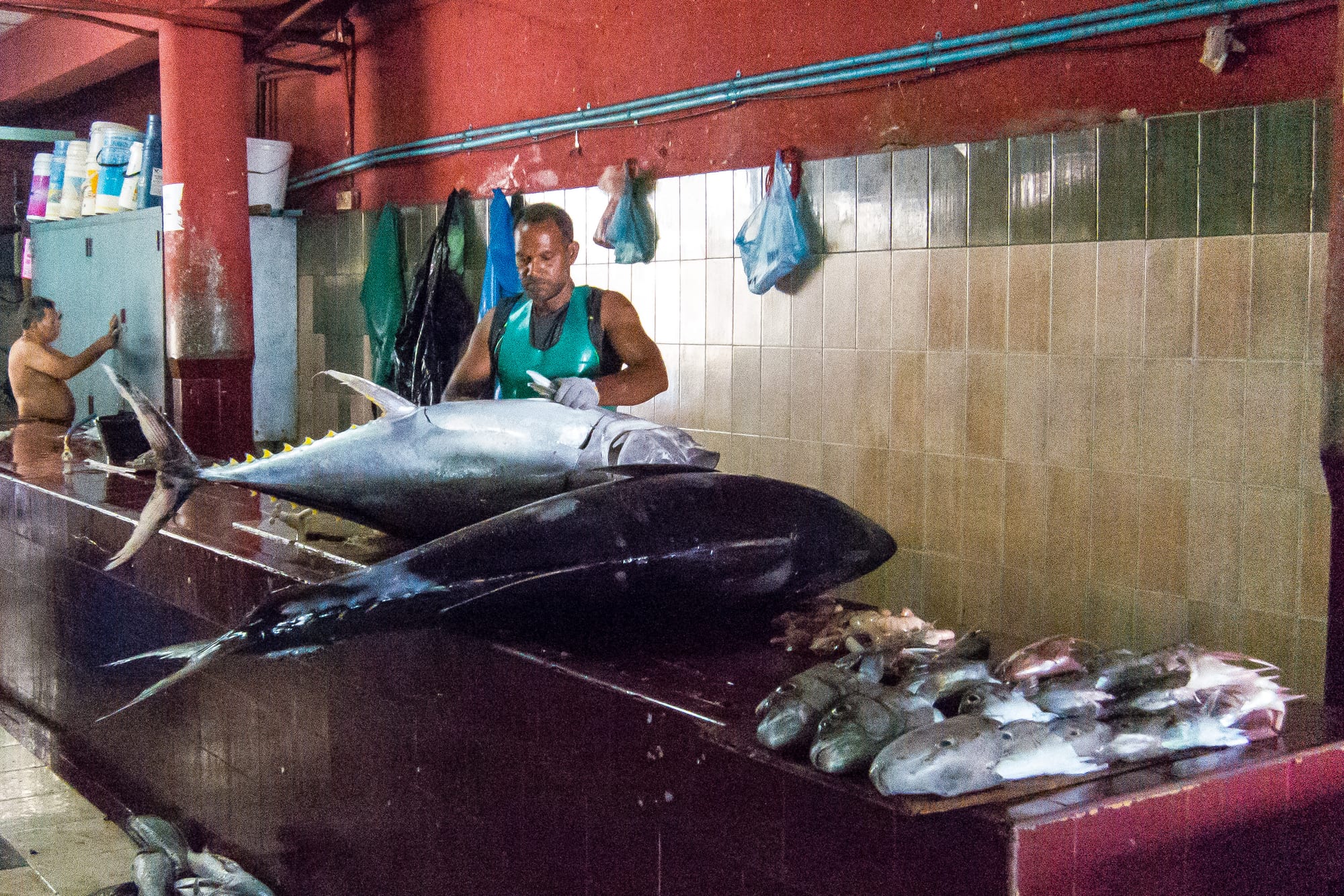
An island nation built on tuna
The Maldives, a chain of low-lying coral atolls in the Indian Ocean, has almost no farmland, so its food culture centres overwhelmingly on the ocean and, above all, tuna, which anchors both the national diet and a tuna fishing industry that remains one of the country's most significant traditional export earners alongside tourism.
The national dish: garudhiya
Garudhiya, a clear, simple broth made by boiling fresh tuna with water, curry leaves and other seasonings, is the Maldivian national dish. Traditionally served with rice, lime, chilli and onion added to taste at the table, garudhiya is plain by design, letting the quality of the fresh tuna itself carry the dish rather than a complex sauce or spice blend.
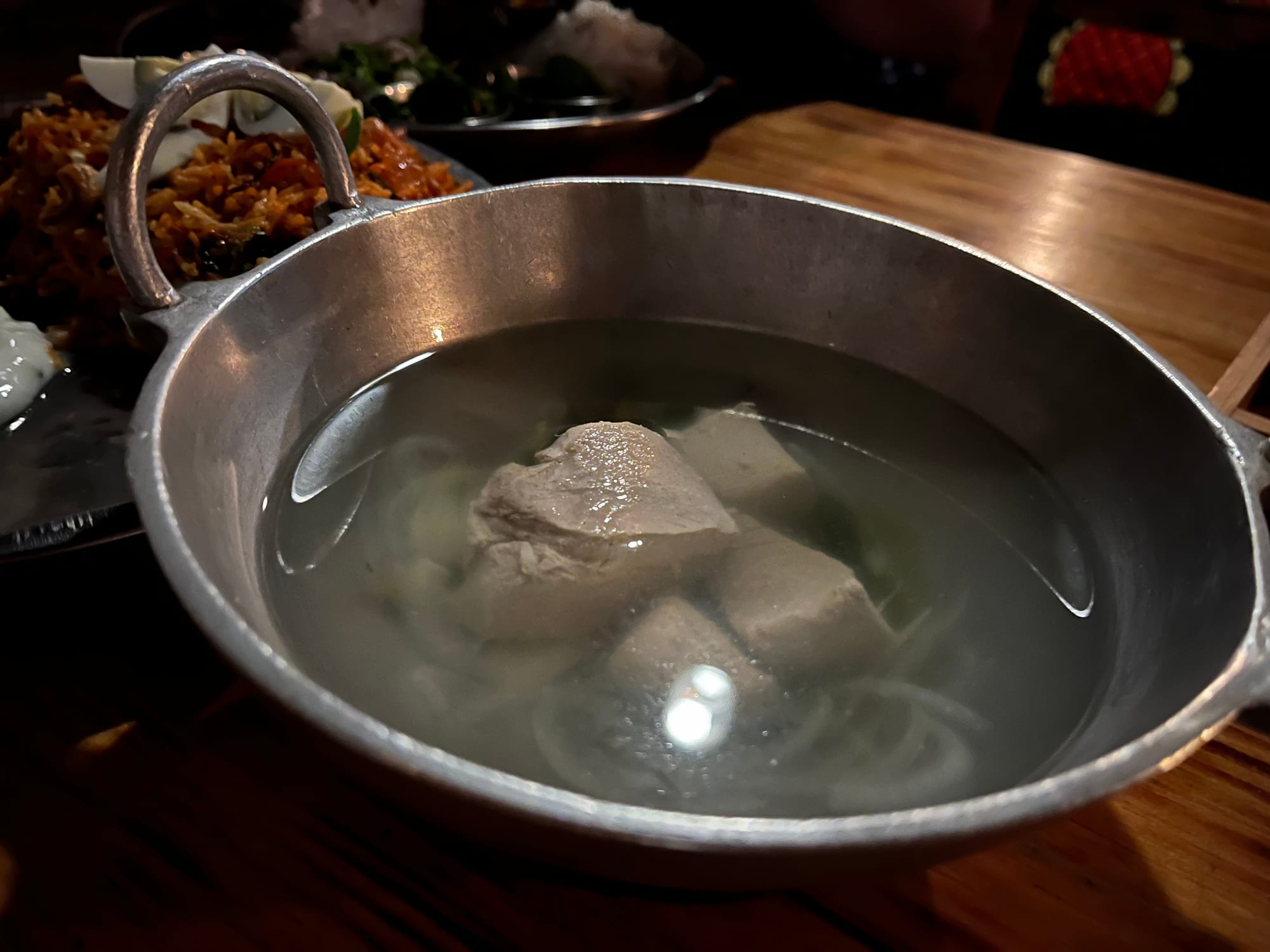
Tuna, coconut and the everyday pantry
Tuna, fresh, dried or smoked, appears throughout Maldivian cooking, most visibly in mas huni, shredded smoked tuna mixed with fresh coconut, onion and lime, the country's classic breakfast dish. Coconut, rice and a range of curry spices reflecting trade contact with South Asia round out the everyday pantry, given how little else grows on the islands themselves.
History behind the plate
Maldivian food traditions developed around a fishing economy that predates any written record of the islands, with dried and smoked tuna historically serving as both a preserved food staple and, for centuries, a genuine export commodity traded across the Indian Ocean. Trade contact with South Asia and the Arab world brought curry spices and other influences into Maldivian cooking, layered onto that older fishing foundation.
Dishes to know
Five more to recognise across the Maldives:
- Mas huni — shredded smoked tuna mixed with coconut, onion and lime, a
classic Maldivian breakfast.
- Rihaakuru — a thick, concentrated fish paste, used as both a
condiment and a flavour base in other dishes.
- Boakibaa — a fish and rice cake, baked and cut into slices, a common
snack.
- Gulha — deep-fried dumplings filled with spiced tuna, a popular
short eat (a Maldivian term for savoury snacks).
- Bondibaiy — a sweetened rice dish flavoured with coconut milk and
spices, often served at celebrations.
Drinks
Fresh coconut water is a genuine everyday drink given how abundant coconut palms are across the islands. Sai (tea) is commonly drunk throughout the day, and Raa, a sweet toddy tapped from palm trees, is a traditional Maldivian drink with deep roots in island life.
Eating as a traveller
Vegetarians will find options genuinely limited outside resorts, since fish is central to nearly all traditional Maldivian dishes, including garudhiya itself. Tap water is not typically safe to drink; bottled or desalinated water is standard. Alcohol is restricted to licensed resort islands and is not available on most inhabited local islands, given the country's Muslim-majority population.
What to take from the table
Garudhiya, simple and built entirely around fresh tuna, is the dish that most directly reflects what the Maldives actually has to work with — an island nation whose food, like its economy, runs on the ocean around it.