Daily Life · Maldives
Maldives: A Capital With Nowhere Left to Grow
Two in five people living in a capital area whose main island covers less than a square mile of coral, a rhythm set by five daily prayers and the ferry timetable, and outer islands where fishing and the tide still shape the working day
By Worldlore Editorial · 30 September 2026
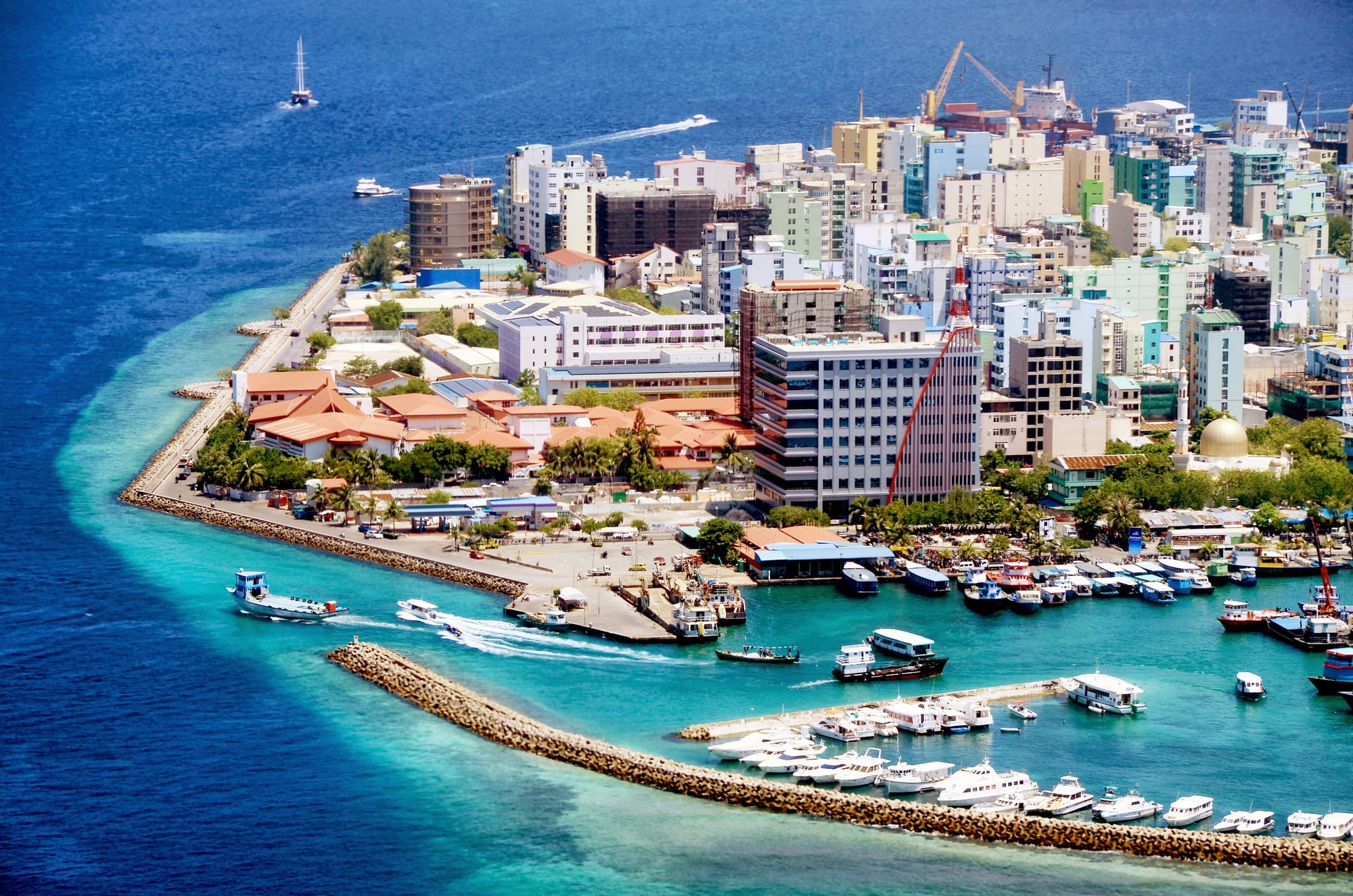
Daily life in the Maldives splits along a line most visitors never see: between the packed high-rises of the capital and the quieter, prayer-paced rhythm of the outer islands. Malé is one of the most densely populated cities on Earth, a single reef island of tower blocks, and together with Hulhumalé and its other islands the capital area is home to around two in five of the country's residents. Everywhere else, across nearly two hundred inhabited islands scattered over 26 atolls, life still runs on the ferry timetable, the fishing catch and the five calls to prayer sounded from each island's mosque.
Family and home life
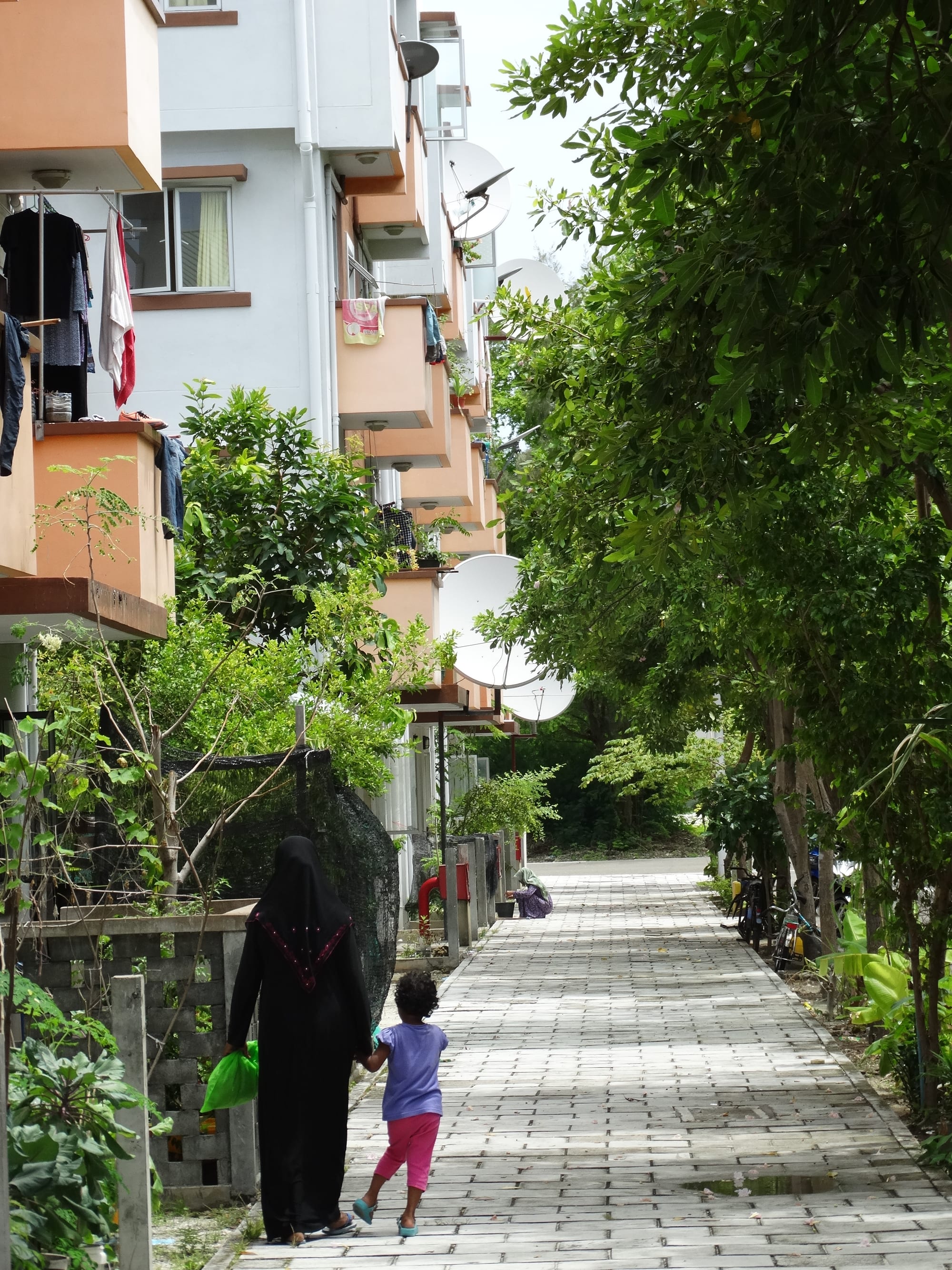
Maldivian homes often centre on a married couple and their children, but extended-family and island-community ties remain strong, and relatives frequently live close by or under the same roof. In Malé, chronic overcrowding means many of these households live in small flats or shared units, sometimes doubling up with relatives simply for want of space, while the government has spent two decades building the artificial island of Hulhumalé next door as a release valve, now home to a large and growing share of the greater Malé population. On the outer islands, houses tend to be simpler and more spread out, built close to a household's own stretch of the island and within easy walking distance of the mosque, the school and the harbour.
Work, school and the rhythm of the day
Many schools, particularly in crowded Malé, run in two sessions to fit everyone into limited buildings: older pupils typically attend in the morning and younger primary pupils in the afternoon, with the school day built around this shift pattern rather than a single fixed timetable. The working week runs Sunday to Thursday, with government offices typically open from morning to early afternoon, though shops and offices on both Malé and the local islands routinely pause around each of the day's five prayer times, particularly for the midday and Friday prayers. Away from the capital, the fishing catch, not the office clock, still sets the pace for many households, and resort workers, drawn from across the country and from a large migrant workforce, typically work long weeks, living on-site in staff accommodation separate from their own communities for weeks or months at a stretch.
Community life and public spaces
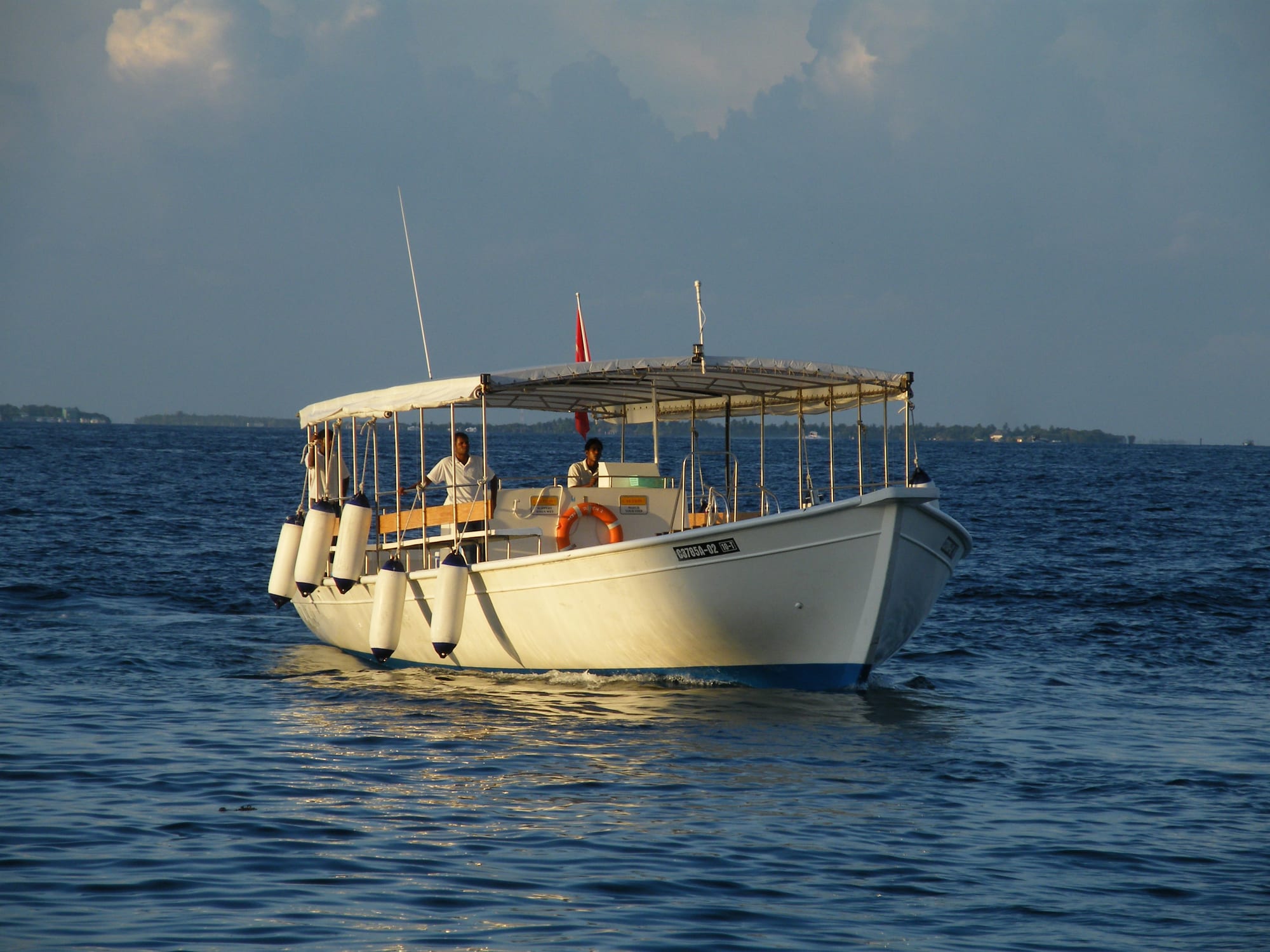
On the outer islands, life still centres on the harbour, where the day's catch comes in and the public ferry or speedboat that connects each island to its neighbours and to Malé ties everyone to a shared timetable. Small tea houses, known locally as hotaa, serve as the everyday meeting place, somewhere between a café and a community common room, especially for men in the middle of the day. Malé itself is dominated by its packed fish market and the narrow streets of its old core, where the everyday crush of motorbikes, pedestrians and small shops reflects a population density that is among the highest of any city in the world, packed onto less than a square mile of reclaimed and natural coral ground.
Free time and weekends
The weekend falls on Friday and Saturday, with Friday built around communal prayer and, on the outer islands, family gatherings and picnics on the beach. Football is the most widely played and followed sport, and most inhabited islands have a pitch, and swimming and fishing remain everyday pastimes for islanders in a way they rarely are for visitors confined to a resort. In Malé, where open ground is scarce, the seafront and the beaches on reclaimed land, including Hulhumalé's, have become the default places to get outdoors, drawing crowds for evening walks and exercise once the day's heat has broken.
A visitor's ordinary day
Resort islands run on US dollars and card payment for almost everything; local islands use the Maldivian rufiyaa alongside dollars, and small cash denominations are genuinely useful there for tea houses, shops and ferries. Getting between islands means either a resort transfer by speedboat or seaplane, or, for those staying on a local island, the public ferry network out of Malé, which is cheap but runs to a fixed and sometimes sparse timetable rather than on demand. It is worth building slack into any itinerary that depends on inter-atoll transport, since weather, tides and, around religious holidays, sheer demand can all delay a crossing.
What to take away
What defines an ordinary day in the Maldives is less any single national rhythm than a country split in two by geography: a capital built to bursting on a single reef, and a scatter of quieter islands still keeping time by the tide, the ferry and the call to prayer.